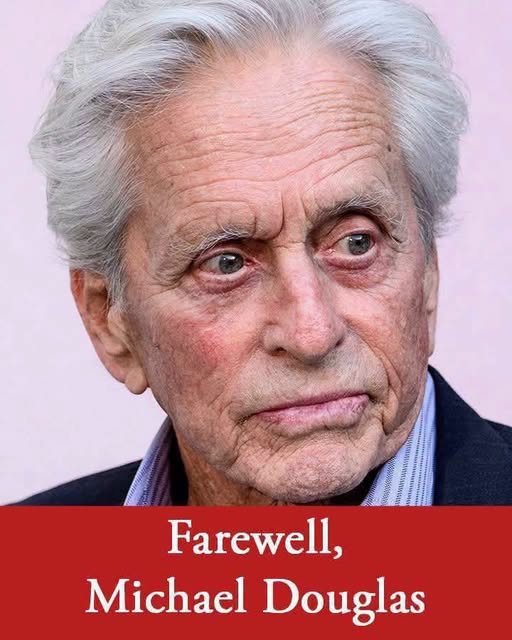
Michael Douglas is one of the most influential figures in modern cinema, known for a career that spans over five decades as both an actor and producer. Born into Hollywood royalty as the son of legendary actor Kirk Douglas, he managed to build a legacy that stands independently of his family name. Rather than relying on his father’s fame, he developed his own identity through a combination of acting talent, production skills, and carefully selected roles that shaped multiple eras of filmmaking.
From the beginning of his career, Douglas demonstrated a strong understanding of storytelling not just in front of the camera but behind it as well. One of his earliest major achievements came when he served as a producer on the iconic film One Flew Over the Cuckoo’s Nest, a project that became a landmark in cinematic history. The film’s success, including multiple Academy Awards, established Douglas as a serious force in Hollywood production and not just an actor following in his father’s footsteps.
As his career progressed, Douglas transitioned into leading roles that defined him as one of the most recognizable actors of the 1980s and 1990s. His performance in Wall Street remains one of his most iconic roles, where he portrayed Gordon Gekko, a ruthless and charismatic corporate raider. The character became a cultural symbol of financial greed and ambition, especially with the famous phrase “Greed is good,” which continues to be referenced in discussions about capitalism and corporate ethics.
Beyond Wall Street, Douglas expanded his filmography with a wide range of roles that showed his versatility. In the erotic thriller Basic Instinct, he played a detective drawn into a complex and dangerous investigation. The film became one of the defining thrillers of the 1990s and reinforced his ability to carry intense psychological narratives. His performances often blended charisma with vulnerability, making his characters feel both powerful and deeply human.
Another major highlight of his career came with The Game, where Douglas portrayed a wealthy banker pulled into a mysterious and life-altering experience. The film’s psychological depth and unpredictable storytelling further cemented his reputation as an actor capable of handling complex and layered roles. His ability to portray characters under pressure became one of his defining strengths across decades of work.
Douglas also earned critical recognition for his role in Traffic, a film that explored the global drug trade through multiple interconnected stories. The movie received widespread acclaim and won several Academy Awards, further highlighting Douglas’s continued relevance in serious dramatic cinema even after decades in the industry.
In addition to his film work, Douglas became part of the modern superhero era through his role in the Marvel Cinematic Universe. He portrayed Dr. Hank Pym in Ant-Man and its sequels, introducing him to a new generation of audiences. This role demonstrated his ability to adapt to changing trends in Hollywood, moving from traditional dramas and thrillers into large-scale franchise filmmaking without losing his identity as an actor.
Throughout his long career, Douglas has received numerous awards and honors, including Academy Awards, Golden Globes, and lifetime achievement recognition. His contribution to both acting and producing places him among a small group of Hollywood figures who have successfully influenced multiple aspects of the industry. His impact is not limited to performance alone but extends into shaping the kinds of stories that reached global audiences.
Outside of his professional achievements, Douglas’s personal life has also been widely documented. He has been married to actress Catherine Zeta-Jones since 2000, and their relationship has often been highlighted as one of Hollywood’s more enduring partnerships. Despite the pressures of fame and busy careers, they have maintained a strong public presence as a couple, often supporting each other’s professional work.
Douglas is also a father, including to his son Cameron Douglas, whose struggles and recovery have been publicly shared over the years. These personal experiences have contributed to Douglas’s more reflective public image in later life, where he often speaks about family, balance, and priorities beyond Hollywood success.
One of the most significant challenges in Douglas’s life came in 2010 when he was diagnosed with throat cancer. The diagnosis required intensive treatment, including chemotherapy and radiation. After a difficult period, he eventually recovered and returned to public life. He has since spoken about how the experience changed his outlook, making him more conscious of health, time, and the importance of personal well-being.
Following his recovery, Douglas gradually adjusted his workload rather than stepping away entirely from acting. In interviews, he has discussed becoming more selective with roles, focusing on projects that interest him creatively rather than maintaining a constant presence on screen. This shift reflects a broader pattern among veteran actors who transition into a slower but still active phase of their careers.
Despite occasional speculation in media and online discussions, Douglas has not made any official announcement of retirement from acting. Instead, he continues to appear in selected film and television projects while balancing his personal life. His approach represents a controlled evolution rather than a sudden exit from the industry.
In recent years, Douglas has also participated in television projects, including roles in streaming series, showing his adaptability to new entertainment platforms. The shift from traditional cinema to digital platforms is a major transformation in Hollywood, and Douglas’s continued involvement highlights his ability to remain relevant across different eras of media consumption.
His long-standing presence in Hollywood makes him part of a rare group of actors whose careers span from the classic studio system era into the modern streaming age. This longevity is not only a result of talent but also of careful career choices and an understanding of how the industry evolves over time.
Douglas’s legacy is often discussed in terms of both artistic contribution and cultural influence. Characters like Gordon Gekko have become symbolic beyond cinema, influencing public perception of corporate culture and ambition. At the same time, his dramatic roles have shown depth, emotional range, and a willingness to take on morally complex characters.
As he continues into the later stages of his career, Michael Douglas represents a generation of actors who have witnessed the full transformation of Hollywood—from analog filmmaking to digital production, from standalone films to cinematic universes, and from theatrical releases to global streaming platforms.
His story is not defined by an ending but by continuity. Rather than a dramatic exit, his career reflects a gradual evolution shaped by experience, health, and personal priorities. The combination of longevity, versatility, and resilience places him among the most respected figures in modern film history.
Ultimately, Michael Douglas remains a living example of how an actor can adapt across decades without losing identity. His journey reflects both the glamour and the challenges of Hollywood, as well as the personal resilience required to sustain a life in the public eye for so long.
