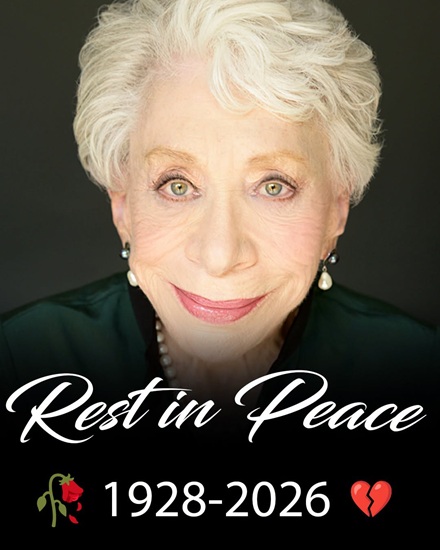
Bunny Levine, the veteran character actress whose remarkable second career brought her appearances in television series and films including Gilmore Girls, Everybody Loves Raymond, Law & Order, Criminal Minds, Ugly Betty, Raising Hope and La La Land, has died at the age of 97. Levine died peacefully in her sleep at her home in Tarzana, California, on August 20, according to her manager, Brandon Kjar. Her death was reported as being consistent with natural causes. Her passing brought renewed attention to an unusual career story: she entered professional acting relatively late in life and continued pursuing roles well into her 90s.
Born Bernice Levine on December 22, 1928, in East Orange, New Jersey, she was interested in performing long before acting became her profession. Her path to entertainment, however, was anything but conventional. Instead of entering Hollywood as a teenager or young adult, Levine devoted a large portion of her working life to education. She pursued advanced studies, earning master’s degrees connected with New York University and Columbia University, and eventually spent approximately 25 years working as a school librarian.
For decades, education rather than acting defined her professional routine. Yet the childhood interest in performing never completely disappeared. When Levine retired from her work in education in 1985, she faced a moment when many people might have chosen to slow down. Levine instead viewed retirement as an opportunity to explore something she had wanted to do for years. Nearing 60, she began pursuing professional acting and started attending auditions.

There was no guarantee that this decision would lead anywhere. The entertainment business is famously competitive for performers of every age, and beginning a career later in life presented an additional challenge. Levine nevertheless continued auditioning and accepting opportunities as they became available. Small roles gradually accumulated, providing her with professional experience and helping her establish herself as a character actress capable of making memorable appearances even with limited screen time.
Her early screen work included projects such as Cadillac Man, the 1990 comedy starring Robin Williams, as well as an appearance on Law & Order. These were among the credits that helped establish her new professional identity after decades spent in education. Rather than treating acting as a brief retirement experiment, Levine continued pursuing it seriously. Over time, her résumé expanded across television and film, eventually encompassing projects from multiple eras of American entertainment.
One particularly unusual early appearance came on a program associated with sex therapist and media personality Dr. Ruth Westheimer. Levine later recalled portraying a widow who was seeking guidance about entering a new relationship after losing her husband. The situation was fictional, but the performance apparently caused some confusion among people who knew Levine personally because her real-life husband, Bernie Levine, was still alive at the time.
Levine discussed the experience with humor years later. She explained that she was simply playing a character, although acquaintances who saw the program did not necessarily understand that immediately. The story became one of many examples illustrating her willingness to accept unconventional material. As her acting career developed, she became increasingly comfortable playing characters who could be eccentric, outspoken, surprising, or deliberately comedic.
That willingness became an important feature of her work. Character actors often appear for only a short period while still being expected to establish a distinctive personality immediately. Levine proved particularly suited to that style of performance. Her age, expressive delivery, and willingness to embrace unusual situations allowed her to turn relatively small parts into recognizable moments. She once reflected on her comedic appeal by saying that she apparently came across as funny on camera even though she could not fully explain why.
Television audiences encountered Levine across an impressive variety of programs. Her credits eventually included appearances on Everybody Loves Raymond, one of the most successful family sitcoms of its era. She also appeared in Gilmore Girls, the comedy-drama centered on Lorelai and Rory Gilmore and the fictional Connecticut community of Stars Hollow. Each role added another title to a career that had begun at an age when many professionals were preparing to retire.
Her television work was not limited to comedy. Levine also appeared in crime and dramatic programs, including Criminal Minds. The long-running series was considerably different in tone from family sitcoms and lighthearted comedies, demonstrating the variety of productions in which she worked. Her résumé similarly included Law & Order, placing her within another of television’s most enduring crime franchises.
Levine also appeared on Ugly Betty, the ABC comedy-drama starring America Ferrera. The series combined workplace comedy, family stories, fashion-industry satire and dramatic elements. By appearing in programs with such different styles, Levine demonstrated the flexibility required of a working character actor. She was not dependent on one recurring character or one specific television genre to sustain her career.
Another credit came through Raising Hope, the Fox sitcom created by Greg Garcia. The series frequently relied on eccentric characters and unusual comedic situations, making it a natural environment for distinctive character performers. Levine’s participation added another modern television comedy to a résumé that already stretched back decades. By this stage, she had successfully worked through major changes in the television industry while continuing to audition for new parts.
Her career also included an appearance on Chappelle’s Show, Dave Chappelle’s influential sketch-comedy series. The program was known for provocative satire and unpredictable sketches, representing yet another type of comedy in which Levine was willing to participate. Her readiness to work on material that audiences might not expect from an older actress became one of the distinctive qualities of her professional life.
Film provided additional opportunities. Levine appeared in the 2008 Adam Sandler comedy You Don’t Mess with the Zohan. She also accumulated other movie roles as her career progressed. Her willingness to accept unusual comedic characters meant that filmmakers could use her presence to create contrast, surprise or humor in scenes. Instead of resisting parts because they did not fit traditional expectations about older performers, Levine frequently seemed willing to lean into the unexpected.
One of the most recognizable films associated with her later career was Damien Chazelle’s La La Land. Released in 2016 and starring Emma Stone and Ryan Gosling, the musical became an international success and received widespread awards recognition. Levine’s involvement placed her within one of the most prominent Hollywood productions of that decade. By then, she had already been acting professionally for roughly three decades despite not beginning until later adulthood.
Her television résumé continued growing as well. Levine appeared in Shameless, the long-running comedy-drama centered on the Gallagher family. Once again, the project was substantially different from many of her previous television appearances. Moving among network sitcoms, crime dramas, sketch comedy, cable television and feature films demonstrated just how broad her second career had become.
What made Levine’s professional journey particularly notable was not simply that she started acting late. She also continued working at ages when opportunities for performers can become increasingly limited. Rather than treating her first few roles as fulfillment of a personal bucket-list goal, she remained professionally engaged for decades. The acting career she began near age 60 ultimately became long enough to represent an entire substantial chapter of her life.
Her later work included the 2024 film Thelma, starring June Squibb. The film itself received attention for placing an older woman at the center of an action-comedy story, making Levine’s participation particularly fitting given her own history of challenging assumptions about age and performance. By the time the film arrived, Levine was well into her 90s and still adding professional credits.
She also remained connected with television late in life, including work associated with The Upshaws. According to her manager, Levine continued auditioning and pursuing acting opportunities close to the end of her life. Reports indicated that she had remained professionally active as recently as June 2026. That detail illustrates that acting never simply became a story from her past; she continued treating it as an active profession.
Levine’s relationship with the acting community extended far beyond her own performances. In 1991, she and her husband, Bernie, founded Actors Connection in New York City. The organization was created to provide actors with opportunities to develop professional skills, connect with industry professionals and better understand the audition and casting process. Through that work, Levine’s influence reached performers who might never have appeared alongside her on screen.
Actors Connection became an important part of her professional legacy because it reflected her interest in helping other people navigate an industry she herself had entered through an unconventional path. Actors often face uncertainty surrounding auditions, representation, casting and career development. Organizations providing workshops and professional networking can help performers better understand those processes. Levine and her husband sought to build a community around those needs.
After news of her death, Actors Connection publicly remembered its co-founder and emphasized her enthusiasm for helping performers. The organization credited Levine’s passion with assisting numerous actors as they worked toward their own professional opportunities. Its tribute thanked her for creating a community intended to serve fellow artists. That remembrance highlighted a side of Levine’s career that audiences watching her television appearances might never have known.
Her personal partnership with Bernie Levine was also a significant part of her life. The couple were married for 53 years before Bernie died in 2003. Their decades together included not only family life but also their shared work in creating Actors Connection. Bunny Levine continued acting after her husband’s death, adding many more credits during the following two decades.
Levine was also a mother and grandmother. Reports following her death identified her surviving children as Marty, Francie and Joe, along with grandchildren Robin and Jeffrey. While much of the public attention surrounding her passing has understandably focused on her unusually long entertainment career, her family’s remembrance emphasized that her life extended well beyond the characters viewers encountered on television and in movies.
In a statement following her death, Levine’s family remembered the affection and admiration she inspired through both education and performance. Those two professions formed the central chapters of her working life. Her first career involved helping students and working within schools, while her second placed her in front of cameras. Though dramatically different, both involved interaction, communication and a lasting connection with other people.
Her transition from school librarian to professional actress is one reason her story has resonated so strongly. Popular culture often presents successful entertainment careers as something that must begin during youth. Levine’s experience followed almost the opposite timeline. She completed decades of work in another profession before giving herself permission to seriously pursue the ambition she had carried since childhood.
Starting later did not mean success arrived instantly. Like countless working actors, Levine had to audition, accept smaller parts and gradually build professional relationships. Her career was constructed one role at a time rather than through a sudden transformation into a leading Hollywood celebrity. That reality makes her story less about overnight fame and more about persistence and continued participation in a profession she genuinely enjoyed.
She also became an example of the importance of character actors within television and film. Leading performers naturally receive much of the publicity surrounding a production, but supporting and guest actors help create the worlds those stories inhabit. A character may appear for only a scene or a single episode yet still contribute an important joke, emotional moment or memorable interaction. Levine spent decades becoming skilled at exactly that type of work.
Her distinctive screen presence made her particularly effective when productions needed an older character who could immediately attract attention. Sometimes the humor came from dialogue, while in other cases it came from the contrast between Levine’s appearance and the unexpected situation surrounding her character. She seemed comfortable using assumptions about age as part of the joke rather than allowing those assumptions to restrict what she could perform.
That approach allowed her to work in projects aimed at dramatically different audiences. Someone might recognize her from a mainstream sitcom such as Everybody Loves Raymond, while another viewer might remember her from Gilmore Girls. Younger audiences could encounter her through Chappelle’s Show, Shameless, or later streaming productions. Moviegoers might recognize her from La La Land, Thelma, or one of her other film appearances.
The variety also illustrates how long she remained active. Television changed considerably between the beginning of Levine’s acting career and her final years. She entered the business during an era dominated by broadcast networks and continued working into the age of cable, streaming platforms and digital entertainment. Through all those changes, the fundamental part of her profession remained the same: auditioning, learning characters and performing when an opportunity arrived.
Her academic background made her journey even more distinctive. Levine had invested years in education before beginning her entertainment career, including graduate study at major universities. Her decision to become an actress did not erase that earlier life. Instead, her biography became an example of how one person can have multiple substantial professional identities across different periods.
The fact that she began acting after retiring also changes the usual meaning of retirement. For Levine, leaving one profession did not mean withdrawing from professional life altogether. It created the space to begin something different. What started as a late pursuit ultimately developed into approximately four decades of acting work, giving her a second career that many people beginning much younger never achieve.
Age inevitably became part of discussions about Levine because her timeline was so unusual. Yet her career suggests that age alone does not fully explain what she accomplished. Persistence, adaptability and willingness to audition remained necessary. Simply wanting to act at 60, 70, 80 or 90 would not automatically create professional opportunities. Levine repeatedly did the work required to remain available when those opportunities appeared.
Her longevity also meant that she became part of productions featuring many generations of performers. From early appearances around the beginning of the 1990s to projects released in the 2020s, she worked alongside actors whose careers began decades apart. That gave her résumé an unusual breadth and connected her professional life to several distinct periods of American television and filmmaking.
Her death on August 20, 2026, came only months before what would have been her 98th birthday. According to her manager, she died peacefully while sleeping at her home in Tarzana. Reports described her death as apparently resulting from natural causes. No more specific medical cause should be assumed without additional confirmed information from her family or representatives.
The circumstances surrounding her passing have therefore been reported without the need for speculation. Her age, location and peaceful death at home were confirmed through her representative, while her family released a statement remembering her life and influence. Maintaining that distinction is important because an obituary should separate information confirmed by relatives or representatives from assumptions that may circulate after someone’s death.
The response from Actors Connection also demonstrated the reach of Levine’s legacy beyond entertainment audiences. Performers who participated in the organization benefited from a community she helped establish decades earlier. For those individuals, Levine may be remembered as much for creating opportunities and encouraging actors as for any individual television or movie appearance.
That combination of education, performance and mentorship makes her career difficult to summarize with a single famous role. She was not defined by one long-running character. Instead, audiences repeatedly encountered her in smaller parts spread across numerous recognizable productions. Her professional identity was built through the cumulative effect of those performances and through her involvement with other actors away from the screen.
Her story is especially compelling because the first major chapter of her working life could easily have been the last. After approximately 25 years as a school librarian, Levine had already completed a meaningful professional career. Choosing to pursue acting afterward was not necessary for her to prove anything about her earlier accomplishments. It was simply an opportunity to finally explore an ambition she had never completely abandoned.
What followed exceeded the idea of a casual retirement hobby. Her credits accumulated over decades, eventually including some of television’s best-known programs and several prominent films. She continued auditioning, performing and adapting as the entertainment business changed around her. The childhood dream she postponed ultimately became a genuine second profession.
There is a broader lesson in Levine’s journey, although it does not require turning her life into an exaggerated inspirational story. Circumstances differ for everyone, and beginning something later does not guarantee professional success. Her documented experience nevertheless shows that personal timelines do not always follow conventional expectations. A person can complete one career and still find enough time to build another substantial chapter.
Bunny Levine’s life also challenges the idea that older performers have little to contribute to comedy or contemporary entertainment. Her roles frequently relied precisely on her ability to surprise audiences and embrace situations that might seem unexpected for someone of her age. Rather than avoiding those opportunities, she made them part of her professional identity.
Even in her 90s, Levine continued appearing in productions and seeking new work. Her participation in Thelma and later projects meant that audiences could still encounter new performances from her nearly four decades after she first seriously entered acting. According to her manager, she remained engaged with auditions close to the final months of her life.
For her family, however, those professional achievements represent only one part of the person they lost. Levine leaves behind children and grandchildren as well as friends, colleagues and members of the acting community. The tributes following her death have reflected both sides of her life: the entertainer audiences recognized and the educator, mentor, wife, mother, grandmother and friend known personally by those around her.
Her extensive list of credits ensures that her performances will continue to be discovered. Viewers revisiting episodes of Gilmore Girls, Everybody Loves Raymond, Criminal Minds, Ugly Betty, Raising Hope, Shameless and other programs may encounter Levine without initially knowing the unusual path that brought her onto those sets. Learning that she did not begin professional acting until near 60 adds another dimension to those appearances.
Films such as La La Land and Thelma similarly preserve moments from the later stages of her career. They demonstrate that Levine remained part of major productions long after the age at which she first entered entertainment. Her résumé eventually became evidence of something her younger self could only have imagined: the acting dream she postponed for decades ultimately lasted for decades itself.
Bunny Levine died at 97 after living a professional life divided into two very different but meaningful careers. She spent roughly a quarter-century serving the education community before entering entertainment, then continued acting for decades. Along the way, she and her husband also created an organization designed to help other performers pursue their professional ambitions.
Rather than being remembered solely for starting late, Levine can be remembered for what she did after she started. She kept auditioning. She accepted unusual characters. She worked across comedy and drama, television and film. She supported other performers through Actors Connection and remained professionally engaged into her 90s. The longevity of that second chapter ultimately became as remarkable as the age at which it began.
Her passing closes an uncommon entertainment career, but the work remains across dozens of productions and in the acting community she helped support. From a school librarian who carried an unrealized childhood ambition to a working character actress appearing in internationally recognized television shows and films, Bunny Levine followed a path that was entirely her own.
For viewers, her legacy can be found in the memorable characters she brought to screens large and small. For aspiring performers connected with Actors Connection, it also exists in the opportunities and encouragement provided by the organization she helped establish. And for her family, her legacy is naturally much more personal than any list of credits could capture.
Bunny Levine’s life offers a simple and enduring reminder without needing exaggeration: a long-delayed ambition can still become an important chapter of someone’s life. She did not follow the traditional Hollywood timeline, and she did not need to. After spending decades in education, she pursued acting near age 60
