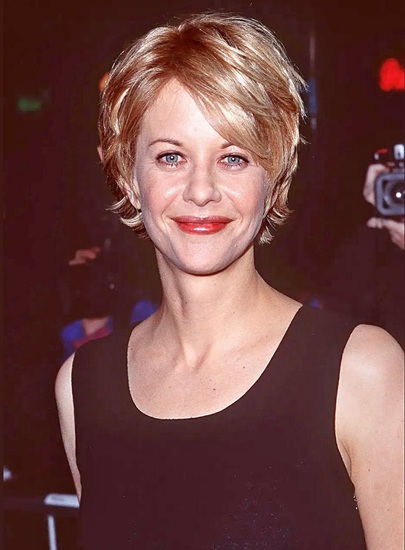
There was a time when Meg Ryan seemed almost impossible to avoid at the movies.
Throughout the late 1980s and especially the 1990s, her face appeared in some of Hollywood’s most memorable romantic films.
She made audiences laugh. She made them believe in unlikely relationships.
And alongside actors such as Billy Crystal and Tom Hanks, she helped create scenes that are still instantly recognizable decades later.
Then something changed.
The actress who had been one of Hollywood’s most familiar leading women began appearing on screen much less frequently.
For some longtime fans, it seemed as though Meg Ryan had simply vanished from the center of popular culture.
But that description misses what actually happened.
She never stopped being creative.
She simply began approaching Hollywood differently.
Before everyone knew her name
Meg Ryan was born Margaret Mary Emily Anne Hyra on November 19, 1961, in Fairfield, Connecticut.
Her acting career did not begin with romantic comedy.
Like many performers, she started with smaller opportunities.
She appeared in the 1981 film “Rich and Famous” and later worked on the daytime soap opera “As the World Turns.”
Those roles gave her valuable screen experience.
But millions of moviegoers received an early introduction to Ryan through a very different kind of film.
“Top Gun.”
Released in 1986, the blockbuster starred Tom Cruise as naval aviator Pete “Maverick” Mitchell.
Ryan played Carole Bradshaw, the wife of Anthony Edwards’ character, Goose.
It was a supporting role.
But the film was enormous.
And Ryan was moving closer to the part that would change her career permanently.
That happened three years later.

Then Harry met Sally
In 1989, Ryan appeared opposite Billy Crystal in “When Harry Met Sally…”
Directed by Rob Reiner and written by Nora Ephron, the movie followed Harry Burns and Sally Albright across years of friendship, arguments, relationships and missed opportunities.
The question at the center of the film was deceptively simple.
Could a man and a woman remain friends without romance complicating everything?
Ryan’s performance helped turn Sally into one of the era’s most memorable romantic-comedy characters.
She was funny.
Particular.
Independent.
Occasionally awkward.
And vulnerable enough to feel human.
Then came the restaurant scene.
Inside Katz’s Delicatessen in New York, Sally demonstrates to a skeptical Harry that a man may not always know when a woman is pretending to experience sexual pleasure.
The scene became one of the most frequently referenced comic moments of the film.
But Ryan’s career was not built on that scene alone.
Her entire performance connected with audiences.
She earned a Golden Globe nomination.
And suddenly, Hollywood had found one of its defining romantic-comedy stars.
Tom Hanks helped create another movie partnership
Ryan’s first movie with Tom Hanks was “Joe Versus the Volcano” in 1990.
Three years later, they reunited for a film that became much more successful.
“Sleepless in Seattle.”
Ryan played Annie Reed, a journalist who becomes fascinated by Sam Baldwin, a widowed father played by Hanks.
The unusual part is how little time their characters actually spend together.
For much of the movie, the romance exists through distance, imagination and possibility.
Eventually, the story brings them to the Empire State Building.
That ending became another defining image of 1990s romantic cinema.
Ryan received another Golden Globe nomination.
And audiences clearly liked seeing her paired with Hanks.
They would eventually get another chance.
But Ryan had other roles to explore first.
She was never limited to romantic comedy
The genre made her famous, but Ryan did not spend her entire career playing variations of Sally Albright.
In 1994, she starred in “When a Man Loves a Woman.”
The role was much heavier.
Ryan portrayed a wife and mother struggling with alcoholism and the consequences it created for her family.
Then came “French Kiss” with Kevin Kline in 1995.
A year later, she appeared alongside Denzel Washington in “Courage Under Fire,” a military drama that moved even farther from the lighthearted romantic image associated with her.
In 1997, Ryan voiced the title character in the animated movie “Anastasia.”
She was demonstrating range.
Still, romantic stories remained closely connected with her public image.
And 1998 would reinforce that connection.
Twice.
One year, two very different romances
Ryan starred with Nicolas Cage in “City of Angels.”
The romantic fantasy-drama told the story of an angel drawn toward a human surgeon.
It was more tragic and reflective than many of Ryan’s familiar romantic comedies.
Then came another reunion with Tom Hanks.
“You’ve Got Mail.”
The 1998 film again brought Ryan together with Hanks and Nora Ephron.
This time, Ryan played Kathleen Kelly, who owns a small independent bookstore.
Hanks played Joe Fox, whose family’s large bookstore chain threatens her business.
In person, they are rivals.
Online, they communicate anonymously and gradually develop an emotional connection without realizing who is on the other side of the screen.
At the time, email still felt relatively novel to many moviegoers.
Today, the computers and dial-up connections are unmistakably from another technological era.
But the emotional idea survived.
Two people can communicate constantly and still misunderstand who the other person really is.
Meg Ryan had become a genre of her own
By the end of the 1990s, audiences knew what seeing Ryan’s name on a movie poster might suggest.
Warmth.
Comedy.
Romance.
A little awkwardness.
And usually an emotional payoff.
That association was enormously valuable.
But being strongly connected with one type of movie can also create expectations.
Audiences may want the familiar version of a performer again and again.
Ryan continued experimenting instead.
And eventually, she took one of the biggest departures of her career.
“In the Cut” showed a different side
In 2003, Ryan starred in Jane Campion’s “In the Cut.”
The psychological thriller was dark, adult and intentionally far removed from the romantic comedies that had defined Ryan’s public image.
She played a teacher who becomes caught up in a murder investigation.
The role challenged the familiar expectations surrounding her.
By then, however, something else was changing.
Ryan’s pace of work began slowing.
She continued appearing in films, including “In the Land of Women,” “The Women” and “Serious Moonlight.”
But the period when a new Meg Ryan movie seemed to arrive almost every year was ending.
For audiences accustomed to seeing her constantly, her reduced visibility created a question.
What happened?
The answer was not as dramatic as some headlines suggested.
Stepping away was not the same as disappearing
Ryan became more selective about acting.
She also began exploring life beyond simply appearing in front of the camera.
Then, in 2015, she made an important creative move.
She directed her first feature film.
“Ithaca.”
Ryan also acted in the project.
Directing placed her on the other side of filmmaking.
Instead of focusing only on her own performance, she was responsible for shaping a much larger creative process.
It represented a new chapter.
And years later, she would use that experience to return to familiar territory.
Romantic comedy.
But this time, she would have much more control.
Her return came in 2023
Ryan returned to the genre with “What Happens Later.”
David Duchovny starred opposite her.
The premise had some of the ingredients associated with classic romantic comedy.
Two former lovers unexpectedly meet again.
A snowstorm leaves them stranded together at an airport.
Old feelings and unresolved questions begin resurfacing.
But the characters were no longer young people discovering love for the first time.
They had history.
They had regrets.
They had decades of choices behind them.
That difference mattered.
So did Ryan’s role behind the scenes.
She was not merely the star.
Ryan directed the film.
She co-wrote it.
She produced it.
She was helping shape the story rather than simply stepping into a character someone else had created.
Returning without trying to recreate the past
There is something fitting about the way Ryan returned.
She did not attempt to become the exact actress audiences remembered from 1989.
That would have been impossible.
Time had passed.
Hollywood had changed.
Ryan had changed too.
Instead, “What Happens Later” allowed her to revisit romantic comedy from the perspective of characters with more life behind them.
That approach reflected her own career.
She was no longer simply the young star of “When Harry Met Sally…”
She had decades of experience in front of the camera.
Now she also had experience directing.
The return therefore felt less like going backward.
It looked more like bringing the past into a new stage of life.
Recognition continued
In 2024, Ryan received the Honorary Heart of Sarajevo at the Sarajevo Film Festival in recognition of her contribution to cinema.
The event also gave her an opportunity to reflect on her career and discuss filmmaking.
Then another nostalgic moment arrived.
In 2025, Ryan reunited with Billy Crystal for a commercial that deliberately referenced “When Harry Met Sally…”
Decades had passed.
Yet audiences understood the joke immediately.
That alone says something about the cultural staying power of the original film.
Some movies outlive the moment that created them
Technology has transformed enormously since “You’ve Got Mail.”
The New York depicted in “When Harry Met Sally…” belongs to another era.
The radio program central to “Sleepless in Seattle” feels different in a world of podcasts and social media.
Yet the movies continue finding audiences.
Why?
Partly because the technology was never really the point.
The characters were.
Ryan’s performances often balanced several qualities at once.
Her characters could appear confident while secretly being uncertain.
They could be romantic while trying not to admit it.
They could be funny without seeming to know they were funny.
That made them memorable.
And it helped make Ryan one of the defining faces of the genre.
The person changed while the movies stayed the same
Meg Ryan is 64 in 2026.
Naturally, she does not look exactly as she did when “When Harry Met Sally…” was filmed.
Nobody does after nearly four decades.
Yet celebrity culture often treats ordinary aging as though it were a mystery requiring explanation.
That can distract from the more interesting transformation.
Ryan went from actress to filmmaker.
She moved away from a relentless Hollywood schedule.
She returned when she found projects she wanted to make.
Her career became less frequent but more self-directed.
That story is considerably more substantial than comparing photographs from different decades.
Press play and the 1990s return
Movies create a strange relationship with time.
Meg Ryan continued aging.
Sally Albright did not.
Kathleen Kelly remains exactly the same age every time someone opens “You’ve Got Mail.”
Annie Reed is still making her way toward the Empire State Building.
Those performances are permanently preserved.
That allows longtime viewers to revisit not only the movies but also their own memories.
Where they watched them.
Who they watched them with.
What their own lives looked like at the time.
Perhaps that is why Ryan remains so closely connected with nostalgia.
Her career followed its own rhythm
The story is not really that Meg Ryan became famous and then vanished.
It is more complicated.
She started with smaller roles.
Became a major star.
Helped define a genre.
Took dramatic risks.
Worked less frequently.
Moved into directing.
And eventually returned to romantic comedy as both a performer and filmmaker.
That is not disappearance.
It is evolution.
And the final scene may be the most fitting one
For years, audiences knew Meg Ryan as the woman waiting for a romantic-comedy ending.
A meeting at the Empire State Building.
A revelation inside a bookstore.
A friendship finally becoming something more.
But her own career did not follow a neat Hollywood script.
She stepped away when the spotlight was brightest.
She explored other interests.
Then she returned without pretending the intervening years had never happened.
The actress changed.
The industry changed.
The audience grew older too.
But the movies remained.
And somewhere, at almost any moment, somebody is probably watching Meg Ryan order food with extraordinary precision, open an anonymous email, or walk toward an unforgettable movie ending.
That may be the clearest measure of her lasting place in popular culture.
The spotlight does not have to remain fixed on someone forever.
Sometimes the work stays bright enough on its own.
