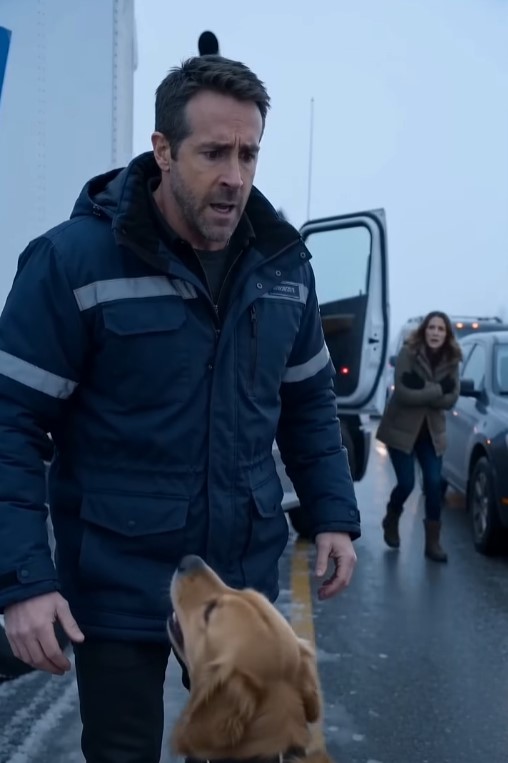
Winter storms often transform highways into dangerous stretches of ice, darkness, and uncertainty. For law enforcement officers assigned to overnight patrols, severe weather conditions create long hours of constant focus, where even a small mistake can quickly become life threatening for drivers traveling isolated roads. On one particularly brutal winter night, a veteran state trooper began what seemed like another routine patrol along a remote interstate highway.
Temperatures had dropped well below freezing, and freezing rain covered nearly every surface with dangerous layers of black ice. The storm had intensified steadily throughout the evening. Strong winds pushed sleet across the empty roadway while visibility became increasingly poor. Most drivers had wisely avoided travel, leaving long stretches of highway almost completely deserted during the early morning hours.
Inside the patrol vehicle, the trooper carefully monitored traffic conditions while maintaining reduced speed on the icy pavement. The windshield wipers struggled constantly against freezing rain that coated the glass faster than the blades could clear it away. For experienced officers, nights like these demanded complete concentration. Winter crashes could happen within seconds, especially involving large trucks traveling long distances through dangerous weather conditions across rural highways with limited emergency assistance nearby.
Shortly after two o’clock in the morning, distant brake lights suddenly flashed ahead through the darkness. A large semi truck traveling several hundred feet ahead fishtailed violently after hitting a hidden patch of black ice near the shoulder. The massive trailer swayed dangerously across part of the interstate before the driver slowly regained control. The truck eventually stabilized and continued forward, disappearing gradually into the snowy darkness farther down the highway.
Concerned about what may have caused the truck’s sudden reaction, the trooper slowed carefully while approaching the same section of roadway. His headlights swept across the ice covered pavement and nearby roadside ditch as freezing rain continued falling steadily. That was when he saw the dog.
Standing near the white line beside the interstate was a golden retriever soaked completely from head to tail. The animal’s fur clung tightly against her thin body while she trembled visibly in the freezing temperatures.
The trooper immediately noticed something unusual about the dog’s behavior. Instead of running from the approaching patrol vehicle or retreating from the flashing emergency lights, the retriever stepped cautiously closer toward the roadway while barking repeatedly into the storm.
The dog paced anxiously between the highway and a dark roadside ditch several feet away. Each time she moved toward the ditch, she paused briefly and looked back toward the cruiser as though attempting to guide someone toward something hidden nearby.
Years of patrol experience had taught the trooper to trust unusual instincts during emergency situations. Animals stranded near highways often behave unpredictably, but this dog’s actions appeared intentional rather than frightened or aggressive.
Carefully activating additional emergency lights for safety, the trooper parked along the shoulder and stepped into the freezing rain. Strong winds immediately cut through his heavy winter uniform while sleet struck his face and exposed hands painfully.
The golden retriever barked again before moving toward the embankment beside the interstate. Despite obvious exhaustion, she continued glancing back repeatedly to ensure the trooper followed behind her through the darkness.
Using a flashlight to search the ditch carefully, the trooper initially saw little beyond dead grass, roadside debris, and muddy water collecting along the frozen embankment. Then the flashlight beam settled upon a partially collapsed cardboard box hidden near the bottom of the ditch.
The box appeared soaked completely through from prolonged exposure to freezing rain and melting snow. Dark stains covered the cardboard while one side had begun collapsing inward under the weight of accumulated water and ice.
As the trooper moved closer, the golden retriever remained nearby, watching him intently while trembling uncontrollably from cold and exhaustion. Her behavior suggested desperate concern focused entirely on whatever remained hidden inside the damaged box. The trooper carefully pulled back the soaked cardboard flaps. Inside, he discovered six newborn puppies huddled tightly together for warmth.
The puppies were covered in mud, freezing rainwater, and traces of blood from birth. Several barely moved at all, while faint cries emerged weakly from beneath the pile of tiny bodies pressed desperately against one another.
It immediately became clear that the blood inside the box did not come from injuries or an attack. Pieces of umbilical cord and afterbirth remained visible, showing the puppies had likely been abandoned very shortly after birth.
The realization made the situation even more disturbing. Someone had left a mother dog and her newborn litter exposed beside a freezing interstate highway during one of the harshest winter storms of the year.
The golden retriever standing beside him was clearly the puppies’ mother.
Despite severe weather, dangerous traffic, and freezing temperatures, she had apparently remained beside the box for nearly two days attempting to protect her newborn puppies from the cold.
Veterinarians later explained that newborn puppies cannot regulate body temperature effectively during their earliest days of life. Exposure to freezing conditions for even short periods can quickly become fatal without warmth and protection from their mother.
The storm had worsened dramatically throughout the previous night, meaning the dogs were likely abandoned before conditions became even more dangerous. The mother dog had probably spent countless hours shielding her puppies with her own body while searching desperately for help.
The trooper suddenly understood why the semi truck driver had nearly lost control moments earlier. The exhausted retriever had stepped into the roadway intentionally, likely making one final desperate attempt to force passing vehicles to stop.
Kneeling beside the box, the trooper quickly checked each puppy carefully for signs of life. Every puppy still had a heartbeat, but several pulses felt dangerously weak beneath the freezing cold skin.
Knowing they would not survive much longer outside, he immediately began preparing an emergency rescue. The cardboard box had become too soaked and unstable to transport safely across the icy shoulder.
Without hesitation, the trooper removed his heavy winter patrol jacket and wrapped the puppies carefully inside the insulated lining. The tiny newborns barely reacted as he lifted them gently from the collapsing box.
The mother dog followed closely beside him as he carried the puppies toward the patrol cruiser. Though visibly exhausted, she remained completely focused on staying near her litter during every step of the rescue.
When they reached the vehicle, the retriever attempted to jump inside but lacked the strength to climb onto the seat herself. The trooper carefully lifted her into the passenger side before placing the wrapped puppies nearby.
Once inside the heated patrol vehicle, the mother immediately curled protectively around the bundle containing her newborn puppies. Her shaking slowed slightly as warm air filled the cabin for the first time in hours.
The trooper contacted dispatch immediately and requested emergency veterinary assistance instead of standard animal control response. Given the condition of the dogs and severe weather conditions, rapid medical treatment was absolutely critical.
With icy highways stretching for miles ahead, he began driving carefully toward the nearest emergency veterinary clinic still operating during the storm. The trip would require navigating dangerous roads under worsening visibility conditions.
Throughout the drive, freezing rain continued striking the windshield while sleet reduced visibility across the interstate. Several times the patrol SUV lost traction briefly while crossing hidden patches of black ice beneath accumulating snow.
At one point during the journey, the cruiser fishtailed dangerously toward the shoulder before the trooper corrected carefully and regained control. Inside the vehicle, the mother dog remained pressed tightly against her puppies without moving away from them.
Every few minutes, the trooper checked the puppies for breathing and movement while continuing carefully through the storm. Some barely responded beneath the jacket, and several remained frighteningly cold despite the heated vehicle.
The mother retriever appeared equally exhausted. Her paws were visibly damaged from prolonged exposure to ice and frozen pavement, while her ribs showed clearly beneath her wet fur from severe malnutrition and dehydration.
After what felt like an endless drive through snow and freezing rain, the glowing sign of the emergency veterinary clinic finally appeared through the darkness. Relief washed over the trooper as he pulled quickly into the parking area.
Veterinary staff rushed outside immediately after hearing the emergency call. The trooper carried the wrapped puppies carefully inside while the exhausted golden retriever limped slowly behind through the clinic entrance.
Inside the treatment area, veterinarians quickly began emergency procedures to stabilize the newborn puppies. Severe hypothermia had dangerously lowered their body temperatures after spending so long exposed to freezing conditions outdoors.
Heat lamps, warming blankets, and specialized incubators were prepared rapidly while technicians administered fluids and monitored heart rates carefully. Every minute mattered because newborn puppies are especially vulnerable to exposure related complications.
The mother dog also required urgent medical care. Veterinarians discovered she was severely dehydrated, dangerously underweight, and suffering from cracked paw pads caused by prolonged contact with ice and frozen asphalt.
Despite her condition, the retriever refused to relax completely unless she could see her puppies nearby. Veterinary staff later described her behavior as remarkably protective and attentive despite overwhelming exhaustion and physical pain.
Unfortunately, one of the puppies remained critically weak despite emergency treatment efforts. Veterinary staff attempted resuscitation procedures after the smallest puppy stopped responding during warming treatment.
Despite every effort, the puppy could not be revived.
The loss affected everyone inside the clinic deeply. Yet veterinarians explained honestly that without rescue that night, the remaining puppies and their mother likely would not have survived until morning in those conditions.
Over the following hours, signs of improvement slowly began appearing among the surviving puppies. Weak cries emerged beneath warming blankets while tiny movements became stronger as body temperatures gradually stabilized.
The exhausted mother dog rested nearby receiving fluids and treatment while constantly watching the veterinary team working around her puppies. Even during recovery, her focus never shifted far from her litter.
By morning, veterinarians confirmed the remaining five puppies were expected to survive. Their temperatures had stabilized successfully, and they had begun feeding normally inside carefully monitored incubators designed for newborn animals.
The mother dog also improved significantly after receiving antibiotics, nutrition, hydration, and treatment for her injured paws. For the first time in days, she was finally warm, safe, and no longer fighting alone to protect her puppies.
News of the rescue quickly spread among veterinary staff and local emergency responders. Many were deeply moved by the determination shown by the mother dog during such extreme and dangerous conditions.
Animal welfare professionals often explain that maternal behavior in dogs can become remarkably strong immediately after birth. Mother dogs instinctively prioritize protecting and warming their puppies even during severe environmental danger.
Over the following weeks, the puppies continued growing stronger each day under careful supervision. Their eyes gradually opened, their movements became more energetic, and healthy weight gain confirmed steady recovery from the traumatic exposure.
The trooper visited the clinic repeatedly during the recovery process. What began as concern gradually developed into a strong emotional connection with both the mother dog and her surviving puppies.
When informed that the dogs would eventually enter an overcrowded shelter system after medical clearance, the trooper made a decision that surprised many of his colleagues but felt completely natural to him.
He chose to personally care for the mother dog and help find homes for the surviving puppies.
Over the next several months, the puppies grew into healthy, energetic dogs surrounded by warmth, safety, and proper veterinary care. The trooper carefully screened families to ensure each puppy entered a loving permanent home.
Four puppies were eventually adopted successfully by trusted families who understood their difficult beginning and committed fully to providing responsible lifelong care.
One puppy remained permanently with the trooper.
The mother dog also stayed beside him.
He named her Hope.
The image of the blood stained cardboard box abandoned beside the frozen highway never fully disappeared from the trooper’s memory. Neither did the sight of the exhausted retriever refusing to abandon her puppies despite overwhelming danger.
What began as an ordinary overnight winter patrol transformed into a rescue that permanently changed the lives of several animals and the officer who stopped to help during the coldest night of the year.
The story also served as a powerful reminder about the importance of responsible animal care and the serious consequences of abandonment, especially during dangerous weather conditions that threaten survival within only a few hours.
Animal welfare organizations consistently emphasize that shelters, rescue groups, and veterinary clinics can provide assistance for pet owners facing difficult circumstances. Abandoning animals outdoors places them at enormous risk of injury, starvation, exposure, and death.
Hope’s determination demonstrated the extraordinary protective instincts many animals show toward their young even during impossible conditions. Her refusal to leave the roadside box ultimately gave her puppies a chance to survive against overwhelming odds.
Beside a dark and isolated interstate highway during a violent winter storm, one exhausted mother dog stepped into traffic searching desperately for help. Because one trooper chose to stop and investigate, five puppies received the opportunity for a safe and healthy future.
