For millions of television viewers, Petticoat Junction was never simply another situation comedy. It represented a warm, deliberately old-fashioned corner of American television where problems were usually manageable, neighbors knew one another, and a tiny train could seemingly connect an entire community. The series premiered on CBS on September 24, 1963, and remained on television for seven seasons, producing 222 episodes before its final original episode aired on April 4, 1970.
At the center of the story was the Shady Rest Hotel, a rural establishment operated by Kate Bradley and surrounded by the eccentric residents of the fictional Hooterville area. The program mixed family comedy, romance, music, small-town misunderstandings and the occasional wonderfully improbable scheme. Decades later, its characters, train and memorable opening remain recognizable symbols of an era of American television.
The series was created by Paul Henning, whose enormous success with The Beverly Hillbillies helped open the door for another rural comedy. Petticoat Junction would eventually become part of a loosely connected television universe that also included Green Acres. Characters could cross between the programs, and familiar Hooterville locations helped give the fictional community a life extending beyond a single series.

The concept was built around Kate Bradley, played by veteran actress Bea Benaderet, who managed the Shady Rest while raising her three daughters. Living with the family was Kate’s Uncle Joe Carson, played by Edgar Buchanan, whose confidence in his own schemes was generally much greater than his enthusiasm for actual work. Together, they created a household that could support almost any comic situation the writers imagined.
Kate’s daughters were Betty Jo, Bobbie Jo and Billie Jo Bradley, and keeping track of the actresses who portrayed them is part of the show’s history. Linda Kaye Henning remained Betty Jo throughout the series, while the other two roles changed performers. Jeannine Riley portrayed Billie Jo during the first two seasons, Gunilla Hutton took over in Season 3, and Meredith MacRae played Billie Jo from Season 4 through the end of the series.
Pat Woodell played Bobbie Jo for the first two seasons, after which Lori Saunders assumed the role and remained with the program. Those changes could easily have disrupted a family-centered sitcom, yet the Bradley sisters continued to function as one of the show’s central attractions. Their personalities also evolved as the series matured and the actresses changed.
Linda Kaye Henning had an especially interesting connection to the program because creator Paul Henning was her father. That relationship could easily lead to the assumption that she simply received the role through family connections, but Linda later recalled a more complicated story. According to a Los Angeles Times retrospective, Bea Benaderet encouraged Paul Henning to allow Linda to audition for Betty Jo. Henning was reportedly concerned that hiring his daughter would look like nepotism, so she still went through screen tests and the approval process before receiving the part.

The result became one of the most durable casting decisions in the show’s history. Linda Kaye Henning stayed with Petticoat Junction for nearly its entire 222-episode journey and appeared in all but two episodes. The Shady Rest Hotel was presented as charming precisely because it was so far removed from conventional city life. Reaching it was closely associated with the Hooterville Cannonball, the little train that became almost as important to the show’s identity as the human characters.
The Cannonball carried residents and visitors through the countryside and provided the series with a recurring source of plots, jokes and visual personality. Its engineers and conductors became familiar faces, while the train itself was prominently featured in the opening credits. In practical storytelling terms, however, the isolation of the hotel was not always handled consistently. Characters sometimes appeared at the Shady Rest whenever a story required them, regardless of how difficult the program had previously suggested the journey should be. Such continuity shortcuts were hardly unusual for a weekly sitcom of the period.

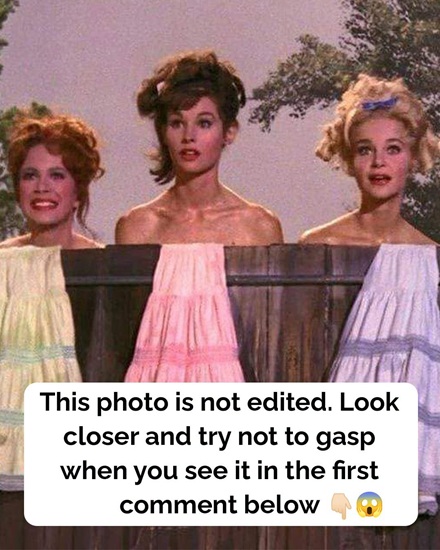
The title Petticoat Junction itself is part of the show’s playful mythology. The opening sequence famously associated the Bradley sisters with the railroad water tower, using their petticoats as part of a gently mischievous visual joke. Even the theme song participated in the humor, including references to the railroad and its curves that could be understood in more than one way. The opening established nearly everything viewers needed to know about the series within moments: a train, a rural destination, a hotel, Kate Bradley, Uncle Joe and the carefree atmosphere of Hooterville. Rather than beginning with an urban skyline or suburban house, the show announced itself with steam, tracks and countryside. That imagery distinguished it immediately from many other family sitcoms. It also made the opening one of the show’s most enduring pieces of nostalgia.
One of the pleasures of revisiting old television is noticing production details that were much easier to overlook when episodes were seen once a week. Cast replacements, recycled footage, changing props and differences between location photography and studio work can become obvious when episodes are watched consecutively. Petticoat Junction went through several major changes during its seven-year run, including its transition from black-and-white production to color. The first 74 episodes were produced in black and white, while the remaining 148 were in color. That transition alone created a clear visual dividing line in the history of the series. It also coincided with changes in performers and the continuing development of Hooterville’s fictional world.
The Hooterville Cannonball was not merely a studio invention. Location footage made use of genuine railroad equipment, including Sierra Railroad locomotive No. 3, a locomotive with an extensive screen career beyond Petticoat Junction. The same historic locomotive became familiar to generations of movie and television viewers through appearances in numerous productions. Studio work, meanwhile, could use constructed equipment and sets when filming aboard an actual moving locomotive was unnecessary or impractical. This mixture explains why careful viewers can sometimes detect differences in the appearance of the Cannonball from one type of shot to another. Television production required illusion, and the illusion only had to survive long enough to tell the week’s story. What viewers remembered was not the machinery behind the effect but the little train chugging toward the Shady Rest.
The train also reflected the changes occurring elsewhere in the series. Early episodes presented the Cannonball using the number associated with Sierra Railway No. 3, while later imagery could differ as the production evolved. More broadly, the program never treated railroad operation as a documentary subject. The Cannonball existed primarily to serve comedy and storytelling rather than to demonstrate historically exact railroad procedures. Travel times stretched or contracted, characters appeared where a script needed them, and the train could become the center of an adventure one week and little more than background scenery the next. That flexibility was part of the show’s whimsical tone. Hooterville followed the logic of a sitcom before it followed the logic of a railroad timetable.
Edgar Buchanan was perhaps the most reliable human presence in that world. As Uncle Joe Carson, he perfected a character who could become intensely energetic whenever a scheme promised money, prestige or an easier way to avoid ordinary labor. The theme song’s description of Uncle Joe as someone moving slowly became inseparable from the character. Yet Buchanan himself was remarkably hardworking when measured by the series’ production record. He was the only performer to appear in all 222 episodes of Petticoat Junction. Linda Kaye Henning came extremely close, missing only two episodes, while Frank Cady’s Sam Drucker was another major constant across the show’s seven seasons. The supposedly lazy Uncle Joe therefore became, in an amusing real-world contradiction, the most consistently present actor on the entire program.
Another beloved performer did not need dialogue at all. The dog seen around the Shady Rest was played by Higgins, an exceptionally successful canine actor who became famous well beyond Hooterville. Within Petticoat Junction, the animal was generally referred to simply as Dog, despite Higgins being his off-screen name. He appeared in a remarkable number of episodes and became involved in a recurring comic rivalry with Uncle Joe. Behind the scenes, the relationship was apparently much friendlier than the fictional one. Accounts of publicity photography describe Higgins sitting comfortably with Edgar Buchanan even though their characters were frequently at odds. The contrast made their on-screen feud even more amusing for those who knew what happened when the cameras were not filming a scene.
Higgins later achieved another level of fame through Benji, the hugely successful 1974 family film. That connection means a viewer discovering Higgins through Benji can look backward and find the same canine performer roaming around the Shady Rest years earlier. Benji was Higgins’ final acting role, and it was also Edgar Buchanan’s final feature-film appearance. It is a remarkable intersection between two pieces of family-entertainment history. Long before animal performers became surrounded by elaborate marketing campaigns, Higgins had already built an extraordinary screen résumé. His presence demonstrates how even a seemingly minor element of Petticoat Junction could develop a history extending far beyond the series itself.
The program also produced a genuine romance involving two members of its cast. Betty Jo Bradley eventually fell in love with Steve Elliott, played by Mike Minor, and their relationship became increasingly important as Betty Jo matured. Linda Kaye Henning and Minor also became romantically involved away from the cameras and married in real life. Their relationship gave viewers the unusual experience of watching performers portray a developing television romance while a real relationship was developing outside the fictional world. Betty Jo’s growth from one of Kate’s young daughters into a married woman and mother became one of the most substantial long-term character arcs on the series. It also helped Petticoat Junction evolve beyond the original premise of three unmarried sisters living at their mother’s hotel.
The actresses who almost became part of the Bradley family are another source of fascination, particularly Sharon Tate. Tate was considered for Billie Jo and participated in early publicity activity, but she ultimately did not play the character in the broadcast series. Jeannine Riley received the role when Petticoat Junction went into production. Over the years, various explanations have circulated about why Tate did not continue, including stories involving provocative photographs and concerns about the show’s family-friendly image. Those explanations should be treated cautiously because they are not established with the same certainty as the basic casting history. A more defensible account is simply that Tate was considered for the role but did not ultimately take it, with accounts also pointing to producer Martin Ransohoff’s view that she was not yet ready for such a central television part. Distinguishing documented history from long-repeated Hollywood legend is especially important when discussing a program more than six decades after its premiere.
Cast changes were not limited to the Bradley sisters. The Cannonball crew changed as well, sometimes because of circumstances far more serious than an actor simply pursuing another opportunity. Smiley Burnette, who played railroad man Charley Pratt, died in 1967. Rufe Davis, familiar to viewers as Floyd Smoot, consequently carried more of the railroad duties before additional changes were made. Byron Foulger later appeared as engineer Wendell Gibbs. In a sad coincidence, Foulger died on April 4, 1970, the same day CBS broadcast the final original episode of Petticoat Junction. Those losses remind modern viewers that the show’s seven seasons represented a substantial period in the lives and careers of the people who made it.
No loss affected Petticoat Junction more deeply than the illness and death of Bea Benaderet. Kate Bradley was not simply another member of an ensemble when the program began; she was its emotional and practical center. Benaderet was already a highly experienced performer before becoming Kate, with an extensive career in radio, television and film. Paul Henning had worked with her on The Beverly Hillbillies, where she appeared as Cousin Pearl Bodine, and Petticoat Junction finally gave her a starring television vehicle. Kate could be patient, firm, amused or exasperated depending on what her daughters and Uncle Joe had created that week. The character gave the series stability. When Benaderet’s health deteriorated, the writers faced the difficult problem of continuing a show whose central figure could no longer work regularly.
Benaderet had undergone medical treatment after doctors discovered lung cancer, and her illness increasingly interfered with production during the later seasons. She underwent surgery in 1967, but doctors found that the cancer could not be surgically removed, and radiation treatment followed. Her absence required the writers to find temporary explanations for Kate’s disappearance rather than immediately eliminating the character. The production continued to hope that Benaderet could return. For a period, she did return to work, allowing Kate to reappear at the Shady Rest. The situation nevertheless remained extremely difficult because her health was fragile. What audiences saw as changes in the fictional household were therefore connected to a very real medical crisis occurring behind the scenes.
One frequently repeated detail about Benaderet’s final episodes needs careful clarification. Her last physical appearance on Petticoat Junction was in the Season 6 episode “Only a Husband.” The following episode, “The Valley Has a Baby,” incorporated Benaderet’s voice, but she was not physically shown performing normally on camera. Linda Kaye Henning later remembered that Benaderet had become too ill to participate fully in the episode involving Betty Jo’s baby. The production found ways for Kate’s presence to remain part of the story even when Benaderet’s condition prevented regular filming. Knowing the circumstances makes those episodes considerably more poignant today.
Bea Benaderet died on October 13, 1968, at the age of 62. Her death created a problem that could not be solved simply by hiring another actress to play Kate Bradley. Kate was too closely identified with Benaderet, and replacing her directly would have fundamentally changed viewers’ relationship with the character. Instead, the series eventually introduced June Lockhart as Dr. Janet Craig. Lockhart was already well known to television audiences through programs including Lassie and Lost in Space. Janet could provide another mature and stabilizing presence around the Shady Rest without pretending to be Kate. Linda Kaye Henning later praised that approach, explaining that Lockhart’s character was a doctor rather than an attempt to duplicate the girls’ mother.
That distinction was important because the program had already changed significantly by the late 1960s. Betty Jo was now married, Steve Elliott had become part of the regular family circle, and the Bradley daughters were no longer simply the three young women introduced in 1963. The loss of Kate accelerated that evolution. Rather than freezing the series in its original form, the writers tried to build stories around the remaining characters and their changing relationships. Dr. Janet Craig brought a different kind of authority and independence to Hooterville. Uncle Joe remained Uncle Joe, of course, while Betty Jo’s marriage and motherhood gave Linda Kaye Henning more adult storylines. The result was recognizably Petticoat Junction, but it was not quite the same program viewers had first encountered.
The transformation of Betty Jo is particularly noticeable when the earliest episodes are compared with the later seasons. She began as the youngest Bradley sister and eventually became a wife and mother. Her relationship with Steve allowed the writers to explore marriage and domestic comedy without abandoning the familiar Shady Rest setting. Their daughter, Kathy Jo, added another generation to the Bradley family. This progression gave the series something many episodic sitcoms of the era did not always emphasize: visible passage of time. Characters could actually grow older and enter new stages of life. That growth also helped compensate for the repeated casting changes affecting Billie Jo and Bobbie Jo.
Yet continuity on Petticoat Junction was never completely rigid. Like many long-running television comedies, it occasionally contradicted earlier information or quietly abandoned story ideas. One particularly striking example occurred around the transition between the sixth and seventh seasons. The Season 6 ending
