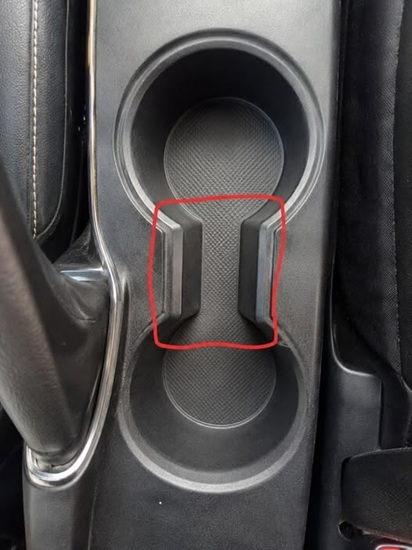
Most drivers spend years inside their vehicles without fully understanding how many subtle design choices are built into everyday features, especially around the center console and cup holder area. At first glance, the space between cup holders in many modern vehicles may appear accidental or purely aesthetic, but automotive design often prioritizes functionality, ergonomics, and driver convenience in small details like this.
In many cases, this narrow gap is not a single-purpose feature but part of a larger design system that helps accommodate different container sizes, shapes, and driving conditions encountered in real-world use. Car interior engineers carefully study how people interact with drinks, phones, keys, and small objects while driving, aiming to reduce distractions and improve accessibility without overcrowding the cabin layout.
Cup holders are designed with varying diameters and spacing because drivers use everything from small coffee cups to large insulated bottles, requiring flexible support to prevent tipping or sliding. The space between them can also help provide clearance for items with handles, such as travel mugs, ensuring they can sit securely without being forced into unstable or angled positions.
During driving, especially when braking or turning, liquids in open containers naturally shift, and properly engineered spacing helps minimize spills by keeping items more stable. However, it is important to note that not every gap or divider in a center console is a specialized feature; in some vehicle models, it simply reflects structural design or packaging constraints.
Automotive manufacturers often have to balance aesthetics, cost, storage capacity, and mechanical components beneath the console, meaning some spaces serve multiple technical purposes rather than a single function. In addition to holding beverages, the center console area is frequently designed as a secondary storage zone for small personal items that drivers need within easy reach.
Items such as coins, charging cables, parking tickets, or sunglasses are often temporarily placed in these areas because they reduce clutter compared to seats or dashboards. Designers aim to ensure that these compartments reduce distraction by giving drivers predictable places to store commonly used objects without searching while driving.
While marketing materials rarely highlight these small engineering choices, they are often the result of extensive testing, prototyping, and user behavior analysis conducted by automotive design teams. Ergonomics plays a key role in shaping the interior layout, ensuring that frequently used areas remain accessible without requiring drivers to shift posture or take attention away from the road.
Even minor details such as texture, friction surfaces, and spacing are tested to ensure that objects remain stable during acceleration, braking, and cornering conditions. The overall goal of modern vehicle interior design is not only comfort but also safety, ensuring that drivers can interact with essential items while minimizing unnecessary movement or distraction.
In this context, even a simple-looking divider or gap can be part of a carefully considered system rather than an unused or accidental space. Understanding these design principles helps drivers appreciate how much engineering effort goes into making everyday driving smoother, more organized, and more intuitive.
Rather than being a mysterious or hidden “trick,” most of these features are the result of incremental improvements in automotive usability over many years of development. While not every vehicle uses identical center console designs, the general principles of accessibility, stability, and multifunctional storage are consistent across many manufacturers.
Ultimately, small interior details like cup holder spacing demonstrate how practical design solutions often go unnoticed because they function seamlessly in the background. By recognizing these elements, drivers can better understand how their vehicles are optimized for real-world use, even in areas that initially seem simple or insignificant. This awareness does not change how a car operates, but it can change how drivers perceive everyday convenience and the thoughtful engineering behind familiar driving environments.
