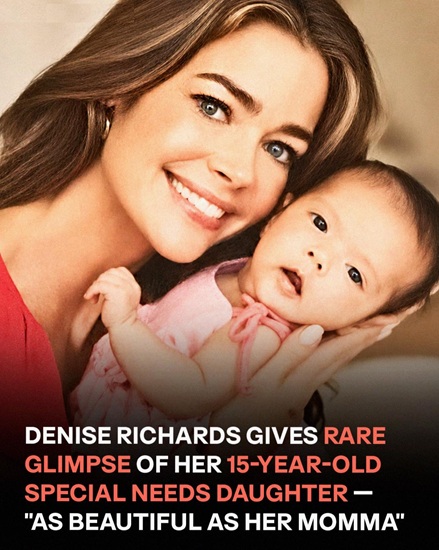
Denise Richards has recently shared a deeply personal reflection on her daughter Eloise, offering insight into the emotional realities of raising a child with special needs as she enters her teenage years. As Eloise turned 15, Richards marked the occasion with a heartfelt message, describing both pride in her daughter’s growth and growing concern about what the future may hold for her.
The actress, known for her work in television and film as well as her role on The Real Housewives of Beverly Hills, has often spoken about family, but this recent message carried an especially emotional tone. Richards explained that each milestone birthday brings mixed emotions, as it highlights both how far Eloise has come and the challenges she continues to face in daily life.
She shared that certain typical adolescent milestones, such as driving or increased independence, may not be part of Eloise’s future due to her developmental condition. Alongside the celebration of Eloise turning 15, Richards also noted another significant family milestone approaching, as her daughter Lola was also entering a major new stage of adulthood.

This overlap of birthdays made the passage of time feel especially intense for Richards, who described feeling both grateful and overwhelmed by how quickly her children are growing. In her message, Richards reflected on the emotional weight that often comes with parenting a child with special needs, particularly as long-term planning becomes more uncertain.
She has previously explained that Eloise was adopted in 2011 after a lengthy and emotional process that included several setbacks before she was finally able to bring her daughter home. Eloise was later diagnosed with a rare chromosomal condition, which affects development and communication, though Richards had noticed early signs that her daughter was developing differently.
From infancy, Eloise experienced delays in reaching milestones such as sitting, walking, and speech development, requiring early intervention and ongoing support. Over time, Richards has described her daughter as primarily nonverbal, while emphasizing that Eloise remains highly perceptive and emotionally aware of her surroundings.

Despite communication challenges, she often responds strongly to emotional cues and shows clear recognition of family members and close relationships. Richards has frequently shared that Eloise possesses a gentle and affectionate personality, often expressing joy in simple, everyday moments. She has described situations where Eloise appears to sense emotional tension in the family and responds in ways that help bring comfort or calm to others.
These observations have shaped how Richards speaks about her daughter publicly, focusing not only on challenges but also on her personality and strengths. Eloise’s older sisters, Sami and Lola, have also remained closely involved in her life, forming a strong family bond that Richards often highlights. According to Richards, both sisters share a deep connection with Eloise and actively include her in daily activities and family routines.

The family has been open about how important consistency, support, and emotional closeness are in maintaining stability for Eloise as she grows older. Richards has also expressed gratitude toward family members and caregivers who help support Eloise’s development and daily needs. In interviews and social media posts, she has occasionally shared moments from Eloise’s life, including hobbies, outings, and small achievements that hold special meaning for the family.
These glimpses often highlight ordinary experiences such as school activities, therapy sessions, or family outings that reflect Eloise’s personality and interests. Richards has emphasized that while medical and developmental challenges exist, Eloise continues to bring joy and meaning to her family’s life.
She has also spoken about the importance of focusing on abilities rather than limitations, encouraging a perspective centered on understanding and acceptance. As Eloise enters her teenage years, Richards has acknowledged that future planning becomes increasingly complex, especially regarding long-term independence and care.

These concerns are common among parents of children with developmental differences, who often balance hope, uncertainty, and daily caregiving responsibilities. Despite these challenges, Richards consistently describes Eloise as a source of happiness, resilience, and emotional grounding within their household. Public reactions to Richards’ openness have been largely supportive, with many people expressing empathy for families navigating similar experiences.
Her story has also helped raise awareness about chromosomal conditions and the varied ways they can affect development and communication. Ultimately, Richards’ reflections emphasize both the emotional challenges and the deep bond between a mother and her child, especially in the context of lifelong care and unconditional love.
