The Whittaker family of Odd, West Virginia, has attracted extraordinary online attention, but much of what circulates about them is mixed with sensational language, incomplete genealogy, and assumptions about disability. Photographer and filmmaker Mark Laita first encountered members of the family while working on his Created Equal portrait project in the early 2000s and later filmed them for his Soft White Underbelly channel. His videos became widely viewed beginning around 2020.
The frequently repeated description of the Whittakers as “America’s most inbred family” is a media and internet label rather than an official medical or scientific designation, and it should be understood that way. The family lives in Odd, an unincorporated community in Raleigh County in southern West Virginia. Laita’s recordings introduced millions of viewers to relatives including Betty, Ray, Lorene, Timmy, Larry, and other members of their extended family.
Some family members have intellectual, developmental, or physical disabilities, while others communicate more conventionally. Public fascination has often centered on the family’s genealogy, but disability in any individual person should not automatically be attributed to one cause without medical evidence specific to that person. Close biological relationships between parents can increase the probability of certain recessive genetic conditions, but that general fact is different from diagnosing particular relatives from photographs or videos.

Genealogical records do support a history of close-relative marriages within earlier generations of the family. Available family-history records identify John Isom Whittaker and Henry Wade Whittaker as twin brothers. Gracie Irene Whittaker, a daughter in one branch of the family, later married John Emory Whittaker from the other branch in 1935. Genealogical sources identify the couple as first cousins because their fathers were brothers, although internet descriptions sometimes use terms such as “double cousins” when discussing the genetic closeness created by the twin relationship. Sources differ on some details, including the precise number of children in particular branches, so those figures should not be repeated as absolute fact without qualification.
That distinction matters because the Whittakers’ story has repeatedly been simplified into a dramatic family tree shared across social media. Genealogical records are not always complete, and different websites list different totals for children and relatives. What can reasonably be stated is that close-relative marriages occurred in previous generations and that this family history became a central subject of Laita’s interviews. It is less responsible to take every online family-tree graphic as definitive or to claim that every health or developmental difference seen in a family video can be traced to a single genetic cause.

Laita’s work also changed the family’s relationship with the outside world. His Soft White Underbelly page describes the Whittakers as a family from Odd, West Virginia, and at various times he used his audience to raise money intended to improve their living conditions. His videos showed their home, daily routines, family conversations, and trips outside the property. The attention brought donations and offers of assistance, but it also exposed relatives who had previously lived relatively privately to millions of strangers online.
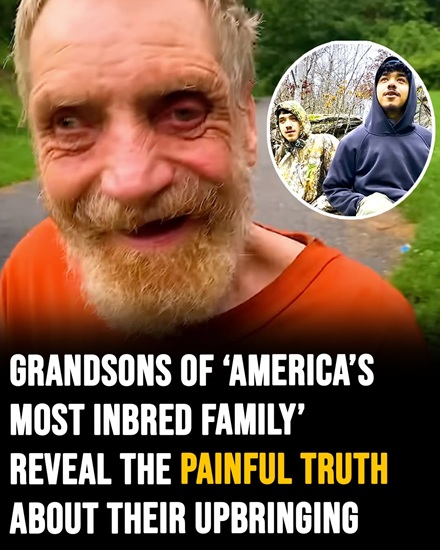
That exposure had another side. Members of the family have described strangers coming to the property simply to look at them, film them, or provoke a reaction. Larry Whittaker’s grandsons Brandon and Luis later discussed what it was like growing up around the family and dealing with the attention their relatives received. Their comments provide a perspective that is quite different from the curiosity often found in viral videos about the Whittakers.
According to reporting based on their interview with Laita, one of the grandsons described childhood becoming difficult when he was around five or six years old. He said he entered foster care at six and spent his seventh birthday there. After leaving foster care, he said he was not initially permitted to return to the family property or see his grandfather. These are personal recollections given by the family members themselves and should be presented as their accounts rather than independently proven descriptions of every aspect of their childhood.

The brothers also discussed serious instability involving adults around them. One account described a confrontation in which Larry allegedly tried to shoot one of their stepfathers after the man was accused of abusing their mother. Because these are allegations recounted retrospectively in an interview, they should not be transformed into established criminal findings without supporting court or police records. What their testimony does clearly communicate is that they remember their childhood as containing family conflict, foster care, and periods when they felt they had to become independent at a very young age.
Interestingly, the brothers did not describe every memory of life around the Whittaker property negatively. Brandon reportedly said that living at the family home itself could be enjoyable and recalled activities such as fishing with his relative Freddie. That detail is important because it prevents the story from becoming a simplistic portrayal in which every aspect of the family’s life is assumed to have been miserable. Families can experience affection, ordinary routines, and happy memories while simultaneously dealing with poverty, disability, instability, or other significant challenges.
What appears to have been especially frustrating was the arrival of outsiders after the family became well known online. Brandon recalled cars coming down toward the property and people “messing around.” He said that as a younger person he sometimes reacted by throwing things such as rocks, sticks, potatoes, or eggs toward visitors. His description gives context to behavior that might otherwise appear inexplicable. From his perspective, the family home had become something strangers treated as a tourist attraction rather than a private residence.
This raises a broader ethical issue surrounding viral documentary content. People featured in popular videos remain real individuals after viewers close their browser or move on to another story. A documentary can bring financial assistance and public awareness, but widespread exposure can also produce unwanted visitors, ridicule, harassment, and a loss of privacy. The Whittakers’ relatives have repeatedly described experiencing both sides of that attention.
The family’s circumstances changed again in 2025. Reports published that November said Ray, Lorene, and Timmy had been removed from their home and placed under state guardianship or protective supervision. Remaining relatives, including Betty and Larry, told journalists that they had received little information about where their family members had been taken. Authorities did not publicly disclose detailed information, citing the confidentiality surrounding adult protective-services matters.
Betty and Larry expressed sadness and confusion over the separation. Reports quoted them saying they missed their relatives and wanted information about how they were doing. Claims that the removal occurred specifically because of internet fame should be treated as the relatives’ interpretation unless authorities confirm the cause. The publicly available information establishes that an intervention occurred, while the precise reasons and assessments involved remain restricted by privacy protections.
The family also became connected to a separate dispute involving money raised in their name. In late 2025, West Virginia State Police were reported to be investigating allegations concerning donations intended for the Whittakers. Two men associated with online fundraising denied wrongdoing and offered competing accounts about what happened to the funds. Because that matter involved an investigation and disputed allegations, no individual should be described as having stolen money unless such wrongdoing is ultimately established through reliable evidence or a legal finding.
These later developments demonstrate how complicated the consequences of internet fame can become. The Whittakers originally attracted attention because viewers were curious about their family history and living conditions. That curiosity eventually expanded into millions of views, fundraising campaigns, strangers visiting their property, questions about guardianship, and disputes over money supposedly collected to help them.
It is also worth reconsidering the language frequently used to describe this family. Headlines emphasizing “inbreeding,” unusual appearance, or communication differences may attract clicks, but family members are not medical curiosities. Some have disabilities and require assistance; others do not. Their dignity does not depend on whether viewers find their family history unusual. Describing observable facts accurately is possible without mocking their appearance, speech, economic circumstances, or intellectual abilities.
The genetics involved also deserve accuracy. Consanguinity—having children with a close biological relative—can increase the chance that two parents carry the same recessive genetic variant inherited from a common ancestor. If both carry such a variant, their children can have a higher probability of inheriting the associated condition. That scientific principle explains why repeated close-relative relationships can increase certain genetic risks across generations, but it does not permit strangers to diagnose individual Whittaker family members based solely on a video.
The grandsons’ testimony may ultimately be one of the more valuable additions to the public record because it shifts attention away from simply staring at the family. Their memories describe children dealing with foster care, complicated adult relationships, periods of instability, and later the strange experience of outsiders arriving to observe their relatives. At the same time, they also remember ordinary family moments and relationships that mattered to them.
Their account therefore complicates the internet caricature surrounding the Whittakers. The story is not simply about an unusual genealogy. It is also about poverty, disability, childhood experiences, family loyalty, privacy, and what happens when an isolated household suddenly becomes entertainment for a global audience.
Mark Laita’s photographs and videos unquestionably played a major role in bringing attention to the Whittakers. They also created opportunities for viewers to provide assistance. But the attention demonstrates why documentary subjects should continue to be treated as people rather than characters after a video goes viral. Curiosity does not create a right to enter someone’s property, harass relatives, or treat a private home as an attraction.
The latest chapters of the Whittakers’ story remain incomplete. Some relatives have been placed away from the original property, questions surrounding donations have prompted investigation, and family members have publicly expressed uncertainty about what will happen next. Where official information is unavailable because of privacy protections, speculation should not be substituted for fact.
What Brandon and Luis have added is a perspective that headlines rarely provide: what it felt like to grow up around the people who later became an internet phenomenon. Their recollections show that the consequences of publicity are not limited to view counts. They can enter a family’s home, alter relationships with strangers, and affect younger generations who never chose to become part of a viral story.
Ultimately, the Whittakers’ history is best approached with accuracy rather than sensationalism. Their documented genealogy contains close-relative marriages, and members of the family have faced significant challenges. But the people seen in these videos also have individual histories, relationships, memories, and a right to dignity. The grandsons’ comments serve as a reminder that behind one of the internet’s most recognizable family stories are real people who have experienced both the assistance and the painful consequences that can accompany worldwide attention.
