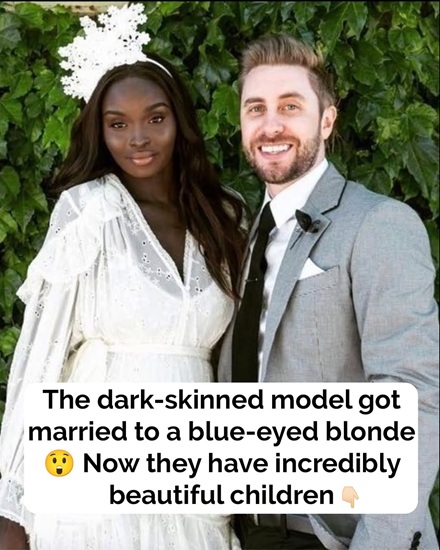
Long before millions of people knew their names, Nikki Thot and Jamie Perkins were simply two people who had met online. The platform was MySpace.
For anyone who remembers the early years of social media, that detail alone places their story in a very different era.
There were no TikTok couples.
Instagram had not yet become a central part of everyday life.
YouTube family vlogging was still developing.
And nobody involved could have known how much of their future would eventually unfold in front of strangers.
Nikki and Jamie first connected through mutual friends on MySpace around 2009.
They initially built a friendship through messages.
At the time, Nikki was pursuing modeling.
Jamie was working creatively with photography and video.
Their lives were moving in different directions.
But they stayed in contact.
Nikki later spent time in New York pursuing modeling opportunities.
She worked with agencies including IMG New York and Chic Management.
Jamie remained part of her life while her career was developing.
Their friendship gradually became a relationship.
Then, several years after they had first connected online, Jamie began planning something much bigger.
He wanted to propose.
But he did not want an ordinary proposal.

Nikki enjoyed watching elaborate proposal videos online.
Jamie knew that.
So he created one of his own.
On April 26, 2012, he arranged for a video to appear on a large screen at Melbourne’s Federation Square.
Nikki sat watching.
Then Jamie appeared.
A friend recorded the moment.
The original idea was relatively simple.
Upload the video so family and friends could see it.
But something unexpected happened.
People outside their family began watching too.
Then more people arrived.
The proposal video spread far beyond the audience they had imagined.
Millions eventually watched it.
And suddenly strangers wanted to know more about the couple behind the video.
That curiosity helped create the next chapter.

Jamie and Nikki began sharing more of their lives online.
What started with a proposal became a growing YouTube presence.
Their relationship became content.
Their routines became episodes.
Their milestones became videos.
And the audience kept growing.
Jamie later explained that becoming vloggers had not been some carefully designed business plan.
They had essentially fallen into it after the proposal attracted so much attention.
That detail is important.
Today, building a family channel can be an intentional career strategy.
For Jamie and Nikki, the audience appeared first.
The career developed afterward.
Less than a year after the proposal, the couple married.
Their wedding took place on March 21, 2013.
Naturally, cameras were there too.
The wedding video became another enormous success online.
By 2017, reports said it had been viewed more than seven million times.
The proposal video had also accumulated millions of views.
Their private milestones had become public entertainment.
And yet Jamie said at the time that they still kept parts of their lives private.
That distinction would later become much more important.
For several years, the public image was straightforward.
Jamie and Nikki appeared to be a young married couple building a life together.
Their videos were carefully produced.
There were vacations.
Daily routines.
Funny moments.
Relationship milestones.
Home life.
And eventually, children.
On January 24, 2016, Nikki gave birth to their first daughter, Ava Sarah.
A new phase of the channel began.
The couple was no longer documenting only marriage.

They were documenting parenthood.
Viewers who had watched the proposal could now watch them become parents.
Ava appeared in family content.
Her milestones became part of the channel’s ongoing story.
Then, on March 29, 2018, the family grew again.
Their second daughter, Zoe Reign, was born.
By then, Jamie and Nikki were firmly established as family creators.
Their household also included their dog, Louis.
The channel presented something viewers found easy to follow.
A relationship that had started online.
A viral proposal.
A wedding.
A first baby.
Then a second.
For many subscribers, it felt almost like watching a television family in real time.
Except these were real people.
That distinction could sometimes become blurred.
One reason Nikki attracted particular attention was her background.
She was born in Khartoum, Sudan, in 1990.
Her family later relocated to Australia, and she grew up in Melbourne.
She has spoken publicly about growing up in a family that valued education, privacy, and hard work.
Her path into modeling was not necessarily the conventional professional future her family had imagined for her.
But modeling became her career.
Then social media created another one.
Nikki later told BuzzFeed that growing up, she had not constantly thought about being different because of her skin color.
She said she had not generally been bullied over it during childhood.
That experience shifted once she became publicly visible online.
Her skin color increasingly became a subject for strangers to discuss.
So did her interracial relationship with Jamie.
Suddenly, aspects of her identity that had not dominated her childhood became recurring topics in comment sections.
Some comments were positive.
Others were intrusive.
And some were openly hostile.
Nikki noted a noticeable difference between audiences on different parts of her online presence.
Family-channel viewers often responded positively to the diversity of the family.
Her beauty content could attract harsher comments.
The larger the audience became, the less control the couple had over what strangers decided to discuss.
Their relationship.
Their appearances.
Their daughters.
Their backgrounds.
Even ordinary encounters occasionally reflected assumptions people made about the family.
Jamie once described a situation in which a doctor apparently asked how he knew Ava rather than immediately assuming he was her father.
Jamie did not characterize the incident simply as racism.
He described it more as a confronting reminder that people sometimes made assumptions about their family based on appearance.
Those experiences became part of a much broader reality.
The family was visible.
Very visible.
And visibility has a cost.
At first, it can feel exciting.
Millions of views mean opportunity.
A growing audience can become a career.
Brands may become interested.
Advertising revenue becomes possible.
Creative work that once seemed like a hobby can support a household.
But an audience also remembers.
People notice changes.
They analyze body language.
They compare old videos with new ones.
They speculate when someone stops appearing.
And they begin asking questions long before anyone involved is ready to answer.
That became especially important in 2019.
From the outside, viewers were accustomed to seeing a polished family channel.
Behind the camera, something had changed.
In August 2019, Nikki publicly confirmed that she and Jamie had separated.
She indicated that she had moved out months earlier.
For longtime followers, the news was jarring.
The couple had been married for approximately six years.
Viewers had watched much of that marriage unfold online.
Yet the relationship had ended largely outside public view.
That alone exposed one of the biggest misconceptions surrounding family vloggers.
Seeing hundreds of hours of someone’s life is not the same as knowing their entire life.
A camera can capture breakfast.
A birthday.
A holiday.
A wedding anniversary.
A family outing.
It does not automatically capture every disagreement.
Every difficult conversation.
Every private fear.
Every problem.
Jamie had spoken years earlier about this exact distinction.
People assumed vloggers shared everything.
But, he said, they did not.
At the time, that comment sounded like a simple explanation of privacy.
After the separation, it carried a different meaning.
The happy videos had been genuine moments.
But they had never been the complete marriage.
No public video could be.
After the separation, the joint family image gradually disappeared.
The couple began living separate lives.
Their daughters remained the connection between them.
And for several years, many details about the end of the marriage remained largely private.
That did not stop speculation.
Online audiences rarely tolerate an information vacuum.
Rumors appeared.
People chose sides.
Old videos were reexamined.
Followers searched for signs they believed they had missed.
Yet there was still no responsible basis for outsiders to claim they knew exactly why the marriage had ended.
Then came 2023.
And the private conflict became far more public.
By that point, reports indicated that the divorce had been finalized.
Jamie published a long YouTube video discussing his version of what happened during the marriage and separation.
He made serious allegations.
Among other things, he accused Nikki of infidelity and abusive behavior.
He also publicly discussed mental-health difficulties that he said he had experienced following the relationship.
Those were Jamie’s claims.
They should be described exactly that way.
Claims.
Allegations.
His account of the marriage.
They should not be rewritten as established facts simply because they appeared in a video.
Nikki responded publicly as well.
She strongly disputed his account.
She denied cheating on Jamie.
She accused him of trying to damage her reputation and said his presentation blamed her for everything that had gone wrong.
She also made claims of her own about problems within the marriage.
Again, those statements represent her account.
Not a court ruling.
Not an independently established version of every private event.
By late 2023, an audience that had once watched wedding videos was now watching two former spouses publicly disagree over what their marriage had actually been like.
The contrast was striking.
Years earlier, millions had watched Jamie’s elaborate Federation Square proposal.
Then they watched the wedding.
Then the children.
Then family life.
Now some of those same viewers were watching a breakup narrative unfold.
It would be tempting to describe that transition as proof that the original relationship had always been fake.
But that conclusion would be too easy.
A marriage can contain happy periods and still end painfully.
A family can share genuine positive moments online and still experience serious problems privately.
People change.
Relationships change.
Circumstances change.
And edited videos inevitably show only portions of a much larger life.
That may be the most revealing part of the Jamie and Nikki story.
Not that a seemingly happy couple divorced.
Many marriages end.
The unusual part was that millions of people believed they had witnessed the relationship closely enough to understand it.
In reality, they had witnessed content.
Often personal content.
Often emotionally genuine content.
But still content.
A camera captures what is placed in front of it.
Editing decides what remains.
Uploading decides what becomes public.
Everything else stays outside the frame.
Until someone chooses to reveal it.
The couple’s rise also highlights the complicated experience of raising children in a family-vlogging era.
Ava and Zoe appeared in content from very young ages.
Their childhood milestones formed part of a successful family channel.
At the time, that kind of content was becoming increasingly common.
Families around the world were building enormous audiences by sharing everyday parenting.
But attitudes toward children’s digital privacy have become more complicated over time.
A baby cannot meaningfully understand what it means for millions of strangers to know her name.
A toddler cannot predict how childhood videos might circulate years later.
A young child cannot fully decide what should remain searchable when she becomes a teenager or adult.
Those questions apply broadly to family creators.
They are not unique to Nikki and Jamie.
But their story provides a clear example of how quickly circumstances can change.
A video uploaded during a happy marriage remains online even if the marriage later ends.
The children in those videos continue growing.
The parents’ relationship changes.
The audience still has access to the past.
That makes privacy increasingly difficult to reconstruct once it has been surrendered.
It also makes the daughters’ current lives especially deserving of restraint.
Ava was born in January 2016.
Zoe was born in March 2018.
As of September 2026, Ava is 10 and Zoe is 8.
They are children.
Their parents’ public history does not make every part of their lives public property.
That point matters especially when websites promise dramatic updates about “how the children look now.”
Appearance is not the meaningful part of their story.
Nor should children’s looks be treated as a spectacle because their parents have different ethnic backgrounds.
They are individuals growing up.
They did not create the viral proposal.
They did not choose the family channel.
They did not choose the separation.
And they did not choose the accusations that appeared years later.
That responsibility belongs to adults.
The more responsible question is not whether the girls remain “beautiful” according to strangers online.
It is whether their privacy and stability can be protected while they grow up.
The same principle applies to Nikki’s appearance.
Much of the early fascination surrounding the couple focused heavily on their interracial relationship.
Jamie’s blond hair and light complexion were constantly contrasted with Nikki’s dark skin.
Their daughters’ appearance then became another subject of fascination.
But treating interracial families primarily as visual curiosities can reduce real people to racial contrasts.
Their story is more substantial than that.
Nikki had a modeling career.
Jamie had a background in video production.
They met through one of the earliest major social-media platforms.
They built a relationship over several years.
A creative proposal unexpectedly became viral content.
That viral moment created a career.
The career changed how their family lived.
Two children were born into a household already being watched by millions.
Then the marriage ended.
Years later, both former partners publicly presented sharply conflicting versions of what had gone wrong.
That is enough of a story without turning skin color into the headline.
There is also another correction worth making.
Some recycled versions of the story claim the viral proposal received 4.6 million “likes” and the wedding eight million “likes.”
Contemporary reporting more reliably describes those figures as millions of views, not millions of likes.
By September 2017, the wedding video had reportedly exceeded 7.2 million views, while the proposal had surpassed four million.
That may seem like a minor wording difference.
It is not.
A healthily sourced article should not turn views into likes simply because the larger-sounding statistic makes the story more impressive.
The videos were already extraordinarily popular.
They do not need exaggerated metrics.
The same standard should apply to the divorce.
Jamie’s accusations were serious.
Nikki’s response was serious.
Neither needs to be embellished.
The factual position is simpler.
They separated in 2019.
Their divorce was finalized years later, reportedly in 2023.
Jamie later made public allegations about the marriage.
Nikki disputed his account and denied the infidelity allegation.
There is no responsible reason for an outside article to decide which disputed private allegations are true without stronger evidence.
That restraint may make the story less sensational.
It also makes it more accurate.
And accuracy changes the final payoff.
At first, Jamie and Nikki’s story looks like a classic rise-and-fall narrative.
Two people meet.
They fall in love.
A romantic proposal goes viral.
They marry.
Millions follow them.
They become parents.
Then everything collapses.
But that framing still misses something.
Their story is also about what happens when private life becomes public history.
A proposal that would once have existed only in family memories became a video seen by millions.
A wedding became permanent online entertainment.
Pregnancy became content.
Parenthood became content.
Family routines became content.
Then separation became public curiosity.
And eventually, private accusations became content too.
The same audience was present for almost every phase.
That is the strange continuity.
The relationship changed completely.
The camera remained.
In the beginning, the camera preserved joyful memories.
Later, online platforms became places where competing accounts of the marriage were presented.
Technology did not cause every problem in the relationship.
There is no evidence for such a simplistic claim.
But technology unquestionably changed how the relationship was experienced by outsiders.
Most marriages end privately when they end.
Jamie and Nikki had to deal with the expectations of people who had spent years emotionally investing in their family.
That does not mean those viewers were entitled to answers.
But it explains why silence became difficult.
Millions of people believed they knew the couple.
Then they discovered how little they actually knew.
And perhaps that is the most useful lesson hidden beneath the viral proposal, the beautiful wedding video, the family channel, and the eventual breakup.
Social media can show real happiness.
It can show genuine affection.
It can preserve extraordinary memories.
But it can never show an entire relationship.
The image on the screen is a window.
Not the whole house.
Jamie Perkins and Nikki Thot once built a career by allowing millions of people to look through that window.
For years, the view appeared warm and carefully composed.
Later, both former partners described a far more complicated reality behind it.
Their accounts do not fully agree.
They may never agree publicly.
And outsiders should be cautious about pretending they can resolve private disputes they did not witness.
What is known is enough.
They met in the early social-media era.
Their relationship grew from MySpace messages into a real-world partnership.
Jamie’s 2012 proposal went viral.
They married in 2013.
Ava arrived in 2016.
Zoe followed in 2018.
The couple separated in 2019.
Years later, their divorce was finalized and their disagreements became public.
Today, the marriage belongs to the past.
The videos remain part of internet history.
And the daughters who once appeared as babies in family vlogs are now school-age children deserving the same thing every child deserves.
The freedom to grow without being permanently defined by their parents’ breakup.
That may be the part worth remembering longest.
The viral proposal made strangers interested in Nikki and Jamie.
The family channel kept them watching.
The separation made people wonder what had really happened.
But the final answer is not hidden in an old vlog or a dramatic accusation.
It is simpler.
What viewers saw was only ever part of a much larger life.
And sometimes the most important part of a story is the part the camera never captured.
