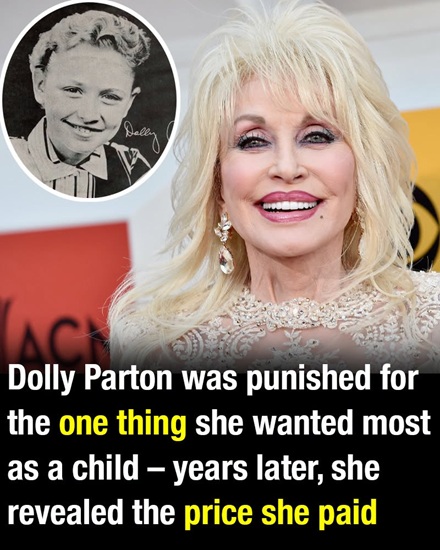
Dolly Parton, one of the most recognizable and influential figures in country music history, died on August 25, 2026, at the age of 80. Her death brought an outpouring of tributes from admirers, musicians, entertainers and people who had been touched by her charitable work around the world. Parton spent more than six decades building a career that extended far beyond country music, becoming a songwriter, actress, entrepreneur, author and philanthropist.
Yet the remarkable scale of her success was especially striking when compared with the modest circumstances in which her life began. She grew up in a large family in rural East Tennessee, where money was scarce and everyday life required resourcefulness and hard work. Those beginnings remained an important part of the story she told through her songs and public life. Her journey from the mountains of Tennessee to international fame became one of the most celebrated success stories in American entertainment.
Dolly Rebecca Parton was born on January 19, 1946, in Sevier County, Tennessee, and was one of 12 children in the Parton family. Her father, Robert Lee Parton, worked as a farmer and construction worker and was known within the family as an exceptionally hardworking man. He had little formal education and could not read or write, something Dolly later said influenced one of the most important charitable projects of her life.
Her mother, Avie Lee Owens Parton, brought music, storytelling and faith into the family’s home and raised the children while managing the enormous responsibilities of such a large household. The family lived with very limited financial resources in the mountains of East Tennessee. Instead of trying to erase that history after becoming famous, Dolly repeatedly incorporated memories of her childhood into her music and storytelling. Poverty was part of her upbringing, but she also remembered the home as a place filled with music, imagination and family bonds.
Life in the Parton household was dramatically different from the glamorous world Dolly would eventually inhabit. The family’s small home offered few of the conveniences that many American households already considered ordinary. With 12 children, space and privacy were naturally limited, and Dolly often described sharing beds and living quarters with her siblings. The children learned to make use of what was available and to find entertainment in their surroundings rather than relying on expensive possessions.
Dolly later spoke openly about the practical difficulties that came with growing up without much money. At the same time, she resisted reducing her childhood to a simple story of misery or deprivation. She frequently emphasized that wealth and happiness were not necessarily the same thing. The affection, music and sense of belonging she experienced at home became emotional resources that remained with her throughout her life.
Her childhood memories eventually provided material for some of her most enduring songs. One of the most famous examples was “Coat of Many Colors,” inspired by a coat her mother made from pieces of fabric. Rather than hiding the family’s financial difficulties, Dolly transformed the experience into a song about love, dignity and the value of something made with care. The song became one of the clearest examples of her ability to turn a personal memory into a story understood by people who had never lived anything like her childhood.
That talent would become a defining characteristic of her songwriting. She could take ordinary experiences involving family, relationships, hardship or hope and make them emotionally universal. Her songs rarely required complicated explanations because their emotional ideas were immediately recognizable. That storytelling ability helped distinguish her from countless other talented singers competing for attention in Nashville.
Music surrounded Dolly long before the recording industry knew her name. Her mother’s side of the family included musical relatives, and singing was a regular part of family and church life. Dolly showed an interest in performing and songwriting while she was still a child and began creating songs at a remarkably young age. Her uncle helped encourage her musical ambitions and gave her an early guitar, providing her with another way to develop her songwriting.
By the time many children were only beginning to imagine what they might want to become, Dolly had already formed a remarkably clear picture of her future. She wanted to write songs, perform and reach audiences beyond the Tennessee mountains. That confidence did not guarantee success, but it gave her a direction that she followed with unusual determination. Music was not simply a childhood hobby for her; she increasingly treated it as the work she intended to pursue for the rest of her life.
Her ambitions soon moved beyond performances for relatives and church congregations. Dolly appeared on local radio and television while she was still young, gradually learning what it meant to perform for audiences outside her immediate community. At 13, she recorded an early single and appeared at Nashville’s Grand Ole Opry, an institution that represented the heart of country music. Johnny Cash introduced her during that appearance, providing the young performer with an unforgettable moment early in her career.
These opportunities gave her experience, but they did not make success inevitable. Nashville was filled with singers and songwriters hoping to establish careers, and talent alone could not guarantee that anyone would be noticed. Dolly nevertheless continued developing her craft while finishing school. Her long-term plan remained remarkably consistent: when she graduated, she intended to go directly to Nashville and pursue music professionally.
After graduating from high school in 1964, Dolly moved to Nashville. She was 18 years old and entering an industry that could be particularly difficult for young women seeking creative and business independence. Songwriting initially provided an important route into the professional music world. Instead of relying entirely on her voice or appearance, she demonstrated that she could create songs with strong narratives, memorable melodies and emotional depth.
Her songwriting ability became one of the foundations on which the rest of her career was built. Record companies did not immediately understand exactly how to market her, and some early attempts to position her as a pop performer failed to produce the breakthrough she wanted. Dolly continued pushing toward the country music she understood instinctively. Once she was given greater opportunity to work within that tradition, audiences began responding.
Her debut album, “Hello, I’m Dolly,” arrived in 1967 and helped introduce her more fully to country audiences. Around the same period, television personality and country singer Porter Wagoner invited her to become part of his popular television program. Their professional partnership dramatically increased Dolly’s visibility and exposed her to a national country music audience. They recorded numerous duets together, and the collaboration played an important role in the early development of her career.
However, Dolly’s ambitions eventually extended beyond being identified primarily as Wagoner’s duet partner. She wanted an independent career built around her own songwriting, recordings and creative decisions. Leaving that partnership was emotionally and professionally complicated. Dolly responded in the way she often did when confronted with powerful emotions: she wrote a song.
That song was “I Will Always Love You,” written as a farewell to Wagoner as Dolly prepared to pursue her career independently. The recording became a country hit and demonstrated her remarkable ability to express separation without turning it into bitterness. Years later, Whitney Houston recorded a dramatically different version for the 1992 film “The Bodyguard,” transforming the composition into an enormous international pop hit.
Houston’s recording introduced Dolly’s songwriting to millions of listeners who might never have followed country music. Dolly’s decision to retain control of her songwriting rights also became an important example of her business instincts. She understood that songs were not merely performances but valuable intellectual property that could continue generating opportunities decades after they were written. The worldwide success of “I Will Always Love You” demonstrated just how important that principle could become.
Another song that became inseparable from Dolly’s name was “Jolene.” Released in the 1970s, the song used a strikingly simple situation to create extraordinary emotional tension. Instead of attacking the woman she viewed as a romantic threat, the narrator pleaded directly with her, creating vulnerability rather than conventional confrontation. The song’s melody, repetition and storytelling helped it become one of the most recognizable recordings in country music.
Over the following decades, musicians from numerous genres recorded their own interpretations of “Jolene.” Younger generations repeatedly discovered the song through covers, television appearances, films, streaming platforms and social media. Its continued popularity demonstrated that Dolly’s strongest songwriting could survive dramatic changes in musical fashion. “Jolene” became more than a successful country single; it became part of international popular culture.
By the late 1970s and early 1980s, Dolly had successfully expanded beyond traditional country audiences. Her music increasingly crossed into the pop market without completely abandoning the identity that had made her successful. The crossover brought larger audiences, television appearances and new opportunities in entertainment. Some country traditionalists questioned the shift, but Dolly continued making decisions according to her own ambitions.
She had spent years being underestimated because of her appearance and personality, yet behind the elaborate costumes was a performer with a clear understanding of her career. She knew that expanding into different areas did not necessarily require abandoning where she came from. That balance between reinvention and continuity would become one of her greatest professional strengths. She could change formats, audiences and industries while remaining unmistakably Dolly Parton.
Her transition into film produced another defining moment when she starred alongside Jane Fonda and Lily Tomlin in the 1980 comedy “9 to 5.” Dolly played Doralee Rhodes and proved that her charismatic personality could work on the movie screen as effectively as it did on a concert stage. She also wrote and performed the film’s title song, turning the everyday frustrations of working life into an energetic pop-country anthem. “9 to 5” reached the top of the American pop chart and became one of the signature songs of her career.
The song earned an Academy Award nomination for Best Original Song, while the film established Dolly as a credible actress. Her performance demonstrated that her appeal was not restricted to people who purchased country records. Movie audiences who had never closely followed her music suddenly discovered her humor and screen presence. Additional film roles followed, including appearances in “The Best Little Whorehouse in Texas,” “Rhinestone” and “Steel Magnolias.”
Not every film received the same critical or commercial response, but Dolly’s screen career added another dimension to an already unusual résumé. “Steel Magnolias,” in particular, became a lasting favorite and placed her alongside an ensemble of prominent actresses. Her acting persona often benefited from qualities audiences already associated with her public personality: warmth, humor, confidence and emotional accessibility.
She did not attempt to separate Dolly the movie performer completely from Dolly the singer. Instead, each part of her career reinforced the others. Television specials, interviews and guest appearances further expanded her public presence. By this stage, she had become more than a country music celebrity and was developing into a broadly recognized American cultural figure. Dolly’s visual appearance was another central part of that public identity.
Long before extravagant celebrity styling became routine, she embraced towering blond hair, bright colors, high heels, rhinestones and dramatic makeup. Her style was intentionally excessive and instantly recognizable. Dolly frequently joked about her appearance and showed an unusual ability to participate in the joke without allowing other people to define her by it.
She acknowledged that a flamboyant local woman she saw during childhood had influenced her early ideas of glamour. While adults around her viewed the woman negatively, young Dolly saw beauty, confidence and excitement. That childhood fascination later evolved into a carefully maintained visual identity that became part of the Dolly Parton brand.
Her fashion choices were not always welcomed by people around her. Dolly recalled that both her father and her preacher grandfather disapproved of the way she wanted to dress, and she spoke publicly about being physically punished by her grandfather. She nevertheless remained determined to express herself according to her own preferences. Later, people within the entertainment business sometimes encouraged her to tone down her appearance so that audiences might take her more seriously. Dolly refused to abandon the image she had created.
She believed that if her talent was strong enough, people would eventually recognize it regardless of her hair, clothing or makeup. Over time, the very appearance that some critics believed would limit her became one of the most identifiable images in entertainment. Behind that flamboyant public image was also a serious businesswoman. Dolly understood the importance of ownership, branding and long-term planning at a time when performers did not always maintain control over the work they created.
She protected valuable publishing rights and carefully expanded her professional interests beyond recording. Her decisions allowed her to benefit from songs she had written decades earlier while developing new businesses connected to entertainment and tourism. She was frequently underestimated because she was funny, glamorous and willing to make jokes about herself. That underestimation often worked in her favor because people sometimes realized too late how carefully she understood the business surrounding her. Dolly’s career ultimately demonstrated that commercial intelligence and artistic creativity did not have to exist separately.
One of her most important business ventures became Dollywood. In 1986, Dolly became involved with an existing Tennessee theme park that was transformed into Dollywood. Located in Pigeon Forge near the region where she grew up, the park combined entertainment with elements of Appalachian culture, crafts and music. Dollywood developed into one of Tennessee’s major tourist attractions and expanded considerably over the following decades. The business also created employment and economic activity in a region that remained personally important to Dolly. Rather than distancing herself from East Tennessee after becoming famous, she invested significant energy and resources there. Dollywood therefore represented both a commercial enterprise and a continuing connection between her international celebrity and her Appalachian roots.
Her relationship with Carl Dean offered a very different side of her life. Dolly met Dean in Nashville in 1964, shortly after arriving in the city to pursue her career. The couple married in Ringgold, Georgia, in May 1966. While Dolly became one of the most photographed and recognizable entertainers in the world, Dean largely avoided public attention. His preference for privacy inevitably generated curiosity, particularly because Dolly’s professional life was so visible. Yet the couple remained married for nearly six decades. Their ability to maintain a private relationship alongside an exceptionally public career became one of the most frequently discussed aspects of Dolly’s personal life.
Carl Dean died in March 2025 at the age of 82, ending a marriage that had lasted almost 60 years. Dolly’s public statement following his death emphasized the many years they had shared and the depth of their relationship. She thanked supporters for their prayers and sympathy while keeping many details of their marriage private, as the couple had generally done throughout their lives. His death represented an enormous personal change for a woman whose professional schedule had remained intense even in later life. Dolly subsequently acknowledged that she had been focused heavily on caring for Carl and had not always paid enough attention to her own health. Even during that difficult period, however, she continued working on creative and business projects. Her determination to remain productive remained visible almost until the end of her life.
Dolly and Carl never had children, but children nevertheless became central to one of her greatest legacies. In 1995, she created Dolly Parton’s Imagination Library in her home county in East Tennessee. The idea was straightforward but ambitious: provide young children with free, age-appropriate books delivered directly to their homes. Dolly frequently connected the project to her father, whose inability to read and write had shown her how profoundly literacy could affect a person’s opportunities. What began as a local program expanded far beyond Tennessee. Eventually, participating communities across the United States and several other countries joined the initiative. By 2026, the Imagination Library had gifted more than 300 million books worldwide.
The program was designed to reach children regardless of their family’s income. Registered children could receive a book every month from birth until age five, creating the possibility of a home library before they entered school. Dolly understood that receiving a package addressed personally to a child could make the experience especially exciting. The books were intended not only to develop literacy but also to encourage families to read together. The initiative eventually expanded across the United States, Canada, the United Kingdom, Australia and the Republic of Ireland. By 2026, more than three million books were being mailed each month through the program and its community partnerships. Those numbers transformed the Imagination Library from a celebrity charity project into one of the world’s most significant early-childhood book-gifting programs.
Her philanthropy extended far beyond literacy. Dolly supported educational programs, scholarships, health initiatives, disaster recovery and community projects. After devastating wildfires struck the Great Smoky Mountains region in 2016, her charitable efforts helped families who had lost their homes. Through the My People Fund, qualifying families affected by the fires received financial assistance while rebuilding their lives. The response demonstrated Dolly’s continuing commitment to the region where she had grown up. Her involvement was not based on pretending to speak for every person affected by the disaster; rather, it reflected a documented history of supporting organizations and communities connected to East Tennessee. That distinction was consistent with much of her philanthropy, which generally focused on practical assistance rather than political messaging.
During the COVID-19 pandemic, another Dolly Parton donation attracted international attention. In 2020, she donated $1 million to Vanderbilt University Medical Center for coronavirus research. Research supported by that donation contributed to work associated with the Moderna COVID-19 vaccine. Dolly later received the vaccine herself at Vanderbilt and used humor to encourage people to consider vaccination. The episode introduced another generation to her philanthropic work and showed the range of causes she supported. She did not present herself as a scientist or medical expert. Instead, she used her resources to support researchers and institutions capable of doing work that she believed could help people.
Her charitable record eventually earned major recognition. In 2022, Dolly received the Carnegie Medal of Philanthropy, an honor recognizing people who have made significant charitable contributions. When discussing her approach to giving, she repeatedly emphasized responding when she saw a need she could help address. That philosophy was visible across many of her projects. Some initiatives were enormous, while others focused on specific communities or institutions. Her fame made the donations visible, but her philanthropic work extended across decades rather than appearing only during major publicity moments. Over time, generosity became almost as closely associated with Dolly Parton’s name as rhinestones and country music.
Her musical achievements were equally extraordinary. Across her career, Dolly wrote thousands of songs and built a catalogue that crossed country, pop, bluegrass, gospel and rock influences. She achieved 25 No. 1 singles on the Billboard country chart and dozens of Top 10 country albums. Her recordings earned Grammy Awards and numerous other honors, while her songs were recorded by performers from different generations and musical traditions. “J
