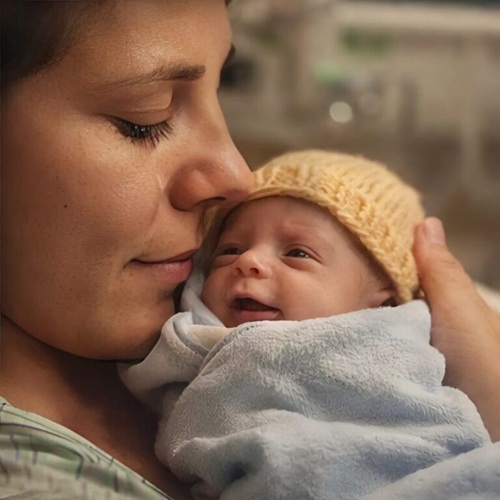
A tiny beginning can sometimes unfold into a deeply meaningful story of resilience, care, and quiet strength. In many cases of early or unexpected birth, the experience does not begin with calm anticipation, but with urgency and uncertainty. Instead of the familiar expectations of a planned arrival, everything can shift suddenly into a medical environment where attention is focused on immediate safety and careful decision-making. These moments are often emotionally intense, as both families and medical teams adjust quickly to rapidly changing circumstances.
In situations involving premature birth, the first signs that something is wrong can be subtle at first—fatigue, discomfort, or unexpected physical changes. However, when these signs escalate, medical attention is required without delay. Once inside a hospital setting, the atmosphere often becomes structured and focused, with healthcare professionals working efficiently to assess and stabilize the situation. Their priority is always the well-being of both parent and baby, and every action is guided by training, experience, and careful monitoring.
When it becomes clear that an early delivery is necessary, the emotional weight of the moment can be significant. Plans and expectations shift instantly, replaced by urgent preparation and medical coordination. For the parent, this can be a time of uncertainty, as the imagined timeline of birth changes in an instant. Despite this, medical teams provide constant support, ensuring that each step of the process is handled with precision and care.
When the baby is born prematurely, the first moments are often delicate and closely observed. Newborns in these situations may require immediate medical support due to their early stage of development. Specialized equipment and neonatal care teams are often present to provide monitoring and assistance. Although the environment can feel overwhelming, it is also a place where focused care allows fragile beginnings to continue safely.
In many neonatal care settings, the first meeting between parent and child may be brief, gentle, and carefully managed. Even in such a fragile state, the emotional connection is powerful. Seeing a newborn for the first time, regardless of size or condition, often brings a deep sense of attachment and hope. Medical staff work to balance necessary care with opportunities for bonding, understanding how important that connection is for both parent and child.
In the days that follow, progress is usually measured in very small but meaningful steps. Each slight movement, change in breathing, or response to sound can be significant in a neonatal environment. Parents often learn to focus on these subtle signs, finding reassurance in gradual improvements rather than immediate transformation. This process requires patience, emotional strength, and trust in the medical team’s guidance.
Medical professionals closely monitor premature infants using specialized equipment designed to track vital signs and development. Adjustments in care are made based on continuous observation, ensuring that the baby receives the appropriate support at every stage. Nurses and doctors often provide updates that help families understand even the smallest changes, offering reassurance during a time that can otherwise feel uncertain.
Over time, these small improvements begin to form a pattern of progress. A steady heartbeat, increased responsiveness, or improved stability can all signal that the baby is gradually adapting to life outside the womb. While progress may be slow, it is often consistent, and each step forward represents an important milestone in early development. These moments are carefully documented and celebrated within the care environment.
The emotional experience for parents during this period is complex. Alongside concern, there is often a growing sense of hope as they witness their child’s resilience. Simple actions such as speaking softly, gently touching, or simply being present can become meaningful forms of connection. Even when physical contact is limited, emotional bonding continues to develop through presence and awareness.
As days turn into weeks, gradual improvements often become more noticeable. The baby may begin to show stronger responses, improved stability, and increased awareness of surroundings. Medical teams may adjust care plans accordingly, reflecting the progress being made. Each positive change contributes to a broader picture of recovery and development, reinforcing the importance of patience and ongoing support.
Eventually, there comes a point where the situation begins to shift from critical care toward stability. This transition is often marked by consistent improvements and reduced need for intensive medical intervention. While continued monitoring remains important, the overall outlook becomes more positive. For families, this stage brings relief and a renewed sense of hope after a period of uncertainty.
Holding the baby without constant medical support often becomes a deeply meaningful milestone. It represents not only physical progress but also emotional reassurance that the most fragile stage is beginning to pass. These moments are often remembered as turning points, where fear gradually gives way to gratitude and confidence in the journey ahead.
Throughout this experience, resilience becomes a central theme. Premature infants often demonstrate remarkable adaptability, responding to care and support in ways that reflect the strength of early life. While challenges may exist, progress is shaped by a combination of medical care, time, and natural development. Each stage builds upon the last, forming a gradual path forward.
For parents, the journey often transforms their understanding of patience, care, and emotional strength. What begins as uncertainty slowly evolves into appreciation for each small achievement. Everyday milestones—such as steady breathing, consistent growth, or improved responsiveness—take on new meaning in the context of early life support.
Ultimately, such stories reflect both medical dedication and human resilience. They highlight the importance of specialized care, emotional support, and the deep bond between parent and child. While every situation is unique, the underlying message remains consistent: even the most fragile beginnings can lead to steady growth and meaningful progress over time.
In the end, what begins as an unexpected and uncertain moment can gradually become a journey shaped by strength, patience, and hope. It is a reminder that progress is often built step by step, and that even the smallest start can develop into something meaningful and lasting when supported with care and dedication.
