A period of growing concern began quietly when a mother named Margaret noticed that her daughter Rachel had stopped responding to phone calls and messages for several weeks. At first, Margaret believed her daughter was simply grieving after reporting the death of her husband, James, and needed time alone. She continued sending supportive messages, hoping that communication would resume naturally. However, as time passed, the lack of response became increasingly unusual.
Other family members, including James’ mother Helen, also reported difficulty reaching Rachel, which raised additional concern within the family. As the silence continued, small details began to create further uncertainty. Relatives noted that communication surrounding the reported death had been brief and lacked the usual documentation and follow-up that typically accompanies such events.
Although Margaret initially tried to remain patient and respectful of privacy, the situation did not improve. A neighbor later shared additional observations, stating that unfamiliar vehicles had been seen near Rachel’s home at unusual hours. These reports, combined with the ongoing silence, led to growing concern that something may not be right.
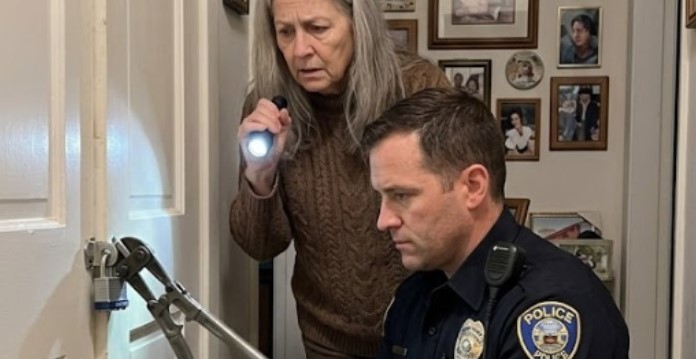
After several unsuccessful attempts to make contact, Margaret decided to visit Rachel’s home in person. Upon arriving, she immediately noticed that the property appeared neglected. The lawn had not been maintained, mail was overflowing from the mailbox, and there were no visible signs of recent activity. Using an emergency key that had been shared with her years earlier, she entered the house. Inside, the environment felt abandoned, with signs that daily life had been interrupted unexpectedly. Household items were left in place, and there was no indication of normal activity in recent days.
While moving through the house, Margaret heard faint sounds coming from a secured lower-level area. Concerned that someone might be in distress, she immediately contacted emergency services. Officers arrived shortly afterward and conducted a careful search of the property. In a secured space below the main level, they discovered James, who was alive but in urgent need of medical assistance. He was immediately transported to a hospital for evaluation and treatment. Medical professionals later confirmed that he was suffering from dehydration and malnutrition, and stated that timely intervention had likely prevented more serious outcomes.
Once James was stabilized, authorities began a formal investigation into the circumstances surrounding his condition and the reported death. Investigators reviewed financial records, legal documents, and communication logs connected to the household. During this process, they identified a life insurance policy with a significant payout that named Rachel as the primary beneficiary. The timing and structure of the policy raised questions that required further review. Officials also examined inconsistencies in earlier documentation related to the reported death, which led to a deeper inquiry into potential irregularities.
As the investigation expanded, authorities identified another individual connected to the case, later named in reports as Derek Moss. According to statements collected during the inquiry, James had expressed concerns prior to his disappearance regarding Rachel’s relationship with Derek. Investigators reviewed additional evidence, including digital communications and financial transactions, which suggested coordination between multiple parties. Authorities stated that the evidence indicated planning and deliberate actions that required formal legal evaluation. The case quickly moved from a private family matter to a structured criminal investigation.
Law enforcement later located Rachel and Derek at a hotel in Los Angeles, where they were taken into custody without incident. During the search, officers reportedly recovered documents, electronic devices, and receipts that were added to the case file for analysis. These materials were reviewed alongside financial records and communication data to establish a clearer timeline of events. Investigators stated that the evidence supported a coordinated effort involving deception and financial motivation. The investigation remained ongoing as additional documentation was processed.
The case proceeded to trial, where it was heard over a period of several weeks. Testimony was provided by family members, neighbors, medical personnel, and financial experts. Margaret described her experience of growing concern, the lack of communication, and the moment she discovered signs that prompted her to call for help. James also provided testimony regarding his recovery and the circumstances he experienced. Prosecutors presented evidence they said demonstrated planning, financial intent, and coordinated actions involving multiple individuals.
After reviewing the evidence, the jury found Rachel guilty on multiple charges, including kidnapping, fraud, document falsification, conspiracy, and attempted murder. Derek Moss also received a conviction related to his involvement and was sentenced separately. Additional individuals connected to fraudulent documentation and supporting actions received penalties based on their level of involvement. The court proceedings concluded with sentencing that reflected the severity of the charges and the evidence presented during trial.
Following the conclusion of the legal case, James focused on recovery and rebuilding his health. He spent time with family members who supported his rehabilitation process, including Margaret and Helen, who remained closely involved in his care. Over time, he gradually regained strength and resumed aspects of his daily life. Support systems played an important role in helping him transition back into stability after the traumatic events. Family members maintained regular contact and continued to provide emotional support during recovery.
For Margaret, the experience served as a reminder of the importance of paying attention to warning signs and acting when situations feel uncertain. She reflected on how a series of unanswered messages and small irregular details eventually led to uncovering a serious situation. Her decision to visit the home and seek help became a turning point in the case. What began as concern over silence ultimately led to a rescue operation, a criminal investigation, and the protection of a life that may otherwise have been at risk.
In the end, the case highlighted how quickly situations can escalate when communication stops and warning signs are overlooked. It also demonstrated the importance of timely intervention, careful investigation, and coordinated response by authorities. While the legal process addressed accountability, the family focused on recovery and rebuilding stability. The events left a lasting impact on everyone involved, serving as a reminder that vigilance and action can make a critical difference when something does not feel right.
