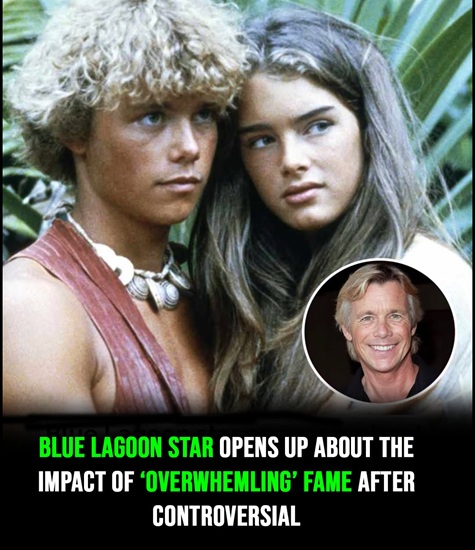
Christopher Atkins became one of Hollywood’s most recognizable young actors almost overnight, but the path that led him to international fame was anything but conventional. Unlike many performers who spend years attending acting classes, auditioning for small roles, and slowly building a résumé, Atkins entered the entertainment industry with virtually no professional acting experience. His journey into filmmaking happened unexpectedly, transforming an ordinary teenager with dreams far removed from Hollywood into one of the most talked-about young stars of the early 1980s.
Decades later, he continues to reflect on that extraordinary period with honesty, acknowledging both the opportunities it created and the challenges it brought into his life. Before becoming an actor, Atkins had very different ambitions. Rather than imagining himself on movie sets or walking red carpets, he dreamed of pursuing a career in baseball. Sports occupied much of his attention during his teenage years, and acting simply wasn’t part of the future he had envisioned for himself.
Like many young people, he had interests outside the entertainment industry and had never expected that a chance opportunity would redirect the course of his entire life. His eventual entrance into Hollywood came through modeling, an experience that unexpectedly opened doors to auditions he had never anticipated attending. During a recent appearance at Fanboy Expo Knoxville in Tennessee, Atkins reflected on those life-changing years while speaking with fans about his career.
Looking back after several decades in the industry, he described just how unfamiliar the filmmaking process was when he first entered it. He admitted that before landing his breakthrough role, he had little understanding of how film productions operated. Concepts that actors routinely learn early in their careers—such as camera positioning, lighting, and hitting specific marks during scenes—were completely new to him. Everything happened quickly, leaving little time to fully absorb the magnitude of what was taking place.

The opportunity that would permanently change his life came when he was cast opposite Brooke Shields in the 1980 film The Blue Lagoon. At the time, Atkins was just eighteen years old, while Shields was fourteen. The romantic survival drama attracted enormous public attention both because of its unique storyline and because it starred two very young performers. Although the film generated considerable discussion and controversy following its release, it also became a major commercial success, introducing Christopher Atkins to audiences around the world almost instantly.
Atkins has often recalled how overwhelming that sudden transition felt. One day he was an unknown young man pursuing ordinary ambitions, and shortly afterward his face appeared on magazine covers displayed in supermarkets across the country. The dramatic shift from anonymity to worldwide recognition happened so rapidly that it became difficult to process. For someone who had never planned to become a public figure, adapting to constant media attention proved to be a significant challenge. The experience was exciting, but it also required emotional maturity that few teenagers naturally possess.
Speaking to fans during the convention, Atkins explained that he had never imagined his first major acting role would propel him into such an extraordinary spotlight. He described traveling to Fiji during production despite having virtually no knowledge of professional filmmaking beforehand. Every day presented new experiences, from learning how film crews worked to adapting to life on an international production set. What began as a remarkable opportunity soon evolved into one of the defining experiences of his life.
Success arrived almost immediately after The Blue Lagoon premiered. The film’s popularity generated extensive media coverage, interviews, promotional appearances, and widespread public recognition. Atkins explained that the sudden visibility fundamentally changed everyday life. Activities that had once seemed ordinary—shopping, traveling, or simply going out in public—became different because people increasingly recognized him. For a young performer still learning how to navigate adulthood, adjusting to that level of attention required significant personal adaptation.

The actor acknowledged that rapid success can sometimes create unexpected pressures for young performers. Overnight fame often brings exciting opportunities, but it can also introduce demanding schedules, heightened public expectations, and constant scrutiny. Many actors who achieve recognition early in their careers have spoken about the difficulty of balancing professional success with personal growth. Atkins’ reflections offer another example of how quickly dramatic career changes can affect someone who enters the entertainment industry at a young age.
While The Blue Lagoon established Atkins as a rising Hollywood star, it also created expectations regarding what would come next. Producers, casting directors, and studios began viewing him as one of the industry’s promising young actors. New projects became available, and the momentum generated by the film appeared to position him for an even larger career. Like many performers experiencing early success, he found himself presented with opportunities that only a short time earlier would have seemed unimaginable.
One of those opportunities, according to Atkins, involved the 1984 musical drama Footloose. The film would eventually become one of the most recognizable movies of the decade, launching Kevin Bacon into international stardom. Atkins has said that during the casting process he believed he was in a strong position for the leading role. Looking back, he considers that period one of the most significant turning points in his professional career.
During the Fanboy Expo discussion, Atkins spoke candidly about the personal struggles he faced at that stage of his life. He explained that the rapid fame following The Blue Lagoon had been accompanied by a lifestyle centered too heavily on parties and alcohol. Reflecting with the perspective that comes only after many years, he acknowledged that he had not always made the best decisions during that period. Rather than blaming others for missed opportunities, he openly accepted responsibility for his own choices.
According to Atkins, filmmakers requested one final meeting before officially moving forward with the project. However, by his own account, he had been drinking before being asked to attend. He recalled initially expressing reluctance because he did not believe he was in the proper condition to make a professional impression. Despite those concerns, he ultimately decided to attend the meeting anyway, hoping the situation would still work in his favor.
Years later, Atkins has described that meeting as one of the greatest professional regrets of his career. He has said that although he believed he was very close to securing the role, he felt his condition prevented him from presenting himself as he normally would have. Looking back, he believes the opportunity slipped away because he arrived unprepared at a critical moment. Whether viewed as a missed chance or an important life lesson, the experience became one of the defining memories he continues to discuss openly decades later.
The lead role ultimately went to Kevin Bacon, whose energetic performance helped turn Footloose into one of the defining films of the 1980s. The movie achieved both commercial success and lasting cultural influence, becoming closely associated with Bacon’s career. While Atkins has acknowledged that outcome, he has also emphasized that reflecting on missed opportunities has helped him appreciate the importance of personal accountability and long-term growth rather than dwelling on disappointment alone.
Perhaps the most encouraging aspect of Atkins’ story is not the role he believes he lost, but the life he ultimately rebuilt afterward. During his appearance, he shared that he has now been sober for nearly four decades. That achievement represents years of commitment, perseverance, and personal transformation. Rather than focusing exclusively on career setbacks, Atkins now often speaks about recovery with gratitude, viewing sobriety as one of the most meaningful accomplishments of his life.
His reflections also coincide with renewed public interest in The Blue Lagoon. Brooke Shields recently revisited the film while speaking on her podcast, Now What? With Brooke Shields, where she discussed how dramatically the movie altered both of their lives. Looking back, Shields described the years following the film’s release as an extraordinary and often overwhelming period. Their shared experiences illustrate how sudden success can profoundly influence young performers in ways that extend far beyond the screen.
Although Christopher Atkins often speaks candidly about the opportunities he believes slipped away, his reflections are rarely centered on regret alone. Instead, they reveal how dramatically success at a young age can affect someone’s personal and professional life. Looking back more than four decades later, he has consistently emphasized that the lessons learned during those years became just as valuable as the achievements themselves. His willingness to discuss difficult moments openly has allowed audiences to see a more complete picture of the person behind the early Hollywood fame.
The entertainment industry has long been known for placing enormous expectations on young performers. Overnight success can introduce opportunities that many aspiring actors spend decades pursuing, but it can also create intense public attention, demanding schedules, and significant personal pressure. For someone entering that environment without previous acting experience, adapting to those changes can be especially challenging. Atkins has often described his early years in Hollywood as exciting, yet overwhelming, acknowledging that he was still learning about adulthood while simultaneously adjusting to life as a public figure.
During his appearance at Fanboy Expo Knoxville, Atkins reflected on that period with remarkable honesty. Rather than attempting to rewrite history or shift responsibility elsewhere, he openly discussed how his own decisions affected his career. His comments suggested that the excitement surrounding his rapid rise sometimes made it difficult to maintain balance. Looking back with decades of perspective, he acknowledged that maturity often comes through experiences that are not always easy to navigate while they are happening.
His recollections about Footloose have attracted considerable attention because the film ultimately became one of the defining movies of the 1980s. According to Atkins, he believed he was in a strong position before the project moved in another direction. While the role eventually went to Kevin Bacon, Atkins has explained that he views the experience less as a reason for resentment and more as a reminder of how quickly professional opportunities can change within the entertainment industry. He has repeatedly accepted responsibility for his own actions rather than criticizing the filmmakers’ decision.
Kevin Bacon’s performance ultimately helped establish Footloose as one of the era’s most recognizable musical dramas. The film enjoyed both commercial success and lasting popularity, introducing memorable performances, music, and dance sequences that continue to be associated with 1980s cinema. While audiences naturally remember Bacon’s portrayal today, Atkins’ reflections offer an interesting glimpse into how differently Hollywood careers can develop depending on timing, preparation, and personal circumstances.
Perhaps the most inspiring aspect of Atkins’ story comes not from the roles he won or lost, but from the life he chose to build afterward. During the Fanboy Expo conversation, he shared that he has been sober for nearly forty years. That milestone represents decades of commitment and personal growth. Achieving long-term sobriety requires sustained effort, and Atkins has spoken about that accomplishment with genuine gratitude rather than self-congratulation. For many fans, that chapter of his life carries even greater significance than any individual acting role.
His comments have resonated with many people because they reflect a broader reality experienced by individuals in numerous professions. Career success does not eliminate personal challenges, and public recognition does not automatically provide emotional stability. By speaking honestly about both achievements and setbacks, Atkins has demonstrated that meaningful success often includes learning from difficult periods rather than pretending they never existed.
Interest in The Blue Lagoon has also been renewed through recent conversations involving Brooke Shields. On her podcast, Now What? With Brooke Shields, she looked back on the film and the extraordinary period that followed its release. Shields described those years as “pure insanity,” recalling how dramatically life changed after the movie reached audiences around the world. Her reflections echoed many of the themes Atkins has discussed, particularly the overwhelming nature of experiencing international fame at such young ages.
During their conversation, Atkins agreed that neither of them could have fully anticipated the impact the film would have on their lives. At the time production began, both were simply focused on completing the project to the best of their abilities. The global attention that followed exceeded anything they had imagined. Looking back today, both actors have spoken less about celebrity itself and more about the unique experience of growing up while navigating extraordinary public attention.
The renewed discussions surrounding The Blue Lagoon have also encouraged audiences to revisit the film within its historical context. Released in 1980, the production became one of the most widely discussed films of its era, generating both commercial success and significant public debate. Regardless of differing opinions about the movie, there is little doubt that it permanently shaped the careers of its two young stars and remains an important part of film history.
For Atkins, those early experiences continue to influence how he approaches conversations with fans today. Rather than focusing exclusively on career highlights, he often shares stories that emphasize resilience, accountability, and perspective. His willingness to discuss moments of vulnerability has helped many people appreciate that professional success and personal growth do not always occur at the same pace. Some of life’s most valuable lessons arrive only after years of reflection.
Another theme running throughout Atkins’ recent interviews is gratitude. While he openly acknowledges missed opportunities, he also expresses appreciation for the experiences that shaped him. He frequently recognizes the fans who have continued supporting his work across several decades and speaks warmly about the projects that introduced him to audiences worldwide. That balanced perspective suggests someone who has come to terms with both the triumphs and disappointments of a long career.
His story also serves as a reminder that careers in entertainment rarely follow a straight path. Some performers enjoy decades of uninterrupted success, while others experience unexpected changes, pauses, or reinventions. External opportunities, personal decisions, timing, and countless unpredictable factors all contribute to the direction a career ultimately takes. Atkins’ reflections illustrate how those elements can intersect in ways that are impossible to predict while they are unfolding.
Today, Christopher Atkins is remembered not only for his breakthrough performance in The Blue Lagoon, but also for his openness about the realities of fame. His recent comments demonstrate a willingness to revisit important moments from his past with honesty rather than nostalgia alone. Instead of presenting an idealized version of his career, he has chosen to discuss both accomplishments and mistakes in a way that many people find relatable.
His nearly four decades of sobriety stand as one of the clearest examples of that personal journey. While movie roles often define an actor’s public image, long-term personal growth frequently becomes the achievement that carries the greatest meaning. Atkins’ reflections suggest that the lessons learned after fame can ultimately become more valuable than fame itself.
Looking back from the perspective of many years, Christopher Atkins’ story is one of unexpected opportunity, rapid success, difficult lessons, and lasting resilience. His experiences illustrate how quickly life can change, how important personal responsibility becomes during moments of success, and how growth often continues long after the cameras stop rolling. As audiences revisit The Blue Lagoon and hear both Atkins and Brooke Shields reflect on that remarkable chapter, their memories offer a thoughtful reminder that behind every famous film are individuals whose lives continue to evolve long after the credits have ended.
