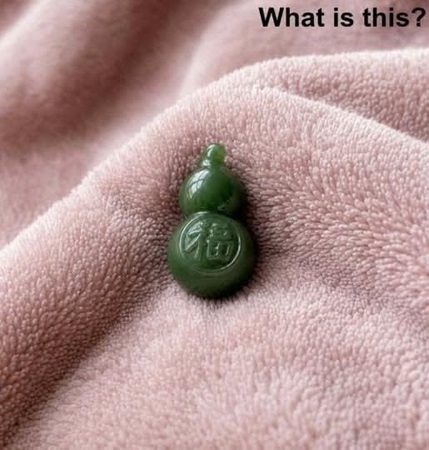
According to the account shared about the encounter, an ordinary trip took an unexpected turn when a driver noticed another man who was struggling to continue his journey. The traveler apparently did not have enough money to pay for the fuel he needed, leaving him in a difficult but straightforward situation. Rather than continuing on his way, the driver decided to help by covering the cost of the gas. There was no agreement that the money would be returned and no demand for anything to be offered as security.
The assistance was presented simply as one person responding to another person’s immediate need. The original account emphasizes that the driver did not negotiate, ask for collateral, or expect repayment afterward. The gesture could easily have ended there, with the traveler filling his vehicle and the two men going in separate directions. Instead, the stranded man reportedly decided that he did not want the driver to leave without some acknowledgment of what had happened.
Because he had already been unable to afford the fuel himself, returning the money immediately was apparently not an option. He therefore reached among his belongings and selected a small green object to give to the person who had helped him. That decision changed the encounter from a purely practical favor into something more personal. The object did not function as an agreed payment for the gasoline, because the driver had already chosen to help without requesting anything in return. It was better understood as a voluntary token offered after the act of kindness had already taken place.
The Small Green Object Quickly Became the Most Mysterious Part of the Story
The item attracted attention because it was not immediately obvious what it was or what material had been used to make it. Photographs associated with the story show a small green carving with a form resembling a double-lobed or bottle-shaped gourd. That distinctive silhouette led to comparisons with the hulu, the Chinese name for the bottle gourd. The appearance alone, however, does not prove that the object was an antique, a valuable gemstone, or even genuine jade.
Many natural and manufactured materials can look similar when seen only in photographs, especially when color, lighting and image quality influence how a surface appears. Determining the actual material would normally require physical examination rather than visual speculation from an online image. The source account itself appropriately avoids assigning the charm a confirmed material or price.
That caution is important because unusual green carvings are sometimes quickly described online as jade even when there is not enough evidence to support that conclusion. A photograph cannot establish characteristics such as hardness, density, internal structure, treatment, craftsmanship or age. Those details could be important in distinguishing jade from other stones, glass, resin or other materials.
There is also no verified appraisal attached to the story establishing that the object had significant financial value. The safest description is therefore a green, gourd-shaped charm or carving whose exact material and market value remain unknown. Treating it this way avoids turning an interesting human story into an unsupported claim about hidden treasure. It also preserves what is actually known while separating that information from speculation.
Its Shape Does Have a Genuine Cultural Background
What can be verified independently is that the hulu, or bottle-gourd form, has a long history in Chinese decorative and symbolic culture. The Metropolitan Museum of Art describes gourd imagery as carrying auspicious associations and notes that the Chinese word hulu has been connected through wordplay with ideas of fortune and prosperity. A Qing-dynasty textile in The Met’s collection likewise explains that the gourd became a popular motif because of its association with fortune and prosperity. The Palace Museum also describes gourds as emblems associated with longevity, prosperity, happiness and continuing good fortune. These are documented cultural traditions rather than properties scientifically produced by the object itself. In other words, the significance lies in what the form has represented historically and culturally, not in a claim that a charm can physically guarantee luck or protection.
Other museum collections offer additional context for why a gourd-shaped object might be regarded as meaningful. The University of Michigan Museum of Art notes that gourds have historically been connected with medicine and appear as symbols related to family prosperity and protection in Chinese art. The Hong Kong Palace Museum describes double-gourd-shaped decorative hangings created during the Qianlong period and explains that the hulu form could evoke fortune and prosperity through linguistic wordplay. These examples demonstrate that the shape has existed in serious historical art and decorative traditions for centuries. They do not prove that the particular green object in this story is old, valuable or connected to any specific historical artifact. They simply help explain why viewers familiar with the form might recognize cultural symbolism in it.
What the Stranger Intended by Giving It Away Is Still Unknown
It would be tempting to conclude that the traveler deliberately gave the charm as a wish for protection, health or good fortune after receiving help. That interpretation is possible, especially given the symbolism historically associated with the gourd form. However, the available account does not document the stranger explaining exactly why he chose that object. There is no verified statement establishing how long he had owned it, where he obtained it or what it personally meant to him.
He might have understood its traditional symbolism, or he might simply have regarded it as a meaningful possession that he could offer when he had little money available. Any more specific explanation would move from documented information into speculation. The source itself recognizes this limitation, noting that interpretations of the stranger’s motivations cannot be confirmed. The same uncertainty applies to the history of the charm.
Nothing in the available material confirms whether it had been purchased recently, received as a gift, inherited, carried for years or obtained in some other way. Its age has not been established, and neither has its place of manufacture. No documented expert appraisal has been provided to establish its monetary value. Those unanswered questions may actually explain why the object attracted so much curiosity after photographs of it circulated. People naturally want to know whether an unfamiliar item is rare, expensive or historically important. In this case, however, the evidence supports curiosity rather than a definitive conclusion, and responsible reporting requires keeping that distinction clear.
The More Reliable Story Is the Exchange Itself
The encounter remains interesting even without turning the green carving into a valuable artifact. According to the account, one man needed enough fuel to continue traveling and another person chose to pay for it without first arranging repayment. The stranger then responded by giving something from his own possessions. That sequence is the central event supported by the material provided. The fuel solved an immediate practical problem, while the charm became a lasting reminder of the encounter. Their contributions did not need to have equal financial value because the original help was not described as a commercial transaction. The source summarizes the exchange simply: one person provided practical assistance, while the other offered something personal.
That distinction also matters when considering the value of the object. Once photographs appeared online, it was understandable that people began asking whether the green carving might be expensive. Yet no evidence provided with the story establishes a reliable price. An item does not have to be financially valuable to become personally significant to the person who receives it. A handwritten note, photograph, souvenir or inexpensive keepsake can become meaningful because of the circumstances surrounding it. In this case, the charm could remind the driver of the moment he decided to help somebody he did not know. Its personal value therefore does not depend on proving that it is jade, ancient or collectible.
A Short Encounter Created a Lasting Reminder
Most interactions between strangers are brief and quickly forgotten, particularly during ordinary travel. The source describes this encounter as one that could easily have ended without either person knowing much about the other. The driver could have continued on his route, while the stranded traveler could have remained focused on finding another solution. Instead, the decision to stop created a brief connection between people who might otherwise never have spoken. The mysterious green object then gave that moment a physical reminder that could be kept long after the gasoline had been used. The charm’s unanswered questions made the story more memorable, but they were not the reason the initial act of help occurred. That happened before the driver knew he would receive anything at all.
There is also no need to exaggerate the encounter into a story about miraculous rewards for good behavior. Nothing in the available information proves that the charm possessed supernatural powers or extraordinary financial value. Nor is there evidence that the stranger intentionally rewarded the driver with a hidden fortune. What can reasonably be said is that a man who apparently could not afford enough fuel accepted help and then chose to offer a small possession in response. Because the object resembles a form with documented auspicious symbolism in Chinese culture, its appearance naturally prompted discussion about what it could represent. That cultural context makes the gift interesting without requiring unsupported claims. The story works best when the known facts remain separate from the mystery surrounding the object.
The Charm Became a Thank-You Rather Than a Repayment
Calling the green object a repayment would overlook an important feature of the account. The driver had already helped without requesting compensation, and the charm was presented only afterward. The source describes it more appropriately as a token of gratitude rather than payment for a service. Its exact monetary value was therefore secondary to the fact that the traveler voluntarily chose something from his possessions and handed it to the person who had helped him. Even if the object were made from an inexpensive material, that would not erase the circumstances under which it changed hands. Conversely, even if an examination someday showed it to be valuable, that would not alter the reason the driver originally stopped. The act of assistance came first, and the mysterious object became part of the story only afterward.
That may ultimately be why the encounter attracts attention beyond the unanswered question of what the green carving is made from. The account describes two people responding to the same moment in very different ways: one with practical assistance and the other with a personal object. There is no confirmed final appraisal, no documented dramatic revelation about the charm’s origin and no evidence establishing that it was a rare treasure. What remains is a comparatively simple sequence of events. A traveler needed fuel, another person helped him, and the recipient of that help chose to leave the driver with something tangible in return. The charm’s material, age and earlier history may remain unknown, but the circumstances under which it was received are the part of the story that gave it new meaning. As the source concludes, its most certain value was connected not to an appraisal but to the memory of why it changed hands.
