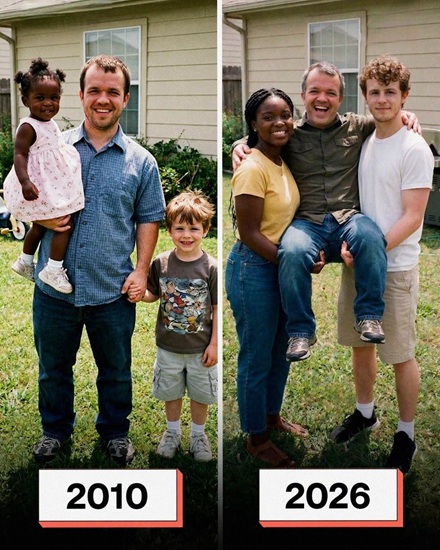
For most of my adult life, people have known me as the calm paramedic who never panics during an emergency. Friends often joked that nothing could surprise me after spending years responding to accidents, medical emergencies, and situations where every second mattered. What they never realized was that the hardest challenge of my life did not happen inside an ambulance. It happened at home, where I was raising my son alone after my marriage unexpectedly ended only a few weeks after he was born.
Becoming both a father and a full-time caregiver changed my priorities forever and taught me that the greatest acts of courage often happen far away from flashing emergency lights. Balancing parenthood with emergency medical work was never easy. My shifts frequently lasted through the night, and there were mornings when I returned home exhausted, only to prepare breakfast before taking my son to preschool. Family members helped whenever they could, but much of the responsibility rested on my shoulders.
Despite the long hours and constant fatigue, we gradually built a happy routine filled with ordinary moments that became priceless memories. We did not have a perfect life, but we had stability, laughter, and unconditional love. Everything changed during a severe rainstorm one autumn evening. My partner and I responded to reports of a serious traffic collision on a rural highway…
-Emergency calls often arrive with very little information, so we prepared for several possible scenarios while driving through heavy rain. When we reached the scene, it quickly became clear that the accident had been extremely severe. Police officers had already secured the area while firefighters worked carefully around the damaged vehicle to ensure it was safe for rescue personnel to enter.
As we assessed the situation, I heard a faint sound that immediately caught my attention. It was the cry of a very young child coming from the rear of the vehicle. Working alongside firefighters, I carefully reached the back seat where I found a frightened little girl secured safely inside a child safety seat. Although she was shaken and frightened, she appeared conscious and responsive. I spoke calmly to reassure her while we carefully removed her from the vehicle and transported her for medical evaluation according to established emergency procedures.
The following days remained emotionally difficult for everyone involved. Hospital staff, law enforcement officers, and child welfare specialists worked together to determine the child’s family circumstances while ensuring she received appropriate care. During that process, I found myself thinking about her repeatedly. I had encountered many patients throughout my career, but something about this little girl’s resilience remained in my thoughts long after my shift ended. Even after returning home, I often wondered how she was doing and hoped she would eventually find stability and support.
Several weeks later, I learned that she had entered the foster care system while authorities continued working through complicated legal and family matters. The news stayed with me longer than I expected. My son, still very young himself, noticed that I seemed unusually thoughtful one evening and asked why I looked sad. I explained, in terms appropriate for his age, that another little child needed people to care for her. His simple response surprised me. “Maybe she needs a family until she feels safe,” he said before returning to his toys.
That conversation remained with me for days. After careful consideration, consultations with social workers, and many discussions with my family, I decided to begin the process of becoming a foster parent. The approval process was extensive and included interviews, home inspections, background checks, training courses, and countless forms. Every requirement existed to protect children, and although the process demanded patience, I understood why each step mattered. My greatest hope was simply to provide one child with a stable and caring home…
Months later, the little girl finally arrived at our house carrying only a small backpack and a stuffed rabbit that never seemed to leave her side. She barely spoke during her first evening, quietly observing everything around her with understandable caution. My son tried to make her feel welcome by showing her where the toys were kept and offering to share his favorite crayons. Those small acts of kindness gradually broke the silence that surrounded her, allowing trust to grow naturally over time.
As the months turned into years, our family settled into a comfortable rhythm. School concerts, birthdays, homework, family vacations, and ordinary evenings around the dinner table slowly replaced the uncertainty that had marked the beginning of our journey together. Although we always intended to be honest about her early history when she became old enough to understand, we also wanted her childhood to be defined by love rather than loss. She grew into a compassionate, intelligent young woman who cared deeply about helping others and often spoke about studying medicine or emergency services herself one day.
My son never treated her as anything other than his sister. Like most siblings, they occasionally argued over television shows, borrowed clothes, or whose turn it was to wash dishes, but those disagreements never lasted long. They celebrated each other’s achievements, supported one another through disappointments, and developed the kind of lifelong bond that grows naturally when children are raised together with patience, respect, and unconditional affection.
Years passed more quickly than I ever imagined. Looking around our home, it became difficult to remember a time before she had been part of our family. Every photograph on our walls, every holiday tradition, every shared memory included her. We rarely spoke about the accident anymore because our daily lives had become filled with school events, family dinners, college applications, and plans for the future. We genuinely believed the past had finally settled into history.
Then, on an ordinary Saturday morning, while breakfast was still cooking and the house echoed with familiar conversation, someone knocked on our front door. I answered expecting a neighbor or delivery driver. Instead, I found a woman standing quietly on the porch, holding an old envelope in one hand. Her expression suggested she had spent years carrying a burden she no longer knew how to bear. Before I could ask why she had come, she looked directly at me and softly said, “I’ve been searching for this house for a very long time.”
-In that single moment, I sensed that everything we believed we knew about our family’s beginning was about to change.
The woman remained quietly seated at our kitchen table as everyone tried to process what had just happened. No one raised their voice, and no one rushed to conclusions. Instead, we agreed that before making any assumptions, every part of her story should be carefully verified. She understood our caution and admitted that after so many years she expected questions rather than immediate acceptance. She explained that finding our family had taken years of searching through public records, contacting agencies, and following small pieces of information that gradually led her to our front door.
Over the following days, several meetings were arranged with legal professionals and the appropriate child welfare authorities. Old records were reviewed, archived documents were examined, and details from the original accident were carefully compared. The process was slow, but everyone agreed that accuracy mattered more than speed. Rather than relying on memories alone, every effort was made to understand exactly what had happened years earlier and how the misunderstanding had developed. The goal was not to assign blame but to establish the truth respectfully and responsibly.
For my daughter, the experience brought a mixture of emotions that were difficult to describe. She had grown up knowing she was adopted and had always appreciated our honesty about that part of her life. Now she suddenly found herself learning new information about her earliest years. Naturally, she had questions about her biological family, but she also wanted reassurance that the life we had built together would not suddenly disappear. We reminded her that discovering new information about her past could never erase the years of love, care, and shared experiences that had shaped our family.
One evening we sat together in the living room without distractions or interruptions. My son spoke first, reminding his sister that nothing had changed between them. They had grown up side by side, celebrated birthdays together, supported one another through school, and shared countless ordinary moments that had created an unbreakable bond. He told her that biology could explain where someone begins, but it could never replace the years spent becoming a family. His words brought quiet smiles to everyone in the room.
As trust slowly developed, my daughter chose to spend time getting to know the woman who had come looking for her. Their conversations were gentle and respectful, beginning with simple topics before gradually moving toward more personal memories. They looked through childhood photographs, shared stories about relatives, and discussed family traditions that had been interrupted by tragedy many years earlier. There was no expectation that they needed to instantly become close. Instead, they allowed the relationship to develop naturally, one conversation at a time.
Throughout this process, I experienced emotions I had never expected to face. Like any parent, I worried about whether my daughter might feel pulled between two different families. Those fears were honest, but they slowly faded as I watched her navigate the situation with remarkable maturity. She repeatedly reminded me that learning about her biological history did not change the person she called Dad. The years we had shared together remained the foundation of our relationship, regardless of any new discoveries about the past.
The experience also reminded our entire family of the importance of compassion during difficult moments. Everyone involved had lived with grief in different ways. The woman had spent years believing she had permanently lost her child, while we had spent years building a family without realizing that unanswered questions still existed. Rather than allowing anger to define the future, we chose patience, understanding, and honest communication. Those decisions created space for healing instead of conflict.
Family counselors often explain that situations involving adoption, reunions, and newly discovered relatives rarely follow a simple path. Every individual processes emotions differently, and healthy relationships usually require time, respect, and clear communication. Experts encourage families to move at a comfortable pace while recognizing that every person’s feelings deserve acknowledgment. Our experience reflected that advice as each conversation helped build greater understanding without placing unnecessary pressure on anyone involved.
Looking back, I realized that parenthood had never been defined by a single moment or one legal document. It had been built through thousands of ordinary days—helping with homework, celebrating accomplishments, comforting disappointments, sharing family dinners, and simply being present whenever my children needed me. Those moments could never be replaced because they represented years of commitment rather than a single event.
As graduation approached, our family gathered once again to celebrate an important milestone. Watching my daughter walk across the stage reminded me how much life can change in unexpected ways. She had grown into a compassionate, confident young woman with dreams for the future and a strong sense of who she was. After the ceremony, she hugged every member of both families before turning toward me with a smile I had seen countless times since she was a little girl. Quietly, she thanked me for never giving up on her and for always making our house feel like home.
Today, our family looks different than it did before that unexpected knock on the door, but it has also become richer in understanding and compassion. We have learned that truth can sometimes arrive years later, yet love built through patience, sacrifice, and everyday acts of kindness remains remarkably resilient. Our story is not about replacing one family with another. Instead, it is about recognizing that love has the capacity to grow without diminishing what already exists. In the end, the greatest lesson we learned was that family is strengthened not only by shared beginnings but also by the commitment to stand beside one another through every unexpected chapter that follows.
