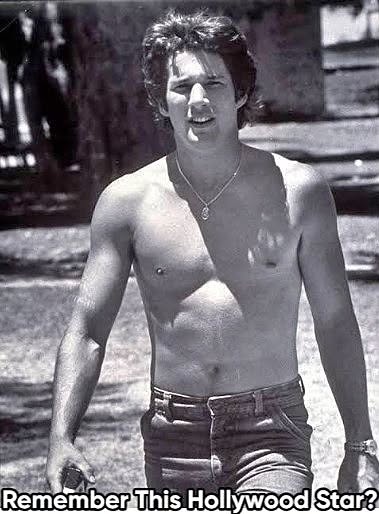
For many movie fans, certain actors become permanently connected with a particular period of their lives. Their films may remind audiences of childhood, teenage years, first dates, family movie nights, or simply an era of Hollywood that felt different from the one that exists today. One celebrated leading man became especially familiar to audiences during the 1980s and 1990s, when his screen presence helped make him one of the recognizable faces of his generation. His performances, particularly in romantic and dramatic films, left an impression on viewers who continued following his career long after those decades ended.
Today, many years have passed since the period when audiences first became familiar with him. Like everyone else, his appearance has naturally changed with age. Looking back at photographs from an actor’s earlier career can sometimes make the passage of time feel surprisingly dramatic. Publicity portraits from decades ago often capture performers at the beginning or height of their fame, when their appearance became closely associated with the characters audiences watched on screen. Those photographs can remain in circulation for decades, creating a permanent visual memory of someone at a particular age.
When more recent images appear, the difference can attract considerable attention. Yet aging itself is neither unusual nor mysterious. It is simply a normal part of a life and career that have continued long after the original photographs were taken. During the 1980s, Hollywood experienced major changes in popular filmmaking. Romantic stories, dramas, comedies, action movies, and large studio productions helped create a new generation of recognizable stars.

Successful leading actors could become internationally familiar through theatrical releases, television appearances, magazines, interviews, and later home video. For performers who remained successful into the following decade, audiences sometimes watched them progress through multiple stages of adulthood on screen. That longevity created a connection extending beyond any individual role. Viewers did not simply remember one movie; they remembered an era.
The actor described here became part of that wider Hollywood landscape. His appeal as a leading man was not based only on appearance. Audiences often become attached to performers because of the combination of screen presence, acting style, chemistry with co-stars, and the emotional impact of the stories in which they appear. A successful romantic drama, for example, can remain meaningful to viewers for decades because people associate the movie with their own experiences and memories. When an actor appears in several memorable productions, those associations become even stronger. Eventually, the performer can become a familiar figure across generations.
The 1990s brought another stage in that development. Hollywood films reached increasingly global audiences, and established stars from the previous decade remained prominent alongside newcomers. For an actor already recognized as a leading man, maintaining a career required adapting to changing roles and changing audience expectations. Younger romantic characters eventually gave way to more mature parts. That transition is a normal part of a long acting career, although audiences sometimes continue associating performers with the appearance they had during their most famous early roles.
This helps explain why recent photographs of longtime stars can generate such strong reactions online. Someone who has not seen an actor for many years may unconsciously expect that person to look exactly as remembered from a favorite movie. The film itself has not aged; pressing play still reveals the actor at the same age as when the scene was recorded. The real person, meanwhile, has continued living for another 20, 30, or 40 years. When those two images are placed side by side, the contrast can feel much greater than it actually is.
Cinema creates an unusual relationship with time in this way. A performance recorded decades ago remains visually unchanged forever. Actors can therefore exist at several ages simultaneously in popular culture. A viewer can watch them as a young performer in an older film and then see them at their present age during an interview or public appearance minutes later. Both images are authentic, but they represent completely different stages of the same life. The contrast is one of the most fascinating aspects of following a performer across a long career.
Natural aging can involve changes in hair color, hair density, facial lines, skin texture, body composition, and many other physical characteristics. These changes vary enormously between individuals and should not automatically be interpreted as evidence of poor health or cosmetic procedures. A photograph alone cannot establish someone’s medical condition, lifestyle, or personal choices. Lighting, camera lenses, expression, makeup, styling, and image quality can also significantly affect appearance. Responsible discussion should therefore avoid making unsupported claims simply because someone looks different from photographs taken decades earlier.
Gray or silver hair is one of the most obvious changes frequently seen as actors grow older. For many people, hair gradually loses pigment with age, although genetics strongly influence when and how quickly that happens. Facial lines can also become more visible over time as skin changes naturally. These characteristics are ordinary parts of aging rather than evidence that something has gone wrong. A performer who became famous while young will naturally look different several decades later.
The entertainment industry has historically placed considerable emphasis on youth and appearance, making discussions about celebrity aging especially common. Photographs are sometimes accompanied by headlines asking what “happened” to a star even when the answer is simply that decades have passed. Such framing can create unrealistic expectations about how people are supposed to look as they grow older. Someone who has lived many years since a famous film should not reasonably be expected to resemble the exact person captured on screen during that production.
For fans, a more interesting approach is to view those changes as part of the performer’s history. Early photographs represent one chapter, while later images represent another. Each stage reflects a different point in a life that continued beyond movie premieres and publicity campaigns. Looking through photographs chronologically can therefore become a visual record of an entire career. Hairstyles change, clothing fashions evolve, and the actor gradually moves from youthful roles toward more mature ones.
Fashion alone can make older photographs feel dramatically different. The hairstyles, jackets, shirts, suits, and grooming trends associated with the 1980s and 1990s immediately identify their eras. Publicity photography also had different visual styles from modern digital celebrity photography. When those images are compared with current pictures, viewers are seeing changes in both the person and the culture surrounding that person. The contrast is therefore about more than aging.
Technology has changed as well. Older celebrity photographs were often captured on film and distributed through newspapers and magazines. Today’s high-resolution digital cameras can reveal details that earlier photography softened or simply failed to capture. Smartphones and social media also mean public figures can now be photographed in far more ordinary circumstances. Comparing a professionally lit studio portrait from decades ago with a candid modern photograph is not necessarily an equal comparison.
This context matters when discussing someone’s appearance respectfully. A single unflattering photograph can be selected from hundreds of images and used to create the impression that a celebrity has undergone a dramatic transformation. Another photograph taken on the same day under different lighting may look completely different. That is why appearance-based stories should avoid drawing major conclusions from isolated images. Aging can be discussed without turning ordinary physical changes into a scandal.
The longevity of a Hollywood career can itself be remarkable. Acting is highly competitive, and public tastes constantly change. Performers who remain familiar to audiences across several decades have usually experienced multiple phases in their professional lives. The types of roles offered to them can evolve substantially as they age. A young romantic lead may eventually portray parents, authority figures, mentors, or more complex older characters.
That progression can give performers opportunities that were unavailable earlier in their careers. Youth may have made someone suitable for certain romantic roles, while age can provide the experience and screen presence required for completely different characters. Some actors have spoken about appreciating the increased complexity of roles available later in life. Others continue moving between genres instead of remaining associated with the type of movie that originally made them famous.
Audiences evolve alongside them. Someone who watched a romantic film as a teenager during the 1980s may now be a parent or grandparent. Seeing the actor decades later can therefore create an unexpected reminder of the viewer’s own passage through time. The reaction is not necessarily only about the celebrity. It can also be about recognizing how many years have passed in one’s own life.
That sense of nostalgia is powerful. Movies are often connected with particular places, people, and periods. Hearing a soundtrack or seeing a familiar actor can bring back memories far beyond the film itself. A photograph of a longtime star today may therefore produce affection, surprise, or curiosity among people who remember watching that performer many years earlier. Those reactions help explain why retrospective celebrity stories remain popular.
Nostalgia, however, should not become an excuse for criticizing someone simply because they no longer look young. The younger appearance exists permanently on film, but the actor is a real person rather than a frozen character. Growing older is the expected outcome of living for decades. The fact that fans can compare multiple stages of the same person’s life is possible precisely because the career and public interest lasted so long.
There is also no objective age at which someone stops being recognizable. Familiar facial structure, expressions, posture, voice, and mannerisms can remain identifiable even as individual features change. Fans who have followed an actor consistently may notice continuity more easily than someone who remembers only a single movie from decades earlier. Recognition involves far more than youthful appearance.
The phrase “leading man” itself describes a particular stage of many actors’ careers rather than a permanent physical category. During one period, a performer may frequently be cast as the romantic center of a film. Later, the same person may move toward character roles or different genres. That evolution does not erase the earlier work. Instead, it adds additional chapters to the career.
Hollywood history contains numerous examples of performers whose public images changed dramatically as they aged. Some embraced gray hair, others changed their style, and many continued acting without attempting to recreate their younger appearance. There is no single correct way for a public figure to age. Personal choices about appearance remain exactly that—personal choices.
Fans can still enjoy comparing photographs from different decades. The comparison becomes more meaningful when it is framed as a celebration of time rather than a judgment. Early images can recall the roles that first made an actor famous. Middle-career photographs may correspond with professional changes or new kinds of characters. Recent images show the person after decades of additional life and experience.
The same principle applies to watching older films again. A movie that felt contemporary when originally released eventually becomes a historical snapshot of its period. Cars, technology, fashion, language, music, and social customs can all reveal how much has changed. The actors become part of that time capsule. Seeing them today creates a bridge between the world represented on screen and the present.
Romantic dramas are particularly effective at creating lasting emotional connections with audiences. Their stories often deal with love, separation, difficult decisions, hope, loss, and reconciliation—experiences that remain relatable long after fashions change. A convincing performance can therefore remain memorable for generations. The actor associated with that performance may continue to occupy a special place in viewers’ memories long after the original theatrical release.
This is why longtime fans may react strongly when encountering a recent photograph. They are not necessarily seeing only an older actor. They may be remembering a character, a movie theater, a relationship, a particular year, or a period of their own youth. Celebrity nostalgia often works through those personal associations. The famous face becomes connected with private memories.
For younger audiences, the experience can happen in reverse. Someone may first encounter an established actor at an older age and only later discover the films that made the performer famous decades earlier. Streaming platforms and digital rentals have made older movies readily accessible to people who were not alive when they premiered. A younger viewer can therefore experience an actor’s career in a completely different order from the original audience.
That accessibility helps older performances remain culturally relevant. A movie does not disappear simply because its cast has aged. New viewers can discover it, while longtime fans can return to it. The actor’s younger image therefore continues circulating alongside present-day photographs. Few professions create such a detailed visual archive of a person’s life.
The archive can be fascinating when viewed without unrealistic expectations. A youthful publicity photograph shows one moment. A picture from 10 years later shows another. Continue through several decades and the collection becomes a record of natural change. No individual photograph tells the entire story.
It is equally important not to make assumptions about health based on appearance. Weight changes, gray hair, wrinkles, or other visible differences do not provide enough information to diagnose a medical condition. Public figures have the same right as anyone else not to have illnesses invented from photographs. Unless a person or reliable source has publicly disclosed health information, appearance should not be treated as medical evidence.
Speculation about cosmetic procedures should also be avoided without evidence. Lighting, aging, facial expression, makeup, photography, and normal biological variation can all affect how someone looks. Comparing two photographs decades apart does not establish what happened between them. Responsible coverage can describe visible changes without claiming to know their cause.
The strongest story is therefore not that a once-famous actor has somehow become “unrecognizable.” It is that audiences have had the opportunity to watch a familiar performer move through several decades of life. The youthful leading man remains preserved in classic films, while the person himself has naturally continued aging. Both versions belong to the same story.
For fans who remember the actor’s most famous period, that continuity can be surprisingly moving. The face may show more years, the hair may be different, and the roles may have changed, but familiar characteristics can remain. A particular expression or smile may instantly bring back memories of earlier performances. Recognition becomes a mixture of what has changed and what has stayed familiar.
A long career also means surviving changes within the entertainment business itself. The Hollywood of the 1980s operated differently from the industry of the 1990s, and both differed enormously from today’s streaming-focused environment. Actors who worked across those periods witnessed changes in production, distribution, publicity, and audience behavior. Their careers become part of the history of those transformations.
Movie promotion changed dramatically as well. Stars who once relied on television interviews, newspapers, entertainment magazines, and premieres now exist in an environment dominated by websites and social media. A single new photograph can circulate globally within minutes. This can renew public interest in someone who has been away from major headlines for years.
Sometimes that attention is positive and nostalgic. At other times, social media users can make unnecessarily harsh comments about aging. The latter reaction often reflects unrealistic standards more than anything meaningful about the celebrity. No person remains physically identical across several decades. Expecting public figures to do so creates a standard that ordinary biology cannot satisfy.
There is something valuable about seeing recognizable stars age naturally. It reminds audiences that fame does not suspend time. The people who appeared larger than life on movie screens are still human beings moving through the same stages of adulthood as everyone else. Their careers may be unusual, but aging is universal.
The transformation can also add meaning to earlier performances. Watching a young actor today while knowing the career that followed creates a different experience from seeing the movie at its original release. Viewers know that the performer would go on to experience decades of professional and personal change. The early role becomes the beginning of a much larger timeline.
For the actor described here, the 1980s and 1990s remain an important part of that timeline. Those decades helped establish the screen image remembered by longtime audiences. Romantic and dramatic roles contributed to his reputation as a leading man and made his face familiar to moviegoers. The passage of time has not erased that history.
Today, the actor naturally looks older than he did during those films. That statement requires no dramatic explanation. Decades have passed, and physical appearance changes over decades. What remains notable is the connection fans continue to feel with someone whose work became part of their own memories.
That is ultimately why before-and-now photographs attract so much attention. They allow viewers to see time compressed into two images. One captures a person during an earlier chapter, while another shows where the years eventually led. The space between those photographs may contain an entire career.
Instead of asking what “happened” to someone who has simply grown older, the more interesting question may be what those decades represent. They include changing roles, changing audiences, changing filmmaking styles, and countless experiences that cannot be captured in a single photograph. Aging becomes part of the story rather than something that needs an explanation.
For longtime movie fans, seeing a familiar leading man today can therefore be both nostalgic and reassuring. The person may no longer look exactly as he did when audiences first discovered him, but there is nothing unusual about that. The classic films remain unchanged, while the actor has been able to continue moving forward through life.
His younger performances are still available for anyone who wants to revisit that period. Newer photographs show another chapter rather than a replacement for the earlier one. Both can be appreciated without pretending that one age is inherently more valuable than another.
Ultimately, Hollywood may preserve youth on film, but real people continue changing beyond the final scene. The celebrated leading man remembered from the 1980s and 1990s has naturally aged just as the audiences who watched him have aged. His appearance today reflects the passing of decades, while his classic performances preserve the younger star who became familiar to millions.
That contrast is not a story of losing what once existed. It is a visual record of time. From an earlier Hollywood leading man to the person seen today, every stage belongs to the same life and career. For fans who grew up with his movies, seeing that journey can provide something more meaningful than simple nostalgia: a reminder of just how much time, history, and memory can exist behind one familiar face.
