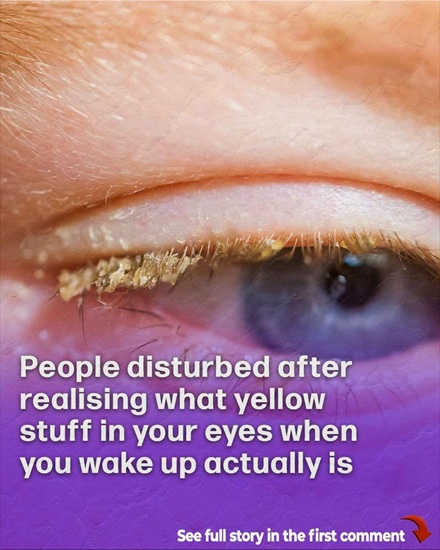
Most people have experienced waking up in the morning and noticing a small amount of dry, sticky, or crusty material in the corners of their eyes. It may look white, pale yellow, slightly cream-colored, or sometimes almost clear depending on how much moisture remains. This material is commonly called “sleep,” “eye gunk,” or “eye crust,” while eye discharge is sometimes described medically as rheum. In most cases, a small amount after sleeping is completely normal and does not mean that something is wrong with the eyes.
The material forms as part of the eye’s normal process of lubricating and clearing its surface. Understanding why it appears can also make it easier to recognize when eye discharge begins to look unusual and may deserve medical attention. The normal surface of the eye is constantly being protected and cleaned. Tears spread across the front of the eye each time a person blinks, helping keep the surface moist while also carrying away small particles and cellular debris.
Mucus produced by the conjunctiva helps trap material that does not belong on the eye’s surface. Oil produced by glands in the eyelids also contributes to the tear film and helps slow evaporation. During the day, blinking helps move these materials toward the corners of the eyes and into the normal drainage system. Because this process is continuous, people usually do not notice most of the debris being removed. Things change while a person sleeps because the eyelids remain closed and normal blinking stops.
Tears, mucus, old skin cells, oils, and small particles can continue to collect even though they are no longer being regularly swept away by blinking. Some of the watery component of the tear film can evaporate, leaving the remaining material thicker or drier. By morning, a small amount may have gathered near the inner corners of the eyes or along the eyelashes. This is the familiar substance many people notice immediately after waking. Cleveland Clinic describes normal morning eye discharge as part of the eye’s normal cleaning process and notes that it is common for discharge to accumulate overnight when people are not blinking.
It is sometimes said online that morning eye crust represents the remains of a battle between the eyes and bacteria. That description may sound interesting, but it is not an accurate explanation of ordinary eye discharge. Normal eye crust can contain mucus, tears, dead cells, oils, and environmental debris without indicating that an infection occurred overnight. The immune system certainly plays an important role in protecting the eyes, and abnormal discharge associated with infection can contain immune cells. However, a normal amount of crust after sleep should not automatically be interpreted as evidence that bacteria were attacking the eyes. In most healthy people, it is simply a visible result of normal cleaning and lubrication processes occurring while blinking is temporarily absent.
The color and consistency of normal morning discharge can vary somewhat from person to person. Some people notice a tiny dry white deposit at the inner corner of each eye. Others may see slightly yellowish material mixed with tears and natural oils. A small amount that disappears after gentle washing and is not accompanied by pain, significant redness, swelling, or vision changes is generally not concerning. What matters more is whether the discharge is noticeably different from what is normal for that individual. A sudden increase in amount, a new green color, thick pus-like material, or discharge accompanied by other symptoms deserves more attention.
Environmental conditions can influence how much material a person notices in the morning. Dry air may contribute to greater evaporation from the tear film, while exposure to dust, smoke, pollen, or other irritants can increase eye irritation. Seasonal allergies can also cause watery, itchy eyes and may lead to more mucus or crusting than usual. People who frequently rub irritated eyes can worsen inflammation and potentially introduce additional contaminants from their hands. Contact lenses can also change the way the eye surface behaves, particularly when they are worn longer than recommended. These factors show why the amount of morning discharge can vary without necessarily indicating a serious disease.
One common condition associated with increased crusting is blepharitis. Blepharitis is inflammation affecting the eyelids, particularly the edges near the eyelashes. It can be associated with excess bacteria around the eyelid margins, clogged oil glands, skin conditions, or other factors. Symptoms may include swollen or irritated eyelids, itching, burning, a gritty sensation, watery eyes, and flakes or crusts around the eyelashes. Symptoms are often particularly noticeable in the morning, and some people wake with their eyelids partially stuck together. Mayo Clinic notes that blepharitis often affects both eyes and that regular eyelid care can help control symptoms even though the condition may be persistent.
Blepharitis is not always caused by poor hygiene, so someone who develops it should not assume that they simply failed to keep their face clean. The oil-producing glands in the eyelids play an important role in maintaining a stable tear film, and dysfunction of these glands can contribute to irritation. Treatment depends on the cause and severity, but careful eyelid hygiene is commonly part of management. Warm compresses may be recommended in some cases to loosen crusting and help eyelid oils flow more normally. A healthcare professional may recommend additional treatment if inflammation is persistent or severe. Repeated symptoms should be evaluated rather than treated indefinitely with random products near the eyes.
Conjunctivitis is another common cause of abnormal eye discharge. Often called pink eye, conjunctivitis is inflammation of the conjunctiva, the transparent membrane covering the white part of the eye and lining the inside of the eyelids. It may result from viral infection, bacterial infection, allergies, or irritation from environmental exposures. Symptoms frequently include redness, a gritty or irritated feeling, watering, itching, and discharge that may crust over the eyelashes overnight. The exact appearance of the discharge can vary depending on the cause. Mayo Clinic notes that pink eye is often caused by a virus, although bacterial and allergic causes also occur.
Not every red eye requires antibiotics. Viral conjunctivitis does not respond to antibiotics because antibiotics work against bacteria rather than viruses. Allergic conjunctivitis requires a different approach as well, since the underlying issue is an allergic reaction rather than an infection. This is one reason it can be unhelpful to diagnose the cause of eye discharge based only on color. A healthcare professional can consider the appearance of the eyes, associated symptoms, exposure history, and other findings. Appropriate diagnosis matters because unnecessary or incorrect medication may provide no benefit. Persistent or severe symptoms should therefore be assessed rather than automatically treated as bacterial pink eye.
A stye can also produce localized irritation and discharge. A stye, medically called a hordeolum, is typically associated with an infected or inflamed oil gland near the eyelid or an eyelash follicle. It usually appears as a red, tender bump near the edge of the eyelid and may resemble a small pimple. The area can be painful, swollen, and sensitive when touched. Some people notice yellowish discharge or additional crusting around the affected eyelid. Unlike many cases of blepharitis, a stye may be limited to one localized area or one eye. Cleveland Clinic advises against attempting to pop a stye because doing so can spread infection or worsen irritation.
Many uncomplicated styes improve with conservative care, including warm compresses when recommended. A warm, clean compress placed gently against the closed eyelid can help encourage natural drainage. Squeezing, puncturing, or aggressively rubbing the bump should be avoided. Eye makeup and contact lenses may need to be avoided temporarily if they aggravate the area. A stye that becomes very large, persists, affects vision, or is accompanied by spreading redness should be evaluated by a medical professional. Recurrent styes may also justify an examination for underlying eyelid or oil-gland problems.
Problems with tear drainage can produce another pattern of discharge. Tears normally drain through small openings near the inner corners of the eyelids into the tear drainage system. If this system becomes blocked, tears can back up and overflow onto the face instead of draining normally. A blocked tear duct can also cause gooey or crusty material to accumulate around the eyelashes. In some cases, the blocked area can become infected and produce pain, redness, swelling, or sticky discharge. Babies are particularly likely to experience congenital tear-duct obstruction, although adults can develop blockages for a variety of reasons as well.
A blocked tear duct should not automatically be treated as though it were ordinary morning crust. Persistent tearing from one eye, repeated discharge, swelling near the inner corner of the eyelid, or recurrent infections can indicate that drainage is not functioning normally. In adults, possible causes include age-related narrowing, inflammation, previous surgery, injury, or other obstruction within the drainage system. The appropriate treatment depends on the cause. Some cases are mild, while others require evaluation by an eye specialist. Painful swelling or fever alongside a suspected tear-duct problem deserves prompt medical attention because infection may be present.
Dry eye disease can also change the type of discharge someone sees. Dry eye occurs when the eyes do not make enough tears or when the tears do not work effectively enough to keep the surface properly lubricated. People may experience burning, stinging, scratchiness, redness, light sensitivity, or blurred vision. Although the name suggests an absence of moisture, dry eye can sometimes produce watering because irritation triggers reflex tearing. It can also leave stringy or sticky mucus behind. The National Eye Institute explains that dry eye can occur when tears are insufficient, evaporate too quickly, or fail to maintain the eye surface properly.
Dry eye has many potential contributors. Age can increase the likelihood of developing it, and contact-lens use can contribute in some people. Certain medications and health conditions may also affect tear production or tear quality. Spending long periods looking at digital screens can worsen symptoms in susceptible people because screen use may reduce normal blinking frequency. Environmental conditions such as wind, smoke, or very dry air can increase evaporation. Treatment depends on the underlying cause and may include artificial tears, lifestyle adjustments, prescription treatments, or procedures recommended by an eye-care professional.
Contact-lens wear deserves particular attention when discussing unusual eye discharge. Contact lenses sit directly on the eye’s surface and can increase the risk of irritation or infection when they are worn improperly. Sleeping in lenses that are not specifically approved for overnight use, wearing them longer than directed, or failing to clean and store them correctly can increase risk. A contact-lens wearer who develops significant pain, redness, light sensitivity, discharge, or blurred vision should not simply assume that the problem is ordinary morning crust. Infections involving the cornea can become serious and may threaten vision if treatment is delayed. Removing the lenses and obtaining professional advice may be necessary depending on the symptoms.
Keratitis, or inflammation of the cornea, is another reason not to ignore severe symptoms. The cornea is the transparent tissue covering the iris and pupil and is essential for clear vision. Infections caused by bacteria, viruses, fungi, or parasites can sometimes involve this tissue. Contact-lens misuse is an important risk factor for certain forms of infectious keratitis. Symptoms can include significant pain, redness, light sensitivity, blurred vision, and abnormal discharge. Cleveland Clinic notes that untreated infection can lead to a corneal ulcer and potentially thick or pus-like discharge.
The amount of discharge is often just as important as its color. A tiny amount of pale crust after sleeping is very different from discharge that repeatedly fills the eye, seals the eyelids shut, or rapidly reappears after cleaning. Thick yellow or green discharge can occur with infection, although color alone does not identify the specific organism or cause. Foamy discharge may occur with some eyelid disorders. Very stringy mucus may appear with dry eye or other irritation. Any major change from a person’s usual pattern is worth paying attention to, particularly if other symptoms develop at the same time.
Eye pain is one symptom that deserves particular caution. Ordinary sleep crust should not cause severe pain. Significant pain can indicate a more serious problem involving the cornea, deeper eye structures, infection, injury, or another condition requiring evaluation. Light sensitivity is another warning sign, especially when it appears together with pain or redness. Sudden blurred vision, loss of vision, or a major new change in vision should never be dismissed as a simple discharge problem. Those symptoms require timely medical assessment.
Significant eyelid swelling should also be taken seriously. Mild puffiness can occur for many harmless reasons, but pronounced swelling associated with redness, pain, fever, or difficulty moving or opening the eye may indicate infection or another problem. Swelling that spreads beyond the eyelid or is accompanied by systemic illness warrants medical attention. Similarly, discharge after an eye injury should not automatically be treated with home remedies. Chemical exposure, scratches, and foreign objects can damage sensitive eye tissues. Emergency guidance may be required depending on the nature of the injury.
For ordinary morning crust, gentle cleaning is usually sufficient. Washing hands first reduces the chance of introducing additional germs to the eye area. A clean, damp cloth can be used gently around the closed eyelids to loosen dried material. There is no need to scrape hardened crust aggressively from the eyelashes or corners of the eyes. If the eyelids are stuck together, softening the material with moisture first is safer and more comfortable. Anything used around the eye should be clean because the eye surface is particularly vulnerable to irritation and contamination.
Eyelid hygiene can be especially useful for people prone to blepharitis. A healthcare professional may recommend warm compresses followed by gentle cleaning along the eyelid margins. The exact routine should be appropriate for the person’s condition because harsh soaps and products not intended for use near the eyes may cause irritation. It is generally wise to avoid placing ordinary facial cleansers directly into the eyes. Persistent eyelid inflammation may require more than simple washing. Professional guidance can help determine whether medication or another treatment is appropriate.
Removing eye makeup before sleep is another sensible practice. Mascara, eyeliner, eye shadow, and other products can accumulate around the eyelid margins and potentially contribute to irritation if left in place overnight. Makeup applicators should also be kept reasonably clean, and sharing eye cosmetics should be avoided because it can transfer microorganisms. Old products may need to be discarded according to appropriate replacement guidance. Anyone experiencing an active eye infection may be advised to replace eye products that could have become contaminated. Cosmetics should never be used to conceal a painful or severely inflamed eye instead of addressing the underlying problem.
Touching and rubbing the eyes should also be minimized, particularly when hands have not been washed. Hands come into contact with phones, door handles, keyboards, public surfaces, food, pets, and countless other sources of microorganisms and irritants throughout the day. Rubbing can transfer material directly to the eye surface. It can also worsen irritation that is already present. People with allergies may find this difficult because itchy eyes create a strong urge to rub. Using medically appropriate allergy management can sometimes reduce that cycle of itching and irritation.
Good contact-lens hygiene is another major part of protecting eye health. Lenses should be handled with clean hands and used according to the instructions provided by an eye-care professional and the product manufacturer. Lens cases require proper care and replacement as recommended. Contact lenses should not be rinsed or stored in ordinary tap water because water can expose the eyes to organisms that may cause serious infections. People should also avoid continuing to wear lenses when their eyes are painful, unusually red, or producing abnormal discharge. Continuing normal lens use in an irritated eye can make some problems worse.
Allergies deserve separate consideration because they commonly cause eye symptoms without infection. Allergic eye irritation often includes itching, redness, watering, and swelling, and mucus may increase in some individuals. Seasonal patterns can offer a clue, such as symptoms becoming worse during periods of high pollen exposure. Unlike bacterial infection, allergic conjunctivitis does not require antibiotics. Reducing exposure to known allergens and using appropriate treatments recommended by a healthcare professional may help. Severe or persistent allergy symptoms should still be evaluated if they interfere with vision or daily activities.
It is also possible for both eyes to behave differently. Some conditions commonly affect both eyes, while others begin in one and later spread. Blepharitis frequently involves both eyelids, whereas a localized stye often appears on only one side. A blocked tear duct may affect a single eye. Infectious conjunctivitis can begin in one eye and then involve the other, particularly if contaminated hands transfer material between them. This is another reason people should wash their hands after touching an irritated eye and avoid sharing towels or washcloths during suspected infection.
Parents may also notice crusting around an infant’s eye. Congenital tear-duct blockage is relatively common in babies and can cause persistent watering or discharge. However, newborn eye problems should be assessed according to the child’s age and symptoms rather than treated based on advice intended for adults. Significant redness, swelling, fever, apparent pain, or concerning discharge in an infant deserves medical guidance. Babies cannot describe changes in vision or discomfort, so caregivers have to rely more heavily on visible signs. Pediatric or eye-care professionals can determine whether simple tear-duct obstruction or another condition is present.
The appearance of morning crust should therefore be interpreted in context. A small amount of material that appears after sleep, causes no discomfort, and disappears after gentle washing is generally part of normal eye function. A sudden change in amount, color, consistency, or associated symptoms is more meaningful than simply noticing that some crust exists. Redness, substantial swelling, pain, light sensitivity, significant itching, or vision changes can point toward irritation, inflammation, infection, or another eye problem. The combination of symptoms is usually more informative than the crust alone. A professional eye examination can clarify the cause when symptoms persist.
People should be especially cautious about attempting to treat an undiagnosed eye condition with leftover antibiotic drops. Antibiotics are useful only for appropriate bacterial infections and do not treat viral or allergic causes. Some eye medications can also be inappropriate for particular conditions. Sharing prescription eye drops with another person is unsafe because the diagnosis and treatment requirements may differ. A bottle tip can also become contaminated if it touches the eye or eyelashes. Medication should be used according to professional instructions rather than based on the appearance of discharge alone.
Home remedies involving substances not designed for ophthalmic use should likewise be approached cautiously. The eye surface is delicate, and substances that seem harmless elsewhere on the body can cause irritation when placed directly in the eye. Commercial eye products are manufactured according to standards designed for ophthalmic use. If symptoms require more than simple external cleaning, asking a pharmacist, optometrist, ophthalmologist, or other qualified healthcare professional is safer than experimenting with homemade solutions. This is particularly important when the person wears contact lenses or has previously had eye surgery.
An eye examination may involve more than simply looking at the discharge. A clinician may examine the eyelids, eyelashes, conjunctiva, cornea, tear film, and tear drainage system. They may ask when symptoms started, whether one or both eyes are affected, and whether pain, itching, light sensitivity, or vision changes are present. Contact-lens habits and recent illness or exposure to someone with conjunctivitis may also be relevant. Dry-eye evaluation may involve measuring tear quantity, tear quality, or how quickly the tear film breaks apart. The treatment selected should be based on the actual cause rather than the assumption that all eye discharge represents the same condition.
For many people, the conclusion is reassuring. Waking with a little pale or slightly yellowish crust in the corners of otherwise comfortable eyes is usually normal. It occurs because the eye continues producing and clearing material while blinking pauses during sleep. Once a person wakes and resumes blinking, the normal cleaning cycle becomes more active again. Gentle washing usually removes the remaining dried material. In the absence of other symptoms, there is generally no reason to view ordinary morning discharge as a sign of infection or disease.
The situation changes when discharge becomes excessive or is accompanied by symptoms that are unusual for the individual. Persistent redness, pain, substantial swelling, thick or green discharge, severe light sensitivity, difficulty opening the eye, or new blurred vision should not be ignored. These signs may indicate conditions ranging from blepharitis and conjunctivitis to tear-duct problems or corneal disease. Contact-lens wearers should be particularly careful because some corneal infections can progress rapidly. Prompt evaluation can help protect both comfort and vision when a potentially serious condition is present.
Ultimately, morning eye crust is a good example of how an ordinary body process can look more dramatic than it really is. The small amount most people encounter after sleeping is usually the result of normal tears, mucus, oils, cells, and debris collecting while the eyes remain closed. It is not necessary to describe it as evidence of a nightly battle against bacteria in order to appreciate the eye’s natural cleaning system. The more useful distinction is between normal discharge and a significant change from a person’s usual pattern. Good eyelid hygiene, appropriate contact-lens habits, clean hands, and attention to warning symptoms all contribute to healthier eyes. When pain, vision changes, severe redness, unusual discharge, or persistent symptoms occur, professional eye care is the appropriate next step.
