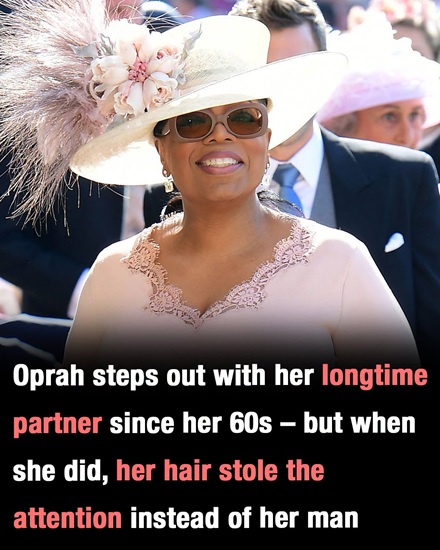
For nearly four decades, Oprah Winfrey and Stedman Graham have built one of the longest-lasting relationships in American entertainment while largely refusing to follow the traditional celebrity script. Their partnership began in 1986, the same year The Oprah Winfrey Show entered national syndication and began transforming Winfrey into one of television’s most influential figures. Unlike many famous couples whose relationships have unfolded constantly in public, Winfrey and Graham have generally kept the most personal parts of their life away from cameras.
They became engaged, considered marriage, and ultimately chose a different arrangement that both have said suited them better. In August 2026, Graham appeared alongside Winfrey during a reunion for former employees of her talk show in Chicago, giving the public a relatively rare recent look at the couple together. The Chicago appearance was notable partly because Graham has become less visible at Winfrey’s major public events in recent years.
Winfrey, now 72, attended a reunion celebrating 15 years since the conclusion of The Oprah Winfrey Show, while the event also anticipated the 40th anniversary of the program’s national launch on September 8, 1986. Graham, 75, joined her at Reunion, Chef Art Smith’s restaurant at Navy Pier. Former senior supervising producer Jill Van Lokeren shared images from the gathering, including a photograph of Winfrey and Graham posing with Smith and a large platter of fried chicken. People reported that it was their first major public appearance together since 2019.
The photograph offered a quiet reminder of how much time has passed since Winfrey and Graham first met. Their relationship began before Winfrey had reached the extraordinary level of fame that would later define her career. In 1986, the two encountered each other at a charity event and initially developed a friendship. They began dating later that year. By coincidence, it was also the year that Winfrey’s talk show became nationally syndicated, creating two major long-term developments in her life almost simultaneously.
Winfrey’s television career would soon become much more demanding than either of them could have predicted. The Oprah Winfrey Show eventually became one of the most successful daytime programs in television history and remained in national syndication for 25 seasons, ending in 2011. The program covered celebrity interviews, books, relationships, health, social issues, personal transformations, and stories from ordinary people. As the show’s popularity expanded, Winfrey herself became far more than a television presenter. She developed into a producer, businesswoman, actress, publisher, philanthropist, and media owner whose professional commitments occupied enormous amounts of her time.

Graham experienced those changes beside her, but he maintained a professional identity separate from Winfrey’s celebrity. He became known for his work as an author, educator, speaker, and businessman rather than attempting to build his own public identity entirely around his famous partner. This separation appears to have been an important feature of their relationship. Winfrey has repeatedly described Graham as someone secure enough in his own identity to allow her to pursue the life and career she wanted. Their relationship consequently developed around partnership rather than the expectation that one person had to reshape the other.
After several years together, marriage appeared likely. Graham proposed in 1992, and Winfrey accepted. At the time, the engagement generated understandable attention because viewers had followed Winfrey’s personal life as her fame continued growing. A wedding seemed to be the obvious next step. Yet the ceremony never happened. Rather than ending the relationship, Winfrey and Graham ultimately concluded that marriage itself was not necessary for them to remain committed to one another.
Winfrey later explained that accepting Graham’s proposal helped her understand something about herself that she had not fully recognized beforehand. In a 2020 essay published by O, The Oprah Magazine, she wrote that she eventually realized she had wanted to know that Graham considered her worthy of marriage more than she actually wanted to become a wife. She valued the emotional meaning of being asked, but she was far less enthusiastic about what she believed the daily structure of marriage would require from her. Her television career was already consuming much of her energy and attention. Both she and Graham understood the priority she had given to her work.
That realization did not represent a rejection of Graham. Instead, Winfrey has presented it as an honest evaluation of the kind of relationship that worked for them. She believed marriage would introduce expectations and assumptions that might change the balance they had already established. Graham also continued supporting the unconventional arrangement. Rather than treating the canceled wedding as evidence that something had failed, the couple continued their relationship and gradually stopped measuring it against a traditional timeline.

Winfrey eventually began describing their bond as a “spiritual partnership.” The term represented something broader than legal marital status. For her, the relationship involved two individuals committed to supporting one another while continuing to develop their own identities. It also reflected her belief that Graham did not need her to become a conventional spouse in order to remain committed to her. Their approach was personal rather than a recommendation that other couples should make the same choices.
Years later, Winfrey became even more explicit about what she believed would have happened if they had married. In a 2019 interview with People, she said both she and Graham had concluded that they probably would not still be together had they gone through with the wedding. Her reasoning was not that marriage itself was inherently problematic. Rather, she believed marriage would have changed the expectations each brought into the relationship. She felt those new expectations might have conflicted with the independence that helped their partnership survive.
Winfrey has specifically praised Graham for allowing her to be the person she felt she needed to become professionally. She has said he did not expect her to organize her life around traditional domestic roles or demand that her extraordinary career be reduced to make him more comfortable. In Winfrey’s view, that freedom mattered enormously. She believed the assumptions she personally associated with becoming a wife could have introduced resentment on both sides. Remaining unmarried allowed them to define their responsibilities privately rather than according to what other people expected.
Their relationship therefore provides an interesting example of how commitment can take different forms. It should not be interpreted as an argument against marriage or as evidence that their arrangement would work for everyone. Millions of couples find happiness and stability within marriage, while other long-term partners prefer different structures. Winfrey has spoken specifically about what worked for her and Graham. Their experience is a personal history, not a universal prescription.
Their decision not to marry was accompanied by another major life choice: Winfrey did not become a mother. She has discussed that decision publicly on several occasions and has said she does not regret it. Her reasoning developed partly from the countless interviews she conducted during her television career. Listening to people describe their childhood experiences and family relationships made her increasingly aware of how demanding parenthood could be.
Winfrey told People in 2019 that her years of interviewing families helped her recognize the enormous responsibility involved in raising children. She came to believe that motherhood required a level of sustained commitment that she did not want to combine with the intensity of the professional life she had chosen. Her comments were not intended to minimize women who became mothers. In fact, Winfrey emphasized her admiration for women who devote large portions of their lives to caring for children.
She has said that she does not naturally compartmentalize different areas of her life particularly well. Because of that, Winfrey believed she would have found it extremely difficult to maintain the career she wanted while also giving children the attention she felt they deserved. Her conclusion was that choosing not to become a mother was more responsible for her personally than having children simply because society expected it. She has repeatedly described parenthood as something that deserves far more recognition for the sacrifices it involves.
A later reflection added another dimension to that decision. In 2025, Winfrey discussed how observing other prominent women, including Barbara Walters, had influenced her thinking about career and motherhood. The experiences she witnessed reinforced her belief that having children while pursuing an exceptionally demanding public career would have required choices she did not want to make. Once again, Winfrey framed the decision as specific to her own personality and priorities rather than as criticism of people who successfully combine professional careers with raising children.
Although Winfrey never had biological children, education and mentorship have occupied enormous parts of her philanthropic life. One of the most significant examples is the Oprah Winfrey Leadership Academy for Girls in South Africa. Winfrey has spoken of students connected with the academy in deeply affectionate terms and has sometimes referred to them as daughters in a spiritual sense. This role does not replace conventional motherhood, nor has Winfrey presented it that way. It reflects a different form of mentorship and long-term investment in young women’s education.
Graham’s ability to maintain his own identity has repeatedly surfaced in Winfrey’s descriptions of why their partnership has lasted. A relationship involving one of the most famous media personalities in the world inevitably creates unusual pressures. Graham could easily have been reduced publicly to “Oprah’s partner,” yet he continued developing his own professional interests. That independence appears to have made their relationship less dependent on celebrity attention.
The couple has also avoided turning their partnership into constant public content. They have attended awards ceremonies, premieres, celebrations, and other major events together over the years, but they generally do not document every aspect of their private life. Photographs from earlier decades show Graham supporting Winfrey at occasions ranging from the Academy Awards to the Kennedy Center Honors. Their public appearances reveal continuity without providing complete access to their relationship.
In 2010, Graham accompanied Winfrey during events surrounding her Kennedy Center Honors recognition. Five years later, the couple appeared together at the Academy Awards, where Selma, a film in which Winfrey appeared and on which she served as a producer, was nominated for Best Picture. In 2016, Winfrey posted a Valentine’s Day photograph while attending the wedding of Liberty Ross and Jimmy Iovine with Graham. These moments offered occasional public glimpses of a relationship that otherwise remained relatively private.
Graham was also beside Winfrey at the 2018 Golden Globe Awards, when she became the first Black woman to receive the Cecil B. DeMille Award. The speech she delivered that evening became one of the most discussed moments of the ceremony. Graham’s presence was characteristic of the role he has often occupied publicly: supportive but rarely attempting to become the center of attention himself.
The couple’s relationship attracted renewed attention during the COVID-19 pandemic in 2020. Like many households, Winfrey and Graham had to adjust to unusual routines and extended periods at home. Winfrey shared occasional lighthearted glimpses of that period, including the two working on a puzzle together. In another social-media moment, members of the household jokingly confronted Graham after he ate an entire loaf of banana bread. Those posts showed an ordinary domestic side of a relationship generally associated with extraordinary wealth and public success.
Their partnership has also endured the intense scrutiny Winfrey has experienced over her appearance and weight throughout much of her career. In late 2025, Winfrey said Graham had remained supportive during decades of highly publicized changes in her weight. She recalled that she weighed around 200 pounds when he first met her and said that her size never made a meaningful difference in the way he treated her. For Winfrey, that consistency became another example of the stability she associated with their relationship.
That history is important because Winfrey’s body became a recurring subject of tabloid headlines and daytime television coverage for decades. She has publicly discussed dieting, weight loss, weight regain, obesity, exercise, and more recently the use of GLP-1 medication. Graham, according to Winfrey, did not make his support dependent on how she looked at any particular stage. She described him as consistently accepting throughout those changes.
Their ability to keep the relationship comparatively private does not mean Graham has disappeared from Winfrey’s life. Public visibility and private involvement are two different things. A person may stop appearing regularly on red carpets while remaining deeply involved in a partner’s everyday life. The 2026 Chicago reunion offered a useful reminder of that distinction. Graham had not suddenly returned to Winfrey after years apart; he had simply made a relatively rare public appearance beside her.
That detail is particularly important when discussing the recent photographs. Headlines describing Graham as having “resurfaced” can create the misleading impression that the couple had been separated or that nobody knew what had happened to him. There is no credible evidence of such a break. They remained longtime partners. What was unusual was seeing them photographed together at a significant public event after several years without a comparable appearance.
The reunion itself carried considerable emotional meaning for Winfrey independent of Graham’s presence. Former employees of The Oprah Winfrey Show gathered in Chicago to celebrate 15 years since the program ended and to anticipate its 40th anniversary. For Winfrey, many of the people in the room had spent years helping create the program that defined a major portion of her professional life. The event was therefore as much about colleagues and shared history as it was about celebrity nostalgia.
The nationally syndicated version of The Oprah Winfrey Show launched on September 8, 1986. By September 8, 2026, that launch will have occurred exactly 40 years earlier. During the reunion, Winfrey expressed amazement at reaching that milestone and thanked members of her former team. The timing creates an unusual parallel with her personal life: 1986 was also the year she met Graham. Her most defining television partnership with her audience and her longest romantic partnership therefore began during essentially the same chapter of her life.
When the show began nationally, few could have predicted what it would eventually become. Winfrey moved from being a successful Chicago television personality to an internationally recognized media figure. Her influence eventually extended into publishing, film production, book promotion, philanthropy, cable television, and digital media. Through all of those transformations, Graham remained part of her life without becoming a constant character in the public presentation of her career.
That separation between professional identity and romantic identity may have helped preserve their relationship. Celebrity couples are frequently expected to attend every event together, discuss one another constantly, and allow public curiosity into deeply private areas of their lives. Winfrey and Graham largely resisted that model. They occasionally discussed their relationship, but they did not construct their careers around being a celebrity couple.
Winfrey has also acknowledged that the relationship required Graham to have an unusually strong sense of self. Being partnered with someone whose first name alone is internationally recognizable could create an enormous imbalance in attention. Graham’s willingness to pursue his own interests rather than compete with Winfrey’s fame seems to have been central to their dynamic. In interviews, Winfrey has repeatedly returned to the idea that he gives her room to be herself.
The relationship therefore challenges some assumptions about what long-term commitment is supposed to look like. They were engaged but did not marry. They remained together rather than treating the canceled wedding as a breakup. They chose not to have children together. They pursued separate professional identities. And they avoided making public visibility a measure of whether their relationship was healthy.
None of those decisions guarantees success, just as following a traditional path does not guarantee failure. What matters in the story of Winfrey and Graham is that they developed an arrangement both have continued accepting across decades. Winfrey’s comments suggest that understanding what she did not want was as important as understanding what she did want. Marriage might have been culturally expected after an engagement, but she concluded that entering one for the sake of convention would not have served either person well.
Her explanation that she wanted “to be asked” rather than necessarily wanting the marriage itself is particularly revealing. Engagement provided emotional reassurance that Graham saw her as someone he wanted to spend his life with. Once that reassurance existed, Winfrey could examine the practical reality of marriage separately. She ultimately decided the symbolic affirmation mattered to her more than the legal institution.
The decision may have seemed unusual in the early 1990s, particularly because Winfrey was already such a visible public figure. Celebrity culture frequently framed engagement as a countdown toward a wedding. Canceling or indefinitely postponing the ceremony was usually interpreted as evidence of trouble. Winfrey and Graham quietly demonstrated that another possibility existed: an engagement could lead to clarity about the relationship without necessarily leading to marriage.
Their longevity ultimately changed the way that decision was perceived. Had the relationship ended shortly afterward, the canceled wedding might have been remembered as an early sign of incompatibility. Instead, they continued together for decades. By 2026, they have been partners for roughly 40 years, considerably longer than many marriages.
This does not prove that avoiding marriage caused their relationship to last. Human relationships are far too complicated for such a conclusion. What can be said is that Winfrey herself believes marriage would have altered their dynamic in ways that might not have worked for them. Graham has apparently agreed with that assessment. Their comments therefore describe their own experience rather than a general theory about marriage.
The same careful distinction applies to Winfrey’s decision not to have children. It should not be presented as an argument that career and motherhood are incompatible. Countless women successfully combine the two in different ways. Winfrey’s point was narrower: knowing her own temperament and the scale of the career she wanted, she believed motherhood would require sacrifices she was not prepared to make. She has expressed admiration rather than criticism toward women who made different choices.
Winfrey’s willingness to discuss those decisions openly has contributed to the continuing public interest in her relationship. People are accustomed to celebrity romances being framed around weddings, divorces, pregnancy announcements, and family milestones. Winfrey and Graham’s story contains relatively few of those conventional markers. Its most remarkable feature is continuity.
Four decades also means the couple has experienced enormous changes in the world around them. Their relationship predates widespread internet access, smartphones, social media, streaming television, and the modern celebrity-news environment. When they first met, The Oprah Winfrey Show was only beginning its national run. Today, entire generations know Winfrey from projects created long after the program ended.
Graham has watched Winfrey move through many professional identities during that time. She became a billionaire businesswoman, launched O, The Oprah Magazine, created the Oprah Winfrey Network, acted in and produced films, established educational initiatives, and conducted major interviews long after her daytime program concluded. Remaining together throughout such changes required their relationship to exist independently of one specific career phase.
Winfrey’s own view of Graham also appears to have changed from conventional romantic expectations toward something she considered deeper. The “spiritual partnership” language she adopted emphasizes purpose and personal development rather than marital status. She has described a relationship in which both people have room to pursue their own calling. That concept appears central to how she explains their longevity.
Public photographs offer only tiny glimpses into that history. A picture from an awards ceremony might show them dressed formally and smiling at cameras. A pandemic-era social-media clip might show them joking at home. The 2026 Chicago photograph shows them standing beside friends and former colleagues. None of those images can reveal the entirety of a 40-year relationship.
That limitation is worth remembering when interpreting celebrity relationships generally. Photographs can confirm that people attended an event together, but they cannot establish everything happening privately between them. In Winfrey and Graham’s case, the strongest information about their relationship comes not from guessing based on photographs but from what Winfrey herself has publicly said over decades.
The recent Chicago appearance therefore does not require dramatic speculation. There is no need to suggest that Graham had disappeared, secretly returned, or suddenly repaired a broken relationship. Reliable reporting simply indicates that the longtime couple appeared together at an important reunion connected with Winfrey’s television history. The rarity of the photograph made it noteworthy enough.
At 72 and 75 respectively, Winfrey and Graham are also now reflecting on a relationship that has occupied most of their adult lives. Winfrey was 32 when they met. Graham was in his mid-thirties. The careers, priorities, and personal identities they possess today were still developing.
That perspective makes the 2026 reunion photograph particularly interesting. It shows two people who met during one of the most pivotal years of Winfrey’s professional life returning to the city where the television phenomenon that changed her career began. Former coworkers gathered to remember the show. Graham, whose relationship with Winfrey began that same year, was present as well.
There is also a meaningful contrast between the scale of Winfrey’s public life and the relative privacy of their partnership. Few television personalities have been more open with audiences about personal subjects. Winfrey built much of her career around candid conversations about relationships, trauma, family, health, ambition, and emotional development. Yet she still maintained boundaries around her own relationship.
Those boundaries did not prevent her from sharing important lessons she believed she had learned. She has spoken about why she did not marry. She has explained why she chose not to have children. She has praised Graham’s independence and support. But she has not attempted to transform every private disagreement or everyday interaction into entertainment.
Perhaps that restraint is one reason a new photograph can still generate interest after 40 years. Audiences are not accustomed to seeing Winfrey and Graham together constantly. When they do appear publicly, the image feels like a glimpse into a partnership that has continued largely beyond the constant cycle of celebrity publicity.
Their relationship also demonstrates that there is a difference between privacy and secrecy. Winfrey has never hidden the fact that Graham is her longtime partner. They have appeared at numerous public events and spoken about each other openly. What they have avoided is turning the relationship into a continuously documented public performance.
That distinction has become increasingly unusual in an era when celebrities can share their lives online every day. Social media rewards constant updates, while entertainment media often interprets silence as evidence that something is wrong. Winfrey and Graham’s decades together predate those expectations and have largely continued outside them.
Their 2026 appearance therefore feels less like a comeback and more like another rare public chapter in a very long story. Graham did not need to return to Winfrey’s life because available evidence indicates he had remained part of it. What returned was simply the opportunity for audiences to see them together at a major event.
Winfrey and Graham’s partnership may ultimately be remembered partly because it resisted easy categories. They were engaged without becoming spouses. They became a family without becoming parents together. They built a deeply committed relationship while preserving substantial independence.
The arrangement worked because it was theirs. Winfrey has never suggested that every couple should imitate it. Instead, her reflections emphasize knowing oneself well enough to distinguish genuine desire from social expectation. In her case, being proposed to answered an emotional question, while actually becoming married represented a lifestyle she eventually realized she did not want.
Graham’s role in that realization was equally important. A different partner might have interpreted the canceled wedding as rejection or insisted that legal marriage was essential. Their continued relationship suggests that Graham was willing to accept a structure that prioritized mutual compatibility over convention. Winfrey has repeatedly credited that willingness as part of their success.
Their story is not without unanswered questions, because no outside observer can know everything about a private partnership. That is precisely why responsible coverage should avoid inventing conflict, assigning emotions the couple never expressed, or presenting speculation as fact. The publicly documented history already provides a compelling narrative.
Two people met at a charity event in 1986. Friendship became romance. Romance became an engagement. Engagement did not become marriage, but the relationship continued.
Meanwhile, one of them built one of the most influential television careers of her generation. The other retained an independent professional life while remaining beside her. They chose not to have children together and developed a partnership outside traditional marital expectations.
Nearly four decades later, they are still together. In August 2026, as Winfrey reunited with people who helped create the television show that transformed her life, Graham appeared at her side once again. The photograph captured only a few seconds from a relationship spanning roughly 40 years.
Perhaps that is why the image attracted so much attention. It was not shocking because either person had undergone some mysterious transformation. It was meaningful because of the history contained behind it. The young couple who met when The Oprah Winfrey Show was beginning had grown older together while the world around them changed enormously.
For Winfrey, the relationship appears to have confirmed something she learned decades ago: commitment does not necessarily have to resemble the version other people expect. For Graham, maintaining his own identity while supporting a partner of extraordinary fame appears to have been equally important.
Their longevity cannot be reduced to one secret or piece of advice. Relationships involve personalities, circumstances, compromises, timing, and countless decisions outsiders never witness. Winfrey and Graham simply found a structure they believed worked for them and continued choosing it.
Forty years after they first met, that may be the most notable part of their story. They did not need a wedding to prove the relationship was serious. They did not need constant public appearances to demonstrate that it continued. And they did not need to turn their choices into a judgment about how other people should live.
The rare 2026 photograph offers something much simpler: Oprah Winfrey and Stedman Graham standing together at another milestone after almost four decades as partners. Behind that single image is a relationship that survived enormous fame, changing careers, public scrutiny, and the passage of time largely on its own terms.
