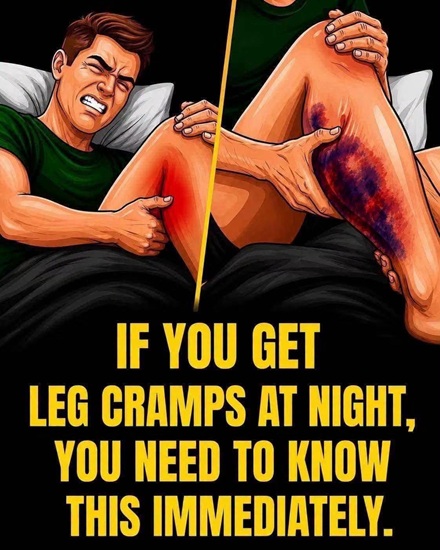
Muscle Cramps Can Strike Without Warning — But the Real Cause Is Not Always What People Think
A muscle cramp can arrive in an instant.
One moment, your leg feels completely normal.
The next, a muscle tightens into a painful knot that seems unwilling to let go.
For some people, the pain lasts only a few seconds.
For others, it can continue for several minutes and leave the muscle sore afterward.
Leg cramps are especially common in the calf, but they can also affect the thighs, feet and other muscle groups.
Most are harmless.
But not all cramps happen for the same reason.
And sometimes the most obvious explanation is not the correct one.
What Exactly Is a Muscle Cramp?
A muscle cramp is a sudden, involuntary contraction of a muscle.
The muscle tightens without you intentionally contracting it and may temporarily refuse to relax.
During the episode, the affected area can feel hard, tense or even visibly knotted.
The calf is one of the most common places for cramps to occur.
They can also affect the hamstrings, quadriceps and feet.
According to medical references, cramps often last from seconds to several minutes, although soreness can remain after the contraction has stopped.
The natural question is simple.

Why does this happen?
There is no single answer.
1. Overusing a Muscle
One of the most common triggers is simply asking a muscle to do more than it is ready for.
Intense exercise can fatigue muscle fibers.
A workout that is longer or harder than usual may increase the likelihood of cramping.
Heat can make the situation more difficult because heavy sweating increases fluid loss.
Poor conditioning can matter too.
A muscle that is not accustomed to a particular activity may tire faster.
This is why cramps sometimes appear during running, swimming or other strenuous exercise.
But physical effort is only one possible explanation.
2. Dehydration Can Play a Role
Not drinking enough fluid can increase the risk of muscle cramps in some situations.
This is particularly relevant during strenuous activity, hot weather, heavy sweating, vomiting or diarrhea.
Muscles depend on adequate hydration to function normally.

However, dehydration should not be blamed for every cramp.
Many nighttime leg cramps occur without any obvious dehydration.
Sometimes no clear cause can be identified at all.
That uncertainty is important.
Because drinking more water may help one person while doing little for another.
3. Electrolyte Problems May Contribute
Minerals such as potassium, calcium, magnesium and sodium play important roles in muscle and nerve function.
Abnormally low levels can contribute to muscle cramps.
But this does not mean that everyone with cramps needs a magnesium or potassium supplement.
There are many possible causes of cramps.
And taking supplements unnecessarily can create its own problems, particularly in people with kidney disease or those taking certain medications.
If recurrent cramps are thought to involve an electrolyte problem, a healthcare professional may use blood tests to investigate.
Guessing from symptoms alone is not always reliable.
4. Holding the Same Position for Too Long
Cramps do not occur only during intense activity.
Sometimes muscles react after being kept in the same position for an extended period.
Long periods of sitting or standing can contribute to discomfort and stiffness.

People with jobs that require prolonged sitting may notice that their legs feel tighter by the end of the day.
Changing position regularly and incorporating gentle movement may help.
Stretching can also be useful.
But if cramps keep appearing despite these changes, another cause may need to be considered.
5. Nerve Compression Can Cause Cramping Pain
Problems involving nerves can sometimes produce symptoms that resemble or contribute to muscle cramps.
Pressure on nerves in the spine may cause cramping sensations in the legs.
For example, certain spinal conditions can create pain or cramping that becomes more noticeable during walking.
A pinched nerve in the back can also cause symptoms that travel into the leg.
This is one reason recurring cramps accompanied by numbness, tingling or weakness deserve medical attention.
The problem may not be located in the muscle itself.
6. Reduced Blood Flow Is Another Possibility
A narrowing of arteries supplying the legs can cause cramping pain during activity.
This is associated with conditions such as peripheral artery disease.
The discomfort may appear while walking or exercising and improve after stopping.
That pattern differs from an occasional nighttime cramp.
Repeated exertional cramping, especially in people with cardiovascular risk factors, should not simply be dismissed as muscle fatigue.
Sometimes circulation needs to be evaluated.
7. Pregnancy Can Increase the Risk
Leg cramps are common during pregnancy, particularly in the second and third trimesters.
The exact reason is not always clear.
Changes in circulation, muscle workload and body chemistry may all contribute.
Pregnant people often experience cramps at night.
Gentle calf stretching, staying adequately hydrated and maintaining appropriate physical activity may help some people.
Any supplements, including magnesium, should be discussed with a healthcare professional during pregnancy rather than started automatically.
8. Some Medications Can Contribute
Certain medicines are associated with muscle cramps.
Diuretics, which increase urination, may contribute indirectly by altering fluid or mineral levels.
Statins, used to lower cholesterol, can sometimes cause muscle-related symptoms.
Other medications can also be involved.
That does not mean someone should stop a prescribed drug because they experience cramps.
Stopping medication suddenly can be dangerous.
Instead, recurrent muscle symptoms should be discussed with the prescribing clinician.
A medication review may reveal a possible connection.
9. Alcohol Can Be Relevant
Heavy alcohol use may contribute to cramps through several mechanisms.
It can affect hydration.
It can influence nutrition.
And long-term heavy alcohol use may affect nerves, muscles and the liver.
Occasional alcohol intake does not automatically explain a cramp.
But frequent or heavy use can be part of the medical picture.
The broader context matters more than a single episode.
10. Some Medical Conditions Can Cause or Increase Cramps
Recurring muscle cramps can sometimes occur alongside underlying health problems.
Examples include thyroid disorders, kidney disease, nerve disorders and diabetes.
Dialysis can also be associated with cramping.
Peripheral artery disease can produce cramping linked to reduced blood flow.
This does not mean that frequent cramps automatically indicate serious illness.
Most are still benign.
But when cramps are frequent, severe or accompanied by other symptoms, evaluation becomes more important.
And that leads to the next question.
What should you actually do when a cramp starts?
The First Step Is Usually Stretching
When a muscle suddenly contracts, gently stretching it is one of the most widely recommended immediate measures.
For a calf cramp, straighten the leg and gently pull the toes toward the shin.
This lengthens the contracted calf muscle.
Do not force the stretch aggressively.
The goal is to encourage the muscle to relax, not cause another injury.
Gentle massage can also help.
Sometimes standing and placing the affected foot flat on the floor provides relief.
Walking slowly may help certain people as the muscle begins to loosen.
Heat Can Help a Tight Muscle Relax
A warm towel, heating pad or warm bath can be soothing while the muscle is tight.
Heat may help the muscle relax and reduce the sensation of stiffness.
After the acute cramp has ended, the area may remain tender.
Cold therapy can sometimes help with lingering soreness.
The best approach can depend on how the muscle feels after the contraction passes.
But there is one popular home remedy that deserves more caution.
What About Pickle Juice?
Pickle juice is frequently mentioned online as a rapid remedy for muscle cramps.
Some small studies involving exercise-associated cramps have explored whether its strong taste might trigger nerve reflexes that reduce cramp duration.
But the evidence is limited.
It should not be treated as a standard or guaranteed treatment for ordinary nighttime leg cramps.
Pickle juice also contains a significant amount of sodium.
That may be inappropriate for some people, including those who have been advised to limit salt.
So while some athletes use it, it is not necessary for most muscle cramps.
Stretching remains much better established.
Pain Relievers Do Not Usually Stop the Cramp Immediately
Ibuprofen, naproxen and similar nonsteroidal anti-inflammatory drugs can sometimes help if a muscle remains painful after the cramp has passed.
They do not usually work quickly enough to stop a sudden cramp while it is happening.
They also are not safe for everyone.
People with certain kidney, stomach, heart or bleeding problems may need to avoid NSAIDs.
Other medications can interact with them.
So pain medication should be used according to label directions and personal medical guidance rather than automatically.
For the immediate contraction itself, stretching and gentle massage are usually more useful.
Can Nighttime Leg Cramps Be Prevented?
Sometimes.
Regular calf stretching may reduce the frequency of nighttime cramps in some people, although it does not guarantee they will disappear.
Staying adequately hydrated is also sensible.
People exercising heavily or sweating extensively may need to replace both fluids and electrolytes.
Gradually increasing exercise intensity can reduce unnecessary muscle fatigue.
Changing position during long periods of sitting may help as well.
But prevention depends on the cause.
A cramp caused by a medication or circulation problem may not disappear simply because someone drinks more water.
Sometimes There Is No Identifiable Cause
This may be the most important part to understand.
Doctors cannot always identify a clear explanation for leg cramps.
Some are classified as idiopathic, meaning no specific underlying cause is found.
That is why lists claiming that every cramp proves dehydration or magnesium deficiency are misleading.
The body is more complicated than that.
A single occasional cramp usually is not something to fear.
Patterns matter more.
And some patterns should not be ignored.
When Should You Seek Medical Advice?
Most muscle cramps resolve on their own and do not require medical treatment.
But medical evaluation is appropriate when cramps are severe or happen frequently.
The same applies if they last unusually long or repeatedly disturb sleep.
Cramps associated with swelling, redness, warmth, numbness or muscle weakness also deserve attention.
According to NHS guidance, leg cramps lasting longer than about 10 minutes or accompanied by swelling or numbness are reasons to speak with a healthcare professional.
Persistent symptoms can sometimes provide clues about an underlying condition.
And that is the real payoff.
The Cramp Is Usually Not the Whole Story
A sudden knot in the calf may simply be the result of a tired muscle.
It might be connected with dehydration.
It could involve electrolyte changes.
Pregnancy, medication, nerve problems or circulation can sometimes play a role.
And occasionally, no clear explanation will ever be found.
So the most useful response is not to assume every cramp means you need more magnesium, potassium or pickle juice.
Start with the basics.
Gently stretch the muscle.
Massage it.
Use warmth if that feels helpful.
Stay adequately hydrated.
Then pay attention to the pattern.
If the cramps are rare and disappear quickly, they are usually harmless.
If they become frequent, severe or appear with other symptoms, the important question is no longer simply how to make the cramp stop.
It is why it keeps coming back.
Medical disclaimer: This article is for general informational purposes only and does not replace professional medical advice, diagnosis or treatment. Anyone experiencing persistent, severe or unusual muscle cramps should consult a qualified healthcare professional.
