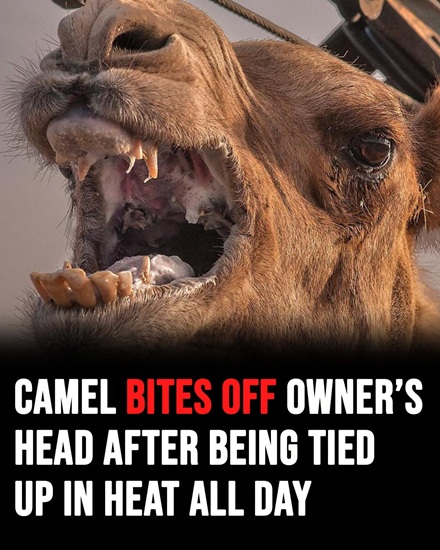
Reports circulating online describe a shocking incident involving a camel in India’s Rajasthan region, specifically the Barmer district, where extreme desert temperatures can exceed 45°C. The story claims a fatal attack occurred after an animal was left restrained in harsh heat conditions. According to viral accounts, the camel had been tethered outside for several hours without access to shade or sufficient water during a severe heatwave.
The region is known for its dry climate and extreme summer temperatures that can become dangerous for both humans and animals. In these reports, the animal’s owner allegedly left it tied up while attending guests indoors, unintentionally delaying care for the animal during peak heat hours. Witnesses in the story describe the camel becoming increasingly restless, showing visible signs of distress and agitation.
Some versions of the report claim that when the owner finally approached the animal, the situation escalated rapidly, resulting in a violent reaction from the camel. These claims include highly graphic descriptions that have circulated widely on social media and low-verification websites.

However, it is important to note that no widely recognized international news organizations have consistently confirmed the most extreme details of this incident, and several versions of the story differ significantly in facts, location details, and outcomes.
What is consistently mentioned across reports is the broader context: camels are large, powerful animals that can become unpredictable when stressed, overheated, or mistreated, especially in extreme desert conditions.
Camel behavior experts explain that camels, although commonly known for endurance and calm temperament, are still capable of defensive aggression when they feel threatened, restrained, or physically distressed for long periods.
Camels in regions such as India, the Middle East, and North Africa are often used for transport, farming, and tourism. In many rural communities, they are essential working animals, but proper handling and welfare conditions are critical for safety.
Animal welfare specialists emphasize that prolonged tethering in high heat without water or shade can cause severe dehydration, heat stress, and panic responses in large animals, potentially increasing the risk of unpredictable behavior.
While viral stories often dramatize animal attacks, documented cases do exist where camels have injured or killed humans, usually in situations involving provocation, improper handling, or stress-related triggers.
For example, isolated incidents reported in various countries have described camels reacting aggressively when struck, overworked, or restrained improperly. These cases, although rare, highlight the importance of safe handling practices.
One widely referenced safety concern is the physical power of camels. Adult camels can weigh over 600–1,000 kilograms and possess strong jaws, powerful neck muscles, and the ability to deliver forceful kicks when threatened.
Wildlife experts stress that camels are not naturally aggressive toward humans, but their size and strength mean that any defensive reaction can lead to serious injuries or fatalities if proper precautions are not taken.
In regions where camels are commonly used, local handlers are typically trained to understand behavioral signs of stress, including pacing, vocalizations, and restlessness. Ignoring these signs can increase risk for both animal and handler.
The viral nature of the India camel story has also raised discussions about misinformation online, where emotionally shocking animal-related incidents are sometimes exaggerated or shared without verification to gain attention.
Fact-checkers often caution readers to approach such stories carefully, especially when they originate from social media posts or entertainment-style news websites that may not rely on verified eyewitness testimony.
Beyond this specific case, animal welfare groups continue to emphasize the importance of humane treatment of working animals, particularly in extreme environments such as deserts, where heat exposure can quickly become life-threatening.
Hydration, shade, and rest periods are essential for preventing heat exhaustion in camels and other livestock. Without these protections, animals may experience severe physical and psychological stress.
Even in cases where aggression does occur, experts stress that it is almost always linked to environmental pressure or human handling factors rather than unprovoked behavior.
In conclusion, while stories of camel attacks attract global attention due to their shocking nature, verified data shows such incidents are rare and usually linked to extreme conditions or mistreatment rather than random aggression.
The broader takeaway from these reports is not fear, but awareness: large animals require responsible care, proper environmental conditions, and understanding of their behavior to prevent dangerous situations.
Whether in India, the Middle East, or other regions where camels are part of daily life, safe handling practices remain the key factor in preventing tragedies and ensuring coexistence between humans and animals.
