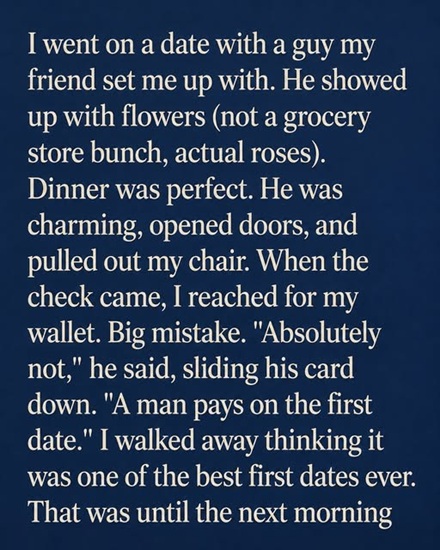
I’ve been on enough first dates to understand that a polished beginning doesn’t always lead to a positive or respectful outcome later, no matter how promising everything initially appears in the moment. Still, when my friend Mia suggested I meet a colleague of her boyfriend, I agreed. She described him as polite, intelligent, and reliable, someone who seemed genuinely respectful and stable in modern dating.
His name was Eric, and from what I was told, he represented the kind of person who restored hope in dating culture—someone attentive, considerate, and seemingly far removed from typical casual or careless behavior. From the start, Eric appeared to meet every expectation. His messages were structured, thoughtful, and consistent. He asked meaningful questions and planned our evening carefully, which created a strong first impression overall.
He chose a well-reviewed Italian restaurant downtown, something that immediately felt more intentional than last-minute casual arrangements. It suggested effort, planning, and a desire to make the evening feel genuinely thoughtful and respectful. There were no obvious warning signs during our early conversations. He listened carefully, responded appropriately, and engaged in topics ranging from travel to work experiences, as well as shared frustrations about dating apps.
When we arrived at the restaurant, Eric was punctual and well-presented. He brought a small bouquet of flowers, opened doors, and maintained polite manners that made the entire experience feel comfortable and respectful at first. The evening conversation flowed easily. We discussed everyday topics, career goals, favorite films, and general life experiences. Everything felt natural, balanced, and free from pressure or discomfort during that initial interaction together.
When the bill arrived, I instinctively reached for my wallet, but Eric politely insisted on paying. His gesture seemed generous and traditional, and I accepted without hesitation or concern at that moment in time. After dinner, he walked me to my car, maintaining respectful distance and polite conversation. There was no pressure, no awkward insistence, and the evening ended in what felt like a normal and pleasant goodbye.
Driving home, I felt cautiously optimistic. I even texted Mia to say the evening had gone well and that her recommendation seemed accurate, based on how respectful and composed Eric had appeared throughout. However, the following morning brought an unexpected shift in tone. Instead of a casual message, I received an email that immediately stood out due to its unusual subject line and formal structure.
The subject read like an invoice for the previous night. At first, I assumed it might be a joke or playful message, but the content quickly made it clear the intent was more serious and unusual. The email was formatted like a business document, complete with itemized sections listing dinner, flowers, and even the small gift he had given, each assigned symbolic “values” or expected forms of repayment.
One section referred to the flowers as “in-kind payment,” suggesting emotional or social compensation. Another implied the keychain gift would require future attention or interaction as a form of repayment for the gesture. The tone became increasingly uncomfortable, especially when the message hinted that declining further interaction could result in social consequences involving mutual acquaintances, which introduced pressure rather than humor or lightness.
What had initially seemed like thoughtful generosity now felt conditional. The earlier kindness appeared reframed as a form of transaction, where normal social gestures were assigned expectations of repayment or obligation. I forwarded the message to Mia, unsure how to interpret it. Her response was immediate and direct, stating that the behavior was not normal and that I should avoid engaging further with the situation.
Mia also shared the email with her boyfriend, Chris, who reacted with concern and disbelief. He agreed that the message reflected inappropriate behavior and suggested addressing it directly to prevent further escalation. Shortly after, Eric received a response crafted in a similarly structured but clearly satirical format, highlighting the inappropriate nature of his message and emphasizing the importance of respectful communication in social interactions.
Following this, Eric’s responses became defensive. He insisted the message was meant as humor, claiming that it had been misunderstood and that people were overreacting to what he considered a harmless joke. He also suggested that I lacked a sense of humor and implied that I had missed an opportunity to continue seeing someone he believed was a good match, which shifted responsibility away from his original message.
I chose not to respond further. At that point, the situation had already revealed enough about communication style, expectations, and boundaries, making additional engagement unnecessary or potentially unproductive. Reflecting on the experience later, I realized how quickly perception can change after a single message. What seemed like genuine politeness during the evening had taken on a very different meaning afterward.
The contrast between the dinner and the follow-up message highlighted how important consistency is in human behavior. Respect should not shift depending on convenience, interpretation, or expectations of repayment later. Healthy interactions are based on mutual respect, clear communication, and freedom from pressure. When kindness is given, it should not come with hidden conditions or expectations of emotional or social repayment afterward.
Looking back, I understood how subtle boundary violations can appear disguised as humor or creativity. Without careful attention, these signals can be easy to overlook during early stages of dating. What stood out most was how structured the message felt, suggesting intention rather than spontaneity. It appeared planned, which raised concerns about whether similar behavior had occurred in other situations before.
The experience reinforced the importance of trusting discomfort signals early. Even small inconsistencies in communication or tone can reveal deeper patterns about how someone views relationships and personal boundaries. Friends play an important role in situations like this. Mia and Chris helped provide perspective, ensuring the situation was viewed clearly rather than dismissed or rationalized through uncertainty or social pressure.
Eventually, communication between all parties ended, and the situation naturally dissolved. What remained was reflection, understanding, and a clearer sense of what healthy interaction should look like moving forward. In hindsight, I felt no anger, only clarity. The experience served as an early filter, removing uncertainty before emotional investment became deeper or more complicated in any meaningful way.
Dating experiences often teach lessons quickly when attention is paid to patterns rather than isolated moments. First impressions matter, but follow-up behavior reveals far more about character and intention. A respectful connection should never feel like a transaction. Genuine generosity exists without expectations, and healthy communication never uses obligation, pressure, or implied debt as a form of influence.
The key takeaway was simple: kindness should feel light, not weighted. If an interaction begins to feel like a contract instead of a connection, it is worth reconsidering the direction entirely. Today, I view that experience as a reminder rather than a negative memory.
It reinforced boundaries, strengthened awareness, and clarified what respectful interaction should consistently feel like in dating. Ultimately, healthy relationships are built on equality, not repayment. When someone values your presence, they do not send invoices—literal or symbolic—for basic respect, time, or shared human interaction.
