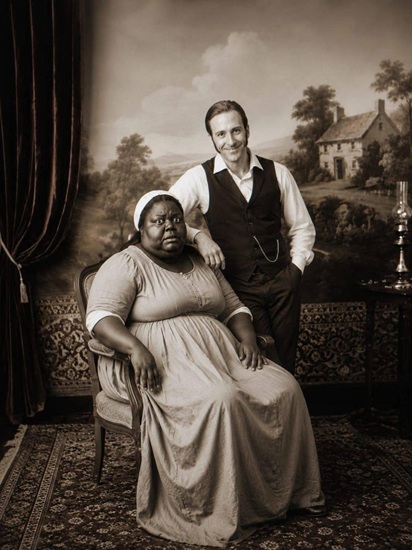
Everyone in the marketplace laughed when a farmer paid only seven cents for a woman nearly two meters tall, a figure many buyers had already dismissed as useless and uncontrollable for labor. The crowd believed no employer would ever manage her strength. They said her size brought only problems, that her presence would lead to losses rather than productivity in any working environment. Yet among the noise and ridicule stood Joaquim Lacerda, a farmer who did not react like the others.
Where most saw failure, he appeared to recognize something entirely different and unexplored. The woman’s name was Benedita. That moment in the market would later be remembered as a turning point, not because of the price alone, but because of what it symbolized for both lives. Set in February 1857, the scene unfolded in the central square of Vassouras, a town located in the interior of Rio de Janeiro during a period shaped by agricultural wealth and human suffering.
The region of Vale do Paraíba at the time was heavily influenced by coffee plantations, where economic growth was deeply tied to forced labor, creating a harsh and unequal social structure. That morning, the square was filled with noise, heat, and tension. Men, women, and children stood on a raised wooden platform as buyers examined them as though they were livestock being evaluated.
The auctioneer, a heavyset man with a curled mustache and a loud voice, moved through each person with practiced efficiency, presenting them as property in a system built on exploitation. When Benedita was called forward, a sudden silence spread through the crowd. It was not admiration, but discomfort, as people tried to assess what to make of her unusual presence. She stood approximately 1.95 meters tall, possibly more, her frame significantly larger than most people present. Her physical presence alone drew attention and uncertainty from those gathered in the square.
Her shoulders were broad and defined, her hands large and rough, and her bare feet pressed heavily into the wooden platform beneath her, leaving visible marks from years of forced labor. She wore a torn garment made of coarse cotton, barely covering her body. The fabric reflected a life of hardship, shaped by exhaustion, hunger, and continuous physical labor under harsh conditions. Her hair had been cut very short, and her face showed signs of endurance rather than expression. She remained still, observing nothing in particular, as though emotionally distant from the scene.
The auctioneer announced her details, including her name, approximate age of twenty-three, and origin from the Recôncavo region of Bahia, describing her physical strength in terms meant to attract buyers. Despite being labeled strong, she was also described as uncontrollable. Reports suggested she had already been transferred through several properties, with no overseer able to properly manage her labor.
This reputation created hesitation among potential buyers. Some viewed her as too difficult, others as too risky, and many simply avoided placing any meaningful bid on her during the auction. As the auction continued, the prices dropped further than expected. Small bids were offered and withdrawn almost immediately, reflecting the growing reluctance among buyers to take responsibility for her.
The numbers fell into near silence: five units, then three, then two, and eventually even lower, until the bids became so minimal that they no longer reflected serious commercial interest. For a moment, it seemed as though no one would claim her at all. The crowd’s attention shifted between boredom and discomfort, waiting for the auction to move on to the next person.
Then, unexpectedly, a deep voice broke through the silence from the back of the square, offering a bid that surprised everyone present and changed the atmosphere of the entire scene. “Seven cents,” the voice said firmly, cutting through the hesitation and noise with a calmness that stood in contrast to the uncertainty of the surrounding crowd. The speaker was Joaquim Lacerda, a farmer whose quiet presence contrasted sharply with the reactions of others. While most dismissed the woman, he appeared to be observing something entirely different.
To those watching, his decision seemed irrational, almost absurd. No one understood why he would invest even a minimal amount in someone considered by many to be unsuitable for conventional labor. Yet Joaquim did not appear influenced by public opinion. His attention remained steady, as if he had recognized potential where others saw only difficulty, unpredictability, and physical excess strength. The auctioneer hesitated briefly before confirming the bid, and a murmur spread across the crowd. Some laughed, others shook their heads, unable to comprehend the decision that had just been made.
For Benedita, the moment marked another shift in a life already defined by uncertainty and displacement. She remained silent, her expression unchanged, as ownership was transferred once again in her life. The crowd began to disperse slowly, the auction continuing in the background, but the unusual purchase remained in many minds as an example of strange judgment or hidden intention. Joaquim, however, did not appear concerned with reactions around him. His focus seemed directed toward something internal, as if evaluating not what Benedita was seen as, but what she could become.
The transaction itself, though small in monetary value, stood out sharply against the surrounding environment, where human lives were reduced to numbers, labels, and assumptions based on physical strength or reputation.
In that moment, two lives became connected through circumstance rather than choice, setting the foundation for an uncertain future shaped by power, expectation, and the harsh realities of the time period. What followed would depend not on the judgment of the crowd, but on the intentions of a single man who saw possibility where others saw only rejection and perceived failure.
