Eyebrows have long been one of the most experimental parts of the beauty world. Over the years, makeup artists and social media creators have reshaped, colored, extended, decorated, and even completely reinvented the traditional brow. Some styles become mainstream, while others exist mainly as artistic experiments created to attract attention or demonstrate creativity. In 2018, one of the most unusual examples appeared on Instagram and quickly attracted media attention.
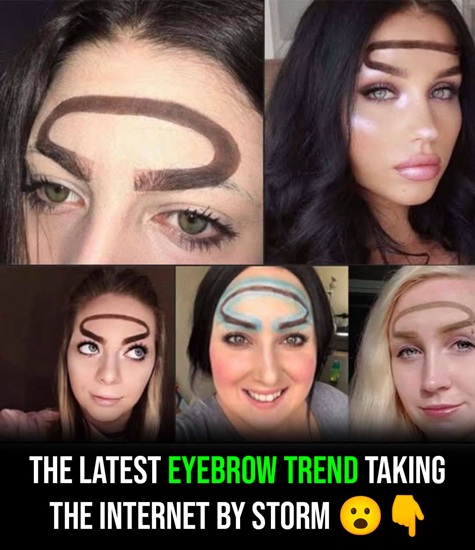
It became known as the “halo brow,” a dramatic makeup design that connected both eyebrows across the forehead in a large curved loop. The idea was associated with British makeup creator Hannah Lyne, who was 16 years old when photographs of the look began circulating widely online. Lyne was already experimenting with unconventional makeup when she created the design. Instead of allowing each eyebrow to end normally near the side of the face, she extended the tails upward and continued drawing them until they connected across her forehead.
The result resembled an oval or halo surrounding the upper portion of her face, making the design immediately recognizable. Beauty publications quickly began describing it as one of Instagram’s strangest eyebrow experiments. The look emerged during a particularly creative period for eyebrow makeup on social media. Instagram users had already experimented with feather brows, wavy brows, barbed-wire-inspired designs, and other unconventional shapes.

Another style known as the “fishtail brow” involved creating an upward extension near the outer end of each eyebrow, giving the impression of a fish’s tail. Lyne later explained that the fishtail design directly influenced her own idea. Instead of stopping after drawing the upward section, she imagined continuing the lines farther until they met.
According to reports published at the time, the idea developed during a conversation between Lyne and a friend about the fishtail brow trend. The two were discussing possible new makeup looks when Lyne decided to connect the tails of her eyebrows. She later described the design as an intentionally creative and unusual experiment rather than a traditional everyday makeup style. That distinction is important because the phrase “beauty trend” can sometimes make an online experiment sound more widespread than it actually was. In this case, halo brows became highly visible online, but there is little evidence that large numbers of people adopted the style for ordinary daily wear.
The original photographs immediately stood out because the brow design was impossible to ignore. The dark makeup began at the natural eyebrows and continued upward in smooth arcs before meeting across the center of the forehead. The finished effect looked somewhat like a traditional halo, although instead of floating above the head, it was drawn directly onto the face. Some publications jokingly described it as a “reverse unibrow.” The visual effect was deliberately exaggerated, which was part of what made the images so shareable.
Lyne reportedly created the dark brow shape using NYX Professional Makeup’s Tame & Frame Brow Pomade in the shade Espresso. She combined the unusual brows with more conventional beauty products, including foundation, false eyelashes, and a prominent highlighter. The bright highlighting around her face strengthened the angelic theme and helped make the dark brow shape even more visually dramatic. Contemporary beauty coverage specifically noted these products while discussing how the look had been constructed.

The finished makeup was not intended to imitate natural eyebrows. Instead, it treated the brows almost like graphic artwork. This approach is common in editorial makeup, where the purpose is often experimentation rather than creating a look suitable for everyday life. Makeup artists regularly use the human face as a canvas, exploring unusual proportions, colors, textures, and geometric shapes. Halo brows fit neatly into that tradition, even though social media rather than a fashion runway or magazine editorial became their primary showcase.
Social media played an essential role in transforming the image from one creator’s experiment into an internationally discussed beauty story. Instagram in particular had become a major platform for makeup artists by the late 2010s. Creators could publish a striking photograph and potentially reach thousands or even millions of viewers without going through traditional beauty magazines. When an image was unusual enough, users reposted it, commented on it, and discussed it across multiple platforms. Media outlets then sometimes reported on the most eye-catching examples, creating an additional wave of attention.
Halo brows benefited from exactly this kind of digital amplification. The design was visually unusual enough that people immediately wanted to react to it. Some admired the creativity involved, while others regarded it as absurd. This mixture of fascination and disbelief often helps unconventional content travel quickly online. A familiar eyebrow style might earn compliments, but something people have never seen before is more likely to generate discussion, screenshots, shares, jokes, and articles.
Beauty publications responded rapidly. Allure described halo brows as a confusing new eyebrow look appearing on Instagram and explained that Lyne had been inspired by fishtail brows. Yahoo Style also covered the design in March 2018, identifying Lyne as the creator and noting the products she used. Marie Claire treated it more playfully and questioned whether the look could realistically be considered a lasting trend at all. These reports show that the phenomenon was real, even if the word “trend” was sometimes used loosely.
The reactions from viewers were predictably divided. Some people praised Lyne’s willingness to experiment and viewed the design as imaginative makeup art. They appreciated that she had created something instantly recognizable rather than copying a familiar style. For people who enjoy editorial makeup, cosplay, theatrical design, or unusual social media aesthetics, the halo brow was another example of how cosmetics can be used creatively rather than simply to enhance conventional features.
Others reacted negatively, sometimes very strongly. The appearance of a dark oval running across the forehead was far removed from mainstream eyebrow styling, and many viewers found it strange or unattractive. Online comments ranged from confusion to jokes about deleting Instagram altogether. Such reactions were widely quoted by lifestyle publications covering the story, although they reflected individual opinions rather than any objective judgment about the makeup itself.
The mixed response illustrates an important feature of internet beauty culture. A style does not necessarily need widespread approval to become successful online. In fact, disagreement can increase its visibility. When some viewers love an image and others strongly dislike it, both groups are likely to comment and share it. Algorithms can then expose the post to additional audiences because it is receiving substantial engagement. This dynamic has helped many unconventional beauty experiments achieve short periods of intense visibility.
That does not mean every viral style becomes a genuine long-term fashion movement. Halo brows appear to have functioned mainly as a short-lived creative phenomenon rather than a widespread transformation of how people shaped their eyebrows. Contemporary coverage itself sometimes acknowledged this. Marie Claire, for example, suggested that the look was more likely a playful experiment than a serious mainstream trend. That distinction makes the story more accurate and prevents a viral photograph from being portrayed as something adopted by the beauty industry as a whole.
Lyne herself emphasized creativity rather than conformity. Reports quoted her explaining that she wanted people to embrace silly, strange, and creative looks. That attitude provides useful context for understanding the design. The goal was not necessarily to convince everyone to wear a dark eyebrow loop to work or school. Instead, the experiment demonstrated what could happen when someone ignored traditional rules about what eyebrows were supposed to look like.
This kind of artistic play has a long history in fashion and beauty. Professional makeup artists have repeatedly transformed eyebrows for runway shows, theater, film, photography, and editorial shoots. Brows may be bleached until they appear almost invisible, exaggerated into dramatic shapes, covered in glitter, or replaced entirely with painted lines. Social media simply allowed amateur and emerging creators to experiment publicly in ways that were once mainly associated with professional studios.
The timing of halo brows also mattered. During the 2010s, brows became an especially prominent part of beauty culture. Thick, carefully defined eyebrows grew popular after years in which thinner styles had dominated. Brow gels, pomades, pencils, powders, and specialized brushes became major categories in the cosmetics industry. Tutorials showing viewers how to create perfectly sculpted eyebrows attracted enormous audiences online.
Once highly polished brows became common, creators naturally began looking for ways to push the idea further. Some exaggerated thickness, while others experimented with unusual shapes. Feather brows involved separating brow hairs to create a feather-like pattern. Wavy brows replaced the traditional arch with deliberately curved lines. Fishtail brows split the outer brow into two sections. Halo brows took this experimentation to an extreme by transforming two individual eyebrows into a single continuous graphic shape.
These experiments often worked because the eyebrow is such a familiar feature. People immediately recognize when its normal shape has been altered. Changing an eyebrow therefore produces a strong visual effect even without complicated makeup elsewhere on the face. A creator can make one relatively simple modification and generate an image that looks dramatically different from everyday beauty styles.
The halo design also demonstrated the increasing overlap between makeup and online performance. Social media makeup is often created not only to be worn but also to be photographed. A look that seems excessive in person may work perfectly in a tightly framed image because the photograph becomes the final artwork. The creator therefore designs the face partly with the camera and the online audience in mind.
That helps explain why some viral beauty looks are rarely seen away from social platforms. They are optimized for visual impact rather than practicality. Halo brows would require considerable time to draw neatly, and maintaining the design during ordinary daily activities would not necessarily be convenient. But practical considerations mattered less when the main purpose was producing a memorable photograph.
The phenomenon also highlights how quickly terminology can emerge online. Once the phrase “halo brows” appeared, it provided an instantly understandable label for the design. The name made the images easier to search, discuss, and reproduce. Beauty websites could use the same phrase in headlines, allowing people who encountered one article to find additional examples elsewhere.
Another reason the image attracted attention was the contrast between the elegant word “halo” and the deliberately unconventional result. Halos are traditionally associated with religious and artistic imagery surrounding saints or angels. Lyne’s brow version translated that familiar circular form into makeup while keeping the design attached directly to the eyebrows. The concept was playful enough that the name itself became part of the joke.
Some publications responded more positively than others. While many articles highlighted how strange the design looked, others recognized its artistic qualities. Beauty coverage at the time sometimes described the halo brows as unexpectedly attractive despite their unconventional nature. These differences in interpretation demonstrate that experimental makeup does not have a single correct reaction. One person may see something humorous, while another may see skillful graphic design.
What cannot reasonably be disputed is that the application required control. Creating two symmetrical arcs that travel upward and meet cleanly across the forehead is considerably more difficult than simply drawing an irregular line. The dramatic result depended on reasonably precise placement and smooth transitions from the natural brows into the artificial extensions. Whether someone liked the finished design or not, the execution required makeup ability.
Social media also allowed Lyne to receive feedback instantly. Previous generations of aspiring makeup artists might have shared their work with a relatively small circle of friends or submitted photographs to professional publications. Instagram gave creators access to a global audience. Positive comments could encourage further experimentation, while criticism arrived just as quickly.
That visibility came with disadvantages as well. Viral content often attracts harsh reactions from strangers who feel comfortable making personal comments about a creator’s appearance. The discussion around unusual beauty trends can therefore shift rapidly from criticism of a particular style to criticism of the person wearing it. For young creators especially, this can create an uncomfortable level of scrutiny.
A more constructive way to view experimental makeup is to separate personal preference from artistic value. Someone can dislike halo brows while still recognizing that the creator was deliberately exploring an unconventional idea. Beauty is inherently subjective, and the existence of an unusual design does not require everyone else to adopt it. Social media allows multiple aesthetics to exist simultaneously.
The story is also a reminder of how rapidly online culture moves. In early March 2018, halo brows suddenly appeared in numerous lifestyle publications. Shortly afterward, attention shifted toward other unusual makeup experiments. New ideas constantly replaced older ones as creators competed for visibility. What seemed impossible to avoid for several days could disappear from the broader conversation almost as quickly as it had arrived.
Years later, halo brows are therefore best remembered as an example of the highly experimental Instagram beauty culture of the late 2010s. They did not permanently replace conventional eyebrow styling, and they were never universally embraced. Their significance comes instead from the conversation they generated and from the way a teenage creator’s unusual makeup experiment traveled across international media.
The episode demonstrates how much power social platforms gave individual creators. Lyne did not need a major cosmetics campaign or fashion magazine to introduce the idea. She created the look, photographed it, and shared it with her audience. From there, the image was discussed by established beauty publications and seen by people far beyond her original followers.
It also illustrates the difference between creativity and conventional attractiveness. Most mainstream makeup is designed around established ideas of balance, symmetry, and enhancement. Experimental makeup can deliberately ignore those principles. The purpose may simply be to surprise viewers or explore what is visually possible.
Halo brows accomplished that objective extremely well. Even people who disliked the style usually understood the concept immediately. Two eyebrows became one continuous halo-like loop, turning an ordinary facial feature into a graphic design. The simplicity of the idea contributed to its memorability.
Ultimately, there was nothing mysterious about the appearance of halo brows. They were not evidence that traditional eyebrow styling was disappearing, nor did they become a beauty standard everyone was expected to follow. They were the product of one creator experimenting with a previous viral eyebrow style and taking the concept in a new direction.
Hannah Lyne’s 2018 experiment became widely discussed precisely because it looked so different from ordinary makeup. Some people praised it, others laughed at it, and many simply stared at the photographs trying to decide what they thought. That range of reactions was part of what made the image successful online.
Today, the halo brow remains an entertaining snapshot of an era when Instagram makeup creators were constantly competing to invent the next unexpected look. It shows how quickly an unconventional idea can move from a conversation between friends to international beauty coverage. More importantly, it demonstrates that makeup does not always need to be practical, permanent, or universally flattering to have value.
Sometimes it can simply be creative experimentation. For Lyne, connecting the tails of her eyebrows produced a design that people remembered long after the original post appeared. Whether someone considers halo brows clever, strange, beautiful, humorous, or completely impractical ultimately comes down to individual taste. What is historically documented is that the look was real, it attracted widespread online attention in 2018, and it became one of the more memorable eyebrow experiments of Instagram’s viral beauty era.
