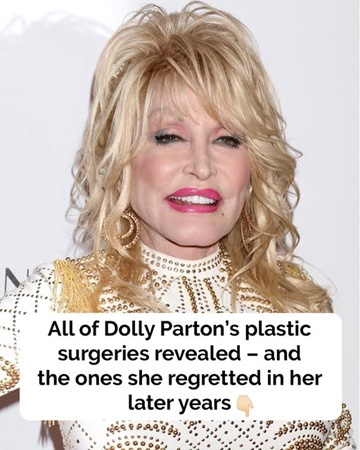
The death of Dolly Parton at the age of 80 has prompted people around the world to reflect on the extraordinary life and career of one of country music’s most recognizable figures. Parton died on August 25, 2026, leaving behind a musical and cultural legacy built across nearly six decades. Her songs, distinctive voice, philanthropy, humor and instantly recognizable appearance made her a figure whose influence reached far beyond country music.
Her enormous blonde hairstyles, sparkling outfits, high heels and carefully applied makeup became visual signatures almost as familiar as the songs she wrote. Unlike many celebrities who preferred not to discuss cosmetic procedures, Parton frequently addressed the subject herself and usually did so with characteristic humor. Parton’s glamorous public image was particularly striking when compared with the circumstances of her childhood. She was born Dolly Rebecca Parton on January 19, 1946, in Tennessee and grew up as one of 12 children in the Parton family.
Her parents, Robert Lee Parton and Avie Lee Parton, raised their large family with limited financial resources. Dolly later spoke openly about growing up poor, but her descriptions of childhood also emphasized family, faith, storytelling and music. Those experiences would eventually provide material for some of the most personal and enduring songs of her career.
Her father worked extremely hard to support the family, while her mother cared for the children and helped fill their home with songs and stories. Dolly credited both parents with influencing different parts of her personality. She admired her father’s work ethic and business instincts, while the musical environment created by her mother helped nurture the talent that would eventually transform her life. Long before international fame arrived, music was already deeply embedded in the world around her.

One of the clearest musical reflections of her childhood came through “Coat of Many Colors.” The song was inspired by a childhood experience involving a coat her mother made for her from pieces of fabric. Rather than hiding the family’s lack of money, Dolly transformed the experience into a story about love, dignity and the difference between material wealth and emotional richness. The song eventually became one of her most celebrated compositions and a lasting example of her ability to transform deeply personal memories into universal storytelling.
The contrast between poverty and glamour would become an important element of Parton’s public identity. She never attempted to present herself as someone who had been born into wealth or sophistication. Instead, she openly discussed her humble beginnings while embracing an increasingly extravagant appearance as her career developed. The transformation was intentional. Dolly knew exactly how she wanted to present herself, and she rarely apologized for enjoying makeup, elaborate clothes, high heels and enormous blonde hair.
Parton often told a story about one of the women who influenced that visual identity when she was young. She remembered seeing a woman in her Tennessee community who wore striking makeup, blonde hair, high heels and clothing that immediately captured Dolly’s attention. Adults around her did not necessarily view the woman with the same admiration. Dolly, however, saw glamour. What other people criticized became, through a child’s eyes, an image of confidence and beauty.

Years later, Parton repeatedly recalled that experience with humor. The woman’s appearance represented something completely different from the modest surroundings in which Dolly had grown up. Instead of accepting other people’s judgment about how a woman was supposed to look, Dolly developed her own definition of beauty. That willingness to decide for herself became a pattern that continued throughout her career.
Her appearance eventually became a carefully constructed extension of her personality. The blonde wigs became bigger, the outfits became more elaborate and the rhinestones became brighter. Dolly understood that audiences recognized the image immediately, and she was comfortable acknowledging that much of it was deliberately artificial. What mattered to her was that the personality underneath the cosmetics remained genuine.
That distinction produced some of Parton’s most memorable comments about beauty. She frequently joked about looking artificial while insisting that she was authentic where it mattered. The humor worked because she never appeared interested in convincing audiences that her appearance required no effort. Quite the opposite was true. Dolly openly acknowledged the makeup, wigs, clothes and cosmetic work involved in creating the person audiences saw onstage.
Her approach to cosmetic procedures followed the same philosophy. Instead of allowing journalists to speculate endlessly while refusing to discuss the subject, Parton frequently answered questions directly. During a 2003 interview with Larry King, she was asked why she was so willing to discuss cosmetic procedures. Her explanation was simple: people asked her about them, and she did not want to lie.
That interview became one of the clearest public records of procedures Parton personally acknowledged. During the conversation, she confirmed that she had undergone work on her face and eyes. She also discussed using collagen on her lips and Botox, and confirmed having liposuction and excess skin removed. Rather than treating the discussion as embarrassing, she approached the questions with humor and directness.
Parton summarized her philosophy with one of the humorous expressions that became closely associated with her public persona. If she noticed something “sagging, dragging or bagging,” she joked, she was prepared to have it addressed. The remark captured the combination of practicality and comedy with which she often approached aging and appearance.
At the same time, Dolly never claimed that cosmetic procedures were completely without risk. Even during earlier interviews, she acknowledged the importance of selecting qualified doctors and avoiding dramatic changes. Her preference, she explained, was to make adjustments gradually rather than attempting an enormous transformation all at once. She wanted to remain recognizable as herself.
That philosophy remained remarkably consistent as she grew older. Twenty years after her Larry King conversation, Dolly appeared on “The Howard Stern Show” in November 2023 and once again discussed cosmetic work. She said she preferred doing relatively small amounts at a time instead of making major changes. She specifically mentioned fillers and Botox and also referred to Juvéderm.
Her comments during the Stern interview demonstrated that Dolly’s openness had not disappeared with age. She was 77 at the time and remained comfortable discussing the work involved in maintaining her appearance. However, she paired that openness with caution. She emphasized the importance of finding highly qualified doctors and warned against overdoing cosmetic procedures.
Dolly understood that any surgical procedure carries potential risks. She told Stern that going “under the knife” always involved uncertainty and that even she worried about whether everything would turn out properly. The comments provided an important counterbalance to her jokes. Cosmetic work might have been something she discussed lightheartedly, but she did not portray surgery as completely trivial or risk-free.
Her concern was particularly strong when discussing procedures involving the face. Dolly observed that problems elsewhere on the body could sometimes be concealed by clothing, while an undesirable result involving someone’s face was much harder to hide. For an entertainer whose face had been photographed and filmed for decades, that consideration was especially significant.
She therefore preferred moderation rather than attempting to completely transform herself. Her goal was not to become a different person. Instead, cosmetic procedures were another component of the carefully maintained image she had created over decades. Makeup, wigs, clothing and cosmetic treatments all belonged to the same larger visual presentation.
Parton’s attitude toward her appearance also reflected an unusual degree of self-awareness. She understood that people sometimes regarded her style as excessive. She knew that enormous blonde hair, dramatic makeup, long nails and rhinestone-covered outfits did not represent conventional minimalism. But conventional understatement was never the objective.
Instead, Dolly transformed exaggeration into a personal brand. Long before contemporary celebrities routinely developed beauty lines and carefully managed visual identities, Parton understood the commercial and cultural power of having an instantly recognizable look. A silhouette, hairstyle or sparkling costume could immediately tell an audience who had entered the room.
That recognition did not happen accidentally. Dolly spent decades refining her image while remaining remarkably consistent about its basic elements. Fashion changed repeatedly around her, but she did not abandon the blonde hair, makeup and glitter simply because trends moved toward something different. She adapted without surrendering the visual characteristics audiences associated with her.
Her attitude also challenged the expectation that women in entertainment should pretend their appearance required little effort. Dolly did not claim to wake up looking exactly like her stage persona. She openly discussed the work behind the image. In doing so, she removed much of the power from speculation about whether she had undergone cosmetic procedures.
That did not prevent speculation entirely. Celebrity culture has long encouraged analysis of famous people’s faces and bodies, and Parton was no exception. Over the years, doctors who had not treated her sometimes offered opinions in media reports about procedures they believed she might have undergone. Such outside speculation, however, should be distinguished from procedures Dolly personally confirmed.
For example, claims have circulated suggesting that Parton may have undergone rhinoplasty at some point in her career. Unless supported by a direct statement from Dolly or reliable medical information she authorized for release, such claims remain speculation. The fact that she openly acknowledged several other procedures does not make every theory about her appearance automatically true.
The most reliable information therefore comes from Parton’s own public statements. She confirmed various cosmetic procedures and treatments herself and discussed them across multiple interviews. Those admissions provide more than enough material to understand her approach without attempting to diagnose changes in her appearance from photographs.
Parton also addressed the enormous amount of public attention directed toward her chest. The subject followed her throughout much of her career, and interviewers frequently asked about it. Dolly generally responded with jokes rather than embarrassment. During her conversation with Larry King, she laughed about how her small frame made her proportions appear even more dramatic.
The humor was characteristic of the way she handled potentially uncomfortable questions. Instead of becoming defensive, she frequently turned the conversation into a joke and moved forward. Her approach gave her control over subjects that tabloids might otherwise have used to embarrass her.
That ability became one of Dolly’s most effective tools throughout her career. She could make a joke about herself before anyone else had the opportunity to do so maliciously. The humor did not necessarily mean that every comment about her appearance was harmless. Rather, it demonstrated that she understood how celebrity culture worked and had developed strategies for navigating it.
Dolly’s beauty philosophy also went far beyond surgery. Makeup played an enormous role in creating her public appearance. She loved bright lipstick, carefully styled eyes, long nails and dramatic colors. Her beauty routine was part of the performance, but it was also something she genuinely enjoyed.
The wigs were equally important. Dolly’s blonde hair became one of the most recognizable hairstyles in entertainment history. She has explained over the years that wigs offered practical advantages because they allowed her to maintain the elaborate hairstyle without constantly subjecting her natural hair to intensive styling.
Her clothing followed a similar principle of deliberate exaggeration. Rhinestones, fitted outfits, high heels and bright colors became essential components of the Dolly Parton image. Eventually, the costumes themselves acquired historical and cultural significance, with some preserved and displayed as artifacts from her career.
Her 2023 book “Behind the Seams: My Life in Rhinestones” explored the role clothing played throughout her life and career. The project demonstrated that Dolly did not regard fashion as an irrelevant side effect of fame. Clothes helped tell her story and allowed her to communicate personality before she had sung a single note.
Yet focusing exclusively on her appearance would miss the reason the image endured for so long. Dolly possessed the talent necessary to support the spectacle. She became one of the most successful songwriters and performers in popular music, creating compositions that survived long after the fashion trends surrounding their original releases disappeared.
Songs including “Jolene,” “9 to 5,” “Coat of Many Colors” and “I Will Always Love You” became central pieces of her musical legacy. Her ability to write memorable melodies while telling emotionally accessible stories helped her cross boundaries between country music and mainstream popular culture.
“I Will Always Love You” provides perhaps the clearest example. Dolly wrote and originally recorded the song decades before Whitney Houston transformed it into a global pop phenomenon. The success of Houston’s interpretation introduced Dolly’s songwriting to another enormous audience and demonstrated how effectively her compositions could move between genres and generations.
Dolly also succeeded in film. Her role in the 1980 movie “9 to 5,” alongside Jane Fonda and Lily Tomlin, expanded her fame beyond music. She wrote and performed the movie’s title song, which became another of her signature recordings. Additional acting roles followed, further establishing her as an entertainer capable of moving between different forms of media.
Business became another important component of her career. Dollywood, the Tennessee theme park bearing her name, developed into a major tourist destination and economic presence in the region. Dolly’s business activities eventually extended into numerous areas while remaining closely connected with the personal brand she had built.
Her philanthropy ultimately became just as important to many admirers as the rhinestones and records. The Dollywood Foundation launched Dolly Parton’s Imagination Library in 1995, initially serving children in her home county in Tennessee. The program provides books to young children and subsequently expanded far beyond its original community.
By the time of Dolly’s death, the Imagination Library had distributed hundreds of millions of books. The project was deeply personal because Dolly often connected it to her father, who had not had the opportunity to receive a strong formal education. Helping children develop a relationship with books became one of the most significant humanitarian projects associated with her name.
Her charitable work extended beyond literacy. Dolly supported communities affected by natural disasters and contributed money to medical research. During the COVID-19 pandemic, her donation to Vanderbilt University Medical Center supported research connected with the Moderna vaccine. She frequently approached philanthropy with the same combination of practicality and warmth that characterized her public personality.
These achievements help place discussions about Dolly’s appearance in appropriate perspective. Cosmetic procedures were something she chose to discuss openly, but they represented only one small part of a remarkably complex life. She was simultaneously a songwriter, singer, actress, entrepreneur, philanthropist and cultural figure.
Nevertheless, her honesty about cosmetic work remains notable because of the environment in which she built her career. Entertainment industries have historically placed intense pressure on women to maintain youthful appearances while simultaneously criticizing them for taking visible steps to do so. Dolly largely refused to participate in that contradiction.
She did not present cosmetic surgery as evidence that she disliked herself. Her public comments instead suggested that she regarded beauty treatments as personal choices. If she wanted something changed and believed it could be done safely, she was comfortable considering it.
At the same time, her later comments demonstrated awareness that procedures could produce complications. She discussed the possibility of swelling and other difficulties and acknowledged that recovery could sometimes interfere with work. Those remarks made her perspective considerably more nuanced than simply encouraging cosmetic intervention.
Dolly’s repeated advice to find highly qualified medical professionals was another reflection of that caution. Although her comments came from personal experience rather than medical expertise, she understood that surgery was still surgery. Her jokes never completely eliminated her recognition that medical procedures carried genuine risks.
For that reason, Dolly’s individual choices should not be interpreted as universal beauty advice. Decisions involving Botox, fillers, implants or surgery are personal medical decisions that depend on individual circumstances. Parton described what she chose for herself; she did not establish a standard that everyone else needed to follow.
What made her discussions distinctive was the absence of shame. Dolly appeared comfortable acknowledging that some aspects of her appearance were created with professional assistance. She did not believe that admitting this somehow diminished her accomplishments or authenticity.
That confidence was closely connected to the famous distinction she made between looking artificial and being genuine as a person. Dolly understood perfectly well that her stage image contained artificial elements. The blonde wigs were intentional. The dramatic makeup was intentional. The rhinestones were intentional. Some cosmetic procedures were intentional.
For Dolly, authenticity existed somewhere deeper. It was expressed through the stories she wrote, the relationships she maintained, the values she discussed and the causes she supported. A person could wear a wig and still be emotionally honest. Someone could use cosmetic treatments without pretending that those treatments never happened.
That philosophy may help explain why audiences remained comfortable with an image that might have seemed excessive on another performer. Dolly was in on the joke. She never asked audiences to believe that the enormous hair or glamorous costumes happened naturally.
The contrast became part of her appeal. Behind the carefully constructed exterior was a songwriter capable of writing with remarkable emotional simplicity about poverty, heartbreak, ambition, family and love. The more elaborate her appearance became, the more surprising the vulnerability of certain songs could seem.
Her childhood remained central to that emotional authenticity. Dolly never completely separated the internationally famous entertainer from the girl who had grown up in a large family in rural Tennessee. Her background appeared repeatedly in songs, interviews and philanthropic projects.
The Imagination Library was perhaps the clearest example of that continuity. A woman who accumulated extraordinary wealth and fame ultimately created one of her most important projects around something her own father had struggled with: literacy. The project connected her adult resources directly with the limitations she had witnessed during childhood.
Her relationship with appearance followed a similar journey. As a child with limited financial resources, she had admired glamour from a distance. As an adult who finally possessed the resources to create whatever image she wanted, she embraced that glamour without restraint.
She could afford elaborate costumes, professional makeup, famous stylists and cosmetic procedures, and she made no secret of enjoying those opportunities. Yet she continued talking about the Tennessee community where her ideas about beauty had first developed.
This combination of humble origins and extraordinary self-invention became one of the defining narratives of Dolly’s life. She did not simply become famous; she created a character that was simultaneously theatrical and deeply connected to her actual personality.
The public image was exaggerated, but the woman controlling it was highly aware of what she was doing. Dolly understood business, songwriting and celebrity branding with an intelligence that was sometimes underestimated by people distracted by her appearance.
She frequently used that underestimation to her advantage. Humor allowed her to appear relaxed while maintaining control over her career and intellectual property. Her image might have been playful, but many of her professional decisions were carefully considered.
Her openness about cosmetic procedures belongs within that larger pattern. By discussing the subject herself, Dolly prevented other people from completely controlling the narrative. Instead of allowing every photograph to generate a mystery about whether she had undergone work, she simply acknowledged procedures she had chosen to have.
That honesty did not mean audiences knew every private medical detail. Nor did it justify speculation about procedures she never confirmed. It simply meant Dolly was willing to discuss more than many celebrities of her generation.
As she aged, the conversation surrounding her appearance naturally changed. Journalists increasingly asked how she
