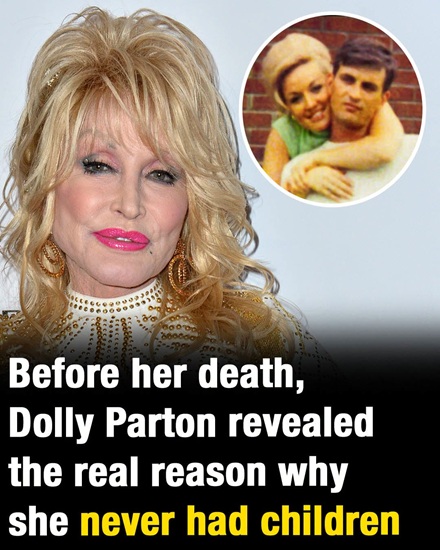
Dolly Parton, one of the most recognizable and influential figures in country music history, died on August 25, 2026, at the age of 80. Her representatives later confirmed that she had died following what they described as a brief battle with cancer, while the specific type of cancer was not publicly disclosed. The announcement brought tributes from musicians, actors, friends, charitable organizations and generations of listeners who had grown up with her songs.
Her nephew Bryan Seaver announced her death in an Instagram video, fulfilling a request Parton had reportedly made years earlier about how the news should eventually be shared. Parton’s death came more than a year after her husband of nearly six decades, Carl Dean, died in March 2025. Together, the two had shared one of entertainment’s longest-lasting and most private marriages. Parton’s life was remarkable not simply because of the number of records she sold or awards she received.
She became a songwriter, singer, actor, businesswoman and philanthropist whose influence extended well beyond country music. Her songs crossed generations and musical genres, while her charitable programs reached children and families far removed from the entertainment industry. She sold more than 100 million records worldwide and earned 10 Grammy Awards during her career, along with a Lifetime Achievement Award. She was also inducted into major music institutions including the Country Music Hall of Fame and the Rock & Roll Hall of Fame. Even people who did not regularly listen to country music were likely to recognize her voice, her songs or her unmistakable public image.

Yet one part of Parton’s personal life continued to generate curiosity throughout her career. She and Carl Dean were married for almost 60 years, but they never had children of their own. Parton addressed that subject many times rather than allowing others to invent explanations for her. Over the years, she described a combination of circumstance, career demands, freedom and personal belief that helped her make peace with not becoming a mother. She eventually came to view the absence of biological children not simply as something she had lost, but as something that gave her the ability to devote herself to millions of other children through her charitable work. Her own explanations are therefore more nuanced than the simple claim that she chose her career instead of children.
To understand that outlook, it helps to begin with Parton’s childhood. She was born on January 19, 1946, in the mountains of East Tennessee and grew up as the fourth of 12 children. Her family lived with very limited financial resources, and her early home lacked many conveniences that later became normal parts of American life. Her father worked hard to support the family, while her mother brought music and storytelling into the household. Parton often spoke about both parents with enormous affection and credited their personalities with shaping different parts of her own. Her upbringing later became material for songs, interviews, films and autobiographical projects.
Music was present from the beginning. Parton grew up hearing traditional songs and religious music and began performing publicly while still a child. By around age 10, she was appearing regularly on local radio and television programs in Knoxville. At 13, she made her first guest appearance at the Grand Ole Opry, a major milestone for a young performer hoping to enter the country music business. Her uncle Bill Owens played an important role in helping her pursue those opportunities and encouraged her songwriting. Parton later recalled being unusually certain from a young age that entertainment was not simply a hobby but the future she wanted.

After graduating from high school in 1964, Parton left for Nashville almost immediately. She was 18 and had very little guarantee that her ambitions would succeed, but she possessed an intense belief in her songwriting and performance ability. Nashville was already the center of the country music industry, and Parton was determined to establish herself there rather than remain close to home. The move became one of the defining decisions of her life. On her first day in Nashville, she also met the man who would remain beside her for the next six decades. His name was Carl Dean.
Parton met Dean outside a laundromat shortly after arriving in Nashville. Their personalities would later appear almost perfectly opposite from the perspective of celebrity culture. Parton became one of the most photographed and recognizable entertainers in the world, while Dean preferred privacy and generally avoided public events. That difference did not prevent their relationship from developing quickly. Dean reportedly knew almost immediately that he was interested in Parton, while she came to appreciate his independence and lack of interest in becoming part of the entertainment business himself. Their relationship gave Parton a private world separate from her public career.
The couple married on May 30, 1966, in Ringgold, Georgia. The ceremony was intentionally modest and private. Parton’s record label had concerns that marriage could interfere with the image of a rising young performer, but Parton and Dean did not want to delay. Her mother accompanied them, and the ceremony took place away from the Nashville publicity machine that was increasingly becoming part of Parton’s professional life. The simplicity of that wedding stood in striking contrast with the enormous celebrity Parton would later achieve.
Their marriage also demonstrated early on that Dean did not want celebrity to become his own career. He rarely attended award shows or industry events, and Parton repeatedly explained that he preferred living outside the spotlight. This arrangement became one of the characteristics that allowed their relationship to function for so many years. Parton traveled, performed and attended public events, while Dean maintained a far more private lifestyle. She did not interpret that independence as a lack of support. Instead, she often credited it with helping both of them retain individual identities within the marriage.

In 2016, Parton and Dean celebrated their 50th wedding anniversary by renewing their vows. The occasion was far more elaborate than their original wedding, but it remained focused on the two of them rather than becoming a major entertainment spectacle. They returned to Ringgold, Georgia, where they had married five decades earlier. Parton later described the celebration warmly and emphasized the friendship underlying their marriage. She repeatedly referred to Dean as one of her closest companions rather than simply as her husband. Their relationship ultimately lasted until Dean’s death in March 2025 at age 82.
Despite the length of their marriage, children never became part of their household. Parton and Dean did think about what parenthood might have looked like. Parton occasionally spoke about wondering whether they would have had a daughter or son and what that child might have looked like. She did not portray herself as someone who had never considered motherhood. Instead, her public comments suggest that the question evolved over time as her career became larger and her circumstances changed.
Parton eventually explained that not having children gave her a level of professional freedom that would have been difficult to maintain otherwise. Her career required extensive travel, recording sessions, songwriting, performances, film productions, business responsibilities and charitable work. She worked for decades at a pace that would have been difficult to combine with being the kind of mother she might have wanted to be. Looking back, she said that having no children gave her freedom to pursue the work she believed she was meant to do. She did not frame that statement as criticism of working parents. It was a reflection on the particular life she herself had lived.
Parton also described her interpretation in spiritual terms. In a 2020 conversation with Oprah Winfrey, she explained that she had come to believe that perhaps she was not meant to have children because she could instead devote herself to helping other people’s children. She connected that idea directly with projects such as the Imagination Library. Her reasoning developed after many years of looking back on how her life unfolded. Rather than viewing her childlessness only as an absence, she saw it as one of the circumstances that allowed her to make a broader contribution.
That perspective became especially visible through the Imagination Library. Parton founded the program in 1995 in her home region of East Tennessee. The original idea was straightforward: young children would receive age-appropriate books mailed directly to their homes, regardless of their families’ income. The program was inspired largely by Parton’s father, who could not read and write. She had seen how limited literacy affected his life, and she wanted children to enter school with greater access to books than he had experienced.
What began locally eventually became an enormous international literacy program. By 2026, the Imagination Library had distributed more than 300 million books to young children around the world. The program expanded far beyond Tennessee and ultimately reached families in the United States and several other countries. Books are mailed to participating children from birth until age five, depending on availability in the region where they live. Parton remained closely identified with the program throughout her life and often spoke about it with particular pride.
Her father’s response to the program became one of Parton’s favorite parts of the story. She recalled that he was especially proud when children began referring to his famous daughter as the “Book Lady.” For a man who had struggled with literacy himself, seeing Dolly use her success to give books to children had deep personal significance. Parton said his pride in that work meant a great deal to her. In many interviews, she treated the Imagination Library not as a celebrity side project but as one of the most meaningful accomplishments of her life.
This helps explain what Parton meant when she sometimes referred to other people’s children as belonging to her in a broader emotional sense. She was not claiming a literal parental relationship with millions of children. Rather, she was describing her belief that the time and resources she did not devote to raising children of her own could be directed toward children elsewhere. That outlook became an important part of the way she understood the unusual combination of personal sacrifice and public opportunity that defined her career.
Her philanthropy extended far beyond literacy. Parton contributed to disaster relief, hospitals, educational programs and medical research throughout her life. During the COVID-19 pandemic, she donated $1 million to research at Vanderbilt University Medical Center that contributed to work associated with the Moderna vaccine. The donation attracted attention partly because Parton approached it with characteristic humor and modesty rather than treating herself as a scientific expert. Her role was financial support, while researchers and healthcare professionals performed the medical work.
She also helped communities affected by natural disasters. Parton’s philanthropy was especially visible in Tennessee, where she continued supporting the region in which she had grown up. Through the Dollywood Foundation and other initiatives, she supported scholarships, disaster relief and children’s programs. In 2024, she and associated organizations pledged millions of dollars toward relief efforts following Hurricane Helene. The variety of causes she supported demonstrated how extensively her financial success eventually became connected with philanthropy.
Parton’s path to that level of wealth and influence began with songwriting. After moving to Nashville, she initially found opportunities writing songs before becoming a major recording star herself. Her early career changed dramatically when she joined The Porter Wagoner Show in the late 1960s. Porter Wagoner was already an established country entertainer, and appearing beside him introduced Parton to a much larger television audience. Their musical partnership produced successful duets and increased Parton’s visibility throughout the country music industry.
Eventually, Parton wanted greater creative independence. Her decision to leave Wagoner’s professional partnership produced one of the most famous songs of her career. “I Will Always Love You” was written as a farewell to their working relationship. The song expressed gratitude and affection while also making clear that Parton was ready to move forward independently. It became a country hit for Parton and later achieved even greater international recognition when Whitney Houston recorded it for The Bodyguard.
Another song, “Jolene,” became equally central to Parton’s identity. The name came from a young fan whom Parton met after a performance. She liked the rhythm of the child’s name and repeated it until she realized it sounded like the beginning of a song. The emotional premise, however, was connected with a woman who had shown noticeable interest in Carl Dean. Parton transformed that ordinary moment of jealousy and insecurity into one of the most enduring songs in popular music.
The simplicity of “Jolene” became part of its strength. The narrator does not threaten or insult the other woman but instead asks her not to take the person she loves. That vulnerability helped the song travel far beyond the period and genre in which it was written. Artists from country, rock, pop and other musical traditions recorded their own versions over the following decades. The song eventually became one of the most recognizable compositions associated with American country music.
Parton’s songwriting catalog expanded enormously. She wrote thousands of songs throughout her career, often generating titles and melodies almost constantly. Her work moved between humor, romance, heartbreak, spirituality, family memories and stories of people living with financial hardship. Many of her songs drew on the Appalachian environment in which she grew up. “Coat of Many Colors,” for example, transformed a childhood experience involving handmade clothing into a song about love, dignity and poverty.
Her recordings eventually produced 25 No. 1 singles on the U.S. country chart, one of the strongest records achieved by a female country artist. Her career also generated 47 albums that reached the country Top 10. These achievements were particularly significant because Parton entered the industry during a period when female performers often faced strict expectations about what kinds of careers they could build. She repeatedly demonstrated an ability to negotiate those expectations without surrendering control over her songwriting or public identity.
Parton also crossed successfully into pop music. “Here You Come Again” became one of the songs that expanded her audience beyond traditional country listeners. “9 to 5,” written for the film in which she starred alongside Jane Fonda and Lily Tomlin, became another major crossover success. The song reached No. 1 in the United States and became closely associated with conversations about work and workplace inequality. Parton managed to retain her country identity even as her audience expanded internationally.
Her move into film demonstrated another side of her appeal. Parton’s role in 9 to 5 introduced her acting ability to audiences who might have known only her records. She later appeared in films including Steel Magnolias, The Best Little Whorehouse in Texas and Rhinestone. Her performances relied heavily on the warmth, comedic timing and larger-than-life personality already familiar from her music career. Acting never replaced songwriting, but it widened her cultural reach considerably.
Business became another major part of her career. In 1986, Parton became involved with an existing Tennessee theme park that was renamed Dollywood. Over time, the attraction expanded significantly and became one of the most important tourism destinations in the Smoky Mountains. Additional entertainment, lodging and recreation businesses grew around the Dollywood name. Parton frequently emphasized that the enterprise created jobs and brought economic activity to the region where she had grown up.
Her business decisions also demonstrated that the glamorous public image surrounding Dolly Parton was never simply accidental. She understood branding exceptionally well. The enormous hair, rhinestones, bright clothing and self-deprecating jokes became recognizable elements of a character that remained consistent without seeming completely artificial. Parton frequently joked about the cost and effort required to create her deliberately exaggerated appearance. The humor allowed her to control conversations about her looks rather than allowing critics to define them for her.
Behind that image was a songwriter and businesswoman known for carefully protecting ownership and creative control. One famous example involved Elvis Presley’s interest in recording “I Will Always Love You.” Parton ultimately declined a deal that would have required giving away a substantial portion of the publishing rights. The decision was emotionally difficult because she admired Presley, but keeping those rights became enormously valuable when Whitney Houston’s version later became a worldwide success. The episode became an example of Parton’s ability to combine sentiment with business judgment.
Her career contained many such decisions. She understood that songwriting rights could remain valuable long after a performance ended. That knowledge allowed her to build wealth that later supported business ventures and charitable programs. Parton therefore belonged to a generation of performers who gradually demonstrated that musicians could be creative artists while also maintaining control over important parts of their commercial work.
Her awards accumulated accordingly. By the end of her life, she had received 10 Grammy Awards from 55 nominations, along with a Grammy Lifetime Achievement Award. She entered the Country Music Hall of Fame and later the Rock & Roll Hall of Fame. She received major songwriting honors and numerous awards recognizing her entertainment career and charitable work. Statistics alone, however, cannot fully explain the unusual affection surrounding Parton. Many successful performers have large collections of awards without inspiring the same kind of cross-generational loyalty.
Parton’s humor played an important role in that affection. She rarely appeared overly impressed with her own celebrity and regularly joked about her appearance, background and public persona. That self-awareness made an otherwise extravagant image feel approachable. She could move between serious discussions of poverty or literacy and playful comments about wigs and rhinestones without appearing uncomfortable with either subject. The combination became central to how audiences understood her.
She also made a deliberate effort not to position herself as a political spokesperson. Parton occasionally expressed broad principles about kindness and equality, but she generally resisted being pulled into partisan disputes. That approach allowed people with very different political and cultural backgrounds to feel connected with her work. After her death, the Associated Press described her as an unusually unifying figure across divisions that often separate public audiences.
The question of children fits naturally into this broader understanding of her life. Parton’s career required an unusual level of commitment and independence. She repeatedly acknowledged that success at that scale involved sacrifices. Travel, recording, performance schedules and business responsibilities consumed enormous amounts of time. She believed that if she had become a mother, she might have approached motherhood with the same intensity she brought to everything else.
In retrospect, she concluded that her life followed a different path. Her husband was independent, and they developed a marriage that did not require them to spend every working day together. Without children, Parton had a degree of mobility and professional flexibility that became essential to the scale of her career. She did not present that arrangement as universally better. It was simply the arrangement that ultimately suited the life they lived.
Her comments about children also evolved into something deeply connected with philanthropy. She often emphasized her affection for nieces, nephews and children generally. Coming from a family of 12 meant children were never absent from her broader family environment. She became especially close with younger relatives and famously served as Miley Cyrus’s godmother. Cyrus later described Parton as a mentor and important maternal figure in her own life.
Following Parton’s death, Cyrus publicly described the loss in deeply personal terms. Their relationship had existed since before Cyrus became famous and continued through her own development as a performer. Parton gave her advice about maintaining individuality and confidence while navigating the entertainment industry. The connection illustrates how Parton could occupy a nurturing role without being a biological mother herself. Her influence extended through family, mentorship and philanthropy in different ways.
Carl Dean’s death in March 2025 profoundly affected Parton. She spoke afterward about grief and acknowledged that caring for him during his later years had caused her to neglect some of her own health concerns. In the period before her own death, Parton experienced several health challenges and postponed or canceled public appearances. Only days before she died, she told PEOPLE that she had been dealing with difficult health issues while continuing to work on projects. Her representatives later confirmed that cancer had ultimately been involved in her death.
Because the specific cancer was not disclosed, responsible reporting should not invent details about her diagnosis. It is also inaccurate to assume that every health problem Parton discussed publicly during her final years was necessarily related to cancer. Reports indicated that she had also dealt with kidney and autoimmune issues before her death. Those conditions may or may not have interacted with her final illness, but the public information does not establish a complete medical chronology. The confirmed statement remains that her representatives described her death as following a brief battle with cancer.
Parton’s final years remained remarkably active despite those challenges. She continued working on music, entertainment projects, business ventures and philanthropic programs. Even shortly before her death, she spoke about things she still wanted to accomplish. This made the news particularly difficult for people accustomed to seeing her as almost permanently energetic and productive. Her public identity had been built around persistence for decades.
That persistence can be traced all the way back to the young girl in the Tennessee mountains who believed she could become an entertainer. There was nothing inevitable about that outcome. She came from a family with limited resources and entered an industry in which success was extremely uncertain. Yet she continued writing, performing and looking for opportunities. Her eventual career became so large that it transformed the economic and cultural landscape of the region where she had started.
Parton never hid the poverty of her childhood. Instead, she repeatedly used those experiences in her work. She could speak about hardship without presenting her family as people without dignity or happiness. Money had been scarce, but music, humor, faith and family were abundant parts of her memories. This balance helped songs about her childhood connect with listeners who recognized similar experiences in their own lives.
Her mother’s storytelling and music were especially important influences. Parton often credited her with creating an environment where songs were part of daily family life. Her father influenced her differently. He was hardworking, practical and deeply important to the literacy work Parton eventually created in his honor. The combination of those influences remained visible throughout her career: creativity from one side and a strong work ethic from the other.
That work ethic became legendary. Parton continued writing songs long after she had enough money and recognition to retire comfortably. She treated creativity as something closer to a daily habit than an occasional professional obligation. Titles, phrases and melodies continued appearing to her, and she recorded ideas whenever inspiration arrived. She often said songwriting remained the part of her career she valued most deeply.
This is why reducing Dolly Parton to her glamorous appearance would miss the central source of her longevity. Trends in clothing and popular music changed repeatedly during her career, but strong songs continued carrying her from one generation to another. Artists who were not yet born when “Jolene” was released later performed it. Whitney Houston transformed “I Will Always Love You” into one of the biggest vocal recordings of the 1990s. Younger performers continued citing Parton as an influence decades afterward.
Her philanthropy produced an equally durable legacy. Music recordings can remain culturally important, but books mailed to children affect lives in a completely different way. By the time of Parton’s death, the Imagination Library had grown into a global operation distributing millions of books each year. The total number of books distributed had passed 300 million. This scale makes the program one of the most substantial achievements connected with a major entertainment celebrity.
The program also gives additional meaning to Parton’s explanation for why she came to accept not having children. She had the resources and freedom to create something capable of reaching far more children than any individual family ever could. That does not mean she claimed philanthropy was equivalent to motherhood. Rather, she believed her circumstances allowed her to direct maternal affection and responsibility toward a broader purpose.
There is no single dramatic explanation for why Dolly Parton never became a mother. Her own comments show a combination of career, circumstance, independence, sacrifice and eventually spiritual acceptance. She and Dean wondered about children, but their lives continued without them. As time passed, Parton stopped treating that as an unanswered problem and instead incorporated it into the way she understood her purpose.
That perspective also helps explain why she rarely sounded bitter when discussing the subject publicly. She acknowledged that different choices might have created a completely different life. Had she been raising children, she believed she probably would not have been able to travel, write, perform and build charitable programs on the scale she ultimately did. Instead of judging the alternative life she never lived, she focused on the one she had.
Her marriage with Dean gave her another form of family stability. Their relationship endured almost 60 years while allowing both people remarkable independence. He remained largely outside celebrity culture, and she rarely pressured him to become part of it. Parton often described this independence as one of the secrets of their longevity. They could spend time apart without treating distance as evidence that the relationship was failing.
Dean’s death therefore represented the loss of someone connected with nearly every stage of Parton’s adult life. He had known her before the world knew Dolly Parton as a star. He was there before “Jolene,” before Dollywood, before film roles, international tours and hundreds of millions of donated books. Their marriage provided continuity beneath an extraordinary public career.
Parton died little more than a year after him. Tributes following her death frequently imagined the two reunited, reflecting how strongly the public associated Dean with the private side of Dolly’s life despite seeing him so rarely. Her nephew Bryan Seaver also referenced Dean while announcing her death. The family’s statement emphasized their faith and their belief that Parton had entered a peaceful spiritual existence after death.
Her funeral was planned as a small private family service rather than a large public spectacle. That decision seemed consistent with the way Parton maintained boundaries between her public life and personal relationships. Millions of people knew her songs and appearance, but her closest family experiences remained largely private. The enormous scale of public mourning therefore existed alongside a much smaller private farewell.
The tributes themselves illustrated the reach of her relationships. Reba McEntire remembered a longtime friend. Miley Cyrus mourned a godmother and mentor. Vince Gill reflected on a collaborator. Sylvester Stallone remembered working with her in film. Artists from several generations described not simply a famous singer but someone they believed had personally encouraged or supported them.
Longtime collaborators also emphasized her generosity. Producer Sam Haskell, who worked with Parton for more than four decades, described someone who made people around her feel noticed and valued. That personal reputation became intertwined with her charitable record. Parton’s ability to maintain such relationships over decades suggests that the public image of warmth was not entirely disconnected from the way many colleagues experienced her privately.
After eight decades, Dolly Parton left behind several legacies operating simultaneously. There is the songwriter whose compositions will continue to be recorded. There is the performer whose voice became inseparable from country music history. There is the actor and entertainer who crossed successfully into film and television. There is the businesswoman associated with Dollywood and numerous other ventures.
Then there is the philanthropist.
For many families, especially those receiving Imagination Library books, that may be the part of Dolly Parton’s legacy encountered most directly. A child can receive one of those books without knowing anything about “Jolene,” the Grand Ole Opry or country music history. The program can therefore continue affecting families long after Parton herself is gone.
That may also provide the clearest answer to the question people repeatedly asked about why she never had children.
Parton did not have biological children, and she did not pretend otherwise.
She also did not view that fact as making her life incomplete.
Instead, she eventually believed it created space for a different kind of contribution.
The freedom of a child-free household gave her time to pursue a career that became unusually demanding and expansive. That career generated resources, connections and influence that she later directed toward causes involving children, literacy, healthcare and disaster relief. Looking backward, Parton believed those outcomes were connected.
Whether another person would make the same choices is irrelevant to understanding hers. Parton never suggested that motherhood and professional success were incompatible for everyone. Her comments were about her own life and the intensity with which she approached work. She believed becoming a parent would have changed how she allocated her time and perhaps changed the entire course of her career.
Instead, the life she actually lived became extraordinary in a different way.
She remained married to Carl Dean for almost six decades.
She became one of the most successful songwriters in popular music.
She built businesses.
She acted in films.
She created a literacy program that ultimately distributed more than 300 million books.
She supported medical research and communities recovering from disasters.
And she maintained enough creative energy into her later years that she was still talking about future work shortly before her death.
Dolly Parton’s death at 80 closes one of the longest and most remarkable careers in American entertainment. Her representatives have confirmed that cancer was involved, while respecting the privacy of the specific diagnosis. Her husband died before her, and the couple left no children of their own. Yet Parton spent a significant part of her life directing attention and resources toward children she would never personally meet.
For that reason, the question of why Dolly Parton did not have children has never had a single simple answer.
There were sacrifices associated with her career.
There was the freedom created by her and Carl Dean’s independent marriage.
There were choices and circumstances that unfolded over many decades.
And eventually there was Parton’s own belief that her life had developed the way it did for a purpose.
She once explained that without children of her own she had been free to do the work that ultimately reached other people’s children.
Her life offers evidence of what she meant.
The little girl who grew up in a family of 12 in the Tennessee mountains eventually became the “Book Lady” responsible for sending hundreds of millions of books into homes around the world. Her father, who could not read and write, lived long enough to see the program begin and take pride in what his daughter was doing. The project eventually became larger than either of them could have imagined when it started in one Tennessee county.
Parton’s story therefore does not end with the fact that she never became a mother.
It expands from there.
Her songs became part of other people’s memories.
Her advice shaped younger performers.
Her businesses provided employment.
Her donations helped researchers and communities.
Her literacy program placed books into the hands of children on a scale few individual philanthropists have ever achieved.
Dolly Parton did not leave behind sons or daughters to carry her name.
She left something different.
She left songs that will continue to be sung, stories that will continue to be told and a charitable infrastructure designed to keep giving children books long after her own lifetime.
For a woman who once wondered why motherhood was not part of her story, that became the answer she ultimately chose to embrace.
Her family has now said goodbye to Dolly Parton at 80, but the enormous body of work and generosity she accumulated during those eight decades remains. Her death marks the end of her personal journey, not the end of the projects she created or the influence she had on musicians, writers, performers and families.
The reasons she never had children should therefore be understood in her own words and through the choices she made, rather than through speculation.
She sacrificed time for work.
She valued independence.
She loved Carl Dean for nearly six decades.
And eventually, she came to believe that not having children of her own gave her the freedom to help countless children elsewhere.
That interpretation belonged to Dolly Parton herself.
And looking at the extraordinary scale of the life she ultimately built, it became one of the most meaningful ways she explained the path she had taken.
