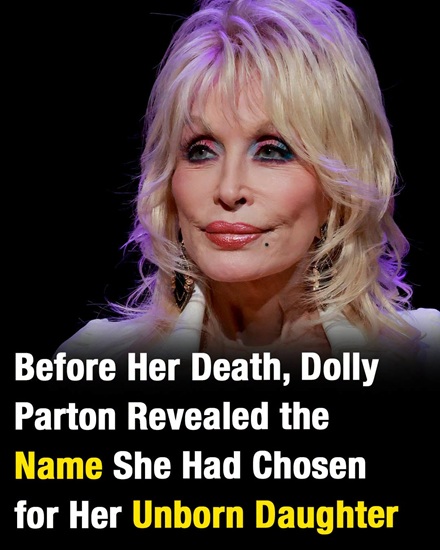
Dolly Parton and Carl Dean shared one of the longest and most private marriages in American entertainment. They married in May 1966 and remained husband and wife until Dean’s death in March 2025, just short of what would have been their 59th wedding anniversary. Although Dolly became one of the most recognizable performers in the world, Carl generally preferred a life outside the entertainment spotlight. Their contrasting lifestyles became one of the most discussed aspects of their relationship.
They never had children together, and over the years Dolly spoke candidly about how she viewed that part of their life. Following Carl’s death, Dolly publicly reflected on the enormous role he had played in her life. Their relationship had lasted for more than six decades from the time they met in Nashville in the 1960s. Carl had largely remained out of public view during Dolly’s career, but she regularly referred to him in interviews and occasionally incorporated elements of their relationship into her music.
His death represented the loss of the person who had been beside her through almost her entire professional career. Dolly herself died on August 25, 2026, at the age of 80 after a brief battle with cancer. In the days following Dolly’s death, many interviews from her long career resurfaced as admirers revisited stories about her marriage, childhood and personal choices. Among them was a 2014 interview in which she discussed the family she and Carl had once imagined when they were newly married.
The conversation revealed something both intimate and surprisingly ordinary about a couple often viewed through the unusual circumstances of celebrity. Like many newly married couples, they wondered what their future children might look like. They even had a name in mind if they ever had a daughter. That hypothetical daughter would have been called Carla, a name clearly connected with Carl.

Dolly recalled that she and her husband wondered whether their children would inherit his height or her much smaller stature. The conversation was not a revelation that Dolly had been pregnant with a daughter or had lost a child named Carla. Rather, she was describing the plans and dreams they discussed as a young married couple. That distinction is important because some recent headlines can make the story sound as though Carla was the name of an actual unborn child. Dolly’s own account described a daughter they imagined but never had.
Looking back many years later, Dolly said that she and Carl eventually became comfortable with the fact that parenthood had not become part of their marriage. She believed motherhood would likely have changed the direction of her life substantially. Dolly had an exceptionally demanding career involving recording sessions, songwriting, concerts, television appearances, film work and extensive travel. She believed that if she had become a mother, she might have felt unable to devote herself to both her children and her professional ambitions in the way she wanted.

Dolly did not generally describe her child-free life as something that could be reduced to a single simple decision. Instead, her reflections evolved over the decades. She sometimes spoke about sacrifices made for her career, while at other times she described her life as having unfolded according to a larger purpose. What remained consistent was her belief that not raising children gave her unusual freedom to work. She could travel extensively, commit to major projects and spend enormous amounts of time building the career that eventually reached audiences around the world.
During a conversation with Oprah Winfrey in 2020, Dolly reflected on this freedom directly. She explained that she had no children and that Carl was highly independent, leaving her with considerable freedom to pursue her ambitions. In her interpretation, that independence was an important part of why she was able to accomplish so much professionally. She did not frame the life she had lived simply as a story of something missing. Instead, she connected the absence of children with opportunities to dedicate herself to work and philanthropy.
That perspective was particularly evident when Dolly spoke about her work with children. Despite never becoming a mother herself, she spent decades supporting childhood literacy through one of the largest projects of her philanthropic career. In 1995, she launched Dolly Parton’s Imagination Library through the Dollywood Foundation. The program began by providing books to young children in the East Tennessee county where she had grown up. What started as a local initiative eventually expanded far beyond Tennessee and even beyond the United States.

The Imagination Library grew into an international early-childhood book-gifting program operating in the United States, Canada, the United Kingdom, Australia and the Republic of Ireland. Registered children receive age-appropriate books through the program from birth until age five at no cost to their families. By 2026, the program was mailing more than three million books every month. It had also passed the extraordinary milestone of more than 300 million books gifted since its creation.
For Dolly, the program had deeply personal origins. Her father, Robert Lee Parton, could not read or write, despite being someone she consistently described as highly intelligent and hardworking. Dolly believed that his inability to read had restricted some of the opportunities available to him. The Imagination Library therefore became a way of honoring him while giving children access to books from their earliest years. She often said that her father’s pride in the program meant more to her than many of her entertainment achievements.
The project also helps explain the way Dolly eventually interpreted not having children of her own. Rather than seeing motherhood only in biological terms, she sometimes spoke about having the opportunity to do things for large numbers of children. In her conversation with Oprah, she connected her freedom directly with projects such as the Imagination Library. She believed that if she had been raising her own children, her priorities and availability might have been very different.
That does not mean Dolly believed career and parenthood were incompatible for everyone. Her remarks were personal reflections about the life she believed she would have lived. She knew her own personality and thought she would have taken motherhood extremely seriously. In the 2014 interview, she suggested that guilt over being away from children for work and touring might have caused her to abandon other ambitions. She therefore imagined that becoming a mother could have completely redirected her future.
Her comments reveal an important distinction between regretting something and imagining an alternative life. Dolly and Carl clearly imagined what having children might have been like. They talked about possible appearances and even chose the name Carla for a hypothetical daughter. Yet Dolly later indicated that she accepted the life they actually had. By the time she discussed the subject decades later, she could look back at both possibilities without suggesting that one invalidated the other.
Carl’s personality also influenced the unusual structure of their marriage. While Dolly traveled the world and appeared before enormous audiences, Carl preferred privacy and generally stayed away from celebrity events. His independence meant that Dolly could spend long periods working without requiring him to participate in her professional world. Their arrangement was unconventional by entertainment-industry standards, but both spoke over the years as though it worked for them.
Their marriage began before Dolly became the international figure the world eventually knew. The couple met in Nashville shortly after Dolly moved there to pursue her music career. Carl saw the young singer outside a laundromat, beginning a relationship that would continue through dramatic changes in Dolly’s life. She went from an ambitious young songwriter trying to establish herself to one of the most successful country performers in history. Carl remained the private partner behind that public transformation.
They married in 1966, when Dolly’s career was still developing. Their wedding was modest compared with the glamorous celebrity life that later surrounded her. Carl subsequently avoided red carpets and most major entertainment events. His relative absence from photographs sometimes generated rumors about their relationship, but Dolly repeatedly spoke about him with affection. Privacy, rather than constant public visibility, was simply part of the way their marriage functioned.
Dolly often joked that spending time apart actually helped their relationship. She traveled constantly because of her career, while Carl maintained his own routines and interests. That independence allowed both of them to retain strong individual identities. Their relationship was therefore very different from celebrity marriages in which both partners share the same public life. It survived for nearly six decades despite, and perhaps partly because of, those differences.
Their lack of children became another characteristic outsiders frequently asked Dolly to explain. Questions about motherhood followed her throughout much of her career, particularly because she had such a visibly affectionate relationship with children. Dolly’s responses often combined practicality with her personal sense of destiny. She recognized the things she had given up while also emphasizing the opportunities the life she chose had made possible.
Career demands were certainly substantial. Dolly recorded thousands of songs, toured extensively and built a career spanning country, pop, film, television and business. Her songwriting alone required enormous time and discipline. The broader entertainment operation around her became even more complex as she moved into movies, television productions and business ventures. Later, philanthropy became another major commitment.
Her career eventually produced songs that became part of American popular culture. “Jolene,” “Coat of Many Colors,” “9 to 5” and “I Will Always Love You” reached audiences well beyond traditional country music. She also became a successful film performer and businesswoman. By the time of her death, she had sold more than 100 million records and had become recognized internationally as much for her personality and charitable work as for her music.
Dolly’s own description of sacrifice helps put those accomplishments into perspective. Fame did not simply happen because she happened to have a distinctive voice or personality. She treated her career as demanding work and repeatedly emphasized the time required to maintain it. Tours could take her away from home. Recording, writing and business responsibilities could occupy enormous amounts of her schedule. She believed there were unavoidable trade-offs involved in pursuing that life at the level she did.
For someone who imagined herself as a highly devoted mother, those trade-offs mattered. Dolly did not picture herself casually balancing children and touring without emotional difficulty. She believed she might have changed her career instead. That was one reason she could later say that her life might have been completely different if she and Carl had become parents. The comment was less a judgment about other working mothers than an assessment of her own personality.
The name Carla makes that alternative life especially vivid. It turns a general discussion about children into something specific. Dolly and Carl were not simply speaking theoretically about whether children might someday exist. They had played with the ordinary details young couples often imagine. What would their children look like? Which parent would they resemble? What would they name them?
For a daughter, the answer they had imagined was Carla. Dolly revealed that detail publicly decades after those early conversations. It showed that the couple had considered parenthood even though it ultimately never became part of their life together.
It is important, however, to describe this accurately after Dolly’s death. Calling Carla her “unborn daughter” can imply that Dolly was pregnant with a daughter who died before birth. Her 2014 remarks do not establish that. She described Carla as the name they would have used if they had had a girl. The distinction protects a touching story from becoming a misleading one.
What actually emerged from Dolly’s life was a different relationship with childhood and family. She was one of 12 siblings and remained closely connected with an enormous extended family. Nieces, nephews and younger relatives became part of her life. She also became godmother to Miley Cyrus, whose father, Billy Ray Cyrus, had a longstanding friendship with Dolly. Her affection for children therefore existed in multiple forms even without motherhood.
The Imagination Library became the largest public expression of that affection. It began modestly in 1995 with just over 1,700 books in its first order. Over the following three decades, it expanded country by country until millions of children were participating. The scale transformed Dolly’s personal tribute to her father into one of the most recognizable literacy programs in the world.
Its basic idea remained remarkably simple despite its enormous scale. A registered child receives a specially selected book each month. The book is addressed to the child and sent directly to the home. The aim is not merely to increase the number of books available but to make receiving and reading books a regular part of childhood. Local partners work alongside the Dollywood Foundation to help finance and administer participation.
By 2026, more than three million books were being mailed every month. The program had expanded across five countries and had distributed more than 300 million books. Those numbers demonstrate why Dolly considered the project one of the defining accomplishments of her life. An entertainment career reached millions of listeners, but the literacy program reached families in a very different way.
Her father remained central to the story. Dolly grew up knowing that he could not read or write, and she understood that this had created difficulties despite his intelligence. She wanted young children to have early access to books so literacy would become part of their lives before they entered school. The project therefore connected three generations: Dolly’s memories of her father, her own ability to fund an ambitious literacy effort and the millions of children who eventually received books.
This connection complicates the simple claim that Dolly “gave up children for fame.” Her own reflections were more nuanced. Career freedom mattered to her, but she also came to believe that not having children allowed her to invest time and resources into work benefiting many children. She interpreted the life she lived as having a purpose rather than viewing it exclusively through what did not happen.
The distinction also reflects Dolly’s broader attitude toward circumstances she could not change. Throughout her public life, she often combined ambition with acceptance. She worked aggressively toward professional goals while remaining comfortable saying that some things were simply not meant to happen. Her conversations about motherhood followed that pattern. She could imagine herself as a mother while also believing the absence of children helped make her other accomplishments possible.
Carl appeared to share the life they ultimately built. They remained together through decades in which Dolly’s professional obligations could easily have strained a marriage. He chose privacy rather than attempting to become part of her celebrity identity. Dolly, meanwhile, continued returning to the relationship as a source of stability even while traveling widely.
Their marriage became especially poignant during the final years of Carl’s life. When he died in March 2025 at age 82, Dolly described the depth of a relationship that had lasted almost 60 years in marriage. His death was one of the most significant personal losses of her later life.
She subsequently released “If You Hadn’t Been There,” a song honoring Carl and the part he had played in her journey. The tribute reflected something Dolly had demonstrated throughout her songwriting career: she often processed significant personal experiences through music. Carl had deliberately avoided the spotlight, but his influence was nevertheless deeply embedded in her private life and occasionally in her songs.
Dolly continued working following his death, although reports indicated that she faced health challenges during her final period. In August 2026, she was hospitalized several days before her death while dealing with health problems. Her representatives later confirmed that she died on August 25 following a brief battle with cancer. She was 80 years old.
The confirmation brought an extraordinary global reaction. Musicians, actors, public figures and admirers remembered Dolly not only as a country singer but as a songwriter, entertainer and philanthropist whose influence stretched far beyond one musical genre. Streaming of her music surged dramatically following the announcement, with millions of listeners returning to songs spanning decades of her career.
Her death also encouraged renewed interest in the interviews she had given over the course of her life. The conversation about Carla resurfaced partly because it revealed a private side of a woman whose public persona was so carefully recognizable. Blonde wigs, elaborate costumes and sparkling stage clothes were part of the Dolly Parton image. Behind that image was someone who had once sat with a young husband imagining what their children might look like.
There is something particularly moving about those old comments after both Dolly and Carl are gone. The couple never met the imaginary Carla they had named in conversation. Instead, they built a different life together, one centered on marriage, independence, work, extended family and an enormous public legacy.
That legacy includes accomplishments neither could have imagined when they first met in Nashville. Dolly’s songs were recorded by other artists around the world. “I Will Always Love You,” first written and recorded by Dolly, became a global phenomenon when Whitney Houston recorded her own version. “Jolene” became one of country music’s most recognizable compositions. “9 to 5” connected Dolly’s musical career with her successful work in film.
She also built a major business identity around Dollywood, the Tennessee theme park associated with the region where she grew up. Her business activities created jobs and tourism while keeping her strongly connected with East Tennessee. Yet even with enormous business and entertainment achievements, Dolly frequently returned to the Imagination Library when discussing the work that mattered most personally.
The program’s scale continued growing into the final year of her life. More than three million books a month represented tens of millions of books each year reaching young readers. The total surpassed 300 million books internationally.
Those figures give special meaning to Dolly’s comment that perhaps everybody’s children could in some sense become hers. She did not literally claim a parental role over the children receiving books. Rather, the remark expressed how she came to interpret the freedom and resources her own circumstances had given her. She could invest in projects designed to create opportunities for children she would never personally meet.
Her philosophy also showed that parenthood was not the only way she understood nurturing. Encouraging literacy, providing financial support for communities and helping families became forms of care on a very large scale. Dolly’s philanthropy extended beyond the Imagination Library, but childhood literacy remained its most identifiable centerpiece.
The books themselves represented opportunities rather than simply gifts. Early exposure to reading can help families establish routines around books before children enter school. The Imagination Library was built around that idea, offering a new age-appropriate title every month from birth through age five.
The program was also intentionally designed so that books arrived in the child’s own name. Receiving something personally addressed can make the experience particularly exciting for young children. This seemingly small detail helped transform reading into an event rather than an obligation. The foundation continued this model even as the program expanded internationally.
Research into the program has examined its relationship with family reading habits, early childhood development and preparation for kindergarten. A large international research project involving more than 86,000 caregivers studied families participating in the program across five countries. The foundation reports positive effects associated with shared reading and participation, illustrating how a program that began as a personal tribute developed into a substantial subject of literacy research.
None of this means Dolly knew exactly what her life would become when she and Carl decided how they would name an imaginary daughter. At that point they were a young couple at the beginning of both a marriage and an uncertain entertainment career. They could not know whether Dolly would become famous, whether they would have children or what their marriage would look like decades later.
That uncertainty makes the Carla story particularly human. Long before Dolly became an institution in American entertainment, she and Carl were doing what many couples do: imagining several versions of their future. Only one of those possible lives actually happened.
In the life that did happen, there was no Carla. There were no sons or daughters of their own. Instead there was a marriage that lasted nearly six decades, a career that changed country music and a literacy project that placed hundreds of millions of books into children’s hands.
Dolly occasionally acknowledged that another path might have been possible. She believed she could have been a loving mother. She also believed motherhood might have changed nearly everything about her professional life. Her comments did not suggest that one path was universally better than another. They simply explained how she understood the choices and circumstances of her own life.
It would therefore be misleading to turn her comments into a story of uncomplicated regret. She and Carl had imagined children, but Dolly later said they were content with how their lives turned out.
Likewise, it would be misleading to say that they unquestionably chose from the beginning never to have children solely because of Dolly’s career. Her public reflections included several ideas: freedom, professional sacrifice, circumstance and her belief that parenthood was not ultimately what life had intended for her. Those ideas can coexist.
Over many decades, she made peace with that reality by finding other ways to support younger generations. Her nieces, nephews and godchildren provided family connections. Her charitable work reached millions more. The Imagination Library became the clearest institutional expression of that commitment.
The story of Carla therefore says less about a child who never existed than it does about the many possible directions a life can take. Dolly and Carl could imagine one future when they were young. The future that arrived looked entirely different.
Carl spent most of his life married to one of the world’s most recognizable entertainers while maintaining extraordinary privacy. Dolly spent most of hers traveling, writing, recording and building enterprises. They returned to the same marriage despite living very different public and private realities.
That relationship survived fame on a scale neither could have predicted when they met. It survived decades of touring and recording schedules. It survived rumors generated partly because Carl was rarely photographed. And it survived until his death in 2025.
After Carl was gone, Dolly’s tributes made clear that his privacy had never meant insignificance. He had been central to her private life even when audiences rarely saw him. Their long marriage was one of the enduring constants behind her constantly changing professional world.
Dolly’s own death approximately a year and a half later closed another chapter. On August 25, 2026, her family and representatives confirmed that the singer, songwriter, actor, businesswoman and philanthropist had died at 80 after a brief battle with cancer.
She left no biological children, but describing her legacy only in terms of descendants would miss much of what she spent her later career building. Her songs continue through recordings and performances. Dollywood continues operating. Her charitable organizations continue their work. Most importantly for the subject she frequently connected with children, the Imagination Library continues sending books.
The program currently serves children across several countries rather than only the Tennessee community where it began. It mails more than three million books every month and has distributed more than 300 million since 1995.
For Dolly, that extraordinary expansion was connected directly with her father. A man who never learned to read helped inspire one of the world’s largest book-gifting programs. His experience became the starting point for a project addressing exactly the opportunity he had lacked.
There is a striking symmetry in that story. Dolly did not become a mother herself, yet one of her greatest achievements centered on the earliest years of childhood. She did not have a daughter named Carla, but millions of young children received books because of a project she created.
Those facts should not be used to suggest that philanthropy somehow replaced a particular missing child. Dolly herself never described Carla as an actual unborn daughter. The more accurate interpretation is that she and Carl once imagined children before their lives developed differently. Years later, Dolly used the freedom, resources and influence available to her to help children on an extraordinary scale.
That distinction makes her original comments more meaningful rather than less emotional. They reveal acceptance alongside imagination. Dolly could acknowledge the family she and Carl once discussed without rejecting the life they ultimately lived.
In the final analysis, the resurfaced interview does not uncover a hidden daughter or a previously unknown pregnancy. It reveals something simpler: Dolly Parton and Carl Dean once imagined what parenthood might look like, and they had chosen Carla as the name they would have given a daughter.
The couple never had that daughter. Their life together followed another route, one lasting nearly 60 years of marriage and spanning almost the entire duration of Dolly’s remarkable career.
Dolly eventually concluded that the freedom resulting from not raising children helped her devote herself to music, business and philanthropy. She believed motherhood might have led her to make very different decisions. Rather than continually questioning the road not taken, she used the road she had to create opportunities for others.
The Imagination Library became perhaps the clearest example. From an initial order of roughly 1,700 books in 1995, it grew into an international initiative distributing millions every month.
That may ultimately be the most fitting context for the story about Carla. A young Dolly Parton once imagined having a daughter. The older Dolly Parton came to believe that her life without children allowed her to devote herself to work that reached millions of children instead.
Neither reality needs to be romanticized or turned into something it was not. Her comments show a woman looking back on the possibilities of her life and recognizing that one different decision could have changed almost everything.
Her marriage with Carl remained at the center of that journey. From their first years together, when they speculated about children, through nearly six decades of marriage, they built an unusually durable partnership largely protected from public view.
Carl’s death in March 2025 ended that partnership in life. Dolly continued working while mourning him and facing health challenges of her own. Her death on August 25, 2026, then prompted renewed attention to the stories, songs and interviews accumulated throughout her career.
Among those stories, the imagined name Carla offers an unusually personal glimpse behind the public persona. It reminds audiences that before the awards, businesses, movies and international fame, Dolly and Carl were simply two young newlyweds thinking about what their future might contain.
The future did not contain the daughter they imagined. It contained something neither of them could have predicted instead: an extraordinary entertainment career, one of celebrity culture’s longest marriages and a literacy program that reached children around the world.
That is the factual story behind Dolly Parton’s comments about Carla. It is not a story about a secret or unborn daughter. It is a story about a name chosen for a child who might have been, the life Dolly and Carl ultimately lived instead, and the millions of children who later became part of Dolly’s philanthropic legacy.
Dolly Parton died without children of her own, but she left a legacy deeply connected with them. Through the Imagination Library, books continue arriving in homes bearing children’s names and encouraging families to read together. More than three decades after Dolly launched the program in honor of her father, its reach had expanded beyond anything its original participants could have imagined.
Her reflections about motherhood therefore belong within the larger story of choices, circumstances and purpose that shaped her life. She understood that another version of Dolly Parton might have become a mother and lived much more privately. The version history received became a songwriter, performer, entrepreneur and philanthropist whose work reached generations.
Carl Dean was there for almost all of that journey. The private husband and the international superstar built a marriage that lasted from 1966 until his death in 2025. They never met the daughter they once imagined naming Carla, but they shared nearly six decades of married life together.
And after both are gone, the story remains meaningful precisely because it does not need exaggeration. Dolly once imagined a daughter named Carla. Life unfolded differently. She came to accept that difference and ultimately connected it with the freedom that allowed her to create much of the work for which she is remembered.
Her music remains part of that legacy, as do her performances, businesses and countless stories about her wit and personality. But the Imagination Library may offer the clearest answer to why Dolly so often spoke warmly about children despite never becoming a mother herself.
She did not need biological motherhood to care deeply about their futures. She found another way to make children a permanent part of her life’s work.
That is the more accurate and enduring story behind the resurfaced interview: not a previously unknown unborn daughter, but a young couple’s imagined future, a life that took another path and a legacy that eventually reached millions of children around the world.
