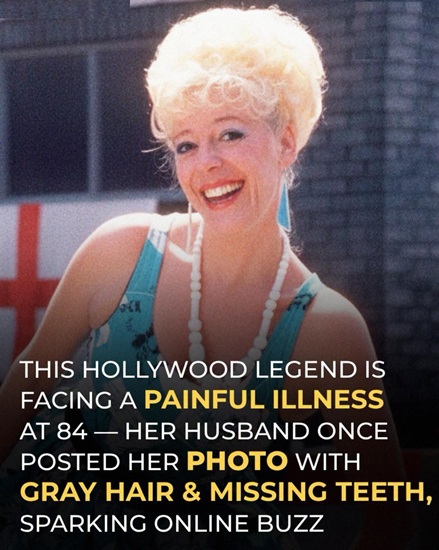
Julie Goodyear became one of the most recognizable faces in British television through her unforgettable portrayal of Bet Lynch on Coronation Street. For millions of viewers, she was associated with confidence, humor, glamorous outfits and the unmistakable leopard-print style that became closely connected with her famous character. Away from television, however, Goodyear and her husband, Scott Brand, have faced a profoundly different chapter of their lives. In June 2023, Brand publicly announced that his wife had been diagnosed with dementia after experiencing increasing problems with forgetfulness.
Since then, he has spoken openly about how the progressive condition has changed their daily lives and transformed him from husband and companion into a full-time carer. When the diagnosis was announced, Brand explained that the couple had already been seeking medical advice because Goodyear had been experiencing forgetfulness for some time. The confirmation forced them to confront the reality that her difficulties were connected to dementia rather than something temporary.
Brand described the diagnosis as heartbreaking and explained that doctors had made clear that her condition would progress. His decision to disclose the diagnosis publicly was also connected with Goodyear’s continued interaction with people who recognized her from television. She still enjoyed seeing friends and going out, but Brand explained that she could sometimes become confused, particularly when she was tired. That request for understanding reflected Goodyear’s unusual position as both a person living with dementia and a celebrity who had spent decades in the public eye.
Even after stepping away from regular appearances on Coronation Street, she remained immediately recognizable to generations of viewers. Brand said at the time that fans enjoyed meeting her and that she enjoyed meeting them as well. However, dementia could make those interactions more difficult than they had once been. By speaking publicly, the couple hoped people encountering Goodyear would understand why she might occasionally seem confused or respond differently than expected.

The announcement also brought wider attention to the realities faced by people living with dementia and those caring for them. Dementia is not a single disease but an umbrella term describing symptoms associated with a decline in cognitive functioning severe enough to interfere with everyday life. Different diseases can cause dementia, and people’s experiences can vary considerably. Memory problems are common, but dementia can also affect communication, reasoning, recognition, mood, behavior and the ability to perform familiar activities. The progression and symptoms differ from one individual to another, making every family’s experience personal.
Scott Brand Describes Watching His Wife Change
By March 2024, Brand was willing to speak in greater detail about what life had become after the diagnosis. Working with Alzheimer’s Society as part of its The Long Goodbye campaign, he described the emotional impact of watching changes in the woman he had known for many years. He remembered Goodyear as fun-loving and larger than life, with an extraordinary personality and a smile capable of lighting up a room. Those were not merely characteristics audiences associated with her television career; they were also qualities he treasured in his wife.
Brand said watching aspects of that familiar personality gradually diminish was extremely painful. Dementia had affected routines and experiences that had once seemed completely ordinary within their marriage. The couple could no longer simply decide to go out together in the same spontaneous way they once had. Meals, shopping trips, walks and other shared activities became more difficult. Experiences that many couples might take for granted acquired a new significance as they became harder or disappeared from daily life.

For Brand, those changes captured what Alzheimer’s Society’s campaign called The Long Goodbye. Families affected by dementia can experience forms of grief while the person they love is still alive. Abilities, memories and familiar aspects of a relationship may change gradually as the condition progresses. Alzheimer’s Society describes feelings of loss, helplessness and anticipatory grief as experiences that can affect people with dementia and those close to them. Importantly, no two families experience dementia in exactly the same way.
Brand’s description of his own experience should therefore be understood as one family’s story rather than a universal description of dementia. Some people retain particular abilities for a long time, while others experience different changes or progress at another pace. Nevertheless, his willingness to discuss the difficult parts of caring for Goodyear provided a recognizable account for many families facing similar responsibilities.
The Glamorous Julie Fans Remember
For longtime viewers, one of the most noticeable elements of Brand’s account involved Goodyear’s relationship with fashion and appearance. Glamour was central to her public image for decades. Her Coronation Street character Bet Lynch became famous for bold clothing, distinctive makeup, elaborate hairstyles and especially leopard print. Goodyear herself was also known for taking considerable pride in her appearance.
Brand recalled that his wife had once rarely gone anywhere without makeup. Her lipstick and clothing were part of the routine through which she presented herself to the world. After dementia progressed, however, he noticed that these things no longer interested her in the same way. Makeup that had once been regularly used remained untouched, while clothes — including the leopard-print styles so strongly associated with her public persona — no longer held the same attraction.

For someone who had known Goodyear intimately, these seemingly small changes carried considerable emotional meaning. Caring for a person with dementia often involves adapting not only to major medical or practical challenges but also to subtle alterations in routines and preferences. Something as ordinary as selecting an outfit or applying lipstick can carry memories of years spent together.
It is also important not to define Goodyear solely by changes caused by dementia. She remains the same person whose career and life created decades of memories for her family, friends, colleagues and audiences. Dementia can affect abilities and behavior, but people living with the condition continue to deserve dignity, companionship and recognition as individuals rather than being reduced to a diagnosis.
Becoming a Full-Time Carer
One of the biggest changes for Brand involved assuming responsibility for his wife’s everyday care. Becoming a carer was not a role he had initially expected to occupy. Like many spouses faced with a serious diagnosis, his first instinct was to try to handle the situation himself. Brand has explained that he and Goodyear had always valued privacy, and accepting outside assistance initially felt difficult.

That approach eventually became impossible to sustain. Brand realized that caring for Goodyear without adequate assistance was affecting his own health and well-being. The responsibilities involved were constant, and the emotional strain existed alongside the practical demands of managing everyday life. He eventually acknowledged that asking for help was necessary rather than a sign that he had failed in his responsibilities.
His experience highlights an important issue surrounding dementia care. Family members frequently become caregivers with little preparation for the responsibilities they suddenly face. They may have to coordinate appointments, manage household finances, understand care services, make practical arrangements and remain available when unexpected problems occur. At the same time, they are dealing emotionally with changes affecting someone they love.
Brand has spoken about how ordinary parts of his own life changed as those responsibilities increased. Activities that once required little thought could no longer necessarily happen spontaneously. Meeting friends, relaxing outside the home or making personal plans had to be considered alongside Goodyear’s needs. The continuous responsibility could leave him exhausted, making even available opportunities for socializing less appealing.
Learning to Accept Help
Brand has said that accepting the diagnosis itself was among the hardest parts of the experience. After initially attempting to manage largely on his own, he eventually recognized that continuing without support was damaging his well-being. His message to other carers has emphasized the importance of seeking assistance rather than waiting until the situation becomes overwhelming.
The Alzheimer’s Society became an important source of support for the couple. Brand described the organization’s assistance as a lifeline during a period when he needed help understanding how to manage the growing practical demands surrounding dementia. One particularly important connection was with Dementia Adviser Julie Mann, who helped him navigate areas that had become difficult.
That assistance extended beyond emotional reassurance. Brand described receiving help with paperwork, planning and understanding the services available to them. Managing these responsibilities can become particularly challenging when a spouse who previously handled certain areas of household life can no longer do so independently. Having someone familiar with dementia services and support systems helped reduce some of that burden.
Brand later said he did not know how he would have managed without the support they received. His comments also served as encouragement to other families who might hesitate to seek assistance. Caring for someone does not necessarily mean doing everything alone. Professional guidance, charities, healthcare services, friends and relatives can all potentially become part of a wider support network.
The Long Goodbye Campaign
In March 2024, Alzheimer’s Society launched The Long Goodbye, an advertising campaign designed to depict the grief and repeated sense of loss that some families experience as dementia progresses. The television advertisement was narrated by actor Colin Firth and used the idea of repeated goodbyes to communicate how dementia can gradually affect memories, abilities, relationships and independence.
Brand’s experiences with Goodyear became part of the broader conversation surrounding the campaign. He explained that the loss of ordinary experiences within their marriage — such as spontaneous outings, shopping, meals together and walking hand in hand — reflected what the phrase The Long Goodbye meant to him personally. These were not dramatic celebrity moments. They were everyday experiences shared by a married couple.
Alzheimer’s Society has emphasized that every dementia experience is different. The organization developed the campaign with input from people directly affected by dementia, while acknowledging that one advertisement cannot represent every family’s circumstances. The campaign generated substantial discussion, including criticism from some viewers who found its portrayal distressing, as well as support from others who believed it reflected experiences that were rarely discussed openly.
The organization subsequently explained its reasons for creating the campaign and continued emphasizing the availability of support for people affected by dementia. The discussion demonstrated how difficult it can be to represent an illness that affects individuals and families in many different ways. For Brand, however, the idea of gradual losses strongly reflected his own experience of caring for Goodyear.
A Relationship Built Over Many Years
Behind the public discussion of illness is a relationship extending back decades. Goodyear and Brand reportedly first met in the 1990s, years before they eventually married. Their relationship attracted media attention partly because of their age difference, but the couple remained together and married in 2007. Brand became Goodyear’s fourth husband.
Over the years, Goodyear occasionally spoke publicly about their relationship and their shared sense of humor. Their marriage existed largely away from the fictional drama that had made her famous. By the time dementia entered their lives, Brand had spent many years knowing Goodyear not as Bet Lynch or a television celebrity but as his partner.
That history provides important context for his descriptions of dementia. When Brand talks about missing the energetic and fun-loving woman he remembers, he is speaking from the perspective of someone who shared ordinary life with her for years. His memories involve private routines as much as public glamour.
The transition from husband to husband-and-carer can significantly alter a relationship. Tasks once shared between two people may gradually become the responsibility of one. Decisions that were previously made together can become more complicated. Brand’s public comments show both the practical burden of that transition and the emotional difficulty of adapting to it.
Julie Goodyear’s Coronation Street Legacy
For audiences, Goodyear will forever be closely associated with Bet Lynch. She first appeared in Coronation Street in the 1960s and later became one of the soap’s most recognizable regular characters. Bet was outspoken, glamorous and impossible to overlook, eventually becoming the landlady of the Rovers Return Inn.
Goodyear’s appearance became an important part of the character. Leopard print, striking makeup and elaborate hairstyles helped create one of British television’s most recognizable soap images. Yet the success of Bet Lynch involved much more than clothing. Goodyear gave the character humor, toughness and vulnerability, helping her remain memorable across decades of changing television.
Her long association with Coronation Street made her familiar to generations of viewers. Even people who had not regularly watched the soap often recognized Bet Lynch’s distinctive appearance. Goodyear eventually stepped away from being a regular cast member but returned for later appearances and remained connected in the public imagination with the program.
She also appeared in other television programs after her major Coronation Street years, including reality and entertainment formats. Her long career ensured that the announcement of her dementia diagnosis in 2023 was met with considerable public attention and messages of support.
Public Attention After the Diagnosis
Because Goodyear had been a public figure for so many years, photographs of her after the dementia announcement naturally attracted attention. Brand has occasionally shared glimpses of their life together, including affectionate messages celebrating their relationship. Such posts have generated responses from people who remember Goodyear from her television career.
One photograph shared by Brand in 2025 prompted particularly strong discussion online. Some individual commenters questioned whether such a personal image should have been made public, while others defended the decision and interpreted the photograph as showing a woman spending time with a husband who cared for her. These were individual reactions on social media and should not be treated as representative of viewers generally.
The disagreement also raises a broader question about how society responds when familiar public figures age or live with illness. Audiences can develop strong memories of performers at particular points in their careers. Seeing someone decades later, particularly while they are experiencing a serious condition, can produce an emotional reaction.
However, aging and illness are parts of real life, including for people who once appeared on television screens every week. A person’s value is not dependent on maintaining the appearance audiences remember from earlier decades. Discussions surrounding people living with dementia are most constructive when they preserve dignity rather than focusing unnecessarily on physical changes.
Why Individual Social-Media Comments Need Context
Online discussions can easily appear larger or more representative than they really are. A handful of strongly worded comments may be reproduced across numerous websites, creating the impression of a broad public controversy. In reality, those comments establish only what those particular individuals chose to say.
Some people responding to photographs of Goodyear expressed sadness because they remembered her glamorous television image. Others who said they had personal experience with dementia responded differently, emphasizing that they saw affection or happiness in images of the couple. Neither group can automatically be treated as speaking for everyone affected by dementia or for Goodyear’s entire fan base.
It is therefore more accurate to say that the photograph prompted differing reactions among some social-media users. Claims that “the public was furious” or that “fans unanimously supported” the image would require much stronger evidence. Online reactions are particularly vulnerable to exaggeration when only the most emotional comments are selected for publication.
At the center of the discussion remains a real married couple dealing with a progressive health condition. Whatever opinions strangers express online, Brand’s own public comments have consistently emphasized his affection for his wife and the difficulty of watching dementia affect their shared life.
Remembering the Woman Beyond the Diagnosis
Goodyear’s diagnosis is now part of her story, but it does not erase everything that came before it. She spent decades building a television career and created a character that became part of British popular culture. She was also a mother, wife, friend and individual with a life extending far beyond the Rovers Return.
The same principle matters for everyone living with dementia. A diagnosis can change what someone is able to do, but it does not erase their history or make their previous experiences meaningless. Photographs, music, familiar places, conversations and routines can continue to carry emotional significance even as cognitive abilities change.
For families, remembering the person’s broader life can be particularly meaningful. Brand’s comments repeatedly return to memories of Goodyear’s humor, glamour, energy and personality. His sadness about what has changed exists precisely because those memories remain important to him.
That combination of love and loss is one reason dementia can place such an emotional burden on spouses and relatives. They may grieve changes while continuing to care for and spend time with the person they love. Alzheimer’s Society notes that feelings including grief, loss and helplessness can occur throughout the progression of dementia, rather than only after a person’s death.
The Hidden Demands on Family Carers
Brand’s experience also highlights the enormous contribution made by unpaid family carers. When someone develops dementia, spouses, children and other relatives often take responsibility for large amounts of day-to-day support. The work can include everything from preparing meals and organizing medication to managing appointments, transportation, paperwork and household responsibilities.
Caregiving can also affect the carer’s social life. Plans may become difficult because someone needs to remain available. Sleep can be disrupted. Friends may not fully understand why invitations are repeatedly declined. Over time, isolation can develop alongside physical and emotional exhaustion.
Brand has acknowledged that attempting to carry the responsibility alone was not sustainable for him. Recognizing that limitation eventually allowed him to seek assistance. His experience illustrates why support for carers matters alongside care for the person who has dementia.
There is no single correct way for every family to manage dementia. Circumstances vary according to the person’s symptoms, finances, living arrangements, available services and support network. What Brand’s account demonstrates is that carers themselves also need attention and assistance if they are going to continue providing care safely.
Small Moments Can Still Matter
Stories about progressive illnesses understandably focus on what has been lost, but daily life is not necessarily defined exclusively by decline. People living with dementia can continue experiencing connection, comfort and meaningful moments, although what those moments look like varies greatly between individuals and stages of illness.
Brand’s affectionate public messages about his wife have occasionally focused on days they enjoyed together rather than exclusively on the difficulties they face. That distinction matters. Dementia can create enormous challenges while people and their families can still experience companionship and affection.
A good day does not mean that dementia has disappeared, just as a difficult day does not mean that every future moment will be identical. The condition can fluctuate, and individual experiences differ considerably. Families often learn to adapt expectations and appreciate experiences that might once have seemed ordinary.
For Brand, remaining beside his wife has clearly become central to his life. His public accounts describe exhaustion and grief, but they also repeatedly reveal his commitment to caring for the person with whom he has shared so many years.
What Scott Brand Wants Other Carers to Understand
Perhaps one of the most useful parts of Brand’s decision to speak publicly is his acknowledgment that he initially tried to cope without enough help. He believed privacy and determination might allow him to handle the situation himself. Eventually, he discovered that this approach was damaging his own well-being.
His subsequent experience with Alzheimer’s Society changed that perspective. Access to a Dementia Adviser helped him navigate practical problems that had felt overwhelming. Instead of carrying every responsibility independently, he had someone who understood the systems and
