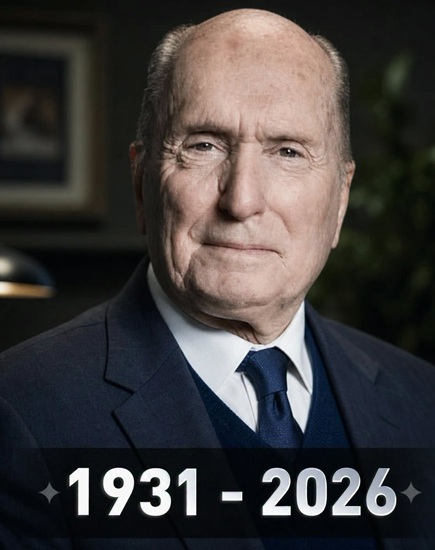
A black-and-white portrait shows an elderly man beside two dates: 1931 and 2026. No name, profession, birthplace, or personal biography is provided with the image. There is only a face and a pair of years that appear to mark the beginning and end of a life. That simplicity gives the portrait much of its emotional force. It does not tell viewers who the man was, but it invites them to think about everything that two dates can never explain. If the dates shown are accurate, they represent a life spanning roughly 95 years.
Someone born in 1931 would have entered a world very different from the one familiar in 2026. Television had not yet become an ordinary household presence in many places, commercial air travel was far less accessible, and digital communication did not exist. News often arrived through newspapers and radio, while long-distance communication depended heavily on letters and telephone systems. Over the decades that followed, technology changed the way people worked, traveled, communicated, learned and preserved memories.
A person living across that period could have witnessed transformations that earlier generations might have considered extraordinary. The development of communications alone changed everyday life dramatically. Letters that once took days or longer to arrive were eventually joined by email, text messaging and instant digital communication. Telephones changed from fixed devices connected to homes and offices into portable computers carried in pockets. Cameras moved from film rolls and carefully developed prints to digital devices capable of storing thousands of images.
These changes happened gradually, meaning each new technology eventually became ordinary even if it initially seemed remarkable. A long life can quietly contain many such transitions. Music and entertainment changed just as dramatically. Someone born in the early 1930s could have listened to music through radio broadcasts and physical records before later encountering tapes, compact discs, digital downloads and streaming services.
Movies moved from theaters and physical media into homes and eventually onto phones and tablets. News cycles accelerated, entertainment became more portable, and global events could be watched almost immediately from far away. Yet technological progress does not necessarily define the memories people consider most important when looking back on their lives. Private memories are often far more personal than public history.
A person may remember the sound of a parent’s voice more vividly than a major political event. The first home shared with someone loved may matter more than the first television purchased. Family dinners, childhood games, ordinary arguments, long friendships and repeated daily routines can become the details that shape a life most deeply. Public history describes the environment surrounding a person. Personal memory explains what that environment actually meant to the individual living inside it.
That is why an unidentified portrait can create so many questions. Who knew the man’s laugh? What work occupied his days? Which people did he call first when something important happened? Was there a particular song that reminded him of being young? Did his family associate him with a favorite meal, a familiar joke or a particular chair in the house? A photograph can preserve the appearance of a person at one moment, but it cannot record all the habits, relationships and experiences that made that person recognizable to those closest to him.
The dates beside a portrait can also make time look far simpler than it feels when lived. Ninety-five years appear as a small space between two numbers, yet a lifetime is experienced one day at a time. Some periods can feel endless while others seem to disappear quickly in memory. Childhood, work, family responsibilities, illness, celebration, disappointment and change do not occur at the same emotional speed. A long life is therefore not one smooth timeline. It is a collection of thousands of ordinary and extraordinary moments experienced separately.
When someone dies, official records can become surprisingly brief. Documents may preserve a legal name, birth date, death date and family relationships. Those facts matter, but they are very different from the memories held by people who actually knew the person. Families may remember expressions repeated for decades, recipes made without measurements, stories told so often that everyone knew the ending, or small routines that once seemed unimportant. Those details rarely appear in public records, but they often become the parts of a person that relatives miss most.
An unfamiliar portrait can therefore remind viewers of people from their own lives. The face itself may belong to a stranger, but the image can bring to mind parents, grandparents, partners, friends or neighbors. Viewers may recognize the same idea of a whole human life represented by only a photograph and two dates. That recognition can feel uncomfortable because it exposes how little an image can preserve. At the same time, it can be comforting because memory usually contains far more than any photograph does.
A meaningful life also does not require famous achievements or a public legacy. Most people are remembered through quieter contributions. They raise children, care for relatives, support friends, perform ordinary work, keep promises, teach skills and return to the same relationships over many years. These acts rarely become part of national history, but they can be deeply important within families and communities. A person may influence dozens of lives without ever becoming publicly known. The absence of a famous biography does not make a life insignificant.
The portrait also offers a reminder that historical change and personal experience exist side by side. A person living from the early 1930s into the 2020s could have lived through enormous developments in transportation, medicine, communications and culture. Yet each technological change would have existed alongside very ordinary human concerns: earning a living, maintaining relationships, dealing with loss, finding moments of happiness and adapting to aging. The outside world may transform dramatically while many of the emotional experiences of daily life remain familiar across generations.
Because the man in the image is not identified in the information provided here, it would be inappropriate to invent details about his family, occupation, personality or experiences. Nothing in the portrait alone can establish whether he married, had children, traveled widely or lived in one place throughout his life. Those possibilities may naturally come to mind, but they remain imagination rather than biography. Responsible storytelling should distinguish between what the image actually shows and what viewers may emotionally project onto it.
The same caution applies to the dates themselves. The image presents 1931 and 2026, but without additional documentation, those numbers should be described as the dates shown in the portrait rather than independently verified birth and death records. If they are accurate, they indicate an unusually long life of approximately 95 years. If the image is commemorative or symbolic, additional context would be needed to know exactly what the dates represent. Avoiding certainty where evidence is missing keeps the reflection meaningful without turning assumptions into facts.
What makes the portrait powerful is therefore not a confirmed biography but the universal idea behind it. A human life can stretch across decades of enormous change and still be reduced visually to one face and two numbers. The years may indicate arrival and departure, but they cannot contain the relationships, mistakes, celebrations, worries, routines and memories that existed between them. Every long life contains far more detail than a memorial image can preserve.
This reflection is based only on the visible premise described here: an elderly man shown in a black-and-white portrait beside the dates 1931 and 2026. It does not claim to identify the man, know his personal history, represent his relatives or speak as a local voice connected to any community. The historical comparisons are general observations about changes that occurred across the twentieth and twenty-first centuries rather than claims about events this particular individual personally experienced. The purpose is to reflect on the passage of time without inventing a biography that the available information does not support.
