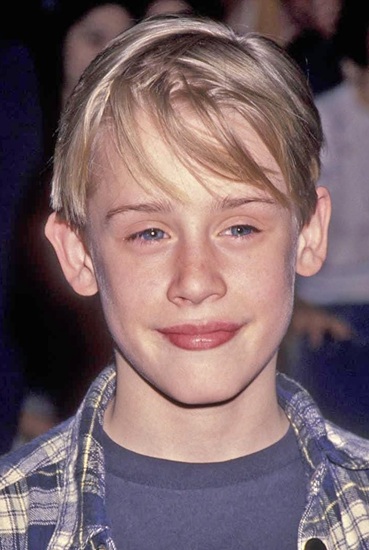
For millions of people, all it takes is one image. A young boy. Hands pressed against his cheeks.
Mouth wide open. An unforgettable scream. More than three decades have passed since that image became part of movie history, but Macaulay Culkin is still instantly connected to it.
He was Kevin McCallister.
The clever eight-year-old accidentally left behind by his family at Christmas.
The child who turned an empty suburban house into a battlefield of homemade traps.
And the young actor who became one of the most recognizable faces of the 1990s almost overnight.
But Culkin’s story did not begin with Home Alone.
And it certainly did not end there.
Long before audiences around the world knew his name, Culkin was already performing.
Born in New York City on August 26, 1980, he began acting when he was very young.
His early career included stage work and small screen appearances.
Then came a movie that helped people notice him.
Uncle Buck.
Released in 1989, the John Hughes comedy starred John Candy, with Culkin playing Miles Russell, one of the children under Uncle Buck’s chaotic care.
Culkin was still a child.
But his comic timing stood out.

He could deliver dialogue with confidence.
He could react naturally.
And he had the rare ability to make a child character feel clever without making him seem like a miniature adult.
That performance helped lead to something much bigger.
A script about a boy accidentally left home while his family flies to Europe for Christmas.
The movie was called Home Alone.
Culkin was cast as Kevin McCallister.
The role changed his life.
When Home Alone reached theaters in November 1990, expectations could hardly have predicted what followed.
The movie became a phenomenon.
Audiences returned repeatedly.
Families embraced it.
Children memorized the traps.
Adults remembered the comedy.
And Culkin became the face of the entire film.
The numbers were extraordinary.
Across its releases, Home Alone has accumulated more than $477 million worldwide, according to Box Office Mojo.
Its original domestic run alone earned more than $285 million.
For a family comedy released in 1990, that was remarkable.
But box-office numbers explain only part of what happened.
Kevin McCallister became a character people remembered.
He was mischievous.
Independent.
Sometimes arrogant.
But also frightened, lonely, and still unmistakably a child.
The movie worked because Kevin was not simply a cartoon genius defeating burglars.
Underneath the comedy was a child who initially believed he wanted his family to disappear.
Then he discovered how much he missed them.
Culkin had to carry both sides of that character.
He had to make audiences laugh.
Then make them care.
And he did it while barely old enough to understand the scale of what was happening around him.
Suddenly, Macaulay Culkin was everywhere.
Magazine covers.
Television appearances.
Interviews.
Movie posters.
Advertisements.
Award shows.
Hollywood had found one of its biggest child stars.
And the offers came quickly.
In 1991, Culkin appeared opposite Anna Chlumsky in My Girl.
It was a very different kind of role.
Thomas J. Sennett was not Kevin McCallister.
The movie dealt with childhood friendship, grief, family, and loss.
For viewers who knew Culkin mostly as a comedian, the film showed another side of him.
Then Hollywood returned to the role everyone associated with his face.
Kevin came back.
In 1992, Home Alone 2: Lost in New York reunited Culkin with Joe Pesci, Daniel Stern, Catherine O’Hara, and other members of the original cast.
This time, Kevin was not abandoned inside his own home.
He accidentally boarded the wrong flight and ended up alone in New York City.
The setting changed.
The basic appeal remained.
Kevin was clever.
The burglars returned.
And elaborate traps followed.
The sequel strengthened Culkin’s place in popular culture.
At that point, he was not simply a successful child actor.
He was one of the most famous children on the planet.
More films followed.
The Good Son.
The Pagemaster.
Getting Even with Dad.
And Richie Rich.
His face remained everywhere.
But an unusual thing was happening at the same time.
The child audiences watched growing up on screen was experiencing a childhood very different from theirs.
Most children went to school.
Played with friends.
Returned home.
Culkin worked on movie sets.
Promoted films.
Dealt with photographers.
And carried the financial expectations attached to major productions.
Success had arrived extremely early.
Eventually, Culkin stepped back.
After Richie Rich in 1994, his presence in mainstream movies decreased dramatically.
For people accustomed to seeing him constantly, it seemed as though he had disappeared.
But that description can be misleading.
He was still alive.
Still growing up.
He simply was no longer living at the center of Hollywood’s child-star machine.
That distance lasted for years.
And because the public had been accustomed to knowing so much about him, his absence created curiosity.
What happened to Macaulay Culkin?
Why did he stop appearing in major movies?
Would he return?
The answers were more complicated than one dramatic explanation.
Culkin had worked intensely at an age when most children were still discovering ordinary life.
He eventually wanted space away from the career that had defined his childhood.
Growing older also meant something else.
He could no longer remain Kevin McCallister.
Child stars face a problem adult actors rarely experience in quite the same way.
Audiences remember them frozen at one specific age.
The actor changes.
The image does not.
A viewer can watch Home Alone every December and see the same ten-year-old face.
Meanwhile, the real person grows older every year.
That gap becomes enormous over time.
Culkin’s adult life would increasingly be defined by learning how to exist beside the image of the child everyone remembered.
Eventually, he returned to acting.
But he did not attempt to recreate his childhood career.
In 2003, he appeared in Party Monster, playing Michael Alig.
The role was radically different from Kevin McCallister.
For anyone expecting the innocent child from a Christmas comedy, the contrast was impossible to miss.
Then came Saved! in 2004.
Again, Culkin seemed less interested in becoming a conventional blockbuster leading man than in choosing projects that interested him.
He also explored creative work outside traditional acting.
Music became one example.
He was involved with the comedy rock project The Pizza Underground, which famously reworked Velvet Underground songs around pizza-themed lyrics.
It was strange.
Deliberately so.
And it suggested that Culkin was comfortable building an adult identity that did not have to resemble the polished child-star image audiences remembered.
He also created Bunny Ears, a satirical lifestyle and comedy platform.
Again, the tone was playful.
Self-aware.
Sometimes absurd.
Culkin seemed increasingly willing to joke about celebrity itself.
Including his own.
And something else gradually became apparent.
He did not appear desperate to escape Home Alone.
Nor did he seem interested in allowing the movie to control everything he did.
Instead, he found ways to coexist with it.
That balance became clearer with age.
In 2021, Culkin appeared in American Horror Story: Double Feature.
The role brought him back to a major television production and introduced him to viewers who may have known his childhood movies better than his adult acting.
A year later, he appeared in The Righteous Gemstones.
Other voice and television work followed.
By the middle of the 2020s, his career looked nothing like the relentless schedule of his childhood.
But it was active.
He was simply choosing a different rhythm.
His more recent credits have included voice work in The Second Best Hospital in the Galaxy and Zootopia 2, along with appearances connected to television projects including Fallout and Running Point.
Then, in December 2023, Hollywood formally recognized the career that had begun when he was a small child.
Macaulay Culkin received a star on the Hollywood Walk of Fame.
It was the 2,765th star awarded.
And the person chosen to speak at the ceremony made the moment especially emotional.
Catherine O’Hara.
His movie mother from Home Alone.
More than three decades earlier, audiences had watched her character desperately trying to return home to Kevin.
Now she stood beside the adult Culkin while Hollywood honored his career.
The reunion was impossible not to notice.
The child from the movie was gone.
The connection remained.
Natasha Lyonne also spoke at the ceremony.
Culkin stood there not as a former child actor being rediscovered, but as an adult looking back at decades of work.
It was one of those moments that made the passage of time suddenly visible.
But perhaps the biggest change in Culkin’s life had nothing to do with acting.
He became a father.
Culkin has been in a long-term relationship with actress Brenda Song.
The pair began dating in 2017 after working together on Changeland.
They later became engaged.
They now have two sons.
Their older son, Dakota, was born in 2021.
Their younger son, Carson, followed in 2022.
By 2026, Dakota is five and Carson is three.
For someone whose own childhood became a global entertainment product, parenthood created an interesting contrast.
Culkin and Song have spoken about protecting their children’s privacy.
Song has emphasized that the boys did not choose public lives simply because their parents are famous.
That approach feels particularly meaningful in Culkin’s case.
He knows exactly what it is like to have strangers recognize a childhood face.
His sons are growing up with famous parents.
But their parents have tried to keep much of their childhood outside the public spotlight.
There is also one amusing connection between Culkin’s childhood and his sons.
They watch Home Alone.
Culkin has spoken about watching the movie with them.
And for a time, they apparently did not fully understand that the child on screen was their father.
To them, Kevin McCallister was simply Kevin.
Their dad was Dad.
That may be one of the strangest experiences available to a former child star.
Millions of strangers instantly recognize your childhood face.
Your own children may not.
And perhaps there is something fitting about that.
Culkin has lived most of his adult life beside a version of himself that never ages.
Kevin is always eight.
The house is always decorated for Christmas.
Harry and Marv are always approaching.
The traps are always waiting.
The scream happens again.
Then the credits roll.
The real Culkin kept moving.
He turned 20.
Then 30.
Then 40.
By September 2026, he is 46 years old.
He has a partner.
Two children.
Decades of life that happened after Kevin McCallister disappeared from the screen.
That is why photographs comparing the young Home Alone actor with Culkin today can feel so surprising.
But there is nothing mysterious about the difference.
More than 35 years have passed.
Faces change.
Hair changes.
Bodies change.
People mature.
The unusual part is that most people do not have millions of strangers comparing their adult face with a perfectly preserved image of themselves at ten years old.
Culkin does.
Every Christmas, a new generation sees him as a child for the first time.
Parents who watched Home Alone in theaters now show it to their children.
Some of those children will eventually show it to theirs.
The movie has outlived the specific era that created it.
And Culkin remains permanently attached to that legacy.
There is another reason his story continues attracting attention.
Child stardom often creates frightening expectations.
People have seen enough troubled former child actors to assume that enormous fame at a young age must lead to one specific ending.
Real lives are not that predictable.
Culkin’s path has included long periods away from mainstream Hollywood.
Unusual creative projects.
Adult acting roles.
Public reflection on his childhood.
And eventually family life.
It was not a straight line.
That may be exactly the point.
The child who appeared to have everything figured out on screen spent adulthood creating a life that did not have to follow the script Hollywood had written for him.
He did not become Kevin McCallister forever.
He could not.
But he also did not need to erase Kevin completely.
At his Walk of Fame ceremony, the history remained present.
Catherine O’Hara stood nearby.
Fans remembered the movie.
Clips circulated online.
The iconic childhood role was part of the celebration.
But the man receiving the star was not ten years old.
He had spent decades becoming someone else.
That difference is where the larger payoff begins to appear.
At first, Macaulay Culkin’s story seems to be about transformation.
Look at the adorable child star then.
Look at the adult now.
See how different he looks.
But appearance is the least interesting change.
The more meaningful transformation happened in everything surrounding the face.
As a child, Culkin’s schedule was built around movies.
As an adult, he gained the freedom to choose when and how he wanted to work.
As a child, millions watched him grow.
As a father, he has helped create a more private childhood for his own sons.
As a boy, he was known largely through one character.
As an adult, he has had the opportunity to decide what parts of that legacy he wants to carry forward.
And there is something else.
For years, people often spoke about Culkin as though his most important life had already happened.
He had been the child star.
He had been Kevin.
He had been enormously famous.
Everything afterward was sometimes presented as an epilogue.
But life does not work like a movie credit sequence.
Being famous at ten does not make everything after childhood an afterthought.
Culkin continued living.
Relationships changed.
Priorities changed.
Career choices changed.
Parenthood arrived.
And the work continued.
His recent acting activity makes that especially clear.
He is not frozen in 1990 simply because audiences enjoy returning there.
The public can revisit the old movie whenever it wants.
He does not have to live inside it.
That may explain why his later relationship with Home Alone feels different from simple nostalgia.
He can joke about it.
Talk about it.
Watch it with his children.
Appear at events celebrating it.
And still go home afterward to a life that has very little in common with Kevin McCallister’s.
That is a kind of distance only time can create.
More than three decades ago, audiences watched Kevin discover that having an empty house was less exciting than he imagined.
The character learned that independence was not the same thing as isolation.
He wanted his family back.
For Culkin, the real-world journey was obviously very different.
But there is an interesting symmetry in where his life eventually went.
After spending part of childhood as one of the most famous children in entertainment, adulthood brought something much more ordinary.
A partner.
Children.
Home life.
Selective work.
Privacy.
The things that generate fewer headlines may have become the things that matter most.
That does not mean his Hollywood story is finished.
Recent acting credits show otherwise.
It means the definition of success changed.
The ten-year-old Macaulay Culkin could measure success in box-office records and movie offers because adults around him were building a career.
The adult Culkin gets to measure it differently.
He can work when a project interests him.
He can step away.
He can return.
And he can be present for a family of his own.
That may be the part that surprises people most when they ask, “Whatever happened to the kid from Home Alone?”
He did not disappear.
He grew up.
The distinction sounds obvious.
But celebrity often makes people forget it.
The child remains permanently available on screen.
The adult continues somewhere beyond it.
For Macaulay Culkin, those two versions now exist side by side.
One is Kevin McCallister.
Ten years old.
Hands against his face.
Forever trying to protect a house at Christmas.
The other is a 46-year-old actor and father whose life has moved far beyond that front door.
And perhaps that is why his story still resonates.
Not because he looks different.
He was always going to.
Not because he eventually returned to acting.
Many performers take breaks.
The remarkable part is how an image that once threatened to define an entire lifetime eventually became just one chapter of a much larger life.
Home Alone remains.
Kevin remains.
The scream remains.
But Macaulay Culkin kept going.
And more than 35 years later, the little boy millions remember is now a father watching that same movie with children of his own.
