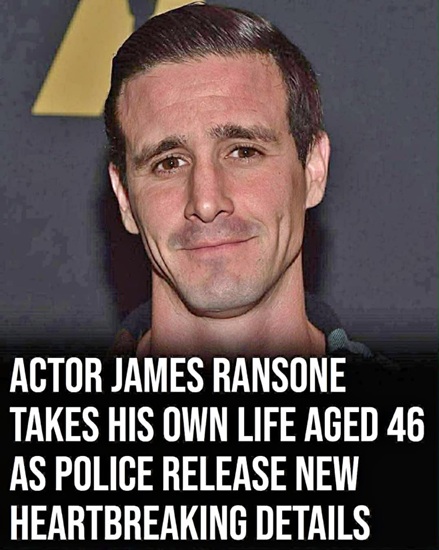
James Ransone Dies at 46, Leaving Behind a Career That Reached Far Beyond The Wire
For millions of television viewers, one name immediately comes to mind when they think of James Ransone.
Ziggy Sobotka.
The reckless, unpredictable and deeply troubled dockworker from the second season of HBO’s The Wire became one of the actor’s most recognizable performances.
But Ransone’s career did not end on the Baltimore docks.
Over the next two decades, he moved between television, independent cinema, war drama and horror, working with filmmakers including Spike Lee and Sean Baker.
Then, in December 2025, came the news that stunned colleagues, friends and viewers who had followed his work.
James Ransone was dead at 46.
His Death Was Confirmed in Los Angeles
Ransone died in Los Angeles on December 19, 2025.
The Los Angeles County Medical Examiner determined that his death was a suicide.
Authorities did not suspect foul play.

The news spread quickly through the entertainment industry.
Tributes began appearing from actors, directors and other people who had worked alongside him.
But before those messages came decades of performances.
And the role that changed everything arrived relatively early.
Ziggy Sobotka Made Him Difficult to Forget
Ransone appeared throughout the second season of The Wire.
The acclaimed HBO drama shifted much of its focus that year toward Baltimore’s struggling waterfront and the people whose livelihoods depended on it.
Ransone played Chester “Ziggy” Sobotka.
Ziggy was the son of union leader Frank Sobotka.
He wanted respect.
He wanted attention.
He wanted to prove himself.
But his impulsiveness repeatedly pushed him toward disaster.
Ransone made the character frustrating, funny, vulnerable and tragic — sometimes within the same episode.
It was a performance viewers remembered.
Perhaps too well.

Success Brought an Unexpected Problem
Years later, Ransone acknowledged that being identified so strongly with Ziggy could be complicated.
He was proud of The Wire.
But such a distinctive role can follow an actor.
Audiences may stop seeing the performer and begin seeing only the character.
Ransone kept working anyway.
And slowly, his résumé demonstrated how much more he could do.
One of his next major projects reunited him with The Wire creator David Simon.
This time, the setting was very different.
Generation Kill Took Him to War
In 2008, Ransone appeared in HBO’s Generation Kill.
The miniseries followed U.S. Marines during the early stages of the Iraq War.
Ransone played Corporal Josh Ray Person.
The role gave him another opportunity to combine humor, intensity and nervous energy.
It also became an important part of his career after The Wire.
David Simon would work with him again on Treme.
The relationship between actor and creator lasted across different projects.
After Ransone’s death, Simon remembered not only his performances but the way he participated in the collaborative life of a production.
That sense of connection would appear repeatedly in the tributes that followed.
Horror Audiences Discovered Another James Ransone
Ransone eventually became especially familiar to horror fans.
He appeared in Sinister alongside Ethan Hawke.
His character, initially known as Deputy So-and-So, brought an awkward but memorable energy to the dark supernatural story.
Ransone later returned in Sinister 2.
Then came another major horror franchise.
In 2019, he appeared in It Chapter Two as the adult Eddie Kaspbrak.
The cast included Jessica Chastain, James McAvoy, Bill Hader and Bill Skarsgård.
Once again, Ransone played a character whose anxiety and humor existed side by side.
It was a combination he handled particularly well.
But another horror project would introduce him to yet another generation.
The Black Phone Became Part of His Later Career
Ransone appeared as Max in The Black Phone, the horror film starring Ethan Hawke and based on a story by Joe Hill.
He later returned for the sequel.
By this stage of his career, Ransone had become one of those character actors audiences might recognize immediately even if they could not always remember his name.
He could move from prestige television to studio horror.
Then from horror to independent film.
That flexibility led to some of his most interesting collaborations.
Sean Baker Remembered a Friend, Not Just an Actor
Long before Sean Baker won the Academy Award for Anora, he worked with Ransone.
Ransone appeared in Baker’s Starlet in 2012.
He later appeared in Tangerine in 2015.
Those films belonged to a very different corner of cinema from It Chapter Two or The Black Phone.
That was part of Ransone’s range.
He could work inside major productions.
He could also disappear into smaller independent films.
After Ransone’s death, Baker shared his grief publicly and said he would miss his friend dearly.
The tribute was short.
The history behind it was not.
Spike Lee Also Looked Back on Their Work Together
Ransone collaborated with filmmaker Spike Lee on multiple projects.
He appeared in Inside Man and later in Red Hook Summer.
Following the actor’s death, Lee shared a photograph of the two together and publicly mourned him.
The message reflected another recurring theme.
Ransone had spent years moving through very different filmmaking communities.
Prestige television.
Independent cinema.
Horror.
Major studio productions.
And directors remembered the person who had worked beside them, not simply the characters audiences saw.
His Television Work Continued Until Near the End of His Life
Ransone never became limited to movies.
His television credits extended across numerous series.
He appeared in Law & Order.
CSI: Crime Scene Investigation.
Bosch.
Treme.
And later Poker Face.
His final television appearance came in the second season of Poker Face in 2025.
Natasha Lyonne, the star of the series, was among those who remembered him after his death.
The tributes kept arriving.
And they came from different generations of performers.
His Wire Colleagues Mourned Him Too
Wendell Pierce, who played Detective Bunk Moreland on The Wire, shared a public message after learning of Ransone’s death.
The two had been part of a series whose cultural reputation only grew in the years after it ended.
For many actors, appearing in a celebrated television series becomes one credit among many.
The Wire became something else.
It continued attracting new audiences.
New viewers discovered Ziggy years after Ransone had already moved on to other projects.
That meant his early performance never really disappeared.
Every streaming generation could encounter it again.
Younger Co-Stars Remembered His Support
Madeleine McGraw worked with Ransone in The Black Phone films.
After his death, she shared an emotional tribute.
She remembered him not only as a talented actor but as someone who had been supportive.
That kind of remembrance offers something a filmography cannot.
Credits show where an actor worked.
They do not show what it felt like to work with them.
The messages from colleagues began filling in that part of Ransone’s story.
But the most personal tribute came from home.
Jamie McPhee Mourned Her Husband
Ransone was married to Jamie McPhee.
The couple married in 2017 and had two children.
Their son is named Jack.
Their daughter is Violet.
After Ransone’s death, McPhee shared photographs and words about her husband and their family.
Her message centered on love, memory and the children they had together.
It was a reminder that behind the actor known to millions was a private family experiencing an enormous loss.
Ransone was not only Ziggy.
Not only Eddie.
Not only Max.
He was a husband and father.
And those were the roles that mattered most outside the screen.
His Family Was at the Center of His Private Life
A fundraising page established after his death described Ransone as a devoted father.
It emphasized the bond he shared with Jamie, Jack and Violet.
Another fundraiser connected with the family supported mental-health advocacy.
The response after his death showed how many different communities knew him.
Some knew his work personally.
Others knew him only through characters.
Some had watched him since The Wire.
Others had discovered him through horror films decades later.
But his family knew the person who returned home when the cameras stopped.
That distinction matters when discussing any public figure’s death.
Ransone Had Spoken Publicly About Addiction
Ransone had previously discussed periods of substance dependence in his younger life.
In a 2016 interview, he said he became sober at 27 after several years of heroin use.
He also clarified that he had become sober before filming Generation Kill.
His openness about addiction became part of the public record of his life.
But it should not be turned into a simplistic explanation for his death years later.
Addiction histories are complex.
So is suicide.
No responsible account can reduce either to one event or one cause without evidence.
And Ransone had also spoken about another deeply painful part of his past.
In 2021, He Publicly Disclosed Childhood Sexual Abuse
Ransone said he had been sexually abused by a tutor when he was young in Maryland.
He publicly discussed the experience decades later.
He described the shame and emotional consequences he had carried from what happened.
A police investigation was opened after his disclosure and later closed without charges being filed.
Ransone’s decision to speak publicly about the alleged abuse was intensely personal.
It also provided context for struggles he himself had discussed.
But once again, context should not be mistaken for a definitive explanation of his death.
Trauma does not create one predetermined outcome.
Neither does addiction.
Suicide Rarely Has One Simple Explanation
When a public figure dies by suicide, there can be a strong temptation to search backward through their life for one event that explains everything.
A traumatic childhood.
Substance use.
Career pressure.
A relationship.
One difficult period.
Real life is rarely that simple.
Suicide is complex and can involve multiple interacting factors that outsiders may never fully know.
Ransone’s past disclosures should therefore be treated with respect rather than converted into a neat narrative about why he died.
The medical examiner established the manner of death.
That does not mean the public knows every reason behind it.
Sometimes those answers remain private.
His Work Reveals a Different Kind of Story
Look at Ransone’s career chronologically and another narrative emerges.
A young actor from Maryland enters film and television.
Then The Wire arrives.
Ziggy becomes unforgettable.
Ransone keeps working.
Generation Kill.
Treme.
Sinister.
Independent films with Sean Baker.
Projects with Spike Lee.
It Chapter Two.
The Black Phone.
Poker Face.
The roles keep changing.
The intensity remains.
It is a career built less around conventional leading-man celebrity and more around memorable characters.
He Made Flawed Characters Feel Human
Many of Ransone’s best-known characters were not polished heroes.
Ziggy certainly was not.
His characters could be nervous.
Impulsive.
Funny.
Uncomfortable.
Frustrating.
Sometimes self-destructive.
Ransone seemed particularly comfortable playing people whose flaws were visible.
That made his performances unpredictable.
It also made them human.
Viewers did not necessarily like every character he played.
But they remembered them.
For a character actor, that may be one of the most meaningful achievements.
The Wire Remains the Role Most Closely Connected to His Name
Despite everything that followed, Ziggy Sobotka remains central to Ransone’s legacy.
Season two of The Wire was initially a dramatic shift from the show’s first season.
The story moved toward Baltimore’s docks and the decline of organized labor there.
Over time, that season became an essential part of the series’ larger portrait of institutions and economic decline.
Ziggy represented one painful part of that world.
He wanted to matter.
He repeatedly made terrible decisions.
And eventually those decisions carried devastating consequences.
Ransone made that trajectory believable.
Decades later, viewers were still talking about it.
Yet His Career Was Much Larger Than Ziggy
That is perhaps the most important correction to the shorthand surrounding his death.
“The Wire actor James Ransone dies at 46” was an understandable headline.
But it could never capture the whole career.
He worked for more than two decades.
He appeared in major horror franchises.
Prestige television.
Independent films.
Crime dramas.
War stories.
And projects by some of the most distinctive filmmakers working during his generation.
His résumé was eclectic because he was.
And the people mourning him came from all of those different worlds.
The Tributes Revealed His Reach
Spike Lee remembered a collaborator.
Sean Baker remembered a friend.
Wendell Pierce mourned a fellow Wire actor.
Younger performers remembered someone supportive.
Jamie McPhee remembered her husband and the father of their children.
Each message described a different relationship.
Together, they created a portrait that no single obituary could fully contain.
An actor can leave behind performances.
A person leaves behind relationships.
Ransone left both.
His Children Are Part of That Legacy
Jack and Violet were young when their father died.
Their experience of James Ransone will never be the same as the public’s.
Fans can replay episodes.
Watch films.
Return to favorite scenes.
His children will inherit something different.
Family photographs.
Stories.
Private memories.
Accounts from their mother and the people who knew their father personally.
That is why the public tributes from friends and collaborators matter beyond celebrity news.
They preserve pieces of a person his children may continue learning about as they grow.
A Career Can Continue After an Actor Is Gone
Film and television create a strange kind of permanence.
An actor dies.
The performances remain unchanged.
Ziggy Sobotka is still young every time someone starts season two of The Wire.
Eddie Kaspbrak still returns to Derry in It Chapter Two.
Max remains inside the world of The Black Phone.
The characters do not age.
The audience does.
And new viewers continue discovering them.
That gives Ransone a legacy extending beyond the news of his death.
His Death Should Not Become His Defining Role
James Ransone died at 46.
The Los Angeles County Medical Examiner determined that his death was a suicide.
That fact belongs in an accurate account of his life.
But it does not need to consume everything that came before it.
He spent decades acting.
He worked with filmmakers whose careers crossed very different parts of American cinema.
He became part of one of television’s most celebrated dramas.
He built a family with Jamie McPhee.
He became a father to Jack and Violet.
He also spoke publicly about painful experiences and personal struggles.
Those pieces belong to the same life.
None should erase the others.
The Final Picture Is Bigger Than One Character
For some viewers, James Ransone will always be Ziggy.
For others, he will be Eddie from It Chapter Two.
Horror fans may remember Sinister or The Black Phone.
Independent-film audiences may think of his collaborations with Sean Baker.
Friends and colleagues will remember moments audiences never saw.
And his family will remember something entirely different.
That is the real scale of a life in performance.
The public receives the characters.
The people closest to the actor know the person behind them.
James Ransone left behind both.
And while his death at 46 brought his career to an unexpectedly early end, the work — and the memories surrounding it — did not disappear with him.
