Robert Redford’s death marked the end of an extraordinary chapter in American cinema. The actor, director, producer and champion of independent filmmaking died on September 16, 2025, at his home in Sundance, Utah, at the age of 89. Redford had spent more than six decades building a career that extended far beyond being one of Hollywood’s most recognizable leading men. He became an Academy Award-winning director, helped create the Sundance Institute and used his influence to support generations of independent filmmakers.
For Jane Fonda, however, the loss was also deeply personal because Redford had been her friend and frequent screen partner for decades. Shortly after learning that Redford had died, Fonda released an emotional statement describing how strongly the news had affected her. She said she “can’t stop crying” and described Redford as someone who had meant a great deal to her. Her tribute was not simply a reflection on the death of another famous actor. Fonda and Redford had known each other for decades, had worked together repeatedly and had developed a friendship that survived long periods when their careers took them in different directions.
Their professional connection stretched from the early stages of their Hollywood careers to a final film collaboration more than half a century later. Their earliest screen connection can be traced to the 1960 film Tall Story, although Redford appeared only briefly and was uncredited. Their more substantial collaborations included The Chase in 1966, Barefoot in the Park in 1967, The Electric Horseman in 1979 and Our Souls at Night in 2017. Those projects placed the actors together at dramatically different stages of their lives and careers. When they reunited for Our Souls at Night, both were established screen legends rather than young performers trying to prove themselves.

Barefoot in the Park became especially important in the history of their friendship. The 1967 romantic comedy, adapted from Neil Simon’s successful stage play, cast Fonda and Redford as newlyweds Corie and Paul Bratter. Their characters loved each other but approached life very differently. Corie was spontaneous and adventurous, while Paul was considerably more cautious and conventional. Much of the film’s comedy came from watching the young couple discover that falling in love and successfully living together were not necessarily the same thing.
The chemistry between Fonda and Redford helped make the movie memorable, and Fonda later admitted that her feelings while making it were not entirely limited to acting. Looking back many years later, she said she had fallen “madly in love” with Redford during the production. She also repeatedly described him as extraordinarily handsome. These comments were made retrospectively and playfully, and Fonda was clear that the two did not become a romantic couple in real life.
Fonda has been unusually candid about the crush she developed on her longtime co-star. She explained in interviews that she tended to fall for Redford while they were working together, even though their relationship remained platonic. Both actors had their own marriages and personal lives, and Fonda has said that nothing happened between them. The distinction is important because their convincing romantic chemistry on screen sometimes encouraged audiences to imagine that there must have been a hidden relationship away from the cameras.

What audiences were seeing instead was an unusually effective screen partnership. Fonda’s expressive, energetic acting style could contrast beautifully with Redford’s quieter approach. Redford frequently communicated through small gestures, expressions and pauses rather than obvious displays of emotion. Fonda could bring a different intensity to the same scene. That contrast gave their fictional relationships a believable tension and helped explain why filmmakers continued to find opportunities to put them together.
Redford’s physical appearance was undeniably part of his early Hollywood appeal. His blond hair, blue eyes and understated confidence made him one of the era’s most recognizable leading men. Yet his career lasted because he refused to rely exclusively on those qualities. He increasingly sought characters with contradictions and eventually moved behind the camera, demonstrating that his ambitions extended far beyond conventional movie stardom.
Fonda remembered recognizing his magnetism very early. Stories she told about seeing Redford during their younger years emphasized the attention he naturally attracted when he entered a room. She later joked about how difficult it could be to concentrate while looking into his eyes during a scene. Beneath those humorous comments was genuine admiration for someone whose screen presence she had witnessed developing almost from the beginning.

Their second major collaboration, The Chase, presented a very different atmosphere from Barefoot in the Park. Released in 1966 and directed by Arthur Penn, the drama featured an ensemble cast that included Marlon Brando alongside Fonda and Redford. The film explored violence, social tension and corruption in a small Texas town. It provided an early example of how both performers were willing to take roles outside conventional romantic entertainment.
A little more than a decade after Barefoot in the Park, Fonda and Redford worked together again in The Electric Horseman. The 1979 film, directed by Sydney Pollack, paired Redford’s former rodeo champion with Fonda’s television reporter. Their characters initially approach one another with different motivations before developing a closer relationship. Once again, filmmakers could rely on the natural chemistry that had already worked between them years earlier.
By that point, both actors had changed substantially. They were no longer simply attractive young stars establishing themselves in Hollywood. Fonda had won major acting honors and become known for taking on challenging roles, while Redford had established himself as one of the industry’s most successful and respected leading men. Their reunion demonstrated that the chemistry audiences remembered from their earlier work had not disappeared.
Their careers nevertheless developed independently for decades afterward. Redford increasingly focused on directing, producing, environmental issues and creating opportunities for independent filmmakers. Fonda continued acting while also becoming widely known for activism and other projects. They did not need to remain constant co-stars to maintain respect for one another.
Redford’s influence behind the camera became one of the defining achievements of his career. His directorial debut, Ordinary People, received major critical acclaim and won the Academy Award for Best Picture, while Redford received the Oscar for Best Director. The achievement demonstrated that the actor famous for his appearance and understated performances also possessed a sophisticated understanding of filmmaking.
His contribution to independent cinema became even more significant. Through the Sundance Institute and the movement that developed around Sundance, Redford helped create opportunities for filmmakers working outside traditional Hollywood structures. His support contributed to an environment in which emerging directors, writers and independent productions could receive attention that might otherwise have been difficult to obtain.
That work became an important part of Fonda’s tribute after his death. She remembered not only the actor with whom she had shared romantic scenes but also the person who had used his influence to change filmmaking. In later comments about Redford, Fonda specifically emphasized his contribution to independent cinema. She believed his impact extended well beyond the films in which audiences saw his face.
Environmental protection was another major part of Redford’s public life. He had a long connection with Utah and became an outspoken supporter of conservation and environmental causes. His home and the Sundance community became closely associated with his belief that natural landscapes deserved protection. Tributes following his death repeatedly highlighted this side of his life alongside his achievements as an actor and filmmaker.
Fonda’s own tribute also reflected the values she associated with him. Her remarks included a political observation about what she believed Redford represented in American life. That comment should be understood as Fonda’s personal viewpoint rather than an objective characterization of the country or a statement made on behalf of any community. The broader point of her remembrance was that she admired Redford for his principles as well as his artistic achievements.
Perhaps the most emotionally meaningful chapter of their screen relationship arrived in 2017. Fifty years after Barefoot in the Park, Fonda and Redford reunited for Our Souls at Night. Directed by Ritesh Batra and based on Kent Haruf’s novel, the Netflix drama offered something unusual in mainstream cinema: a romantic story centered on two older people dealing with loneliness, companionship, family and the possibility of finding love late in life.
Fonda played Addie Moore, while Redford portrayed Louis Waters. Both characters are widowed and living alone in a small Colorado community. Addie approaches Louis with an unconventional proposal: rather than continuing to spend their nights alone, they could share companionship. What begins as an arrangement designed to ease loneliness gradually develops into a deeper emotional relationship.
The story appealed to Fonda partly because it treated romance among older adults seriously rather than turning aging itself into a joke. She described the film as being about hope and the possibility of taking emotional risks even later in life. Her character understands that time is limited and decides that fear of gossip or judgment should not prevent her from seeking connection.
Casting Fonda and Redford gave that story an additional layer of meaning. Audiences familiar with Barefoot in the Park could remember the same performers as young newlyweds beginning their adult lives together on screen. Half a century later, they were portraying people confronting loneliness and discovering companionship at a completely different stage of life.
Fonda herself recognized those parallels. While making Our Souls at Night, she recalled moments that reminded her of scenes from Barefoot in the Park. The similarities created an unusual cinematic echo: two actors who had once portrayed young romantic partners were now exploring the meaning of intimacy in later adulthood.
Their friendship also made the reunion easier professionally. Redford explained around the time of the film that working with Fonda felt natural because of their long history together. They did not need extensive discussion to establish trust or chemistry because decades of experience had already created that familiarity. He also described Fonda admiringly as a “force,” particularly praising her ability to continue moving forward rather than remaining trapped by difficulties from her past.
Fonda continued joking publicly about her attraction to Redford while they promoted the movie. During television appearances, she humorously complained that their romantic scene was too brief and acknowledged that looking into Redford’s eyes could still distract her. The remarks were characteristic of the playful way she discussed their screen chemistry rather than evidence of a secret relationship.
That distinction remained consistent throughout Fonda’s recollections. She had a crush on Redford, admired him and enjoyed playing romantic partners with him, but they were longtime friends and professional collaborators. Their relationship became interesting precisely because the affection between them did not need to become a conventional Hollywood romance in order to last.
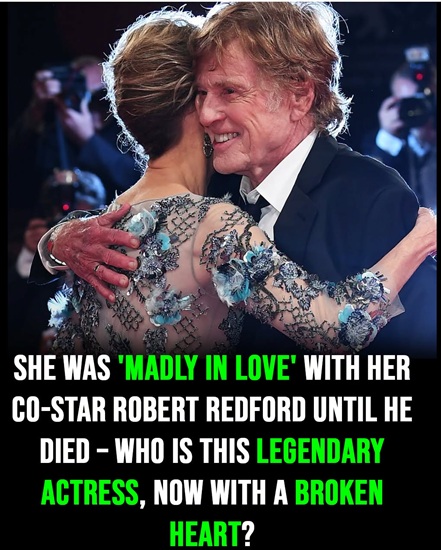
The two also appeared together at the Venice Film Festival in 2017, where Our Souls at Night was presented. Both received Golden Lion honors recognizing their contributions to cinema. Photographs from Venice captured them laughing, embracing and standing together more than half a century after their earliest work.
Those photographs took on greater emotional significance after Redford’s death. They represented two people who had watched each other move through extraordinary careers and profound personal changes while periodically finding their way back to the same movie set.
Fonda’s tribute after Redford died included a photograph from Our Souls at Night featuring the two stars with young actor Iain Armitage. Armitage later became widely known through Young Sheldon, but at the time he was working alongside two performers whose careers stretched back decades before he was born. He also shared his own memories following Redford’s death, describing how meaningful the experience of observing Fonda and Redford had been for him.
Fonda remembered happier moments as well. She wrote about Redford’s practical jokes and the laughter they had shared. Those details helped make her tribute less like a formal obituary and more like a personal farewell. The Robert Redford she remembered was not only the celebrated actor known to millions but also the friend who could make her laugh while they were working together.
Her tribute also contained a painful regret. Fonda said she had wanted to visit Redford during the final months of his life because she wanted to make sure everything was good between them. She did not arrange that visit soon enough. After his death, she transformed that regret into a personal lesson about not postponing contact with people who matter, particularly later in life.
That admission made her remembrance especially relatable. Famous actors may live lives that appear very different from those of most people, but regret about an unmade visit or delayed conversation is universal. Fonda had known Redford for more than half a century, yet she still found herself wishing she had acted sooner.
Redford died peacefully in his sleep at his home in Sundance, Utah, according to reports following his death. He was 89 years old. The news produced tributes from across film and entertainment, including actors and filmmakers who had worked with him and others influenced by the institutions he helped create.
His career included some of the most recognizable films of his era. Butch Cassidy and the Sundance Kid helped cement his status as a major star, while The Sting reunited him with Paul Newman and became another enduring classic. The Way We Were, opposite Barbra Streisand, demonstrated his effectiveness in romantic drama, while All the President’s Men placed him at the center of one of American cinema’s best-known films about investigative journalism.
Redford continued challenging his established image as his career developed. He appeared in films including Three Days of the Condor, The Natural, Out of Africa and later All Is Lost, in which he carried much of the film almost entirely by himself. His longevity was not based on playing the same handsome leading man indefinitely. He repeatedly sought projects that allowed him to explore aging, failure, morality and personal responsibility.
His directing career was equally significant. Winning the Academy Award for directing Ordinary People gave Redford an achievement that relatively few major actors successfully accomplish. He could move between acting and directing while also producing and supporting other filmmakers.
The Sundance Institute ultimately became one of his most important contributions. What began from Redford’s interest in giving independent artists greater opportunities developed into an institution associated worldwide with independent filmmaking. Sundance helped filmmakers find audiences, financing and industry attention while encouraging work that might not fit conventional studio formulas.
That legacy helps explain why tributes to Redford came from people who had never appeared with him on screen. His influence reached filmmakers whose careers benefited from the independent-film ecosystem he helped strengthen. For them, Redford was not simply an actor from an earlier generation but someone who had created opportunities for new voices.
Jane Fonda’s relationship with him occupied a different part of that legacy. She had known the young Redford before many of those accomplishments existed. She watched the handsome emerging actor become a superstar, director, producer, environmental advocate and institution builder.
Redford, in turn, watched Fonda’s own extraordinary evolution. She moved through different stages as an actress, activist and public figure while repeatedly reinventing herself. His description of her as someone who continually moved forward reflected a familiarity that could only develop over many years.
Their different personalities may have helped sustain their friendship. Neither needed the other to validate an already successful career. They could reunite after long periods apart and still discover that the fundamental connection between them remained.
Their screen partnership also avoided becoming repetitive. The Chase was different from Barefoot in the Park. The Electric Horseman placed them in another setting entirely. Our Souls at Night finally allowed them to explore romance from the perspective of people confronting aging and mortality.
That final film now carries an emotional weight that could not have been fully anticipated when it was released. A story about older people recognizing that time is precious became the final movie Fonda and Redford made together. Fonda’s later regret about postponing a visit makes the film’s themes of connection and limited time feel even more poignant.
It would nevertheless be misleading to reduce their relationship to sadness. Fonda’s memories emphasized laughter just as strongly as grief. She remembered practical jokes, affection and the pleasure of repeatedly finding herself opposite Redford on a film set.
Her famous comments about falling for him also reveal the humor with which she viewed their history. Decades after Barefoot in the Park, she could openly acknowledge how attractive she found him and laugh about becoming distracted during romantic scenes.
Redford’s response was characteristically understated. He expressed admiration for Fonda’s determination and resilience rather than turning their friendship into a dramatic romantic story. That difference in temperament was almost an extension of what audiences saw when they worked together.
For viewers, their chemistry could feel remarkably natural because there was genuine familiarity beneath the performances. That does not mean the romantic relationships portrayed on screen existed in real life. It means two skilled actors trusted each other enough to make fictional intimacy convincing.
The distinction matters when remembering their work. Hollywood history frequently transforms friendships between famous men and women into supposed secret romances. Fonda herself repeatedly clarified the reality: she developed crushes on Redford, but they did not become a couple.
Their friendship was substantial enough without inventing anything else. It survived marriages, career changes, political controversies, professional successes and the ordinary passage of decades.
In 2026, Fonda again reflected publicly on Redford while discussing how he was remembered during the Academy Awards. She described herself as having always been in love with him and again praised both his appearance and his values. She also highlighted the way he had changed the film industry by supporting independent cinema.
Those later comments showed that her grief had not erased the playful quality that had always characterized the way she discussed him. Even while mourning, Fonda could remember the crushes, movies and laughter alongside the more serious aspects of his legacy.
Redford received tributes from many other major figures as well. His career had intersected with generations of actors, directors and writers, while Sundance connected him with an even broader group of filmmakers. The scale of those reactions reflected how many different roles he had occupied during his life.
