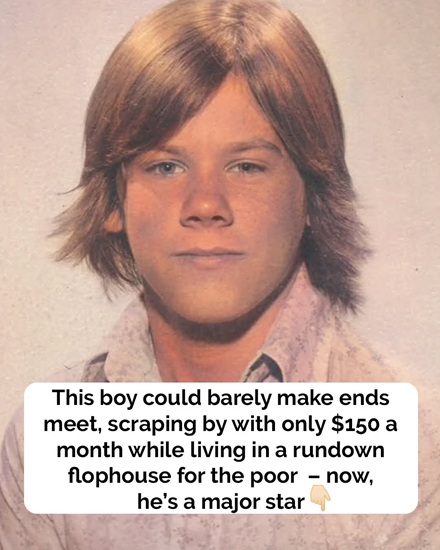
Long before Kevin Bacon became one of Hollywood’s most recognizable actors, his life looked very different from the comfortable and peaceful existence many fans associate with him today. His path to success included years of uncertainty, inexpensive housing, auditions, theater work, and the determination required of a young performer trying to establish himself. Decades later, Bacon has built an enduring acting career while also embracing a quieter lifestyle with his wife, actress Kyra Sedgwick.
Their life away from Hollywood includes animals, gardening, cooking, and plenty of time spent outdoors. Bacon’s interest in performing developed long before audiences knew his name. Born in Philadelphia, Pennsylvania, in 1958, he grew up in a family that encouraged creativity and intellectual curiosity. His father, Edmund Bacon, was a prominent urban planner and architect who served for many years as executive director of the Philadelphia City Planning Commission. His mother, Ruth Hilda Holmes, was a teacher and social activist. Kevin was the youngest of six children, and the arts became an important part of his interests while he was still young.
According to accounts Bacon has shared about his childhood, movies had an especially powerful effect on his imagination. After seeing films at the theater, he enjoyed returning home and pretending to be characters he had just watched on the screen. A collection of old clothing saved by his mother became an important source of entertainment. Instead of needing elaborate toys, he could use different pieces of clothing to create characters and invent stories, allowing his imagination to become part of everyday life.
That childhood fascination eventually became something more serious. Bacon realized at a relatively young age that acting was not simply a hobby he enjoyed but something he wanted to pursue professionally. As a teenager, he attended the Pennsylvania Governor’s School for the Arts at Bucknell University, where he studied theater. The experience helped reinforce his desire to become an actor and exposed him to an environment where artistic ambition was encouraged.

At 17, Bacon left Philadelphia for New York City in pursuit of an acting career. Moving to New York did not immediately result in glamorous opportunities or financial security. Like countless aspiring performers before and after him, he had to find a way to survive while developing his craft and searching for work. His early years in the city became an important part of the story he would later tell about his beginnings.
Bacon has recalled initially staying with his sister while trying to establish himself in New York. Eventually, he needed an affordable place of his own. Through an advertisement in the Village Voice, he found inexpensive accommodation that was described as an artist-oriented residence. The living arrangement was basic and far removed from the lifestyle normally associated with established Hollywood stars.
Bacon has said that the accommodation cost approximately $150 a month. Even at that price, however, he was not getting a private apartment. He shared the room with another resident, a classical pianist. For a young actor living on a limited budget, sharing the space provided an affordable way to remain in New York while continuing to pursue professional opportunities.

The arrangement lasted much longer than a temporary stay. Bacon has recalled sharing the room with the pianist for several years. Although the surroundings were modest, he has spoken about some of those memories with affection. His roommate would sometimes play classical piano, creating an unusual soundtrack to their inexpensive New York living arrangement.
Those early circumstances reveal how different Bacon’s life was before fame arrived. There were no guarantees that he would become a successful film actor. He was simply one of many young performers attempting to find work in a competitive industry. Remaining in New York meant accepting limited comforts while investing his time and energy into acting.
The city also offered Bacon something he valued deeply: access to theater and serious acting opportunities. He studied at the Circle in the Square Theatre School and became involved with stage productions. Theater provided an important foundation for his development as a performer, allowing him to gain practical experience before his film career became established.
Bacon later described his youthful attraction to the arts as something almost philosophical. In an interview quoted by Cosmopolitan, he spoke about wanting the “real thing” from life and recalled being surrounded by the idea that artistic and creative expression represented something deeply valuable. That attitude helps explain why he was willing to tolerate uncertain finances and modest living conditions while pursuing acting.

His first years as a professional performer were not defined by instant celebrity. Bacon had to move gradually through theater, television, and film opportunities. His feature-film debut came in the 1978 comedy National Lampoon’s Animal House. Although the movie became a major comedy classic, Bacon’s appearance did not immediately transform him into a leading Hollywood star.
Like many actors, he experienced periods when progress seemed uncertain. Bacon continued auditioning and accepting different roles while developing his career. He appeared in theater productions and television work and gradually gained more experience in front of audiences and cameras. Those years between his first professional opportunities and his eventual breakthrough required persistence.
During the early 1980s, Bacon began receiving roles that brought him greater attention. He appeared in Friday the 13th in 1980, one of the films that became associated with the rise of the modern slasher genre. He subsequently appeared in movies including Diner, released in 1982. Diner, directed by Barry Levinson, featured an ensemble cast and helped several young actors gain wider recognition.
Then came the role that permanently changed Bacon’s public profile. In 1984, he starred as Ren McCormack in Footloose. The movie follows a teenager who moves to a small community where dancing has been prohibited and challenges the restrictions surrounding him. Bacon’s energetic performance, combined with the film’s enormously successful soundtrack, turned Footloose into a defining piece of 1980s popular culture.
The success of Footloose made Bacon widely recognizable, but he deliberately avoided building his entire career around one type of character. Over the following decades, he accepted roles across numerous genres, including drama, comedy, thrillers, crime films, science fiction, and independent productions. This willingness to move between leading and supporting roles helped him maintain an unusually long career.
His filmography eventually included titles such as Tremors, JFK, A Few Good Men, Apollo 13, Sleepers, Mystic River, The Woodsman, Beauty Shop, Frost/Nixon, X-Men: First Class, and Crazy, Stupid, Love. These projects demonstrate the range of characters Bacon has portrayed. Rather than relying entirely on the youthful image associated with Footloose, he continued taking roles that allowed him to explore very different personalities.
Bacon’s performance in The Woodsman, in particular, demonstrated his willingness to tackle difficult material. The 2004 drama placed him in an exceptionally challenging role and received significant critical attention. Throughout his career, Bacon has frequently moved between mainstream studio productions and smaller projects, creating a body of work that extends far beyond the movie that first made him famous.
His television career has also become increasingly significant. Bacon has appeared in prominent television projects, including the crime thriller series The Following and the drama City on a Hill. His work across television, film, and theater reflects the same interest in acting that originally brought him from Philadelphia to New York as a teenager.
Bacon has received numerous honors during his career. Among them is a Golden Globe Award for his performance in the television film Taking Chance. Released in 2009, the HBO production told the story of Lieutenant Colonel Michael Strobl accompanying the remains of Marine Lance Corporal Chance Phelps home to his family. Bacon’s performance earned widespread recognition.
His personal life also became closely connected with another successful performer. Bacon married actress Kyra Sedgwick in 1988 after the two worked together on the television film Lemon Sky. Their marriage has endured for decades, an unusually long period by the standards often associated with celebrity relationships. They have two children, Travis and Sosie Bacon, both of whom have pursued creative careers.
Sedgwick has established an extensive acting career of her own. She became particularly well known for starring as Deputy Chief Brenda Leigh Johnson in the television drama The Closer, a role that earned her major awards and critical recognition. Rather than one partner simply accompanying the career of the other, Bacon and Sedgwick have each maintained substantial professional identities.
Away from movie sets and television productions, the couple developed a very different side of their lives. Bacon and Sedgwick have spent considerable time at their property in Connecticut, where farm animals, gardens, and outdoor routines offer a contrast with entertainment-industry life. Reports have described their Connecticut property as encompassing about 40 acres.
The couple’s farm life has attracted considerable attention because Bacon frequently shares glimpses of the animals with his social-media audience. Their animals have included goats, pigs, alpacas, and miniature horses. The resulting videos often feel far removed from a traditional Hollywood celebrity image, showing Bacon interacting casually with animals rather than appearing on a red carpet.
Bacon has spoken publicly about the calming effect animals can have on him. He has described them as a source of joy and said he finds being around them relaxing. That affection is easy to see in many of the informal videos that he and Sedgwick have shared over the years.
Music has become part of those farm videos as well. Bacon sometimes performs songs while surrounded by the animals, creating lighthearted clips that have attracted large online audiences. Sedgwick has also appeared in videos involving their animals, and the unexpected combination of recognizable actors, music, goats, and everyday farm life has become popular with followers.
The couple has joked about how strongly audiences respond to this content. Sedgwick told People that people sometimes recognize her for videos involving their goats, despite the extensive acting careers she and Bacon have built. She has treated the reaction humorously, noting that the videos make people happy.
The farm is not only about animals. Bacon has also discussed enjoying the garden and the opportunity to gather ingredients grown at home. Herbs, tomatoes, basil, peppers, and zucchini are among the produce he has mentioned. For someone who once depended heavily on inexpensive prepared food while trying to survive in New York, the ability to walk into a garden and collect fresh ingredients represents a notable lifestyle change.
Interestingly, Bacon has connected his current interest in cooking with lessons he first observed during those financially limited New York years. He has recalled that his pianist roommate regularly prepared his own meals because he was careful about spending money. Bacon, by contrast, had little cooking experience at the time and was accustomed to buying simple foods such as sandwiches or slices of pizza.
Watching his roommate cook eventually made an impression on him. Bacon has said he became inspired by seeing someone prepare meals economically rather than constantly spending money on restaurant food. It is a small detail from his early life, but it provides an interesting connection between his modest New York beginnings and his later enthusiasm for food and cooking.
Today, Bacon and Sedgwick sometimes share cooking content in addition to their animal videos. Their lifestyle demonstrates that maintaining a successful entertainment career does not necessarily mean spending every moment surrounded by the machinery of Hollywood. Their Connecticut property gives them an environment where ordinary activities such as gardening, preparing food, caring for animals, and spending time outdoors can become part of daily life.
Living closely with farm animals has even influenced Bacon’s eating habits. He has explained that developing relationships with certain animals made him uncomfortable with eating those same types of animals. He has spoken about avoiding goat and pig products because of his connection with the animals he cares for.
Bacon has joked that adding additional animals to the farm might further limit what he is willing to eat. The comment reflects the emotional connection he has developed with the animals rather than a broad claim about how everyone should eat. His dietary choices are personal decisions shaped by his own experience of caring for particular animals.
This distinction matters because Bacon and Sedgwick have not presented their farm lifestyle as a political campaign or instruction for others. Instead, their public comments largely describe what they personally enjoy about their surroundings. Their experiences can be discussed without suggesting that their choices should determine how other people live, eat, or manage their own property.
The difference between Bacon’s early New York life and his present circumstances is striking. As a teenager and young adult, he was focused on finding inexpensive housing, learning his craft, and securing acting jobs. Decades later, he has the benefit of a long-established career and a family life that includes a peaceful rural environment.
Yet the two periods are also connected in interesting ways. Creativity remains central to Bacon’s life, just as it was when he dressed up in old clothes as a child. Music, which once came from the classical pianist sharing his inexpensive room, remains part of his world today. Cooking, something he initially learned about by watching that roommate, has become another activity he enjoys.
His career also demonstrates why overnight-success narratives can be misleading. Footloose may have seemed to audiences like the moment Bacon suddenly appeared, but years of work came before it. He had moved away from home, lived inexpensively, studied acting, performed on stage, appeared in smaller roles, and continued working through uncertainty before becoming widely famous.
That background does not diminish his later success. Instead, it provides context for understanding how his career developed. Bacon did not begin his professional life with the financial security or name recognition he eventually acquired. His early accommodations and employment reflected the circumstances of a young performer attempting to establish himself.
His story also illustrates how dramatically priorities can evolve over several decades. At 17, the excitement of New York theater and professional acting represented the life he desperately wanted. Today, acting remains important to him, but his public life also includes quieter pleasures such as feeding animals, playing music, gardening, cooking, and spending time with Sedgwick.
There is no contradiction between those worlds. Bacon continues working as an actor while enjoying a rural home life when he is away from production. The farm has not erased his connection to the entertainment industry; instead, it provides another environment in which he and his family can spend their time.
Celebrity farm life can sometimes be presented as though famous people have completely abandoned their careers. Bacon’s situation is more nuanced. He remains professionally active, while his Connecticut property offers a different rhythm when he is not working. Both parts of his life exist alongside one another.
Other entertainers have similarly spoken about gardening, farming, or maintaining rural properties, but each person’s circumstances are different. Jennifer Garner, for example, has publicly discussed her connection with her family’s farm in Oklahoma and its role in producing ingredients associated with her Once Upon a Farm food business. Such examples reflect individual projects rather than a single celebrity movement with one common purpose.
For Bacon, the most compelling part of the story may simply be the distance traveled between two stages of the same life. The young performer sharing inexpensive New York accommodation could not know exactly what the coming decades would bring. He was concentrating on acting and trying to remain financially afloat while pursuing the career he wanted.
Eventually, persistence and opportunity produced a career spanning decades. Footloose made him a pop-culture icon, but numerous performances afterward demonstrated that his professional identity could not be reduced to one role. His work in film, television, and theater has allowed multiple generations of audiences to encounter him in very different characters.
At home, meanwhile, the image is considerably more relaxed. Instead of stage lights or film sets, many of the moments Bacon shares involve gardens, kitchens, instruments, and animals. These glimpses do not tell us everything about his private life, but they show a side of his routine that he and Sedgwick have chosen to make public.
The contrast makes his early housing story particularly memorable. The same person who once shared an inexpensive room with a pianist while searching for acting opportunities eventually built a stable career and established a rural family home. It is not a story of instant transformation but one that unfolded across decades of professional and personal change.
Bacon’s experience also serves as a reminder that photographs of celebrities at premieres reveal only one part of their lives. Away from public events, people can develop interests that seem surprisingly ordinary. Growing vegetables, cooking dinner, caring for goats, or listening to music may not resemble Hollywood glamour, but those activities can be deeply meaningful to the people doing them.
For Kevin Bacon, the path from Philadelphia to New York, from inexpensive shared housing to professional acting, and eventually to family life on a Connecticut farm contains several distinct chapters. Each reflects a different period in a career that has lasted for decades.
What began with a young person fascinated by movies ultimately developed into a remarkably durable acting career. The old clothes he used for childhood make-believe were eventually replaced by professional costumes, film sets, theaters, and television studios. Yet the curiosity and creativity behind those childhood games remained relevant throughout his professional life.
Today, Bacon’s quieter moments with Kyra Sedgwick and their animals provide a very different picture from his earliest years in New York. The circumstances have changed enormously, but his story still connects creativity, persistence, family, music, food, and a willingness to embrace new stages of life.
From sharing a modest New York room to becoming the star of Footloose and many other productions, Bacon has experienced a career few aspiring actors achieve. And while millions know his face from screens around the world, some of the moments he appears to enjoy most today are remarkably simple: spending time with family, caring for animals, making music, preparing food, and stepping into the garden for something fresh.
