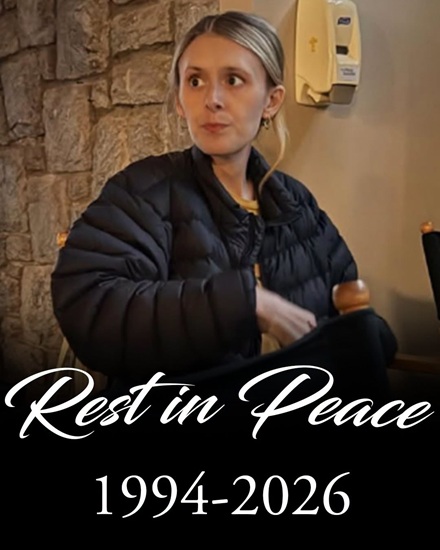
Television writer and producer Jesikah Suggs, known in recent years for her work on Netflix’s My Life with the Walter Boys, died on August 18, 2026, at the age of 32. Her family confirmed that she died at her home in Studio City, California, following an eight-year experience with breast cancer that began when she was only 24 years old. The news brought attention not only to the career she had built in television but also to the determination with which she continued working through years of treatment.
Suggs had already become an important part of the creative team behind one of Netflix’s popular young-adult dramas. At the time of her death, she had begun preparing material connected with the show’s upcoming fourth season. Her death came at an age when many television writers are only beginning to establish the careers they hope to build over several decades. Suggs was born on March 2, 1994, in Dallas, Texas, and later studied film at Baylor University.
After completing her education, she moved to Los Angeles to pursue a career in television, entering an industry known for demanding long hours and intense competition. One of her early opportunities came through an internship on the reality television series Big Brother. She later worked as an assistant to acclaimed writer and producer Jason Katims, whose credits include Parenthood. Those early positions allowed her to learn the practical side of television production while developing her own abilities as a writer. Over time, she moved from assisting established creators to receiving writing and producing responsibilities of her own.
Her professional journey unfolded while she was dealing with a serious health challenge that had begun years earlier. Suggs was diagnosed with breast cancer when she was 24, according to accounts shared by her family following her death. Her treatment included a double mastectomy, chemotherapy and radiation. Two years after the original diagnosis, her family said the cancer had metastasized, meaning it had spread beyond the place where it initially developed. That development meant her experience with the disease continued for years rather than ending after the first period of treatment. Even during that period, Suggs continued pursuing and developing her television career.

Her sister Liz Suggs, herself a writer and producer, emphasized that Jesikah did not want cancer to become the defining feature of her identity. In the family’s remembrance, Liz described her sister as someone who continued showing up to work and remaining committed to storytelling while undergoing treatment. Her tribute also highlighted Jesikah’s appreciation for the healthcare workers who cared for her during the long course of her illness. Rather than presenting her professional life as something that stopped when treatment began, the family described work and creativity as important parts of the years that followed her diagnosis. That distinction helps explain how Suggs continued accumulating significant credits despite becoming seriously ill at such a young age. Her television work was not simply something she had done before cancer; much of it developed while she was living with the disease.
One of the projects most closely associated with Suggs was Netflix’s My Life with the Walter Boys. The series premiered in 2023 and follows Jackie Howard, a teenager whose life changes dramatically after a devastating loss. She moves away from her previous home and begins living with her guardian’s large family, forcing her to adjust to unfamiliar relationships and a very different environment. The drama combines themes involving grief, adolescence, family, friendship and romance. It developed a substantial audience after arriving on Netflix and continued into additional seasons. Suggs became part of the team shaping that story from its early stages.
Suggs joined the series during its first season as a story editor. A story editor on a scripted television production can play an important role in helping develop episodes, character arcs and the larger direction of a season while also contributing as a writer. As the series continued, Suggs’s responsibilities increased. She was promoted to co-producer for Seasons 2 and 3, reflecting a growing role within the production. Her work therefore extended beyond an isolated writing credit and became part of the continuing creative development of the show. By the third season, she had become a familiar part of the team responsible for carrying the series forward.

Her writing can also be identified directly in episodes of the series. Suggs received a writing credit for “Split Focus,” the second episode of the third season, which was released as part of Season 3 on August 6, 2026. Records for the episode list her as its writer. The episode arrived less than two weeks before her death, giving her final weeks a particularly poignant connection to the work she had spent years building. Season 3 itself consisted of another stage in the expanding story of Jackie and the Walter family. Suggs was not only involved behind the scenes as a producer but was continuing to contribute directly to the scripts audiences watched.
She also had writing involvement in the second season. The episode “My Life Without the Walter Boys,” released in August 2025, credits Suggs among its writers. That contribution illustrates the continuity of her involvement as the series moved from one season to another. Rather than joining briefly and moving on, she developed with the production as the show expanded. Each season brought new storylines and character developments, and Suggs participated in the writers’ room that helped determine how those narratives would unfold. Her promotion from story editor to co-producer also reflected that continuing investment in the project.
By the time of her death, Suggs was already looking ahead to the fourth season of My Life with the Walter Boys. Reports following her death said she had begun preparing scripts or writing material for the upcoming season. That detail is especially significant because it demonstrates that her creative work remained active very near the end of her life. She was not being remembered only for television work completed years earlier. She was still contributing to the future of an ongoing series. Her unfinished work became part of the professional legacy she left behind.
Suggs’s career included additional television experience beyond the Netflix drama. Reports about her death noted credits and professional connections involving projects such as Parenthood, As We See It and It’s Not Like That. Her early work alongside Jason Katims helped place her within an environment focused heavily on character-driven television. She also worked with her sister Liz, and the two became creative collaborators as their careers developed. The progression from assistant and early-career positions to writer, story editor and producer illustrated a steady advancement within television. At 32, Suggs had already reached a point where she was helping shape an established streaming series while preparing its future episodes.
Her career also represented the less visible work behind television programs that audiences often associate primarily with actors. A successful scripted series depends on writers, editors, producers and other creative staff who work long before an episode appears on a streaming platform. Story ideas must be developed, character motivations debated, scenes written and revised, and individual episodes connected to the larger season. Suggs worked within that collaborative process. Her contributions were therefore woven into stories seen by viewers even when audiences did not necessarily know the names of every writer responsible for creating them. Her sister’s tribute specifically focused on this aspect of Suggs’s legacy, suggesting that her influence would continue through writers and stories shaped by her presence.
Suggs’s experience with breast cancer had begun before many of those professional milestones. She was only 24 when she received the diagnosis, an age at which a serious illness can disrupt education, employment, relationships and plans for the future. According to her family, treatment became extensive. A double mastectomy involves surgical removal of both breasts, while chemotherapy and radiation are treatments used in different circumstances to destroy or control cancer cells. The exact medical decisions involved in Suggs’s individual case remain private beyond what her family publicly disclosed. It would therefore be inappropriate to speculate about the specific biological characteristics of her cancer, her treatment sequence or individual prognosis.
What has been publicly reported is that two years after her first diagnosis, the cancer had metastasized. Metastatic breast cancer refers to breast cancer that has spread to another part of the body. It is distinct from breast cancer that remains limited to the breast or nearby tissues, and its treatment generally focuses on controlling the disease and maintaining quality of life for as long as possible. Individual experiences can differ considerably depending on multiple medical factors. Suggs’s family did not provide a detailed medical record, and responsible reporting should therefore remain within the information they chose to share. Her eight-year experience with the disease is significant without adding unsupported medical claims.
Suggs occasionally addressed her experience with cancer publicly rather than keeping every aspect of it completely private. In November 2018, while undergoing chemotherapy, she shared a reflection on social media about the people supporting her. She described friends and relatives providing practical forms of help during a deeply difficult period, including meals, letters and assistance with everyday needs. Her comments focused strongly on gratitude and the community surrounding her. The message showed that treatment was demanding while also revealing how important emotional and practical support had become to her.
That earlier reflection now provides additional context for the way her family described her after her death. They remembered someone who continued engaging with work and relationships rather than allowing the illness to become the only subject attached to her name. This does not mean the physical and emotional difficulties of cancer were insignificant. Instead, it reflects the way her relatives chose to describe the balance between illness and the rest of her life. Her professional ambitions remained active, friendships remained important, and storytelling remained part of her identity. Those aspects deserve attention alongside the seriousness of her diagnosis.
Her sister Liz’s tribute was particularly focused on storytelling. Liz said that Jesikah’s influence would continue through stories written by the people whose work she had touched. The comment reflected how television writing is often collaborative and how creative influence can continue beyond an individual credit. Writers exchange ideas, review each other’s work, develop characters together and learn from colleagues throughout their careers. A person’s influence can therefore appear later in projects on which they never personally received a credit. Suggs’s family sees that creative influence as part of the legacy she leaves behind.
The timing of her death made that legacy especially visible. Season 3 of My Life with the Walter Boys had premiered on Netflix on August 6, 2026. Suggs died twelve days later, on August 18. Her family publicly confirmed the death the following week. Viewers were therefore encountering new work connected with her at almost the same time that her family, friends and colleagues were grieving her loss.
Her death at 32 also highlights how much of her professional life had taken place during those eight years following diagnosis. If she was 24 when first diagnosed, then the period in which she was navigating treatment overlapped with a substantial portion of her career development in Los Angeles. During those years she progressed from early opportunities to becoming a co-producer on a major Netflix production. It would be inaccurate to assume that every day of that period was characterized by the same level of illness or treatment. What can be said is that cancer remained part of her life while her career continued to advance.
The entertainment industry is often described through highly visible actors, directors and showrunners, but Suggs’s career illustrates how television careers can grow through many different positions. An internship can lead to an assistant job. Assistant work can provide exposure to professional writers’ rooms and production processes. Writing opportunities can lead to editorial positions, which in turn can develop into producing responsibilities. Suggs traveled through several of those stages within a relatively short career. Her work on My Life with the Walter Boys represented the point at which many viewers could directly encounter stories she helped create.
Her education at Baylor University was part of that foundation. Reports identify Suggs as a film graduate who moved from Texas to Los Angeles after completing her studies. That journey is familiar within the entertainment industry, where many aspiring writers relocate in search of entry-level opportunities. Suggs’s first major steps did not come from immediately being given a television series to write. Like many people entering the industry, she began by learning through internships and assistant work. Her later producer title therefore represented years of professional progression rather than an overnight success.
Her connection with her sister also formed part of that story. Liz Suggs is a writer and producer, and the sisters worked together at different points in their careers. Shared creative interests provided them with both a professional and family bond. Liz’s public remembrance after Jesikah’s death was therefore not simply a relative describing someone’s life from outside the television industry. It came from a sister who understood the work itself and had witnessed Jesikah’s commitment to writing through years of treatment.
Suggs’s husband, actor Dustin Ingram, is among the family members surviving her. Ingram is known for acting work including Watchmen. Reports also list Suggs’s mother, Roxanne Suggs; her sisters Elizabeth, known as Liz, and Kathryn; and her brother Jimmy, along with his wife Elizabeth. She is also survived by nieces, a nephew and other members of the extended family. Her father, Jim Suggs, died before her. These family details have been publicly reported as part of the announcements following her death.
A memorial service was held in Los Angeles on August 22, several days after Suggs died. A further service was scheduled for August 29 in Grapevine, Texas, providing another opportunity for relatives and friends connected with her Texas roots to gather. Funeral information lists her birth date as March 2, 1994, and death date as August 18, 2026. The scheduled Texas services included visitation, a funeral service and a graveside service. These arrangements provide independent confirmation of the basic dates reported in entertainment coverage.
Her death also generated condolences from viewers learning about the person behind episodes they had watched. Television writers often work without the public recognition given to performers, but an obituary can suddenly make audiences aware of how many people participate in producing a series. Suggs’s writing credit on My Life with the Walter Boys is one visible part of that work. Her co-producer role reflects responsibilities that extend beyond a single episode. Her involvement in preparations for Season 4 shows that she remained connected with the series’ future direction until very late in her life.
It is important, however, that coverage of Suggs’s death does not reduce her identity to cancer. Her family explicitly pushed back against that framing. She was a writer, producer, wife, daughter, sister, colleague and friend who happened to be managing a serious illness through much of her adult life. Cancer affected her profoundly, but it did not erase everything else she did. The professional credits accumulated during those eight years are evidence of a career continuing alongside treatment rather than being completely replaced by it.
At the same time, respectful reporting should not romanticize the physical reality of cancer treatment. Suggs underwent major medical interventions, and her cancer eventually became metastatic. Describing her determination does not mean claiming that maintaining a professional career during serious illness is something every patient should be expected to do. People respond to cancer differently, and health, treatment side effects, personal circumstances and resources vary widely. Suggs’s experience belongs to her alone. Her family’s admiration for how she approached those years should be understood as a personal remembrance rather than a standard other patients are expected to meet.
There is also no need to invent medical details beyond what the family has disclosed. The specific subtype of Suggs’s breast cancer has not been established in the reporting reviewed for this article. Details such as genetic markers, exact sites of metastasis, individual drug regimens and treatment chronology have not been publicly documented in the available reliable sources. Unless her family or medical representatives choose to release additional information, those details should remain private. Accuracy requires recognizing where verified information ends.
The confirmed facts already tell a substantial story. Suggs received a breast cancer diagnosis at 24. Her family says the disease became metastatic two years later. She underwent a double mastectomy, chemotherapy and radiation during her years of treatment. At the same time, she continued building a television career and ultimately worked as a writer and co-producer on a successful Netflix series. She died at her Studio City home on August 18, 2026, at the age of 32.
Her work on My Life with the Walter Boys also connected her with a series centered on young people dealing with change, grief and complicated relationships. The show follows Jackie after a devastating event reshapes her life and moves her into a large family environment very different from the one she previously knew. As a member of its writing and production team, Suggs helped shape stories about people learning how to continue after life changes unexpectedly. It would be inappropriate to claim those themes were directly autobiographical unless she said so herself. Still, they demonstrate the kind of emotionally driven storytelling involved in the project she helped create.
The series’ success gave Suggs’s writing the chance to reach an international streaming audience. Netflix programming can be watched across numerous countries, meaning the work of writers behind such series travels far beyond the rooms where scripts are created. A viewer may never know which particular writer proposed a scene, refined a character moment or helped solve a story problem. Television writing is often too collaborative to assign every creative choice to one person. Suggs nevertheless has specific credits that permanently identify her contribution to the production.
Her Season 3 episode “Split Focus” is one such example. Released on August 6, the episode followed Jackie as she struggled with school commitments while other characters faced their own developments. Suggs is credited as its writer, providing viewers with a concrete example of her work in the final season released during her lifetime. Her name will remain attached to that episode whenever future audiences encounter the series.
Another lasting part of Suggs’s career is the work that exists beyond what audiences can directly identify in credits. Story editors and producers frequently contribute to numerous conversations and revisions across a season. A television episode usually evolves through discussions involving several writers and producers rather than being created entirely by a single individual working in isolation. Suggs’s promotion within the series suggests that her role expanded as colleagues came to rely on her contributions. This is part of why her sister described her influence in terms broader than individual scripts.
The fourth season adds another dimension to that legacy. Because Suggs had reportedly begun work toward the upcoming season, some of her final professional efforts were directed toward stories audiences have not yet seen. The precise extent of her contribution has not been publicly detailed, so it would be inappropriate to attribute particular future episodes or plotlines to her at this stage. What is confirmed is that she had begun writing or preparing scripts for Season 4 before her death.
Her story also demonstrates why professional achievement should not be measured only by the number of years someone has been working. Suggs died at 32, but she had already moved through multiple stages of television production and reached a producing role on a continuing Netflix series. She was still in the process of building that career. The work already completed offers a record of what she accomplished, while the unfinished projects inevitably raise the question of what she might have created with more time.
For family members, however, professional credits represent only part of the loss. Public audiences knew Suggs through television, but relatives knew the personal relationships that existed outside work. The family statements published after her death focus heavily on her character, her gratitude toward caregivers and the relationships she formed with other writers. Those memories offer a perspective that a list of television credits cannot provide. They suggest that colleagues and relatives viewed her impact as something extending beyond individual productions.
The social-media message Suggs shared while undergoing chemotherapy in 2018 also gives readers a glimpse of those relationships. She expressed gratitude for people who supported her through practical gestures when treatment was difficult. Meals, letters and help with everyday tasks mattered during a period when she was physically and emotionally challenged. Her description of that support presented community as an important part of how she navigated treatment. The message was written years before the professional success for which many viewers would later know her.
That timeline is worth remembering. In 2018, she was a young woman undergoing chemotherapy and publicly thanking people helping her through it. Several years later, she was working as a story editor and eventually co-producer on a Netflix drama watched internationally. Those were not separate lives. They were different parts of the same eight-year period in which cancer and career existed simultaneously.
The news of her death therefore carries several layers of loss. The entertainment industry lost a writer and producer whose responsibilities had continued to grow. Her colleagues lost someone they had worked alongside in writers’ rooms and production environments. Her husband and relatives lost a loved one at an unusually young age. Viewers lost a creative voice whose work was still evolving. None of those losses requires exaggeration to be significant.
It is also important that discussions of Suggs’s cancer avoid suggesting that her outcome predicts what will happen to another person diagnosed with breast cancer. Breast cancer includes different biological subtypes and stages, and individual prognosis varies widely. Suggs’s illness became metastatic, according to her sister. Her individual medical history should not be used as a universal description of breast cancer or as a substitute for medical guidance. Anyone concerned about personal cancer risk, screening, symptoms or treatment should rely on qualified healthcare professionals rather than drawing conclusions from a celebrity or entertainment-industry obituary.
Similarly, her age should not be used to create unnecessary fear. Suggs was diagnosed at 24, which is notably young, but one person’s diagnosis does not establish the level of risk faced by another individual. Personal medical decisions depend on factors that cannot be determined from someone else’s story. Responsible coverage can acknowledge how young she was without turning that fact into an unsupported warning directed at readers.
The most respectful way to discuss her illness is therefore to stay close to what has been confirmed. Breast cancer entered her life at 24. It later became metastatic. She received extensive treatment. Through those years, she continued writing and producing television. Those facts are enough to explain the remarkable overlap between her health experience and professional life without inventing additional medical details.
Her family’s tribute repeatedly returns to one idea: Jesikah Suggs wanted to continue creating. That drive remained visible in the fact that she was preparing work for another season shortly before her death. Writing gave her a professional identity independent of treatment rooms and medical appointments. Her sister’s statement suggests that the relationships Suggs formed with other writers mattered deeply as well. In that sense, her legacy is not limited to finished episodes but also includes creative communities in which she participated.
As My Life with the Walter Boys continues, audiences may encounter her name in credits and revisit episodes she helped create. New viewers discovering the series years from now may have no knowledge of the circumstances surrounding her death. Her work can therefore continue existing separately from the obituary that brought broader public attention to her story. That may be one of the clearest meanings behind her sister’s belief that Jesikah would continue “writing” through the people and stories she influenced.
The third season had arrived only shortly before her death. Season 3 premiered on August 6, 2026, with ten episodes, including the Suggs-written “Split Focus.” Her family confirmed her death publicly later in August, creating a heartbreaking contrast between a new season reaching viewers and the loss of one of the people who helped produce it.
The fourth season will carry additional significance because Suggs had already contributed to its early creative work. Exactly how the production will recognize her remains something for the people making the series to determine. No assumptions should be made about tributes, dedications or credits that have not been officially announced. What can already be said is that her work had extended into the future of the show before her death.
Her professional journey from Texas to Los Angeles was relatively short in years but substantial in development. She studied film, entered the industry as an intern, worked as an assistant, developed writing credits and eventually reached the level of co-producer on a streaming series. That progression required persistence independently of her health challenges. When considered alongside eight years of cancer treatment, it provides important context for why colleagues and relatives have emphasized her determination.
Yet her legacy should not become a story only about endurance. Suggs was also a working television writer whose scripts and production contributions deserve recognition on their own merits. People living with serious illness can still have identities built around creativity, careers, family, humor, relationships and ordinary interests. Her family’s statement makes clear that she resisted having her life reduced to one diagnosis.
For viewers, one appropriate way to remember Suggs is simply to recognize the people behind the stories they watch. Television credits contain names that can easily pass unnoticed after an episode ends. Behind those names are careers, ambitions and lives far larger than what appears on the screen for several seconds. Suggs was one of those creators. At 32, her career had already reached millions of viewers while still appearing to have much room to grow.
Her death is unquestionably premature, but her family’s remembrance focuses as much on what she created as on what was lost. They have described a woman who worked, collaborated and remained appreciative of those who cared for her through treatment. Her sister expects that influence to continue through the writers she knew and the stories they will create in years ahead. That kind of legacy is difficult to measure but important within an industry built on collaboration.
Jesikah Suggs is survived by her husband Dustin Ingram, her mother Roxanne, sisters Liz and Kathryn, brother Jimmy and other family members. She was preceded in death by her father, Jim. Memorial arrangements were made in both California and Texas, reflecting the two places closely connected with her life: the state where she was born and educated, and the city where she pursued her television career.
Her life ended on August 18, 2026, but the work she helped create remains available to audiences. Episodes can be watched again. Scripts can influence other writers. Colleagues can carry lessons from shared writers’ rooms into future productions. Family members can preserve memories that have nothing to do with television or cancer. Those different forms of remembrance together provide a fuller picture than any single obituary could offer.
At only 32, Suggs had already spent eight years navigating breast cancer while continuing to pursue the career she chose. Her disease eventually became metastatic, and despite extensive treatment, her family confirmed her death at her Studio City home. At the same time, she had progressed from early industry work to writing and producing one of Netflix’s continuing dramas. She had even begun preparing for the next season.
That final detail may be one of the most powerful parts of her professional story. She was still thinking about what came next. There were more characters to develop, more scenes to shape and more episodes being planned. Her own time to participate in that work ended far earlier than anyone would have wanted, but the creative process she contributed to continues.
For those who knew Jesikah Suggs personally, no television credit can capture the full scale of the loss. For audiences, however, her work provides a visible record of a life dedicated in significant part to storytelling. From an internship and assistant positions to writing and producing for Netflix, she built a career while confronting an illness that began when she was only 24.
Her family has made clear how they want that life understood. Cancer was part of Jesikah Suggs’s story, but it was not the entirety of it. She continued working, creating and forming relationships within the television industry while undergoing treatment. She became a writer whose work reached viewers around the world and a producer trusted with increasing responsibility on a successful series.
Her sister’s tribute perhaps captures the lasting idea best without requiring any embellishment: stories continue through the people who create them and through those who learn from one another. Jesikah Suggs’s own career ended far too soon, but the episodes she wrote and the writers she influenced remain. In that sense, her contribution to television did not disappear on August 18. It became part of the body of work and creative relationships she left behind.
