Antique shops are filled with objects whose original purposes are no longer obvious to modern visitors. A piece that once belonged to an ordinary tool, machine, household device, or workshop system can become almost impossible to recognize after being separated from its original setting. That uncertainty is one of the reasons unidentified antiques attract so much curiosity. A small piece of metal can appear completely unremarkable at first, yet its shape, material, markings, and signs of wear may preserve clues about an earlier technology.
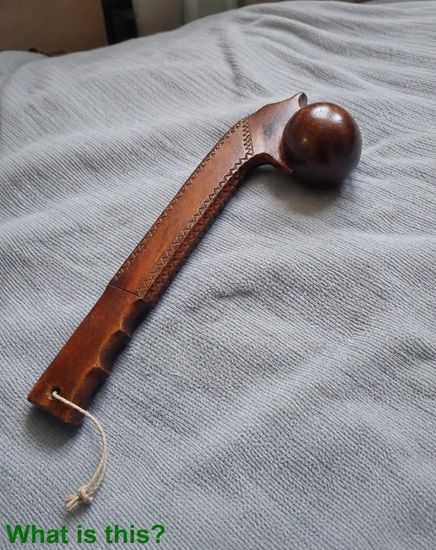
The challenge is separating reasonable possibilities from attractive but unsupported guesses. In the story surrounding one such antique-shop discovery, a shopper encountered a small and unusually heavy metal object measuring roughly ten centimeters. It did not have an obvious handle, conventional switch, readable label, or immediately recognizable opening. One of its most noticeable characteristics was a circular feature around its central area.
Without packaging, instructions, or the larger equipment from which it might have originated, however, its appearance alone provided little certainty about its purpose. Even the person selling it reportedly could not provide a definitive identification. The object’s modest price made the mystery easier to take home.
Purchased for less than five euros, it was not valuable because anyone knew it to be rare or historically important. Its attraction came from the unanswered question surrounding it. What had this compact piece of metal originally been designed to do? Was it complete, or merely one component of something much larger? Those questions are common when dealing with unidentified vintage hardware because an object removed from its original environment can lose nearly all of the visual clues that once made its purpose obvious.
At home, the search for an identification reportedly continued through online comparisons. Descriptions based on size, shape and material produced possible matches, but superficial similarities are rarely enough to identify an old mechanical component reliably. Hardware from locks, machinery, measuring equipment, agricultural devices, vehicles and industrial systems can share surprisingly similar shapes. A circular depression or raised section might serve a mechanical purpose on one device while being decorative or structural on another. Without identifying marks or documentation, photographs alone can therefore produce convincing but incorrect conclusions.
This is one of the fundamental problems with identifying mysterious antiques online. Search engines are excellent at finding visually similar objects, but similarity does not establish that two objects performed the same function. Dimensions, weight, material composition, manufacturing techniques and attachment points all matter. Wear patterns can be equally useful because scratches or polished surfaces sometimes indicate where another component repeatedly contacted the object. Threads, rivet holes, stamped numbers and traces of paint can also narrow the possibilities considerably.
The absence of a manufacturer’s name can make the process especially difficult. Many commercially produced tools and machines carry a brand, patent number, model designation or stamped symbol that can be researched in catalogs and historical databases. Individual internal components, however, may have no identifying information at all. If an object was never intended to be seen separately from a larger machine, its manufacturer had little reason to label it for future collectors. Decades later, that lack of information can transform an ordinary replacement part into a genuine identification puzzle.
Context is often just as valuable as the physical object itself. Knowing that an item came from an old automobile workshop, for example, creates a very different range of possibilities than knowing it came from a farmhouse kitchen. A component discovered with railway equipment would invite another set of comparisons, while something found in an old office, factory or commercial building might belong to security, communication or mechanical systems. Unfortunately, objects in antique shops frequently arrive without detailed provenance, meaning that this extremely useful information has already been lost.
That appears to have been part of the difficulty surrounding the mysterious metal object in this account. Friends could suggest possibilities, and online searches could provide look-alikes, but there was not enough evidence to confirm one theory. Some comparable objects reportedly had handles, mounting holes or other features that the purchased piece lacked. Others were made from different materials or had noticeably different proportions. Each mismatch mattered because small structural differences can completely change the purpose of a mechanical component.
As time passed, the lack of an answer became part of the object’s appeal. This is a familiar experience for people who collect unidentified tools and hardware. Once something becomes a puzzle, even an inexpensive item can command far more attention than its monetary value would suggest. The owner begins noticing details that were easy to overlook at first and comparing them with increasingly specialized categories. Sometimes a collector eventually finds an exact catalog illustration or encounters someone who remembers using the device professionally.
According to the story, the object’s most dramatic clue appeared unexpectedly rather than through research. During unrelated work at home, the metal piece was nearby when it was accidentally struck with a hammer. Instead of producing only the ordinary dull impact someone might expect from a compact piece of metal, it reportedly generated a surprisingly loud and piercing sound. That reaction immediately suggested that at least part of the object’s design involved producing or amplifying sound when subjected to mechanical force.
Such an observation can certainly provide an important clue, but it should not automatically be treated as definitive proof of a particular historical function. Many metal objects resonate when struck, and bells, gongs, signaling components, alarm mechanisms and even unrelated machine parts can produce unexpectedly strong sounds. Establishing the exact identity of an antique normally requires additional evidence. Its internal construction, mounting arrangement, material, provenance or comparison with a documented example would ideally support any final identification.
The original account associates the piece with an older mechanical alarm or warning system. That general category is historically plausible because mechanical signaling devices existed long before today’s electronic alarms. Mechanical alarms and annunciators could use bells, gongs, springs, triggers and other moving components to create an audible warning. Similar principles appeared in door alarms, clocks, industrial signaling equipment, security devices and numerous other systems. However, the precise model and purpose of any unidentified object should be stated cautiously unless documentation confirms them.
Long before electronic sensors became inexpensive and widespread, designers had numerous ways to create warning systems using mechanical principles. A spring could store energy, a striker could hit a bell or gong, and movement could release a trigger. Some systems relied on doors or windows physically moving a component. Others were integrated into equipment where a change in position, pressure or mechanical state initiated a signal. These systems could be remarkably effective despite containing no microprocessor, wireless connection or digital display.
Sound itself was an ideal warning mechanism because it required little explanation. A sufficiently loud bell or gong could attract attention immediately, even when the person hearing it did not know exactly what had triggered it. Factories used audible signals for work routines and emergencies, while homes, businesses and vehicles incorporated various bells and alarms. Mechanical alarm clocks provide one familiar surviving example of how stored spring energy and a rapidly moving striker can create a surprisingly intense sound without electronic amplification.
Once a historical signaling component is removed from the system that activated it, however, its purpose may become almost invisible. Imagine finding only the gong from an old alarm clock without the clock mechanism, hands or case. A modern observer might recognize that the curved metal can produce a sound but still have difficulty identifying its exact origin. The same problem applies to countless pieces of industrial and domestic equipment. We usually recognize machines as complete systems rather than as collections of individual components.
Modern consumer electronics make this contrast particularly noticeable. A contemporary alarm often communicates its function through familiar design conventions: indicator lights, buttons, displays, speakers, electrical cables or recognizable plastic housings. Many modern devices also have printed model numbers that can be searched online within seconds. Older mechanical components may provide none of these conveniences. Their form was often determined primarily by engineering requirements and by the surrounding equipment in which they were installed.
Manufacturing methods can sometimes help determine an object’s approximate period even when its exact purpose remains unknown. Cast iron, stamped steel, brass and other materials were used differently across industries and historical periods. The shape of screws, machining marks, casting seams and surface finishes can provide additional clues. Patina can indicate age, although appearance alone is unreliable because environmental conditions can age materials differently. Restoration, repainting and replacement components can further complicate dating.
Corrosion deserves similar caution. Rust may demonstrate that iron or steel has been exposed to moisture and oxygen, but it does not provide a precise manufacturing date. An object stored outdoors for a few years may look older than something preserved indoors for many decades. Likewise, a polished antique may look surprisingly new after restoration. Collectors therefore combine material evidence with documentary research rather than assigning an age solely from surface appearance.
Weight can also be informative, particularly when two objects that look similar are made from different metals or have different internal structures. A surprisingly heavy component may contain thick cast material, a dense internal mechanism or a construction intended to withstand repeated impact. Yet weight is another clue rather than a conclusion. Accurate dimensions and mass are most useful when they can be compared with specifications from a documented example.
Attachment points can reveal even more. Screw holes may indicate that an object was fixed to a wall, machine or wooden enclosure. Uneven wear might reveal the direction in which a component moved. Threads can indicate that another part was once attached, while remnants of wire can suggest an electrical connection. Conversely, the absence of obvious mounting points may mean the object fitted into a housing that held it in place through pressure, brackets or another arrangement that disappeared when the item was separated from its original assembly.
For this reason, collectors trying to identify an unfamiliar object should begin with careful observation rather than experimentation. Photographing every side against a plain background provides a useful record. Including a ruler or another standardized scale helps others understand the true dimensions. Recording weight can distinguish between visually similar materials or designs. Close photographs of numbers, letters, logos, seams, screws and damaged areas may reveal information that is invisible in a single general photograph.
Lighting can make a surprising difference as well. Stamped characters that appear invisible under direct light may become readable when illuminated from the side. Raised casting marks may become clearer in a close photograph. Dirt should not automatically be aggressively removed, because cleaning can damage an antique surface or destroy evidence such as paint, labels or residues. If an item could have historical or monetary value, advice from someone familiar with conservation may be preferable to immediate restoration.
The location where an object was obtained should also be documented whenever possible. Antique dealers may remember which estate, workshop, farm or collection supplied a group of items even if they cannot identify every individual piece. Objects displayed nearby can provide indirect clues if they arrived together. A box containing components from one profession or machine is much easier to interpret than a single isolated piece purchased after those associations have disappeared.
Online communities can be extremely useful once good photographs and measurements are available. Collectors often specialize in narrow subjects such as antique tools, locks, railway hardware, clocks, agricultural equipment, telephones or industrial machinery. A feature that means nothing to a general audience may be instantly recognizable to someone who repaired similar equipment decades earlier. Historical catalogs and patent drawings can then provide independent evidence to confirm or reject the proposed identification.
Museums and historical organizations can provide another source of expertise. A local history museum may recognize equipment once used by industries that dominated its region. Railway museums maintain knowledge of specialized signaling and maintenance hardware, while agricultural museums can identify tools unfamiliar to urban collectors. Clock specialists, locksmiths, machinists and restoration professionals likewise possess practical knowledge that ordinary visual searches cannot reproduce.
Even with expert assistance, uncertainty should be preserved when the evidence remains incomplete. There is an important difference between saying that an object “is” a specific alarm component and saying that its construction “appears consistent with” a type of signaling device. The first statement claims a confirmed identification; the second accurately communicates uncertainty. Responsible historical writing should maintain that distinction rather than converting an interesting theory into a fact merely because it makes a compelling story.
That principle becomes especially important when stories about mysterious objects circulate on social media. A dramatic explanation can spread much faster than a cautious technical analysis. After enough reposts, an unsupported identification may be repeated as established history even though the original source contained no documentation. Checking museum collections, historical catalogs, patents or specialist references can prevent an entertaining anecdote from gradually becoming misinformation.
There is also a significant safety reason to avoid experimenting with unidentified antiques. Striking the object in this story reportedly provided a useful clue, but deliberately hitting an unknown item is not a recommended identification technique. Old equipment can contain materials or mechanisms that are hazardous when disturbed. An object that appears to be solid metal may conceal springs, pressurized components, brittle parts, electrical elements or chemical residues.
Some historical electrical devices used materials that require careful handling. Old switches and scientific equipment can contain mercury, while older electrical components may contain substances that should not be opened or damaged casually. Certain vintage painted surfaces may contain lead compounds. Industrial components can retain oils or chemical residues. None of these possibilities can necessarily be identified from an object’s external appearance, which is why cautious handling is sensible until its nature is understood.
Unexploded ammunition and military ordnance create an even more serious concern. Objects recovered from battlefields, military sites or old storage areas should never be struck, drilled, heated, cut or dismantled simply to discover what is inside. If there is any reasonable possibility that an unidentified object could contain explosive material, the safest response is to leave it undisturbed and contact the appropriate local authorities or qualified professionals. Curiosity is never worth creating an unnecessary physical risk.
Electrical experimentation can be dangerous for similar reasons. Finding wires or terminals does not mean an unidentified vintage device should be connected to a modern power supply. Its original voltage may be unknown, insulation may have deteriorated, and internal components may have failed. Applying electricity can destroy an otherwise collectible object and can potentially cause shock, fire or other hazards. Identification should come before attempts to make an old device operate.
Heating is equally inappropriate as an identification technique. Different metals, residues and sealed materials can react unpredictably to high temperatures. Even cleaning chemicals should be selected carefully because they can react with old finishes or remove historically useful information. The safest first stage of investigation is almost always non-destructive: photographs, measurements, visual inspection and research.
If the object described in the antique-shop story was indeed part of a mechanical warning system, its continued ability to resonate illustrates the durability of simple mechanical designs. A metal gong or resonating component does not require software updates, batteries or a network connection. Provided that corrosion or physical damage has not compromised it, the basic acoustic principle can remain effective for many decades. Mechanical simplicity can therefore give certain historical devices remarkably long functional lives.
That durability should not be confused with technological superiority. Modern alarms offer capabilities that purely mechanical systems could never provide, including remote notifications, multiple sensors, automatic monitoring and integration with other security equipment. Older devices solved different problems with the materials and engineering available at the time. Appreciating them does not require claiming that they were better than today’s systems; their interest comes from seeing how designers addressed practical needs under different technological constraints.
This is one of the most rewarding aspects of studying ordinary antiques. Museums naturally preserve famous works of art, important documents and objects connected with major historical figures, but everyday technology tells another part of history. Door hardware, kitchen tools, workshop equipment and signaling devices reveal how ordinary people solved routine problems. Their designs can show what resources were available, which tasks mattered and how much physical labor everyday activities required.
An unidentified component can therefore become a small historical investigation. First comes observation: What is it made from? How large is it? Which surfaces are worn? Then comes comparison: What documented objects share those characteristics? Context follows: Where was it found, and what industries or activities were associated with that location? Finally comes verification through catalogs, photographs, patents or expert knowledge. Each step reduces the temptation to accept the first visually convincing answer.
Sometimes that process produces a definitive identification. At other times, the available evidence only narrows the object to a general category. Both outcomes are useful. Historical research does not become a failure simply because the final answer includes uncertainty. In fact, acknowledging what cannot be verified is more informative than attaching an unsupported story to an object merely to make the mystery disappear.
The mysterious metal piece in this account captures that appeal particularly well. It was inexpensive, compact and apparently unremarkable, yet it generated weeks of curiosity because nobody immediately knew what it was. Its unexpected response to an accidental impact offered an important clue and shifted attention toward devices designed to create audible signals. Whether every detail of its precise original installation can be independently established depends on the surviving evidence surrounding the item.
Its story also illustrates how quickly technological knowledge can disappear. A repair technician working with a particular system decades ago might have recognized such a component instantly. Once that equipment stopped being manufactured and the people who maintained it retired, the knowledge became increasingly specialized. Eventually, an everyday mechanical part could arrive at an antique shop where neither seller nor buyer knew what previous generations had considered obvious.
The internet has improved the chances of recovering that lost knowledge. A collector can now show an object to thousands of people without transporting it anywhere. Digitized catalogs allow researchers to search manufacturers whose businesses disappeared generations ago. Museum databases provide photographs of artifacts that were once accessible only by visiting collections personally. Even so, technology works best when researchers provide accurate measurements, multiple images and honest descriptions of what they know and what remains uncertain.
For the buyer in this story, the object apparently became more interesting after a possible purpose emerged. Before identification, it was primarily a mystery. Afterward, it could be viewed as evidence of an earlier approach to producing a warning signal. That transformation—from anonymous metal to understandable technology—is one of the reasons people enjoy identifying antiques. The physical object remains exactly the same, but knowledge changes the way we see it.
There is also something compelling about discovering that an apparently obsolete object can still demonstrate the principle for which it was designed. Mechanical systems often communicate their function through movement and sound in ways that remain understandable even after their original context disappears. A gear still turns, a spring still stores energy, a bell still resonates and a lever still transfers force. These basic physical principles do not become obsolete simply because newer technologies replace the machines that used them.
At the same time, the most responsible conclusion is not necessarily the most dramatic one. Without a maker’s mark, documented provenance, patent drawing or confirmed comparison with an identical example, some details about a mysterious antique may remain unresolved. That uncertainty should be part of the story rather than something to hide. Readers deserve to know which details are documented, which are reasonable interpretations and which remain open questions.
Ultimately, this small antique-shop discovery demonstrates why ordinary historical objects can inspire so much fascination. An inexpensive piece of metal can preserve evidence of engineering, craftsmanship and everyday problems from another period. Researching it requires patience, comparison and sometimes specialist knowledge. The process can reveal much more than a product name because it encourages us to understand how an earlier device actually worked and why somebody once needed it.
The most useful lesson from the story is therefore both historical and practical. Forgotten technology can survive long after knowledge of its purpose has faded, and seemingly insignificant objects may contain valuable clues about everyday life in the past. But unknown antiques should be investigated carefully rather than tested through force, heat or electricity. Photographing, measuring and researching an object is far safer than experimenting with it. Sometimes solving the mystery takes longer, but a well-supported answer is ultimately more valuable than a dramatic guess.
