Hayden Panettiere’s death at the age of 36 left her family, friends, colleagues, and longtime fans confronting a loss that remains surrounded by unanswered questions. The actress, widely known for her work in Heroes, Nashville, Remember the Titans, and the Scream franchise, was found unresponsive at a residence in Greenville, South Carolina, on August 16, 2026. Emergency responders attempted to revive her, but she was pronounced dead at the scene.
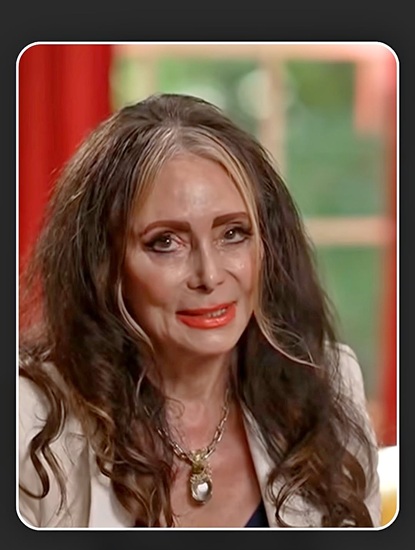
Authorities have said that an initial examination found no signs of trauma, and investigators have not announced evidence of foul play. Her official cause and manner of death remain pending while the investigation continues. In the days after her daughter’s death, Lesley Vogel spoke publicly about both her grief and the complicated relationship she had shared with Hayden during the final period of the actress’s life. During an interview with ABC News, Vogel described herself as still struggling to understand that her daughter was gone.
She also pushed back against criticism of the way she was grieving, emphasizing that the loss was intensely personal. The death was especially painful because Vogel had already lost her son, Jansen Panettiere, in 2023. Vogel told ABC News that she wanted Hayden to be remembered for far more than the difficulties that became public during her adult years. She described her daughter as talented, intelligent, outgoing, and beautiful, and recalled the child she knew long before international fame arrived. Hayden began working in commercials while extremely young before moving into soap operas, television series, and films. Her childhood career eventually developed into one of the most recognizable acting careers of her generation.

One photograph Vogel discussed showed Hayden during the period surrounding the premiere of Pixar’s A Bug’s Life, in which the young actress voiced the character Dot. It represented an earlier chapter when acting was already a major part of Hayden’s life but many of the difficulties that would later become public had not yet emerged. Hayden continued building her career through projects such as Remember the Titans before achieving enormous television visibility as Claire Bennet on NBC’s Heroes.
The success of Heroes changed the scale of Hayden’s fame. The series became an international hit after premiering in 2006, and her character became closely associated with the show’s famous phrase about saving the cheerleader. Vogel has said she began noticing changes in her daughter during her teenage years as that level of attention increased. Her comments represent a mother’s perspective on that period rather than an independent medical assessment, but Hayden herself later spoke publicly about the difficulties she experienced while growing up in the entertainment industry.
As Hayden moved into adulthood, Vogel said the relationship between mother and daughter naturally changed. She could offer advice, but Hayden was increasingly responsible for her own personal and professional decisions. That transition can be complicated in any family, and their circumstances were made more unusual by the fact that Hayden had worked professionally from childhood. Vogel had been closely involved in her early career, which meant the boundaries between family relationships and professional responsibilities were not always simple.

Hayden later described some of those tensions in her 2026 memoir, This Is Me: A Reckoning. Among the subjects she discussed was the difficulty she experienced in her relationship with her mother. Hayden had previously said publicly that she had tried to keep the door open for a healthier mother-daughter relationship but believed that had become increasingly difficult. Vogel responded publicly to some of those statements and offered a different interpretation of several events.
One disagreement involved a conversation that Hayden said occurred when she decided she no longer wanted her mother involved in managing her career. Hayden wrote that her mother responded by telling her that she owed her. Vogel disputes that recollection. In her ABC News interview, Vogel said she remembered being in Hayden’s trailer when the change was discussed but maintained that she did not say the words attributed to her in the memoir.
Those conflicting recollections illustrate an important distinction when examining their family history. Hayden documented her own experience, while Vogel has now described the same relationship from her perspective. Neither private memory can be independently reconstructed in full years later. A responsible account therefore has to make clear who is making each statement rather than presenting one person’s recollection as objective proof of exactly what happened.

Another major strain involved Brian Hickerson, who entered Hayden’s life around 2018. Their relationship was marked by serious and well-documented legal problems. Hickerson was arrested in connection with domestic violence allegations involving Hayden and later faced criminal proceedings. In 2021, he pleaded no contest to two felony counts of injuring a spouse or girlfriend and received a jail sentence along with probation and domestic violence counseling requirements.
Hayden nevertheless remained connected with Hickerson during later years. She publicly discussed their history and at times described efforts to forgive him and move forward. Their relationship was therefore complicated, shifting between separation, reconciliation, and periods in which Hayden described him as part of her life in different ways. That history is important context, but it does not establish that Hickerson was responsible for Hayden’s death, and authorities have made no such determination.
Vogel has been far more critical of Hickerson. During interviews after Hayden’s death, she described him as a harmful influence and said she believed her daughter knew the relationship was unhealthy. Vogel also linked part of Hayden’s emotional vulnerability to events surrounding custody of her daughter Kaya. Hayden shared Kaya with former fiancé Wladimir Klitschko, and Kaya eventually lived primarily with her father.
Hayden had previously spoken candidly about that period in her life, including her struggles with alcohol and postpartum depression. Vogel told ABC News that she viewed the custody change as a major emotional turning point for her daughter. That interpretation should be understood as Vogel’s opinion rather than a clinical conclusion. Hayden herself had discussed addiction and personal difficulties in interviews and in her memoir, making clear that her struggles involved multiple factors rather than one single event.
Approximately a year before Hayden’s death, Vogel said she stayed with her daughter for about six weeks while trying to help her separate from Hickerson. According to Vogel, Hayden initially expressed a desire to remove him from her life. Vogel said she remained nearby to offer support but eventually noticed Hayden withdrawing from her. She then returned to Florida.
Vogel said Hayden later called her and announced that she had decided to resume her relationship with Hickerson. Vogel described that conversation as a breaking point. She said she became extremely upset because she believed her daughter was returning to a relationship that had already caused considerable harm. Acting on advice she said she received from a therapist, Vogel established a boundary and told Hayden she could not maintain contact while Hickerson remained in her life.
That decision ultimately contributed to their estrangement. Vogel has said she believed the separation between mother and daughter would be temporary. She expected that she would eventually have another opportunity to repair their relationship. Hayden’s unexpected death meant that opportunity never came. In retrospect, Vogel has described that realization as one of the most painful aspects of her grief.
The estrangement adds another layer to the public discussion surrounding Hayden’s final year, but it should not be interpreted as evidence about the cause of her death. Family relationships can become strained for many reasons, particularly when addiction, past abuse, and long-standing disagreements are involved. What Vogel has described is her experience as a mother who believed she needed to create distance after unsuccessful attempts to change circumstances she found deeply troubling.
Vogel has also made allegations concerning Hayden’s possessions and finances. She said she learned that some of Hayden’s belongings had been sold or pawned while Hickerson was involved in her life. Reports published after Hayden’s death have cited people claiming that items belonging to the actress were sold. These allegations add context to Vogel’s distrust of Hickerson but remain separate from the official investigation into Hayden’s death.
The most serious questions arose after Hayden was found unresponsive on August 16. A police report identified Brian Hickerson and his brother Zach as people present at the residence during the emergency response. According to the Associated Press, paramedics attempted CPR before Hayden was declared dead that afternoon. The autopsy found no trauma, and investigators said there were no obvious indications of foul play. The official cause of death had not yet been determined.
Initial emergency communications reportedly referred to both an overdose and cardiac arrest. Those terms, however, should not be confused with an official cause of death. Cardiac arrest describes the heart stopping, which can result from many different causes. References to a possible overdose during an emergency call also do not establish toxicology findings. Investigators and the coroner must rely on autopsy results, laboratory testing, toxicology, medical history, and other evidence before making an official determination.
The investigation has received additional attention because federal drug enforcement officials have reportedly become involved. Their participation does not by itself establish criminal wrongdoing by any particular individual. Authorities may become involved in death investigations for many reasons, including identifying the origin or composition of substances that could potentially be relevant. No person has been publicly identified as a suspect in Hayden’s death.
Vogel, however, has openly questioned the account she says Hickerson provided about Hayden’s final hours. In a separate interview reported by multiple outlets, she described that version of events as containing significant gaps. According to Vogel’s retelling, Hickerson said Hayden had been getting ready earlier that morning, that he left the residence for a period, and that he later returned and slept. Vogel questioned how Hayden could have become critically ill without someone nearby noticing sooner.
Those are questions raised by Vogel, not findings issued by investigators. She has also questioned reports concerning the presence and use of naloxone, commonly sold under the brand name Narcan. Naloxone is an emergency medication designed to reverse the effects of an opioid overdose. Its presence or use can indicate that someone suspected an opioid-related emergency, but by itself it does not prove what substance was involved or establish who, if anyone, supplied it.
Vogel has gone further by publicly offering her own theory about what may have happened before emergency responders arrived. That theory has not been endorsed by law enforcement, the coroner, or prosecutors. Because the investigation remains open, it would be misleading to repeat a grieving relative’s suspicion as though it were an established reconstruction of Hayden’s death. The distinction is particularly important when real people could face reputational or legal consequences from unsupported accusations.
Hickerson has not provided a detailed public response to every allegation made by Vogel. His attorney has instead emphasized that Hayden’s death remains under investigation and that investigators should be allowed to complete their work. That position is consistent with what authorities themselves have said: the available evidence does not yet provide a final public explanation for why Hayden died.
The absence of an official cause of death also means headlines describing the death definitively as an overdose go beyond what has been publicly established. Dispatch information raised that possibility, and Hayden had previously discussed substance-use problems, but neither point substitutes for completed toxicology testing. Until the coroner issues a final determination, any specific medical explanation should be described as unconfirmed.
Hayden’s documented struggles with addiction were part of her own public story long before her death. She spoke openly about alcohol and opioid use and described periods of treatment and recovery. She also discussed postpartum depression following the birth of Kaya and the emotional pressures of working in the entertainment industry from a very young age. Those disclosures can provide context but should not be used to assume the circumstances of her death.
Her personal life also included enormous professional achievement. Hayden worked for decades in television and film, beginning as a child performer and later receiving major recognition for adult roles. Her performance as Claire Bennet made her an internationally known face, while her portrayal of Juliette Barnes on Nashville earned critical recognition, including Golden Globe nominations. She also appeared in films including Remember the Titans, Ice Princess, and entries in the Scream franchise.
Colleagues have remembered her for qualities that went beyond her public struggles. After her death, actors and creators from Heroes gathered to honor her and shared memories of her talent, humor, generosity, and presence on set. Former Nashville co-star Charles Esten also paid tribute to her during a Grand Ole Opry appearance, recalling the encouragement Hayden gave him when they first worked together.
Those tributes reflect the broader life Vogel says she hopes the public will remember. The circumstances of Hayden’s death have understandably drawn intense attention, but they represent only one part of a career and life that lasted more than three decades in public view. She was a daughter, sister, mother, colleague, performer, and friend whose work reached millions of people.
For Vogel, however, the questions surrounding the final day are inseparable from the personal regret of their estrangement. She had established a boundary because she believed remaining involved in the situation was damaging to her own well-being. She expected the separation to last for a limited period rather than forever. Hayden’s death permanently removed the possibility of another conversation, which has left Vogel grieving both her daughter and the reconciliation that never happened.
That reality helps explain the intensity of Vogel’s public comments without making her suspicions factual conclusions. She is a grieving mother trying to understand circumstances she considers incomplete. Investigators, meanwhile, must operate under a different standard, relying on physical evidence, medical findings, witness interviews, and laboratory results rather than emotion or speculation.
As of the latest public reporting, the clearest official picture remains limited. Hayden Panettiere was found unresponsive in Greenville on August 16, 2026, and could not be revived. Brian Hickerson and his brother were identified in the police report as being at the residence around the time of the emergency. An autopsy found no signs of trauma, authorities have not reported evidence of foul play, and the official cause and manner of death remain pending.
Everything beyond those established facts requires careful attribution. Vogel has serious questions about the timeline. Hickerson’s lawyer has urged the public to allow the investigation to proceed. Emergency communications mentioned a possible overdose, but toxicology results have not yet produced a publicly announced final determination. No authority has publicly accused Hickerson or his brother of causing Hayden’s death.
For that reason, the most responsible way to understand the story is not to choose between competing theories before investigators finish their work. It is possible to acknowledge Vogel’s grief and concerns while also acknowledging that suspicion is not proof. Hayden’s documented history of addiction, Hickerson’s documented domestic violence convictions, and the difficult history between mother and daughter are important pieces of context, but none independently determines what happened on August 16.
The final explanation will depend on evidence that remains under examination. Until then, Hayden Panettiere’s death is an active investigation involving a family experiencing profound grief and a public searching for answers that authorities have not yet been able to provide. The known facts deserve to remain clearly separated from allegations, personal interpretations, and unresolved theories.
For Lesley Vogel, the story is also deeply personal in a way official reports cannot capture. She expected the distance between herself and Hayden to end someday. Instead, the last period of separation became permanent. Now she is mourning a daughter she loved while trying to understand circumstances that remain incomplete in the public record.
Whatever the investigation ultimately determines, Hayden’s life should not be reduced solely to the unanswered questions surrounding her final hours. Her acting career began when she was a child and continued through major television series and films that made her known around the world. She also spoke publicly about experiences that were painful and complicated, often discussing addiction, family relationships, and the realities of growing up under intense public attention.
For now, patience with the investigation remains essential. Official findings from the coroner and law enforcement will carry considerably more evidentiary weight than theories circulating online. Until those findings are released, any account of Hayden Panettiere’s final day should make clear what investigators have confirmed, what witnesses have reported, and what remains only an allegation or opinion.
That distinction protects both accuracy and the people involved. It also allows Hayden’s story to be told without turning an unresolved death into speculation presented as certainty. Her mother has shared her concerns publicly, Hickerson’s attorney has emphasized the continuing investigation, and authorities continue working toward answers. Until that process is complete, uncertainty remains an important and unavoidable part of the story.
