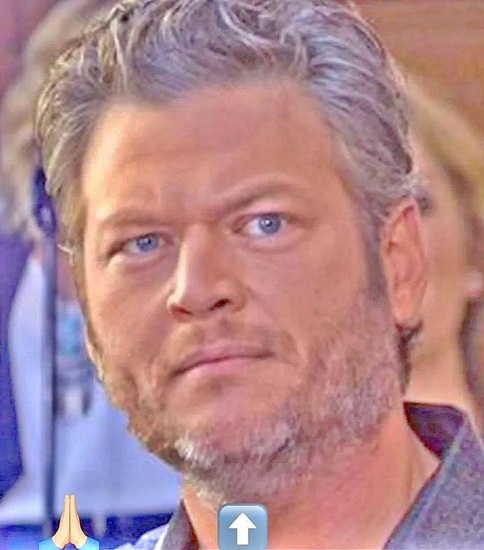
Country star Blake Shelton has spent decades living with the demanding schedule that comes with recording albums, touring, television appearances and other professional commitments. Over the years, changes in his appearance have occasionally generated discussion among fans, particularly during periods when his normal routine changed. Some online stories have turned those observations into dramatic claims about his health.
However, when Shelton’s own interviews and established entertainment reporting are examined, the documented story is considerably different and does not require claims about a heart attack or an unverified medical crisis. One of the most clearly documented changes occurred during the COVID-19 pandemic in 2020. Shelton spent much of the early lockdown period at his Oklahoma property with Gwen Stefani, who was then his longtime partner and later became his wife.
Like millions of other people, Shelton suddenly experienced a major change in his normal routine. Touring and many in-person entertainment activities were disrupted, while television production had to adapt to unusual circumstances. Shelton publicly acknowledged that his weight had increased during that period. During a September 2020 appearance on The Ellen DeGeneres Show, he joked that he had gained “117 pounds” during quarantine.
The number was clearly delivered humorously rather than as a literal measurement, but the underlying point was genuine: Shelton said he had gained weight. More importantly, he also said directly that he was trying to lose some of it. His appearance had changed in another noticeable way during the same period. Shelton discussed how his naturally graying hair had progressed from what he described as “salt and pepper” toward predominantly white. Stefani helped color his hair while they were staying at home. Shelton joked about the result and about seeing himself differently on television, treating the subject with the humor that has characterized many of his interviews.
These comments provide a factual basis for saying that Shelton experienced changes in his appearance during quarantine. They do not, however, establish that he suffered from a medically diagnosed binge-eating disorder, severe anxiety or another condition sometimes attributed to him in viral articles. Shelton’s documented statement was much simpler: he gained some weight during quarantine and later wanted to lose it. Turning that admission into a detailed medical narrative without reliable evidence would go beyond what he publicly confirmed.
The same caution is necessary when discussing alcohol. Shelton has never hidden the fact that drinking has been part of his lifestyle, and his public personality has frequently included jokes about alcohol. What became particularly noteworthy was a candid interview he gave to Entertainment Tonight in December 2023. Asked about his New Year’s resolutions, Shelton said he had repeatedly wanted to change his drinking habits but had not yet succeeded.
Shelton said that he had not managed to stop drinking and acknowledged that even reducing his consumption had been difficult. He identified either cutting back substantially or stopping altogether as his goal for 2024. Because those words came directly from Shelton, they can responsibly be included in an account of his lifestyle. They show that he had personally recognized something about his alcohol consumption that he wanted to change.
That statement should nevertheless be presented exactly for what it was. Shelton did not announce in that interview that he had suffered a heart attack because of alcohol. He did not describe a medically documented crisis caused by binge drinking. He simply acknowledged that reducing or stopping drinking had proven difficult and that he wanted to make another serious attempt. Expanding those remarks into a diagnosis or dramatic medical history would introduce information that the interview itself does not support.
His comments also showed that lifestyle changes do not always happen immediately simply because someone decides they would be beneficial. Shelton admitted openly that he had made similar resolutions before without successfully maintaining them. Rather than presenting himself as someone who had already completed a dramatic transformation, he described an ongoing goal. That distinction makes the story less sensational but considerably more accurate.
Another genuine period of change came after Shelton ended his long tenure on The Voice. He had been one of the original coaches when the American version of the singing competition began and remained on the program for 23 seasons. His final season concluded in May 2023, bringing an end to one of the longest and most recognizable chapters of his television career.
Leaving The Voice created a very different professional rhythm for Shelton. For years, television production had occupied a substantial part of his calendar while he simultaneously maintained a recording career and other professional responsibilities. Once that schedule ended, he did not immediately rush toward another equally demanding project.
Shelton later described the reason in unusually candid terms. In a 2025 interview with People, he said he had been burned out when he left The Voice. He explained that it took approximately a year before he even felt open to seriously considering what should come next professionally.
That documented burnout should not be confused with the unverified quarantine narrative circulated by some websites. Shelton was talking specifically about his professional state after 23 seasons of The Voice. He had spent years balancing television with music and other responsibilities, and eventually he needed time away from that cycle.
During that period, Shelton spent considerable time at home with Stefani and his stepsons. Rather than immediately trying to prove that he could maintain the same pace, he allowed himself to reconsider what he actually wanted from the next stage of his career. The pause became important because Shelton no longer wanted to accept projects merely because remaining constantly busy had become normal.
He later described the previous rhythm as something resembling a professional “hamster wheel.” Years could pass while recording, filming and other obligations continually followed one another. After stepping away from The Voice, Shelton became more deliberate about choosing projects instead of automatically moving toward the next opportunity.
The change was not a retirement from music. Eventually, an unexpected collaboration helped renew his enthusiasm. Post Malone contacted Shelton about working together, leading to their song “Pour Me a Drink.” Shelton later said the experience “lit a fire” under him and helped revive his excitement about making music.
That renewed energy contributed to another period of recording and eventually to Shelton’s 13th studio album, For Recreational Use Only. His description of the process suggests that the significant transformation was professional and personal rather than the dramatic medical recovery portrayed in some viral stories. He had experienced burnout, stepped away from an exhausting schedule and gradually rediscovered enthusiasm for recording.
Shelton’s comments about burnout also provide useful context for understanding why celebrity appearances can change over time. A performer who spends years on television may be seen by audiences every week under professional lighting, makeup, wardrobe and production conditions. During breaks from that environment, viewers may see the same person in much more casual circumstances. Changes in weight, hair, facial hair or clothing can therefore attract disproportionate attention online.
In Shelton’s case, some of those changes have been discussed by the singer himself. The quarantine weight gain was real, although his “117 pounds” figure was a joke. His desire to lose weight was real. His later admission that reducing alcohol consumption was difficult was real. His burnout after leaving The Voice was also real.
Those confirmed facts already provide enough material for an accurate story about lifestyle changes without introducing unsupported medical claims.
One claim that should specifically be removed is the allegation that Shelton suffered a “mild heart attack” while completing household chores. Reliable reporting and Shelton’s established interviews do not provide adequate support for presenting that event as fact. A serious medical event involving a public figure requires stronger evidence than repetition across low-quality websites.
The same applies to claims that he experienced a specific cycle of binge eating, severe isolation, helplessness and anxiety that directly caused his physical transformation. It is possible for people to experience any of these problems, particularly during disruptive periods, but possibility is not evidence that Shelton personally experienced them. Without a reliable statement from Shelton or credible reporting, they should not be included as established facts.
There is a meaningful difference between saying someone ate more during quarantine and saying they suffered from binge eating. “Binge eating” can describe specific behavior and may also refer to a recognized eating disorder. Assigning such terminology to a real person without adequate evidence risks turning ordinary celebrity coverage into unsupported health reporting.
Likewise, there is an important difference between Shelton acknowledging difficulty reducing alcohol and claiming that he suffered from a period of destructive binge drinking caused by isolation. His 2023 interview supports the first statement. It does not establish the second.
Shelton’s actual comments are noteworthy precisely because he did not pretend that changing his drinking habits was effortless. He admitted that cutting back had been difficult. Many public figures might avoid discussing a goal they had repeatedly failed to achieve, but Shelton addressed it directly and with characteristic humor.
The conversation occurred while he was preparing to participate in New Year’s Eve Live: Nashville’s Big Bash. Shelton joked about previous New Year celebrations and discussed performing with longtime friend Trace Adkins. The interview was not presented as a medical announcement or emergency. It was a conversation about resolutions and lifestyle goals.
That context is important because online stories can sometimes take a legitimate quote and place it inside a much more alarming narrative. A statement about wanting to drink less can become evidence of an alleged addiction crisis. Weight gain can become a supposed medical emergency. A changed appearance can become evidence of a secret illness.
Responsible reporting should resist that progression unless additional evidence exists.
Shelton has spent much of his adult life in an industry where appearance is constantly visible. He became nationally known through country music before reaching an even larger audience through The Voice. As a result, photographs and television appearances from different stages of his career are easy to compare.
Physical appearance naturally changes over decades. Shelton was in his mid-40s during the early pandemic and is now around 50. Hair color changes, body weight fluctuates and professional styling varies. None of those observations provides a medical diagnosis.
The quarantine period was nevertheless unusual because Shelton himself commented on his appearance. He noticed his increasingly white hair and joked about the weight he had gained. Stefani coloring his hair became part of the humorous story he told on television.
He also made clear that he wanted to lose weight. This was not the first time Shelton had publicly discussed fluctuations in his weight. Like many people whose careers place them frequently in front of cameras, his appearance has periodically become part of entertainment coverage.
What should be avoided is presenting weight loss itself as proof that someone experienced a serious illness. People lose weight for countless reasons. Without reliable information from the individual or a representative, photographs cannot establish the cause.
Shelton’s more recent discussion of professional burnout offers a stronger and more interesting story because it came directly from him. After years of maintaining an intense schedule, he reached a point where continuing automatically no longer appealed to him.
He wanted his next professional decisions to feel intentional.
That perspective represented a major change from the earlier stages of his career. Shelton had spent decades building momentum. Success often creates pressure to keep accepting opportunities because entertainers know that public attention can disappear quickly.
Shelton later acknowledged that fear of losing success had once kept him working constantly. With age and experience, his attitude became different. He described reaching a point where music could become enjoyable again rather than something driven primarily by anxiety about remaining successful.
This provides a much better explanation of his recent lifestyle transition than an invented medical crisis.
Leaving The Voice gave Shelton something he had not possessed in the same way for years: control over more of his time. He could spend longer periods at home with his family and become more selective about professional commitments.
The change did not mean he stopped working.
He continued recording.
He collaborated with other artists.
He returned to performing.
He became involved with new television projects.
But he approached those opportunities differently.
His collaboration with Post Malone became particularly significant because Shelton had not been actively searching for something to force him back into an intense recording schedule. The opportunity arrived unexpectedly and reminded him that making music could still be exciting.
That eventually contributed to a renewed period of creativity.
Shelton’s career has always involved adapting to change. He first established himself in country music long before becoming a television personality. The Voice then transformed him into a household name beyond country audiences.
The program also introduced him to Stefani, whom he eventually married in 2021.
Their relationship became another major part of his life outside professional achievement.
Shelton became closely involved with Stefani’s three sons, and he has repeatedly spoken about how being a stepfather changed his priorities. Family life increasingly became part of the reason he wanted greater control over his professional schedule.
This helps explain why stepping away from The Voice should not automatically be interpreted as evidence that something had gone wrong. Shelton had already spent more than a decade on the show.
Eventually, he wanted time for other parts of life.
Burnout was real.
But burnout did not mean his career had collapsed.
The year away helped him determine which opportunities still interested him.
That is a substantially different story from the claim that he became isolated, suffered a heart attack and then rebuilt his health through a dramatic fitness program.
The documented version is quieter but more credible.
During quarantine, Shelton gained weight and joked publicly about it.
He said he was trying to lose weight.
Several years later, he openly acknowledged wanting to reduce or stop drinking.
After leaving The Voice, he described being professionally burned out.
He spent significant time away from the relentless television schedule.
Eventually, new musical opportunities renewed his enthusiasm.
These are facts supported by Shelton’s own words and established reporting.
They also demonstrate why different periods of his life should not be combined into one invented timeline.
The quarantine weight comments came in 2020.
The comments about reducing alcohol came in December 2023.
His departure from The Voice occurred in May 2023.
His more detailed discussion of burnout appeared later as he returned more fully to recording.
Combining all of those separate events into one dramatic episode can create a misleading impression that they were parts of the same medical crisis.
They were not documented that way.
Shelton’s weight gain during quarantine does not establish the cause of his later comments about alcohol.
His alcohol resolution does not prove a connection with a medical emergency.
His burnout from The Voice does not prove he experienced severe anxiety during the 2020 lockdown.
Each statement should remain attached to its actual context.
This is particularly important when writing about health.
A celebrity’s appearance is not a medical record.
Weight change is not a diagnosis.
A statement about drinking is not automatically evidence of alcoholism.
Professional burnout is not proof of a specific mental-health condition.
And an unverified online claim about a heart attack should not become factual simply because multiple websites repeat it.
The strongest version of Shelton’s story therefore focuses on what he has chosen to discuss publicly.
He has been unusually willing to joke about weight.
He has acknowledged wanting to change his drinking habits.
He has discussed feeling professionally exhausted.
And he has explained how time away from television helped change his relationship with his career.
Those statements reveal a person reconsidering different aspects of life as he gets older.
They do not require a hidden medical emergency to make them meaningful.
Shelton’s 2023 comments about alcohol are perhaps the clearest example.
He did not announce a perfect transformation.
He admitted that he had tried and struggled.
His goal was to either reduce his drinking or stop altogether.
That honesty is more useful than presenting an unsupported story in which one frightening event instantly changed everything.
Real lifestyle changes are often less dramatic.
People make goals.
They struggle.
They try again.
Their priorities change.
Their circumstances change.
Shelton’s public comments fit that more ordinary pattern.
His discussion of burnout follows the same theme.
He did not leave The Voice and immediately begin a carefully planned reinvention.
He said it took roughly a year before he even became open to asking what should come next.
That period of uncertainty was not necessarily a failure.
It gave him distance from a schedule he had maintained for more than a decade.
When enthusiasm eventually returned, it happened naturally through music.
The Post Malone collaboration reminded Shelton of the enjoyment he could still find in recording.
From there, other projects followed.
By 2025, he was again discussing music with enthusiasm rather than describing himself as someone simply trying to keep a career machine running.
This shift is arguably the most meaningful lifestyle transformation Shelton has publicly described.
He moved away from constant professional momentum and toward greater selectivity.
He had already achieved enormous success.
There was less need to prove himself by accepting every opportunity.
Family, home life and personal enjoyment could occupy more space.
That does not mean Shelton suddenly became a model of perfect health.
He has never publicly presented himself that way.
His comments about alcohol demonstrate the opposite: there were still habits he wanted to change.
Accuracy requires allowing those contradictions to remain.
A person can feel professionally healthier while still struggling with a personal goal.
Someone can gain weight and later try to lose it without experiencing a medical emergency.
Someone can want to reduce alcohol without having publicly disclosed an addiction diagnosis.
These distinctions matter.
They also create a more realistic picture of Shelton.
The dramatic version circulating online suggests a straightforward sequence: isolation caused destructive eating and drinking, those behaviors caused serious health consequences, a heart attack provided a wake-up call, and Shelton transformed his diet and exercise routine.
The evidence does not establish that sequence.
The verified story is different.
Pandemic life disrupted Shelton’s routine.
He gained some weight and later said he was trying to lose it.
Years later, he acknowledged that reducing alcohol had been difficult and identified it as something he wanted to change.
