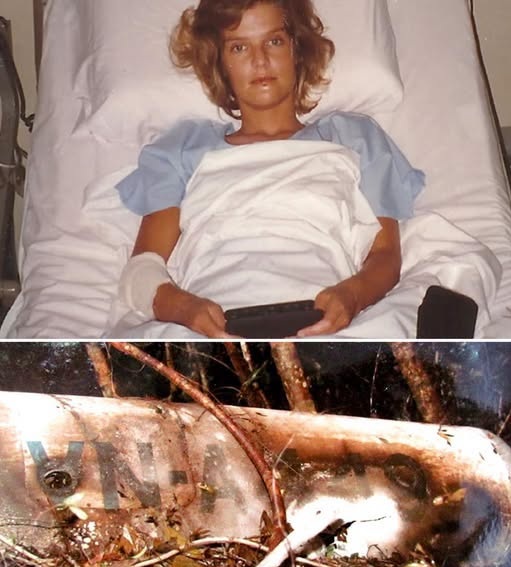
On November 14, 1992, Annette Herfkens boarded a small passenger aircraft in Vietnam expecting a few peaceful days with the man she loved. Instead, the journey became the defining event of her life. Vietnam Airlines Flight 474 was traveling from Ho Chi Minh City to the coastal city of Nha Trang when the Yakovlev Yak-40 crashed into mountainous terrain during difficult weather. There were 31 people aboard: 25 passengers and six crew members. Thirty eventually died. Herfkens, seriously injured and stranded in the jungle, became the sole survivor.
Herfkens was 31 at the time and already had a demanding international career in banking. She was Dutch and had studied at Leiden University, where she met Willem van der Pas, the man she affectionately called Pasje. By 1992, they had been together for approximately 13 years. Their careers had repeatedly placed them in different countries, and the months before the accident had again kept them apart. Herfkens was working for Santander in Madrid, while Van der Pas had moved to Vietnam for banking work. Their short holiday was supposed to give them time together after a lengthy separation.
They planned to travel to Nha Trang, a coastal destination on the South China Sea. It was supposed to be a romantic break rather than an adventure. Herfkens later described herself and Van der Pas as college sweethearts who had built their lives around international careers while remaining together through years of moves and professional demands. The holiday represented a chance to temporarily leave those pressures behind. Nothing about the purpose of the trip suggested that it would become an extraordinary survival story discussed more than three decades later.

There was, however, one part of the journey that immediately made Herfkens uncomfortable. She was claustrophobic, and the Yak-40 looked extremely small to her. She initially resisted boarding the aircraft. Van der Pas tried to reassure her and persuaded her to continue with the trip. Her nervousness at that moment was related to the confined aircraft rather than knowledge of any specific mechanical problem. She eventually took her seat beside the man with whom she had shared more than a decade of her life.
The aircraft departed Ho Chi Minh City for Nha Trang. The flight was taking place during difficult weather associated with Tropical Storm Forrest, and the Yak-40 was approaching its destination when the situation became catastrophic. Aviation records identify the accident as controlled flight into terrain. During the approach toward Nha Trang, the aircraft descended too low, struck trees near a ridge and crashed. The impact occurred far from an easily accessible populated area, making the subsequent search exceptionally difficult.
Herfkens later remembered a sudden drop during the flight. Van der Pas became worried, and shortly afterward the aircraft dropped again. Someone screamed. Everything went dark. The next clear moments in Herfkens’ memory came after the aircraft had already crashed. Her later recollections of the impact and immediate aftermath were fragmented, something she has attributed in part to trauma and the severity of her injuries.
When she regained consciousness, she was surrounded by wreckage and the sounds of the Vietnamese jungle. A dead passenger had fallen across her. Nearby, Van der Pas remained in his seat. He had died in the crash. Herfkens had gone from planning a holiday with the person she loved to waking in a destroyed aircraft beside people who were dead or gravely injured.

Her own injuries were severe. The Guardian later reported that she had 12 broken bones in her hip and knee alone. Her jaw was badly damaged, and one of her lungs had collapsed. Herfkens has said she cannot fully reconstruct how she managed to remove herself from the wreckage. She believes she crawled from the aircraft despite enormous pain and eventually moved roughly 30 yards away from it.
The fact that Herfkens survived the initial impact did not mean she was immediately safe. She was immobilized by serious injuries in remote terrain without normal supplies, communication equipment or medical assistance. She could not simply stand up and walk toward help. Survival would depend on staying alive where she was until rescuers found the wreckage.
Herfkens was also not immediately the only living person at the crash site. During the first period after the accident, she could hear injured passengers around her. There were groans and cries from people who had survived the initial impact but were critically hurt. As time passed, those voices became fewer. Eventually they stopped. Herfkens realized that she was alone among the dead.
That realization produced intense panic. Her breathing was already compromised because of her collapsed lung, and panic made getting enough air even harder. Herfkens later described deliberately focusing on breathing as a way of returning her attention to the immediate moment. Decades afterward, she compared what she did instinctively with techniques people now commonly associate with mindfulness.
The jungle around her was simultaneously dangerous and unexpectedly beautiful. Herfkens later remembered leaves in shades of green and gold, covered in moisture and illuminated by sunlight. Focusing on those details gave her something other than death and pain to think about. Rather than constantly staring at the wreckage and the people who had died, she directed her attention toward whatever was still alive around her.
This became the basis for one of the ideas she would repeat throughout her later life: accepting what was absent allowed her to recognize what remained. She could not bring Van der Pas back. She could not transform the jungle into the beach holiday they had planned. She could not immediately repair her injuries. Once she stopped mentally fighting those facts, she said, she could concentrate on the environment and the actions still available to her.
Her most urgent practical problem was water. A person can survive considerably longer without food than without adequate hydration, and Herfkens understood that she needed to find a way to collect rainwater. She could see damaged insulation material from the aircraft and believed it might absorb water like a sponge. Getting to it, however, required moving with an extensively injured body.
Herfkens propelled herself along using her elbows because her lower-body injuries made normal movement impossible. The effort damaged her elbows so severely that they later required skin grafts. She eventually managed to reach pieces of insulation and created several small balls from the material. Her plan was simple: when rain arrived, the material could absorb water that she could then drink.
The plan worked. When rain fell, the improvised pieces of insulation collected moisture. Herfkens rationed the water carefully rather than consuming everything immediately. She later recalled taking a sip roughly every two hours. Each successful drink became a small achievement, and she deliberately congratulated herself for completing another manageable step.
That mental approach became important to her understanding of why she survived. Looking at the entire problem would have been overwhelming. She was severely injured, alone in remote jungle terrain and surrounded by people who had died. Instead of trying to solve everything at once, she focused on individual tasks. Find material. Reach it. Wait for rain. Collect water. Take one sip. Continue breathing. Repeat.
She did not have food during those days, but thirst was the immediate concern. The rainwater provided enough hydration to keep her alive while rescuers searched for the missing aircraft. Her inability to move freely may paradoxically have forced her to conserve energy. She had little choice except to remain close to where she had crawled after escaping the wreckage.
Search teams faced difficult conditions. The plane had gone down in mountainous terrain during severe weather, and locating wreckage in thick vegetation was extremely challenging. Search efforts reportedly involved aircraft, helicopters and vessels looking across possible areas because the exact crash location was initially uncertain. The wreckage was not located until eight days after the accident.
For Herfkens, those eight days were experienced very differently from an ordinary calendar. There was no normal schedule, no telephone and no reliable way to know what rescuers were doing. She could not know exactly when someone would reach her. Yet she later said she did not spend most of the ordeal convinced that she would die. She believed people would continue searching.
The absence of information could have become psychologically overwhelming. Instead, Herfkens concentrated on the immediate physical world. She breathed. She rationed water. She watched leaves. She endured pain. Her survival strategy was not based on heroic physical feats so much as an ability to remain focused on extremely small actions.
At some stage, Herfkens’ mental state shifted again. She has described a period near the end of the ordeal when she felt herself weakening considerably. Later accounts describe the experience as almost peaceful rather than dominated entirely by panic. After so many days alone, physically exhausted and severely injured, her perception of the jungle had become deeply connected with the psychological state that allowed her to survive.
On the eighth day, people finally appeared.
A Vietnamese police officer and other rescuers reached the crash location. They had not expected to discover a passenger still alive. Herfkens has recalled that they had arrived prepared to recover bodies rather than rescue a living survivor. Finding her completely changed the nature of their mission.
After surviving the impact, serious injuries, dehydration and more than a week in the jungle, Herfkens now faced the process of being removed from the mountain. Rescuers placed her on an improvised stretcher made with material stretched between poles and carried her toward medical help. The journey out of the jungle marked the end of one ordeal and the beginning of another: physical rehabilitation and grief.
The official toll from Flight 474 was devastating. There had been 31 people aboard. Herfkens was the only survivor. Twenty-four other passengers and all six crew members died. Aviation records identify her as the sole survivor of one of Vietnam Airlines’ most serious accidents of that period.
The accident occurred on November 14, 1992, as the aircraft was approaching Nha Trang. Records show the plane was registered VN-A449 and was a Soviet-built Yakovlev Yak-40. The aircraft had departed Ho Chi Minh City’s Tan Son Nhat airport. The accident took place near Son Trung, Vietnam.
For Herfkens, however, technical information could never describe the most important loss. Willem van der Pas, her partner of 13 years, was gone. They had imagined a future together and regarded themselves as eventual marriage partners. The person who had persuaded her onto the aircraft had died only a short distance away from her.
After rescue, Herfkens received hospital treatment and began recovering from her extensive injuries. The speed of some aspects of her physical recovery surprised people around her. In December, only weeks after the accident, she returned to the Netherlands for Van der Pas’s funeral. Accounts differ on whether she arrived in a wheelchair or was carried, but all agree that she was still physically recovering when she attended.
By around New Year, she had progressed enough to walk again. In February 1993, approximately three months after the crash, she returned to her banking career. The rapid return to professional life did not mean that the psychological effects had disappeared. Her body was recovering, but grief and trauma continued.
Herfkens later described periods of anger following the accident. She had survived an event that killed the man she planned to marry and everyone else aboard the aircraft. Survival itself did not automatically provide emotional peace. It left her with the difficult task of constructing a future that no longer included the person with whom she had imagined sharing it.
She also continued experiencing reminders of the crash. Certain situations while flying could trigger memories. The sight of a seatback in front of her could recall the dead passenger who had fallen over her in the wreckage. She developed a preference for sitting in the front row when possible so that she would not have another passenger seat directly in front of her.
Vietnamese food could also trigger unexpected memories. Trauma does not always return through deliberate thinking; smells, tastes, sounds or visual details can suddenly reconnect someone with an experience years later. Herfkens said these reminders occasionally caught her by surprise long after her physical injuries had healed.
Water acquired a special significance. During the jungle ordeal, each small amount of rainwater had represented survival. Decades later, she continued carrying water regularly and described its taste with unusual appreciation. Something most people consume without thinking had become permanently connected with being alive.
Her life also continued in ways she could not have predicted during those eight days. Her colleague Jaime Lupa traveled to Vietnam during the search and believed she might still be alive. Years later, Herfkens and Lupa married. They eventually moved to New York and had two children, Joosje and Max.
The marriage later ended in divorce, but it represented one of several major chapters that followed the accident. Herfkens had once lost the future she expected with Van der Pas. She eventually built another life, became a mother and developed experiences entirely separate from the crash.
Her son Max was diagnosed with autism, creating another period in which Herfkens had to reconsider expectations about what the future would look like. She later connected her approach as a mother with lessons she believed she had learned in the jungle. She focused on accepting realities she could not change and then directing attention toward possibilities that remained.
This did not mean ignoring difficulty or pretending loss was painless. Herfkens has repeatedly emphasized that accepting loss requires genuinely experiencing it. She compared the idea with concepts she had understood professionally while working in financial markets: sometimes a loss has to be recognized completely before a person can move forward.
That interpretation eventually became central to her public speaking. Herfkens began telling her survival story to audiences and examining the behavior that had kept her alive. She discovered that several of the things she had done instinctively were consistent with established survival guidance: create a plan, divide overwhelming problems into smaller tasks, secure water, conserve energy and focus on immediate priorities.
She had not studied a survival manual before entering the jungle. The strategies emerged from circumstance. Years later, friends gave her books about survival, and she realized that much of her behavior had followed principles commonly recommended to people facing extreme situations.
Herfkens also became interested in the characteristics that may have shaped those instincts. She has said that being the youngest child in her family gave her a degree of independence. She remembered being loved but also being allowed to work things out for herself. In her interpretation, that experience encouraged improvisation and self-reliance.
She has also speculated publicly that she may have attention-deficit disorder, though this should not be presented as a confirmed diagnosis. Herfkens herself framed it as a possibility rather than a formal medical conclusion. She believed traits such as improvisation and unconventional problem solving may have helped her in the jungle.
That distinction matters. It would be inaccurate to state as fact that ADHD caused her to survive or that medication would necessarily have changed the outcome. Those are Herfkens’ personal reflections on her own life rather than scientifically established explanations for why she lived.
Luck was undeniably part of the outcome as well. Aircraft accidents involve countless variables that passengers cannot control. Herfkens happened to survive the initial impact despite suffering devastating injuries. Nothing she did before the crash could guarantee that result. Her survival skills became relevant only after she remained alive when almost everyone else had been killed or fatally injured.
This is why her story does not need to be framed as proof that the right mindset guarantees survival. Many of the other passengers survived the immediate impact for some period but died from injuries that may simply have been unsurvivable without rapid medical intervention. Herfkens’ actions mattered, but circumstances and chance mattered too.
Her memoir, Turbulence: A True Story of Survival, eventually allowed her to tell the story in greater depth. The book explored both the physical ordeal and the philosophy she developed afterward. The title reflected more than the moments aboard the aircraft. It also referred to the disruptions and losses that followed throughout her life.
Her central principle became simple: when something cannot be restored, acknowledge that reality and focus on what remains. In the jungle, Van der Pas and the planned beach vacation were gone. What remained were leaves, rain, insulation material, breath and the possibility of rescue.
Later in life, the same framework helped her interpret other difficult experiences. She has applied it while discussing pregnancy losses, her son’s diagnosis, the end of her marriage and other personal changes. The circumstances were radically different, but she saw a common psychological challenge: resisting reality can consume energy that could otherwise be used adapting to it.
Her relationship with the jungle itself became surprisingly positive. Most people might expect the site of such traumatic loss to remain only a source of terror. Herfkens instead began describing the jungle as a mental “safe place.” The same leaves she focused on while injured became images she could return to during later periods of stress.
This does not mean she forgot what happened there. The crash continued affecting her life, and certain triggers still brought memories back. Rather, the location became associated with both trauma and the extraordinary clarity she experienced while surviving.
Her story challenges the simple assumption that survivors always interpret the places connected with trauma in the same way. Psychological responses are deeply individual. Someone else might have avoided every reminder of the jungle. Herfkens found herself mentally returning to it.
She has also repeatedly marked the anniversary of the accident. November 14 is not simply another date on the calendar for her. She remembers Van der Pas and the people who died, while also recognizing the period in which she survived without normal food or water.
In accounts of her anniversary ritual, Herfkens has described paying particular attention to food and water during the eight-day period following November 14. Ordinary meals become reminders of what she lacked in the jungle. Drinking water becomes an opportunity to appreciate something that once determined whether she would live another day.
She has also allowed herself small celebrations or gifts during these periods. That may seem surprising given the tragedy associated with the anniversary, but survival and grief can exist together. Honoring the dead does not necessarily require rejecting gratitude for continuing to live.
The accident eventually became a story other people wanted to adapt. Herfkens has discussed interest from film and television producers, although proposed projects have not always progressed. She has said she resisted versions that transformed the story into a conventional heroic narrative focused entirely on her personality.
From her perspective, one reason she survived psychologically was that she stopped thinking about herself as the center of everything. Instead of repeatedly asking why the disaster had happened to her, she concentrated on practical reality. The jungle was not personally attacking her. Rain was simply rain. The leaves were simply there. Her body needed water.
That approach became part of how she describes instinct. Extreme situations can strip away many ordinary distractions. There were no business meetings, financial markets, social expectations or future plans to manage in those days. There was only the next breath and the next sip.
Her professional background may have contributed to the way she organized problems. Trading involves uncertainty, risk and decisions made with incomplete information. Herfkens has occasionally drawn connections between taking financial losses and accepting losses in life, though the emotional stakes of the two are obviously not equivalent.
Before the crash, she had been successful in a demanding financial environment. The Guardian reported that she was the only woman on her trading floor in Madrid. Her career involved developing markets and complex financial transactions. The jungle reduced that sophisticated professional world to the most basic possible question: how to remain alive long enough to be found.
The contrast is one reason the story remains compelling. Herfkens was not trained as a wilderness survival specialist. She did not travel to Vietnam intending to test herself in extreme conditions. She was a banker on holiday with her partner.
She had no survival kit designed for a jungle emergency.
She had no planned shelter.
She had no medical equipment capable of repairing her injuries.
She had no reliable way to communicate with rescuers.
She could barely move.
Yet she identified the resource that mattered most and found a way to collect it.
The improvised rainwater system remains one of the clearest examples of her problem-solving approach. Aircraft insulation was not designed as a survival sponge. In the wreckage, its intended purpose no longer mattered. Herfkens only needed to recognize a property that could be useful.
This is one reason survival specialists often emphasize improvisation. An object can become valuable for a purpose completely different from the one for which it was created.
Her severely injured elbows showed the cost of reaching that material. The effort was not effortless or cinematic. Moving only a short distance could be excruciating. She sometimes lost consciousness from pain.
Her injuries also meant she could not search widely for resources. Whatever she used needed to be within the limited area she could reach.
The body itself became another resource she needed to manage carefully.
Her collapsed lung meant breathing required deliberate attention.
Her fractures limited movement.
Pain consumed energy.
Without food, conserving strength became increasingly important.
Herfkens therefore survived largely by doing less rather than more.
She remained where rescuers were most likely to find evidence of the crash.
She rationed her water.
She avoided wasting energy on impossible tasks.
And she waited.
Waiting may sound passive, but in that situation it required enormous psychological discipline.
Every hour that passed without rescue created another opportunity for panic.
Every silence from the other passengers confirmed another death.
Every period without rain threatened her supply of water.
She had no evidence that rescuers knew exactly where she was.
Still, she continued.
On the eighth day, the wait ended.
The Vietnamese rescue team reached the aircraft.
The people searching for bodies discovered a woman who was still alive.
That discovery turned Annette Herfkens from one of the presumed victims of Flight 474 into its only survivor.
Her return also changed the experience of the people who loved her. During the search, relatives and colleagues had feared there could be no survivors. Jaime Lupa was among those who traveled to Vietnam believing Herfkens might still be found alive. Later he became an important part of her life.
The story did not end when rescuers carried her from the mountain.
Physical rehabilitation followed.
Then grief.
Then returning to work.
Then marriage and motherhood.
Then divorce.
Then a new professional identity as a speaker and author.
Her survival became part of her identity, but she repeatedly resisted the idea that the crash was the only meaningful thing about her.
She had been a professional before November 1992.
She became a mother afterward.
She continued living through other losses and changes.
The jungle became a reference point rather than the entirety of her life.
Three decades later, Herfkens was still discussing what happened not because she believed she possessed a magical secret to surviving disaster, but because the experience changed the way she understood adversity.
Her philosophy does not promise that accepting reality removes pain.
Van der Pas was still dead.
The other passengers were still gone.
Her injuries still hurt.
Acceptance simply allowed her to direct attention toward whatever options remained.
That distinction is important.
Acceptance is not approval.
It does not mean believing that a tragedy is acceptable or fair.
It means recognizing that reality has already changed and deciding what can still be done within it.
For Herfkens, that meant seeing the rain.
Seeing the insulation.
Seeing the leaves.
Taking the next sip.
Taking the next breath.
And continuing until someone arrived.
Flight 474 remains part of aviation history because 30 people lost their lives and one passenger survived. The accident should not be reduced to an inspirational story alone. Families lost people they loved, and Van der Pas’s death remained central to Herfkens’ experience.
At the same time, her survival provides an extraordinary documented example of human endurance under severe physical and psychological stress.
She survived a crash that killed nearly everyone immediately or through injuries afterward.
She survived extensive fractures.
She survived a collapsed lung.
She survived without conventional food or clean water supplies.
She survived eight days before rescuers reached the wreckage.
And she eventually returned to an active life.
Those facts are remarkable without exaggeration.
There is no need to call every moment a miracle.
There is no need to claim she was completely fearless.
There is no need to pretend trauma disappeared after rescue.
Herfkens has openly acknowledged fear, grief, anger and lasting triggers.
That honesty makes the story more credible.
Survival was not a transformation into someone untouched by pain.
It was continuing despite it.
Herfkens later summarized much of what she learned through the idea that seeing what remains requires accepting what has been lost.
In the jungle, she lost almost everything she expected from that week.
The man she loved was dead.
The vacation was gone.
Her career temporarily ceased to matter.
Her normal physical independence disappeared.
But some things remained.
She remained alive.
Rain still fell.
The jungle contained material she could use.
Rescuers were still searching somewhere beyond what she could see.
That was enough to keep acting on.
Thirty-plus years later, the circumstances are part of history.
The Yak-40 is long gone.
Nha Trang and Ho Chi Minh City have changed enormously.
Herfkens’ life has moved through multiple chapters.
But November 14, 1992, continues to divide her biography into a before and an after.
Before it, she was a Dutch banker traveling with her longtime partner for a romantic holiday.
After it, she became the sole survivor of Vietnam Airlines Flight 474.
The title could have trapped her permanently inside one event.
Instead, she turned the experience into writing, speaking and a philosophy for dealing with change.
She continued flying despite the memories.
She raised children.
She rebuilt professional and personal life.
She learned how certain triggers could remain while life still expanded around them.
The jungle remained part of her.
But it did not end her story.
Perhaps the clearest image from all eight days is not the wreckage itself.
It is Herfkens lying injured and looking at leaves.
The aircraft represented everything that had been destroyed.
The leaves represented what still existed.
She could not control the first.
She could still pay attention to the second.
That difference became the foundation of how she survived the waiting and how she later explained the experience to others.
Annette Herfkens did not board Flight 474 seeking a lesson in resilience.
She boarded because she wanted a holiday with the man she loved.
The tragedy took that future away from her.
What followed was not a carefully planned act of heroism.
It was a sequence of tiny decisions made by a gravely injured person who wanted to remain alive.
Move toward something capable of collecting water.
Breathe through panic.
Drink slowly.
Conserve energy.
Look at what is present rather than only what has disappeared.
Wait for help.
Eight days later, help finally arrived.
Thirty people aboard Flight 474 did not return home.
Annette Herfkens did.
Her survival remains extraordinary, but the most enduring part of her account may be the simplicity of what she says she learned afterward.
When reality takes something away, a person cannot always restore it.
Sometimes the only available choice is to acknowledge the loss and then look carefully at what is still there.
For Herfkens, in November 1992, what remained was rainwater, breath, a Vietnamese jungle and one more chance to live.
