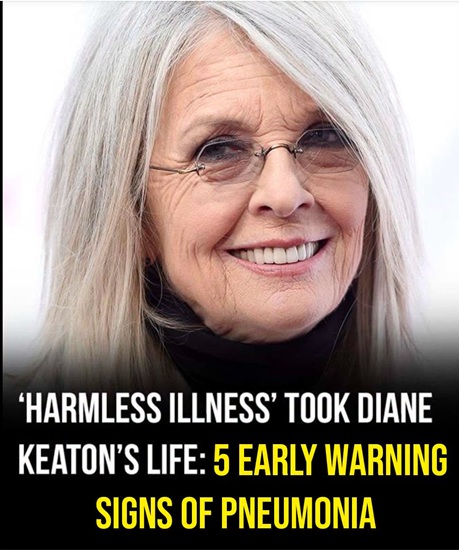
The death of Diane Keaton brought an outpouring of tributes from audiences, colleagues, and fellow performers who had followed her extraordinary career for more than five decades. The Oscar-winning actress died in California on October 11, 2025, at the age of 79. In the days immediately following her death, her family requested privacy and did not provide extensive medical information. Several days later, they confirmed that Keaton had died from pneumonia.
An official death certificate subsequently provided an additional detail, identifying primary bacterial pneumonia as the immediate cause of death. Keaton’s family expressed gratitude for the many messages they received after her death. Their statement emphasized the affection being shown for the actress rather than focusing on speculation surrounding her final days. They also mentioned two causes that had been important to Keaton during her lifetime: animal welfare and support for people experiencing homelessness. The family suggested that people wishing to honor her memory could consider supporting an animal shelter or food bank.
The official medical information also helped clarify an important point. Early discussion following the actress’s death included speculation about other illnesses, partly because Keaton had previously spoken publicly about health issues earlier in her life. However, the death certificate obtained after her death listed bacterial pneumonia as the immediate cause and did not list significant contributing medical conditions. For an accurate account, there is therefore no basis for presenting a cancer recurrence or another unconfirmed illness as responsible for her death.
Emergency responders had been called to Keaton’s Los Angeles-area home on the morning she died. ABC News reported that the Los Angeles Fire Department responded to a medical call at her Brentwood residence at approximately 8:08 a.m. and transported a patient to a hospital. At the time, authorities did not publicly provide detailed medical information about what had occurred inside the home. The family’s later statement and the subsequent death certificate provided the clearest information about the cause.
The news came as a shock because Keaton’s illness had not been widely discussed publicly. Reports following her death said that even some longtime acquaintances had not fully understood the extent of her recent health difficulties. Her family maintained considerable privacy during that period. Rather than attempting to reconstruct private medical circumstances from photographs or anonymous observations, the most reliable information remains what the family and official documentation eventually confirmed: Keaton developed bacterial pneumonia and died on October 11.
Her death also renewed public interest in pneumonia itself, an illness that can range from relatively mild to life-threatening. Pneumonia is an infection affecting one or both lungs. It causes inflammation within the lung tissue and can result in the tiny air sacs, known as alveoli, filling with fluid or pus. Bacteria and viruses are common causes, while fungi and, less commonly, parasites can also cause pneumonia. The severity depends on several factors, including the particular infection, a person’s age, overall health, and immune function.
Pneumonia should therefore not be confused with an ordinary cold, even though the earliest symptoms can sometimes overlap with common respiratory infections. Some cases are mild enough to be treated at home, while severe cases may require hospitalization and intensive medical care. The illness can interfere with the lungs’ ability to move enough oxygen into the bloodstream, which is one reason breathing problems can become serious. Older people and individuals with certain underlying conditions have a greater likelihood of developing severe complications.
Age is one of the important risk factors. According to the U.S. Centers for Disease Control and Prevention, adults 65 and older are at increased risk of pneumonia, and the risk continues increasing with age. This does not mean every older adult who develops pneumonia will become critically ill, but it does mean symptoms deserve careful attention. The immune system changes with age, and older adults are also more likely to have other health conditions that can make respiratory infections more difficult to tolerate.
Certain chronic medical conditions can increase risk as well. The CDC identifies chronic heart disease, chronic liver disease, chronic lung disease, and diabetes among conditions associated with greater pneumonia risk. People with weakened immune systems can be especially vulnerable. Smoking cigarettes can also increase risk because smoking damages the respiratory system’s normal defenses and makes it harder for the body to clear mucus and infectious material from the airways.
Pneumonia symptoms can vary significantly from person to person. Common symptoms include coughing, fever or chills, shortness of breath, chest pain when breathing or coughing, and unusual tiredness. Some people produce mucus when coughing, while others do not. Nausea, vomiting, diarrhea, headaches, or muscle pain can also occur. Because these symptoms overlap with those of other respiratory illnesses, a healthcare professional may need to perform an examination and testing to determine the cause.
A persistent or worsening cough is one symptom that can deserve medical attention, particularly when accompanied by breathing difficulties, fever, or chest discomfort. A cough alone does not prove that someone has pneumonia, since many illnesses can cause coughing. However, a cough that becomes more severe instead of improving may indicate that a respiratory infection requires evaluation. Healthcare providers consider the complete pattern of symptoms rather than relying on a single warning sign.
Chest pain can also occur with pneumonia. The National Heart, Lung, and Blood Institute notes that some patients experience pain when they breathe or cough. This can happen because infection and inflammation affect structures involved in breathing. Chest pain has many potential causes, some of them urgent, so severe or unexplained chest discomfort should not simply be assumed to be pneumonia. Medical evaluation is important when symptoms are significant or worsening.
Fever and chills are common symptoms, but their absence does not necessarily rule pneumonia out. This is particularly important in older adults. The NHLBI notes that older people or those with serious illnesses may sometimes have a lower-than-normal temperature instead of the typical fever. This difference can make pneumonia less obvious in an older patient if people are waiting only for a high temperature to appear.
Shortness of breath is another potentially important sign. Pneumonia can reduce the efficiency with which oxygen passes from the lungs into the bloodstream. A person may feel unusually winded during ordinary activities or may struggle to breathe even while resting in more serious cases. Healthcare providers can measure oxygen levels using pulse oximetry and may use additional tests when breathing difficulty is significant.
Fatigue can also be substantial. Pneumonia places considerable demands on the body as the immune system responds to infection. Someone who normally has good energy may feel unusually weak or exhausted. Again, fatigue alone has many possible explanations, but when it appears together with coughing, fever, chest pain, or respiratory difficulty, professional assessment may be appropriate.
Confusion is an especially important symptom to understand in older adults. Instead of showing all of the symptoms people commonly associate with pneumonia, an elderly person may suddenly appear confused, disoriented, or significantly weaker. Both the CDC and the NHLBI list altered mental status or sudden confusion among possible manifestations. Family members and caregivers should therefore avoid assuming that abrupt confusion in an older adult is simply a normal part of aging.
Medical diagnosis typically involves more than observing symptoms. A healthcare provider can review the patient’s medical history, listen to the lungs, and perform a physical examination. A chest X-ray is commonly used to look for inflammation consistent with pneumonia. Blood tests may provide information about the body’s response to infection, while pulse oximetry measures oxygen levels. In some cases, tests of mucus, blood cultures, or additional investigations may help identify the organism responsible.
Knowing what caused the infection can matter because pneumonia does not have one universal treatment. Bacterial pneumonia may be treated with antibiotics. Viral pneumonia may sometimes be treated with antiviral medication, although antiviral drugs are not available or appropriate for every virus capable of causing pneumonia. Fungal pneumonia can require antifungal medication. Treatment is therefore determined by the likely or confirmed cause as well as the severity of the illness and the patient’s health.
The official record in Diane Keaton’s case specifically identified bacterial pneumonia. According to reporting on her death certificate, the infection had been present for days before her death. The available document did not list another significant contributing condition. That information distinguishes her case from the many different forms pneumonia can take and provides a more precise description than the family’s initial statement, which understandably used the broader term pneumonia.
Antibiotics are an important treatment for bacterial pneumonia, but the seriousness of individual cases varies considerably. Many patients can recover at home under medical supervision. Severe pneumonia, however, may require hospital treatment. Patients admitted to a hospital may receive intravenous antibiotics and fluids, oxygen therapy, and continuous monitoring. People with very serious respiratory failure may need mechanical ventilation.
The fact that antibiotics exist does not mean bacterial pneumonia is always easy to treat. Severity can depend on how quickly the disease progresses, the bacterium involved, the patient’s age, existing medical conditions, and how well the body responds. Complications can develop even when appropriate medical care is available. This is one reason older adults and other high-risk groups are encouraged to take respiratory symptoms seriously rather than assuming that every infection will resolve without assistance.
Serious pneumonia can lead to respiratory failure or acute respiratory distress syndrome, sometimes called ARDS. In severe cases, insufficient oxygen can affect organs beyond the lungs. The NHLBI also notes that serious pneumonia can contribute to kidney, liver, or heart damage when organs do not receive adequate oxygen or when the body’s response to infection becomes severe. Lung abscesses and other complications can occur as well.
These possibilities should not be interpreted as reasons for panic whenever someone develops a cough. Most respiratory symptoms do not automatically mean a person has severe pneumonia. The purpose of understanding warning signs is to recognize when medical evaluation could be important. Symptoms that suddenly worsen, serious difficulty breathing, inability to speak normally because of breathlessness, unusual confusion, or severe weakness should not simply be ignored.
Pneumonia also represents a significant public-health burden. The CDC reports that more than 41,000 people died from pneumonia in the United States in 2022. Millions of people worldwide are affected each year. Those figures help explain why medical organizations emphasize prevention, vaccination, early assessment of concerning symptoms, and appropriate treatment.
Statistics should be interpreted carefully because pneumonia can be caused by many different pathogens and can occur in very different clinical situations. Someone may develop pneumonia in the community, during or after receiving healthcare, or while receiving mechanical ventilation. These categories can involve different organisms and risks. Doctors therefore consider where and how the illness developed when deciding how to investigate and treat it.
Bacteria responsible for community-acquired pneumonia include organisms associated with pneumococcal disease as well as Mycoplasma pneumoniae. Other bacteria can cause pneumonia less frequently. Viruses capable of causing pneumonia include influenza, respiratory syncytial virus, human metapneumovirus, COVID-19, parainfluenza viruses, and several others. Fungal pneumonia is less common overall but can become particularly serious in some people with weakened immune systems.
Because several different infections can lead to pneumonia, prevention is also broader than a single intervention. Vaccines can reduce the risk from some organisms that cause pneumonia. Other steps, such as avoiding cigarette smoking and reducing exposure to respiratory infections where possible, can also help. No prevention strategy eliminates every case because pneumonia has many causes.
Pneumococcal vaccination is one specific preventive tool. Current CDC guidance recommends pneumococcal vaccination for many adults based on age, previous vaccination history, and certain medical risk factors. As of 2026, CDC guidance includes pneumococcal conjugate vaccination for adults age 50 and older who have not previously received one, with different options depending on the vaccine used and previous immunization history. People should discuss their individual vaccination needs with a healthcare professional rather than relying on a general article alone.
Other vaccinations can indirectly reduce the burden of pneumonia by preventing respiratory infections that sometimes progress to pneumonia. Influenza is one example. RSV and COVID-19 can also cause pneumonia in some patients. Which vaccines are appropriate depends on age, health status, previous vaccination, and current public-health recommendations. Medical guidance can change, so individualized recommendations should come from an appropriate healthcare professional.
Recovery can take time even when pneumonia has been successfully treated. Some patients may feel better after several days, while fatigue and breathing limitations can persist much longer. The NHLBI notes that recovery may take several weeks. Light physical activity can eventually help some people regain strength, but strenuous activity may be inappropriate during recovery. Follow-up care may be needed when symptoms persist.
The illness can be particularly disruptive for older people because losing strength during a serious infection can affect mobility and independence. An older patient may need additional rehabilitation after the infection itself begins resolving. This does not happen in every case, but it helps explain why prevention and prompt medical attention are especially important for older adults.
Diane Keaton was 79 when she died, placing her within an age group the CDC identifies as having increased pneumonia risk. That general medical fact should not be confused with speculation about exactly why her own infection became fatal. Her private medical records have not been made public in detail, and neither her family nor the death certificate described a broader chain of contributing illnesses. The responsible conclusion is therefore limited to what was actually confirmed: primary bacterial pneumonia caused her death.
That distinction is important because celebrity deaths often produce immediate theories online. Photographs are examined, old interviews are revisited, and previous illnesses can quickly become part of unverified explanations. In Keaton’s case, her family chose to disclose the cause, and the death certificate later added medical specificity. There is no need to go beyond those records in order to understand what happened.
Keaton’s death was especially shocking because of the enormous vitality associated with her public image. Across decades of movies, interviews, photographs, and public appearances, she cultivated an identity that was immediately recognizable. Her hats, tailored clothing, humor, distinctive speaking style, and willingness to appear unconventional made her different from many of her contemporaries.
Her career had begun long before she became an Oscar winner. Born Diane Hall in Los Angeles in 1946, she eventually adopted her mother’s maiden name, Keaton, professionally. Her early career included stage work before she reached a much wider audience in movies. The 1970s transformed her professional life and established her as one of the defining actresses of her generation.
One of her breakthrough screen roles was Kay Adams in Francis Ford Coppola’s The Godfather in 1972. Keaton portrayed the outsider who enters the world of the Corleone family through her relationship with Michael Corleone, played by Al Pacino. She later returned to the role in the sequels, allowing audiences to watch Kay’s relationship with Michael deteriorate as his commitment to organized crime deepened.
Keaton became even more closely associated with comedy through her collaborations with Woody Allen during the 1970s. Their films together included Play It Again, Sam, Sleeper, Love and Death, and eventually Annie Hall. Her work in Annie Hall became a defining moment in her career and earned her the Academy Award for Best Actress.
The character also influenced fashion. Keaton’s combination of hats, loose trousers, ties, vests, and layered clothing became strongly associated with both the movie and her personal style. Rather than disappearing after one decade, that visual identity remained part of her public persona throughout her life.
Keaton continued demonstrating dramatic range in films such as Looking for Mr. Goodbar, Reds, and later Marvin’s Room. Her performance in Reds earned another Academy Award nomination. These roles made clear that the qualities audiences loved in her comedies did not limit her ability to handle more serious material.
Another generation of viewers discovered Keaton through Father of the Bride and its sequel. Playing Nina Banks opposite Steve Martin, she became part of another widely loved screen family. The films introduced her to younger audiences who may not initially have known her work from the 1970s.
She later joined Goldie Hawn and Bette Midler in The First Wives Club, another enduring comedy. The film followed three longtime friends rebuilding their lives after painful marital experiences. Its combination of humor and friendship turned the movie into a lasting favorite for many viewers.
In 2003, Something’s Gotta Give gave Keaton another major romantic comedy success. Her performance opposite Jack Nicholson earned her a fourth Academy Award nomination. The role was particularly notable because it placed the romantic life of an older woman at the center of a mainstream Hollywood production rather than treating aging as something that ended emotional or romantic possibilities.
Her career continued well into later life. Keaton appeared in The Family Stone, Morning Glory, Book Club, and Book Club: The Next Chapter, among numerous other films. She also worked as a director, producer, photographer, writer, and advocate for architectural preservation.
Keaton never married, but she became a mother through adoption. She adopted her daughter Dexter in 1996 and her son Duke in 2001. She frequently discussed motherhood as one of the major transformations of her life. Following her death, both children were listed among the immediate family members surviving her.
Animals were another important part of her personal life. Her family specifically mentioned her love of animals when suggesting ways people could honor her memory. Instead of asking for elaborate public tributes, they pointed toward animal shelters and food banks. That request offered a personal glimpse into the causes Keaton valued away from movie sets.
Tributes after her death came from numerous performers who had worked with or admired her. Bette Midler, Kimberly Williams-Paisley, Jane Fonda, Robert De Niro, Meryl Streep, Leonardo DiCaprio, and others were among those remembering her. Their responses reflected the unusual breadth of Keaton’s career and the number of generations of performers she had worked alongside.
For audiences, her death meant losing an actress whose personality often appeared inseparable from the characters she played. Keaton had a rare ability to bring nervous energy, intelligence, awkwardness, confidence, and humor into the same performance. She could make uncertainty funny without making the character seem foolish.
Her career also challenged narrow ideas about how actresses were expected to present themselves. Keaton developed a style that was unmistakably her own and continued dressing according to that identity as she aged. She did not attempt to recreate the appearance of her younger self every decade. Instead, hats, gloves, suits, turtlenecks, and oversized silhouettes became part of an evolving personal aesthetic.
That individuality may partly explain why news of her death produced such strong responses. People were not remembering only a series of famous movies. They were remembering a recognizable personality who seemed to have occupied a unique place within American cinema for more than half a century.
The medical circumstances surrounding her death, however, deserve to remain separate from nostalgia. Pneumonia is an illness, not a metaphor for Keaton’s career or personality. Turning her death into an exaggerated warning would not improve public understanding. What can be useful is recognizing that a common-sounding respiratory infection can become serious, particularly in older adults.
Pneumonia may begin after another respiratory infection or can develop independently depending on the organism involved. Symptoms do not always appear identically, and severity can change. A person who initially believes they have an ordinary respiratory illness may need medical evaluation if breathing becomes difficult or symptoms worsen.
Older adults deserve particular attention because their symptoms may not always follow the expected pattern. Sudden confusion, weakness, or reduced alertness can occur even when a high fever is absent. This is why healthcare guidance emphasizes looking at the whole person rather than relying on one classic symptom.
People with concerning symptoms should seek individualized medical advice rather than trying to determine the diagnosis solely from an online checklist. Pneumonia shares symptoms with influenza, COVID-19, bronchitis, and other respiratory conditions. A professional assessment can help distinguish among them and determine whether tests or treatment are needed.
Likewise, antibiotics should not be treated as a universal answer to every cough or respiratory infection. They work against bacterial infections and do not treat viruses. Unnecessary antibiotic use can contribute to antimicrobial resistance and expose patients to side effects without providing benefit. When bacterial pneumonia is suspected or diagnosed, clinicians determine which antibiotic treatment is appropriate.
Viral pneumonia requires a different approach. Antiviral medication may be available for certain infections, but not every virus has a specific treatment. Supportive medical care can become especially important, including hydration, rest, oxygen therapy when needed, and management of complications.
Fungal pneumonia represents another category entirely and is generally less common. Certain fungal infections occur more frequently in particular geographic regions or among people with weakened immune systems. Antifungal medications may be needed when fungi are responsible.
The diversity of causes is another reason statements such as “pneumonia is harmless” or “pneumonia is always deadly” are both inaccurate. The illness exists across a wide spectrum. Many people recover completely. Others become seriously ill. Individual risk depends on the infection and the patient.
In Keaton’s case, the available record tells us the outcome was tragically severe. Her bacterial pneumonia progressed to the point that it became fatal. The official record reportedly indicated that she had the infection for several days. There is not enough publicly released medical information to responsibly reconstruct every decision or event during those days.
Respecting that uncertainty is particularly important when discussing a private individual’s final illness, even when the individual was internationally famous. Keaton’s family disclosed enough information to answer the central question about cause of death. They did not release a complete medical history, and the public does not need to invent one.
The more responsible lesson from her death is therefore a general one. Respiratory symptoms deserve attention when they are severe, persistent, or worsening. Older adults and people with certain health conditions should be particularly cautious. Vaccination can reduce the risk from several important infections, though no vaccine prevents every cause of pneumonia.
Regular medical care can also help people understand their individual risk factors. Someone with chronic lung disease may receive different advice from someone without underlying medical conditions. Vaccination recommendations vary according to age, medical history, and previous doses. A clinician or pharmacist can provide current guidance.
Preventive measures can extend beyond vaccination. Avoiding smoking can improve respiratory defenses. Hand hygiene and reducing exposure to people with contagious respiratory illnesses can lower the chance of infection. Managing chronic medical conditions appropriately can also support overall health.
None of those steps guarantees that pneumonia will never occur. Prevention works by reducing risk, not eliminating it completely. The possibility of illness remains even for people who take reasonable precautions.
That reality is worth emphasizing because health stories involving famous people can sometimes encourage false certainty. Readers may search for one action that would have guaranteed a different outcome. Medicine rarely works that way. Serious infections can develop despite responsible behavior and appropriate care.
What public-health information can offer is a better understanding of risk and warning signs. Difficulty breathing, severe chest discomfort, worsening symptoms, or sudden confusion deserve prompt attention. People should seek emergency help for severe respiratory distress rather than waiting for an online article to determine whether the situation is dangerous.
Diane Keaton’s death does not mean everyone with pneumonia should expect the same outcome. It demonstrates instead that pneumonia exists on a spectrum and can become life-threatening, particularly in older adults. Her age placed her within a group known to have higher risk, but public information does not establish every factor involved in her individual case.
Remembering those limits allows her story to be told without misinformation. She died at 79 on October 11, 2025. Her family said the cause was pneumonia. Her death certificate identified primary bacterial pneumonia and reportedly listed no significant contributing conditions. These are the established facts.
Everything beyond those facts should be treated carefully.
There is no verified basis for claiming that her previous cancer had returned.
There is no need to interpret photographs as medical evidence.
There is no need to turn emergency dispatch audio into speculation about her final moments.
And there is no reason to suggest that physicians could have guaranteed a different outcome if one particular step had occurred earlier.
The available information is already significant.
One of American cinema’s most recognizable actresses died from a serious lung infection at the age of 79.
Her death reminded many people that pneumonia should be understood as a genuine medical condition rather than dismissed as an ordinary cold.
At the same time, her life deserves far more attention than the illness that ended it.
Keaton spent decades creating characters remembered across generations.
Kay Adams introduced audiences to one side of her dramatic ability.
Annie Hall transformed her into an Oscar winner and fashion influence.
Reds demonstrated her range.
Father of the Bride brought her to another generation.
The First Wives Club became an enduring ensemble comedy.
Something’s Gotta Give proved that a romantic comedy centered on older characters could become a major mainstream success.
Her work continued afterward rather than becoming purely nostalgic.
She kept acting.
She wrote books.
She photographed architecture.
She became known for preserving and restoring homes.
She raised two children.
She advocated for causes she valued.
She continued dressing in a way that remained unmistakably Diane Keaton.
That broader life is why the reaction to her death extended far beyond Hollywood.
Audiences had spent decades watching her age on screen without losing the qualities that made her distinctive.
Unlike stars whose image is closely tied to one period, Keaton remained recognizable at every stage of adulthood.
Her sense of humor evolved.
Her roles changed.
Her style developed.
But the individuality remained.
The family’s request for donations to food banks and animal shelters offered an appropriate final reminder that the public personality was only one part of her life.
Behind the films was a woman with children, siblings, friendships, animals, private interests, and causes she cared about.
Her family chose to emphasize those things when responding to the public after her death.
That choice also provides a useful model for remembering her.
Understanding pneumonia may help readers take respiratory illness more seriously.
But Diane Keaton should not be reduced to a warning about pneumonia.
She spent nearly six decades contributing to film and popular culture.
The infection that caused her death lasted days.
Her body of work will last much longer.
For anyone concerned about pneumonia because of her story, the most useful response is not fear but informed awareness.
Know that pneumonia can be serious.
Understand that adults over 65 face greater risk.
Recognize coughing, chest pain, fever or chills, breathing difficulty, fatigue, and sudden confusion as possible symptoms.
Remember that older people may not always develop a high fever.
Seek appropriate medical care when symptoms are serious or worsening.
Discuss vaccination with a healthcare professional.
And avoid assuming that every pneumonia case will follow the same course.
These principles are consistent with guidance from the CDC and the National Heart, Lung, and Blood Institute.
Keaton’s family ultimately gave the public a clear answer about her death while maintaining the privacy surrounding her final illness.
She died from pneumonia on October 11, 2025.
The subsequent official record specified bacterial pneumonia.
There is no need for a hidden explanation or unverified theory.
The tragedy lies in the confirmed facts themselves.
A serious infection took the life of an actress who had remained an active and beloved presence in popular culture for generations.
For her family, the loss was personal.
For colleagues, it meant saying goodbye to a performer whose approach was difficult to imitate.
For audiences, it brought an opportunity to revisit films that had become part of their own lives.
And for people learning about pneumonia because of her death, it provided a reason to understand an illness that affects millions of people without treating one celebrity case as a substitute for individual medical advice.
That balance matters.
Diane Keaton’s story can be remembered accurately.
Pneumonia can be discussed responsibly.
Neither requires exaggeration.
Keaton’s death certificate provides the medical conclusion.
Her movies provide the much larger record of the life that came before it.
And ultimately, that extraordinary career—not the circumstances of her final days—is what made Diane Keaton unforgettable.
