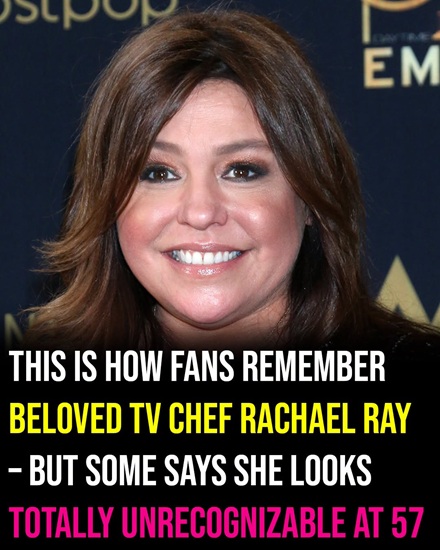
Rachael Ray has once again become the subject of intense online discussion after a recent cooking video led some viewers to focus less on her food and more on her appearance. The 57-year-old television personality posted a short video in July 2026 explaining how she measures seasoning using the palm of her hand rather than traditional measuring spoons. The tip itself was classic Ray: practical, informal, and designed to encourage home cooks to trust their instincts in the kitchen.
Yet the comments quickly moved in another direction, with some viewers saying they were surprised by how different she looked. Others immediately pushed back, asking people to avoid making assumptions about her health based only on appearance. Ray captioned the clip with a familiar piece of cooking advice, describing the hand as an “original measuring spoon” and encouraging viewers not to overthink seasoning. The message reflected the relaxed style that has been part of her television identity for years.
Ray built much of her career around making everyday cooking feel accessible rather than intimidating. For longtime viewers, the technique itself was hardly unusual. What was unusual was how quickly the discussion shifted from cooking toward questions about Ray herself. Several commenters said they did not immediately recognize her in the video. Others asked whether she was doing well, while some comments became unnecessarily harsh about aging and appearance.

Those remarks received thousands of reactions and contributed to the clip spreading beyond Ray’s usual cooking audience. At the same time, many supporters criticized the tone of the discussion and reminded other users that people naturally change as they grow older. Some argued that public figures should not be expected to look exactly as they did twenty or thirty years ago.
That distinction is particularly important because appearance alone cannot establish a medical diagnosis. Ray has not publicly announced a new health condition connected to the July 2026 video. There is no reliable basis for claiming that changes in her face or body prove a particular illness. Social media users have offered theories, but those theories remain speculation. Responsible discussion should therefore separate what Ray has actually disclosed from what strangers believe they see in a short video.
Ray has previously been the subject of similar speculation. In September 2024, an Instagram cooking video prompted some viewers to comment on her speech and facial appearance. Some users claimed she appeared to be slurring words, while others speculated about serious medical conditions. Ray did not publicly confirm those theories. Coverage at the time explicitly noted that the speculation had not been supported by a diagnosis from Ray herself.

A month later, however, Ray did share one genuine health-related update. During the debut episode of her podcast I’ll Sleep When I’m Dead in October 2024, she said she had experienced “a couple of bad falls” during the previous weeks. She did not explain exactly what caused the falls or identify a broader medical condition behind them. She mentioned them while discussing how much she enjoys physical chores, including carrying wood at home. The falls had temporarily prevented her from doing some of that work.
That is an important example of why confirmed information should not be mixed with speculation. Ray herself confirmed that she had fallen. She did not confirm that those falls were caused by a stroke, neurological disorder, or any other condition suggested by commenters online. Unless she or a qualified representative provides such information, assigning a diagnosis would go beyond the available evidence. A person’s speech, facial expression, weight, or appearance in a social media clip cannot responsibly be used to establish a medical conclusion.
Ray’s comments on her podcast also showed that she continued to think of herself as highly active. She described herself as a homemaker who genuinely enjoys physical work. Cooking, planning meals, making lists, carrying wood, and doing household chores were activities she said brought her satisfaction. Her comments did not sound like someone announcing retirement from daily life. Instead, she spoke about wanting to remain engaged and productive even when occasional physical setbacks forced her to slow down.

Work has remained a major part of Ray’s identity as well. Her long-running daytime program Rachael Ray ended in 2023 after 17 seasons, but the end of the show did not mean that she disappeared from television or food media. She moved into other projects, including her podcast and new television work connected to her production company, Free Food Studios. Reporting on her life after the daytime show described her as continuing to create recipes, write programs, attend events, and build new media projects.
Ray has also addressed the idea that she somehow vanished from entertainment. In later interviews, she rejected the suggestion that she had simply stopped working. Her schedule changed after the end of her daily television show, but she continued producing content and developing projects. That distinction matters because a lower level of daily television exposure can easily be mistaken for retirement. For someone who appeared on television almost every weekday for many years, even a normal reduction in visibility can feel dramatic to longtime viewers.
Her career before that transition had already been unusually extensive. Ray became widely known through programs such as 30 Minute Meals, where she promoted simple recipes designed for busy households. Her accessible cooking style eventually expanded into cookbooks, magazines, daytime television, product lines, charitable work, and other business ventures. She was never known primarily for elaborate restaurant cuisine. Her public image was built around everyday food and the idea that home cooking did not need to be complicated.
That informal approach helped make Ray one of the most recognizable food personalities on American television. She frequently measured ingredients by eye, used terms such as “EVOO” for extra-virgin olive oil, and encouraged viewers to cook with confidence rather than obsess over precision. The July 2026 video about measuring spices with her palm therefore fits directly into the cooking philosophy she has promoted for years. The online reaction was unusual not because the technique was surprising but because the audience focused so heavily on the person demonstrating it.
Age is also relevant to the conversation, but it should be treated carefully. Ray turned 57 in August 2025. Like any person in their fifties, she does not look identical to the woman viewers remember from the early years of 30 Minute Meals. Physical appearance changes naturally with age, lifestyle, stress, weight fluctuations, styling, lighting, and many other factors. None of those possibilities allows a stranger to determine someone’s medical condition from a video.
Several supporters made this point directly in the comments. They argued that aging should not automatically be treated as evidence that something is wrong. Others criticized the expectation that women in entertainment should maintain the same appearance indefinitely through cosmetic procedures or other interventions. Whether Ray has personally made any particular cosmetic choice is not something that should be assumed. The broader point made by supporters was simply that normal physical change should not automatically invite ridicule.
The discussion also came during a period of significant personal loss for Ray. Her mother, Elsa Scuderi, died in late 2025 at the age of 92. Ray later spoke publicly about losing her and described experiencing grief while also feeling gratitude for the many years they had together. She said her mother died at home and that she spent the final days sharing memories and stories from their life together.
Scuderi had an enormous influence on Ray’s relationship with food. She worked in restaurants and helped shape the strong work ethic Ray later carried into her own career. Ray has credited her mother with teaching her about hospitality, feeding people, and working hard. Losing her therefore represented not only the death of a parent but also the loss of one of the foundational figures behind Ray’s culinary identity.
When Ray discussed her mother’s death, she described crying frequently but characterized many of those tears as expressions of gratitude. Her comments suggested a complicated form of grief that included sadness alongside appreciation for a long shared life. That experience is relevant background when discussing the period she has been living through, but it should not be used as a medical explanation for her appearance. Grief can affect people in many ways, and it would be inappropriate to claim that it caused any specific physical change without evidence.
The death of her mother was not the first major personal disruption Ray had experienced in recent years. In August 2020, a fire destroyed her home in Lake Luzerne, New York. Ray and her husband, John Cusimano, escaped, but the house and many personal possessions were lost. She later spoke about how painful it was to lose photographs, letters, artwork, music, and other objects representing years of shared life. The loss was emotional because many of those items could not simply be replaced.
Ray and Cusimano eventually rebuilt the property. The experience became part of a broader period that included the COVID-19 pandemic and major professional adjustments. Ray continued producing television content from home during the pandemic, demonstrating how her work changed when normal studio production became impossible. She and Cusimano worked closely together during that period, which offered audiences a more personal view of their partnership.
That partnership has also attracted its own share of online speculation. Ray and Cusimano have been married since September 25, 2005, after marrying in Tuscany. In September 2025, they publicly celebrated their twentieth wedding anniversary. Ray described their relationship affectionately, while Cusimano has also publicly referred to her in loving terms. These public statements do not support claims that the couple has quietly separated or that their marriage is known to be in crisis.
Like many long-married couples, they have openly acknowledged disagreement. Ray has joked that she and Cusimano sometimes have loud arguments and that both are strong personalities. She has said she prefers direct communication rather than silently avoiding conflict. Those comments should not automatically be transformed into evidence of marital trouble. Ray herself has framed that communication style as part of how their relationship works.
Cusimano has also played an important role in Ray’s professional life. Ray has said that he handles significant business responsibilities connected to their brand while she focuses heavily on creative work and television production. During the pandemic, working from home allowed them to observe more closely what the other actually did during a typical day. Ray said this gave them a better understanding of each other’s professional responsibilities.
Their twentieth anniversary provided more recent evidence of the partnership continuing publicly. Ray shared a tribute celebrating two decades of marriage, while the couple appeared together in a video marking the occasion. She described their life together in characteristically food-themed language, emphasizing laughter and shared experience. That does not mean outsiders know everything about their marriage, but it does mean unsupported rumors of a confirmed breakup should not be presented as fact.
Ray’s relationship with work appears similarly consistent. She has long described herself as someone who struggles to remain inactive. Even after ending her daytime show, she continued developing programming through Free Food Studios and working with media partners. Reports from 2024 described her spending time both in Italy and New York while remaining actively involved in recipe development and production.
Italy has become especially important in Ray and Cusimano’s life. The couple married there and later developed a home in Tuscany. Ray has filmed food and lifestyle programming in the region, connecting her longstanding interest in Italian cuisine with her personal connection to the country. Her television work there has allowed her to explore food culture outside the format of a daily studio show.
One of the videos that triggered earlier concern about her speech actually came from her Tuscany programming. In that 2024 clip, Ray was telling a story about her late friend Tony Bennett while preparing a meal. Viewers debated whether her speech sounded different and whether her facial movements looked unusual. Some attributed the pauses to emotion, while others speculated about medical explanations. Ray did not validate those diagnoses.
This background explains why the July 2026 cooking video quickly revived earlier speculation. Once audiences have discussed someone’s health online, every later photograph or clip can become part of the same narrative. That can create a cycle in which ordinary changes are interpreted as evidence supporting an already established assumption. The danger is that repetition can make speculation sound increasingly factual even when no new medical information has been provided.
The more responsible approach is straightforward. Ray’s confirmed public disclosures should be treated as facts. She said she had experienced a couple of bad falls in 2024. She lost her mother in 2025. She and her husband celebrated twenty years of marriage that same year. She continues to create food-related media and public content. None of those facts establishes the unverified medical diagnoses or marital problems sometimes suggested online.
The latest video itself also offers evidence that Ray remains engaged with cooking. She speaks directly to viewers about seasoning and demonstrates a method she has used throughout her career. The clip was intended as practical food advice rather than a health announcement. Turning it into an unofficial medical examination risks ignoring the actual purpose of the content while subjecting a person to conclusions she did not invite.
Appearance-based commentary is especially complicated for women in public life. Television personalities are frequently compared with photographs taken decades earlier, creating unrealistic expectations about aging. If someone uses cosmetic procedures, they may be criticized for looking unnatural. If they age without appearing to pursue extensive cosmetic intervention, they may be criticized for looking older. That contradiction can make nearly any physical change a target for online commentary.
Ray’s supporters highlighted this issue when they defended her. Several urged commenters to consider whether they would make the same remarks directly to another person. Others reminded viewers that growing older is a privilege rather than a failure. The point was not that people cannot notice physical changes. It was that noticing something does not require turning it into an insult or an unsupported diagnosis.
This distinction also protects the accuracy of health reporting. Medical information should come from the individual, an authorized representative, or credible reporting based on reliable evidence. A social-media comment saying someone “looks sick” is not medical evidence. Even thousands of people agreeing with that comment does not transform it into a diagnosis. Popular opinion and clinical information are fundamentally different things.
Ray’s work history provides another reason to avoid portraying her as someone who has simply disappeared. Her daytime talk show ending was a major transition, but it came after an extraordinary 17-season run. Maintaining a daily syndicated television program for that length of time requires an enormous amount of production, preparation, and personal energy. Choosing a different professional format afterward does not necessarily indicate inability to continue working.
In fact, Ray has emphasized the opposite. She has described work as something that fuels her. Her podcast title, I’ll Sleep When I’m Dead, intentionally reflects her energetic relationship with productivity. She has said she enjoys writing, cooking, planning, and physical labor. Those comments are consistent with the public career she has built over decades.
Her love of physical chores is particularly interesting because it contrasts with the glamorous image often attached to celebrity life. Ray has described carrying firewood and turning routine household work into informal competitions with her husband. She seems to find satisfaction in practical tasks that produce visible results. Cooking fits naturally into that mindset because it combines planning, physical activity, creativity, and immediate usefulness.
Those habits have been part of her identity long before the recent discussion about her appearance. Ray became successful by presenting herself as someone who actually cooks, shops, cleans, plans, and solves everyday household problems. Her appeal was based less on culinary perfection and more on making food feel manageable. That authenticity helped distinguish her from chefs whose television personas were built around fine-dining technique.
The palm-measuring method in her recent video captures that philosophy perfectly. Instead of requiring home cooks to stop and measure every spice precisely, she encourages people to develop judgment through experience. A pinch, a small handful, or a palmful can become part of learning how seasoning works. Experienced cooks frequently make adjustments based on taste rather than strict measurements. Ray has promoted that confidence-oriented approach throughout her career.
Of course, precise measurements remain important in certain areas, particularly baking, where chemical ratios can affect the final result. Ray’s palm method is better understood as a casual approach to seasoning savory dishes rather than a universal replacement for measurement. The July video appears intended to encourage confidence, not to establish a scientific conversion system between hands and measuring spoons.
Yet the culinary lesson almost disappeared beneath the reaction to Ray’s appearance. That says as much about social media as it does about the celebrity involved. Platforms encourage immediate reactions, and unusual or critical comments often attract more engagement than ordinary responses. A cooking tutorial can therefore quickly become an unrelated conversation about someone’s body, health, marriage, or age.
This creates a challenge for responsible entertainment reporting. Fan reactions can be newsworthy when they become widespread, but they should not be presented as evidence that the underlying speculation is correct. An accurate article can report that viewers expressed concern while also making clear that Ray has not announced a new medical diagnosis. That distinction allows readers to understand the online discussion without turning rumor into fact.
The same principle applies to comments suggesting she has experienced weight changes. A person’s weight can fluctuate for countless reasons, many of which are completely private. Unless Ray publicly explains a change, it would be inappropriate to assign one specific cause. Social media discussions about medication, menopause, illness, cosmetic treatments, or diet should remain clearly identified as speculation unless independently confirmed.
Menopause was mentioned by some fans defending Ray, particularly those sharing their own experiences with weight gain and aging. Their personal stories may help explain why they responded compassionately, but they do not establish anything about Ray’s own health. One person’s experience cannot be transferred medically to another. Personal anecdotes should therefore remain anecdotes rather than evidence.
Ray’s recent grief should be treated with similar care. Losing a parent can be emotionally overwhelming, and Ray has openly acknowledged crying over her mother’s death. But grief manifests differently in every individual. It would be inaccurate to say that her loss caused specific changes in her appearance or health unless she personally makes that connection. The respectful approach is to acknowledge what she has shared without using grief to explain things she has not discussed.
The 2020 house fire can also provide context without becoming an explanation for everything that followed. Ray described losing important physical reminders of her life, including letters, photographs, artwork, and music. That was an enormous personal loss. Yet six years have passed, and it would be speculative to claim that the fire directly explains her present appearance. Context should help readers understand someone’s recent history, not become a substitute for evidence.
Taken together, Ray has experienced several major transitions since 2020. She lost a home to fire, adapted her television production during a global pandemic, ended a daytime program that had lasted seventeen seasons, launched new creative projects, dealt with falls she publicly disclosed, and lost her mother. Those are documented events. They demonstrate that her life has changed considerably without providing grounds for inventing additional diagnoses.
At the same time, she has continued celebrating important milestones. Her marriage reached twenty years in 2025. Her professional work continued through her production company and podcast. She has remained connected to food, television, and charitable activities. The picture is therefore more complicated than the dramatic online claim that something must have happened simply because viewers believe she looks different.
Public figures cannot realistically prevent people from noticing changes in their appearance. What can be controlled is how those observations are reported. A responsible account can say that viewers reacted strongly to a new video. It can quote a limited number of representative comments. It can also state clearly that commenters do not have access to Ray’s private medical information. That keeps the article factual while preserving the real story about the online reaction.
It is also worth remembering that social media offers a distorted sample of public opinion. The most visible comments are often those receiving the most likes or replies, which can make one viewpoint appear universal. Many people may watch the same video without commenting at all. Others may be interested only in the cooking advice. Describing “fans” as though everyone agrees therefore risks exaggerating the reaction.
In the July discussion, there were clearly two major responses. Some people expressed genuine concern or surprise, while others defended Ray and criticized appearance-based commentary. Both reactions were visible. The second group emphasized empathy and reminded viewers that aging and personal change are normal parts of life.
That division also illustrates how differently people interpret the same image. Someone who has not seen Ray in years may compare her current appearance with memories from the early 2000s. Someone who has followed her more recently may see far less of a change. A photograph or video can also vary depending on lighting, camera distance, makeup, hairstyle, facial expression, and image compression. Those variables make visual comparisons unreliable for medical conclusions.
Ray’s age provides useful chronological context. She was born on August 25, 1968, making her 57 during the July 2026 discussion. Her earliest Food Network fame dates back more than two decades. Comparing someone at 57 directly with how they looked in their thirties will naturally reveal differences. That observation requires no medical explanation.
What matters more is what Ray herself continues to say and do. She remains involved in cooking media. She continues developing programs and publishing food content. She launched a podcast specifically designed for long-form personal conversation. She has attended food events and appeared publicly with her husband. These are observable facts that provide a more reliable picture of her current professional life than assumptions drawn from one short video.
Her podcast has also allowed her to speak more openly than she often did during the structured format of daytime television. She has discussed marriage, work, aging, physical activity, and personal experiences in a conversational setting. That platform gives Ray the opportunity to disclose health information herself if and when she wants to. Until she does, outsiders should avoid filling those gaps.
The same respect should apply to her marriage. Ray and Cusimano have acknowledged that they can be loud and argumentative, but they have also repeatedly expressed affection and partnership. Their twentieth anniversary is a recent confirmed milestone. Claims that they are secretly struggling may circulate online, but there is currently no strong public evidence supporting a confirmed separation or divorce.
Their relationship has endured periods that would challenge many couples. They experienced the destruction of their New York home, worked closely together during pandemic production, and navigated Ray’s evolving business ventures. Cusimano has remained part of both her personal and professional world. That does not allow outsiders to declare their marriage perfect, but it does make unsupported claims of collapse inappropriate.
Ray herself has never presented marriage as effortless. Her descriptions are often humorous and candid. She has said that both she and Cusimano can be loud and that they tend to express disagreements directly. That kind of honesty may be more realistic than pretending they never argue. The important point is that she has not equated those arguments with the end of the relationship.
Her response to criticism more generally has been similarly straightforward. Ray has spent decades living in public and has faced criticism about everything from her recipes to her voice and personality. She has indicated that she does not like allowing negative public commentary to dictate how she lives. That attitude may explain why she has not responded to every round of speculation about her appearance.
Not responding should not be interpreted as confirmation. Celebrities are under no obligation to publicly answer every rumor about their bodies or health. Silence can mean many things, including a simple decision that private medical information should remain private. In responsible reporting, an unanswered rumor remains an unanswered rumor.
That point becomes particularly important when online speculation involves serious diseases. A stroke, neurological disorder, substance problem, or other medical diagnosis cannot ethically be assigned based on facial appearance alone. Those claims can cause unnecessary alarm and may spread long after the original speculation has been disproven or forgotten. Accuracy requires a higher standard than visual guesswork.
Ray’s confirmed health-related history does include earlier vocal issues. She has spoken in the past about having vulnerable vocal cords and underwent surgery on a benign cyst on a vocal cord years ago. Those documented issues help explain why her voice has sometimes attracted attention over the course of her career. But even known medical history should not be used to explain new symptoms automatically.
The same caution applies to her 2024 falls. Falls can happen for many reasons, from simple accidents to medical conditions. Ray did not disclose the cause. Therefore, the accurate statement is only that she reported experiencing a couple of bad falls and temporarily reduced some of her physical chores. Anything more specific would be conjecture.
By 2026, Ray remains visible enough that public reaction to a single video can still produce widespread coverage. That itself demonstrates the lasting connection audiences have with her. Many viewers grew up watching her shows and feel they know her because she spent so many years speaking directly into their homes. When someone with that kind of familiarity appears different, people can react emotionally.
But familiarity is not the same as personal knowledge. Viewers do not have access to Ray’s complete health records, private family conversations, or everyday circumstances. Recognizing that boundary is essential. Fans can express concern without turning concern into certainty.
The supportive comments beneath her video reflected that idea. People asked others to show kindness, avoid saying things online they would not say directly to someone, and recognize that aging is normal. Those responses offered a useful counterweight to comments reducing Ray to her appearance.
There is also a broader cultural question behind the reaction. Television preserves images of celebrities at particular ages. Old episodes can be replayed indefinitely, allowing audiences to compare a person’s present appearance with a version recorded decades earlier. That can create the illusion that the celebrity changed suddenly when the actual process occurred gradually over many years.
Ray’s early television programs remain widely recognizable. Her short dark hair, energetic delivery, and rapid cooking style became part of her brand. Viewers who have not followed her recent projects may still hold that image in memory. Seeing her now can therefore produce a stronger reaction than it would for someone watching her regularly.
Recent photographs and public appearances also show that the look seen in the July clip did not emerge from nowhere overnight. Ray has appeared publicly at food events and other engagements in recent years. While photographs naturally vary, her appearance has evolved gradually like anyone else’s. This context makes dramatic descriptions such as “suddenly unrecognizable” less precise than they might sound.
That does not mean viewers are wrong to notice change. It means change should not automatically become evidence of crisis. The distinction between observation and conclusion is central to responsible reporting. “She looks different to some viewers” is an observation. “She must have a serious illness” is an unsupported conclusion.
Ray’s public life currently provides more concrete topics to discuss. She continues working in food television and media. She has expanded Free Food Studios. She hosts conversations through her podcast. She maintains her longtime relationship with Cusimano and continues discussing food with the same practical enthusiasm that made her famous.
Her recent seasoning video is a small example of that continuity. She is still encouraging home cooks to trust themselves, work by feel, and avoid making everyday cooking more complicated than necessary. Those ideas have been part of her brand for more than twenty years. The camera, format, and stage of her life may have changed, but the practical cooking philosophy remains recognizable.
The strongest conclusion available from the July 2026 reaction is therefore relatively simple. Rachael Ray posted a cooking video. Some viewers were surprised by her appearance and expressed concern. Others defended her and criticized the personal comments. Ray has not announced a new diagnosis explaining the reactions. Those four facts can coexist without adding speculation.
Her past disclosure of falls deserves acknowledgment because it is something she chose to reveal herself. Her mother’s death deserves acknowledgment because she has publicly discussed the grief. Her twenty-year marriage deserves accurate context because public evidence shows that she and Cusimano celebrated that anniversary together. None of those facts should be stretched beyond what they actually establish.
This approach allows Ray’s story to remain human without turning it into medical or marital speculation. She has faced loss and major life changes. She has also continued working and creating. Both realities can be true at the same time.
For longtime fans, seeing a television personality change with age may be a reminder of how much time has passed since the early years of her career. Ray first became a familiar face in a very different television era. The fact that audiences still react so strongly to her demonstrates how deeply she became part of popular food culture.
Her legacy is already much larger than one social media video. She helped make quick home cooking a mainstream television format, built a long-running daytime program, published numerous cookbooks, and created a recognizable approach to food that emphasized practicality over perfection. Those accomplishments remain unchanged regardless of online debates about her appearance.
Today, she appears to be building a different kind of career than she had during the peak of daily television. There is more control over her schedule, more time for podcasts and specialized programming, and fewer expectations tied to producing a weekday talk show. That change should not automatically be interpreted as withdrawal.
If Ray chooses to discuss additional health information in the future, that information can be reported accurately when it becomes available. Until then, the most respectful and factual position is to avoid guessing. Health belongs to the individual, even when that individual has spent decades in public life.
The same rule applies to appearance. People can look different because they age, change hairstyles, gain or lose weight, experience stress, use different makeup, change medications, undergo medical treatment, or for countless other reasons. Without confirmation, choosing one explanation from that long list is speculation.
Ultimately, Ray’s latest video tells two different stories. The first is a familiar one about a chef teaching viewers how to season food confidently. The second is about how quickly social media can shift attention from someone’s work to their body. The first story is supported directly by the video. The second is supported by the comments surrounding it.
What the video does not provide is a diagnosis.
For that reason, concern can remain concern without becoming a claim. Fans can wish Ray well while respecting her privacy. Supporters can criticize cruel comments without pretending they know everything about her life. And readers can follow her current projects without needing an invented explanation for every visible change.
Rachael Ray has spent much of her career telling people not to overcomplicate cooking. A similarly straightforward principle works here: stick to what is actually known. She is 57, continues working, publicly acknowledged bad falls in 2024, lost her mother in 2025, celebrated twenty years of marriage that year, and remains active in food media. Beyond those confirmed facts, medical conclusions based solely on a short cooking clip should remain where they belong—as unverified speculation.
