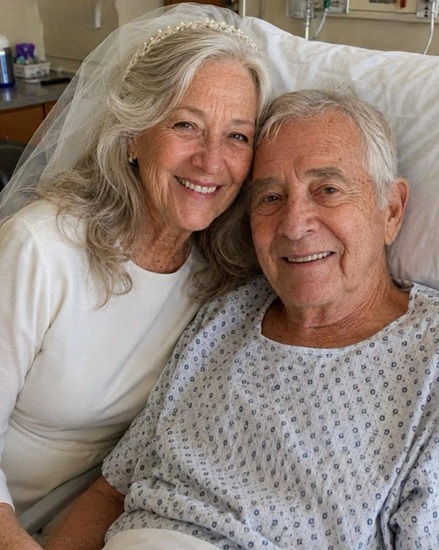
At 73, Nancy returned to the hometown she had left more than half a century earlier. She expected the move to make retirement easier, but rising living expenses quickly changed those plans. Her pension was not enough to comfortably cover rent and everyday costs, so she decided to return to nursing part-time at the local hospital. The work was familiar, even if almost everything else about the town seemed different. Streets had changed, businesses had disappeared, and people she remembered as teenagers were now grandparents.
Nancy had never married and had no children. She had built a meaningful life through work, friendships and independence, yet one memory had remained surprisingly vivid. His name was Thomas, the boy she had loved when they were both 17. They had imagined a future together until graduation forced them to make different choices. Nancy had been accepted into a college program in another city, while Thomas wanted to remain home and eventually join his father’s business.
Their goodbye had taken place at a bus station.
Thomas begged her to reconsider. Nancy remembered him telling her that leaving would break his heart, but she was determined to pursue the opportunity she had earned. She promised that distance did not necessarily mean the end of their relationship. Life, however, moved faster than either expected. Letters became less frequent, circumstances changed, and eventually communication stopped completely.
Fifty-six years passed.
Then, during an ordinary hospital shift, Nancy opened a patient’s chart and saw a name that made her stop.
Thomas.
At first, she assumed it had to be someone else. Then she entered the room.
The man in the hospital bed was thin and visibly ill, but she recognized his eyes almost immediately. Age had changed his face and silvered his hair, yet something about his expression remained exactly as Nancy remembered it.
Thomas recognized her too.
His smile appeared before either of them found the right words.
The reunion was emotional but initially awkward. There were decades of unanswered questions between them, and neither knew where to begin. Eventually, they started with ordinary memories—the bus station, school dances, teachers they had disliked and places around town that no longer existed.
Soon, conversation became easier.
Whenever Nancy’s duties allowed, they talked.
Thomas told her that he had spent most of his adult life working and eventually managing family business interests. Nancy explained her own career in nursing and the places where she had lived.
Then they discovered something neither expected.
Neither had ever married.
That revelation did not magically erase 56 years, but it changed the emotional tone between them. The affection they remembered had not survived untouched by time, yet the familiarity underneath it seemed remarkably easy to recover.
Thomas wanted to know about Nancy’s current life.
During one conversation, she mentioned a distant cousin named Raymond.
Since Nancy had returned home, Raymond had suddenly become unusually interested in her affairs. He called frequently and asked questions about her pension, savings, apartment and estate plans.
Nancy found the attention irritating but initially considered it harmless.
Raymond repeatedly argued that relatives should look after one another’s finances as they became older.
He often mentioned Aunt Margaret.
Years earlier, Raymond had supposedly helped Margaret manage bills and accounts during the final period of her life. Nancy remembered that Margaret had once been financially comfortable but had died with surprisingly little money.
Nancy had never investigated the discrepancy.
Thomas became noticeably serious when he heard Raymond’s name.
He asked several questions but initially refused to explain why.
Meanwhile, Thomas’s condition continued deteriorating.
His cancer was advanced, and both of them understood that their unexpected reunion would not provide the decades they had already lost.
One evening, Thomas asked Nancy to sit beside him.
He told her something he had apparently wanted to say for years.
He had never completely stopped loving her.
Thomas acknowledged that they could not recover their youth, but he did not want his remaining time to pass while pretending their relationship meant less than it did.
Then he asked Nancy to marry him.
She initially thought emotion was influencing his judgment.
Thomas insisted that he understood exactly what he was asking.
He did not promise a conventional marriage or a long future.
He simply wanted whatever time remained to belong to them honestly.
Nancy accepted.
Three days later, they exchanged vows in Thomas’s hospital room.
The ceremony was small.
A nurse stood nearby as a witness, and Thomas’s longtime attorney, Walter, attended as well.
There were no elaborate decorations or months of preparation.
For Nancy and Thomas, the ceremony was meaningful precisely because they understood how limited their time might be.
Walter also brought paperwork.
In this fictional narrative, the documents concerned Thomas’s estate and arrangements designed to provide financial support for Nancy.
Walter explained the general purpose of each document, and Nancy signed after discussing the arrangements.
The news of the marriage quickly reached Raymond.
His reaction surprised Nancy.
Rather than congratulating her, Raymond became furious.
He insisted that Thomas had manipulated her and repeatedly encouraged Nancy to seek an annulment.
Nancy refused.
She was 73, mentally capable of making her own decisions and did not believe Raymond had any authority to determine whom she could marry.
Thomas lived for approximately another month.
During those weeks, Nancy spent as much time with him as possible.
Their marriage was brief, but their conversations covered decades.
They discussed the lives they had lived separately and the life they might have shared if Nancy had stayed at the bus station all those years earlier.
Neither tried to rewrite history.
Nancy had valued her education and nursing career.
Thomas had built a life in the hometown he loved.
Their choices had consequences, but neither life had been meaningless simply because they had lived apart.
Thomas eventually died with Nancy beside him.
At the funeral, Raymond approached her again.
His words were presented as concern, but Nancy heard something different underneath them.
He emphasized that she had few close relatives remaining and suggested that he should begin managing her financial affairs.
Then he mentioned Aunt Margaret again.
This time, Nancy felt uneasy.
The following morning, Walter arrived at her home carrying a wooden box.
Thomas had instructed him to deliver it only after the funeral.
Walter first explained that the documents Nancy had signed were intended to establish a protective estate arrangement.
Thomas had placed assets into a trust designed to support Nancy.
Walter also explained that any authority concerning Nancy’s own finances would need to be handled through properly executed legal arrangements rather than informal pressure from relatives.
Then he opened the box.
Inside were estate documents, information concerning Thomas’s home and dozens of letters tied together with twine.
There were 55 letters.
Nancy stared at them without understanding.
Thomas had written one during nearly every year they had been apart.
He had never sent them.
Some were only a page.
Others were much longer.
They recorded birthdays, memories and moments when something had reminded Thomas of the girl who boarded a bus decades earlier.
There was also one final letter.
In it, Thomas explained why Raymond’s name had troubled him.
According to the fictional backstory, Aunt Margaret had been connected with Thomas’s family business for many years.
Thomas had known her personally.
Near the end of her life, he became concerned about financial activity involving Raymond.
Thomas believed money was disappearing from Margaret’s accounts.
He tried to warn her.
Margaret refused to believe that a relative she trusted might be acting against her interests.
After she died, Thomas never forgot what he had observed.
Years later, he learned that Nancy had returned to town.
Then he heard that Raymond had begun taking an unusually strong interest in her finances.
Thomas became concerned that history might repeat itself.
His letter explained that his desire to marry Nancy was genuine.
He loved her.
But he also wanted to ensure that after his death, Nancy would have independent professional advice and financial resources that could not easily be controlled by someone pressuring her.
That was the “trap.”
It was not intended for Nancy.
Thomas had expected Raymond to become more aggressive once he believed Nancy had inherited something valuable.
By structuring his estate carefully and involving an attorney, Thomas hoped any attempt to pressure Nancy would become easier to recognize and resist.
Nancy had complicated feelings after reading the letter.
Part of her wished Thomas had told her everything directly.
She did not like discovering that he had anticipated a family conflict without fully explaining it.
But she also understood the fear behind his planning.
He knew he would not be there to protect her personally.
So he had tried to make sure she would not face important financial decisions alone.
Several days later, Raymond arrived at Nancy’s home.
He was angry.
He demanded information about Thomas’s estate and insisted that Nancy was incapable of understanding complicated financial documents.
Nancy did not argue.
Walter was present and calmly explained that Raymond had no automatic right to control Nancy’s affairs.
Being a relative did not give him ownership over her money, property or personal decisions.
If Raymond believed a legal document was invalid, he could use appropriate legal procedures rather than intimidating Nancy.
The conversation ended quickly.
For the first time, Nancy saw Raymond’s concern differently.
She stopped answering intrusive financial questions.
She kept important documents secure and relied on independent professional advice when making major decisions.
Thomas’s planning had given her resources.
But protecting her independence still required Nancy to make her own choices.
That spring, she moved into Thomas’s old home.
The house contained traces of the life he had lived during their decades apart.
There were photographs, books, tools and furniture carrying stories Nancy had never known.
But the letters became her most treasured inheritance.
She decided not to read them all at once.
Every Sunday morning, Nancy made coffee and opened one.
Some made her laugh.
Others made her cry.
Through them, she gradually discovered the Thomas who had existed between 17 and 73—the years she had missed.
The letters did not convince Nancy that they should have spent their entire lives regretting the past.
They showed something more complicated.
Two people had made choices when they were young.
Those choices sent them in different directions.
Then life unexpectedly brought them together again when neither had reason to expect it.
Their marriage lasted only weeks.
Their relationship had lasted much longer.
Thomas’s final arrangements also taught Nancy something important about independence.
Love and protection should not require surrendering control.
A trustworthy person can offer advice while still respecting another adult’s ability to make decisions.
Age alone does not make someone incapable.
And being someone’s relative does not automatically create a right to manage that person’s money or life.
Nancy eventually stopped thinking of her return home as a financial setback.
She had returned because retirement became too expensive.
Instead, the decision led her back to someone she had believed belonged permanently to her past.
She could not recover the 56 years they had spent apart.
Nothing could change that.
But she had been given one final month with Thomas.
She had heard him say what neither of them had managed to say properly when they were 17.
And afterward, she had 55 letters allowing his voice to remain part of her Sundays.
Love had not returned in the way Nancy once imagined it would.
There was no long retirement together.
No golden anniversary.
No decades spent growing old side by side.
Their second chance was short.
But to Nancy, short did not mean meaningless.
Thomas had spent his final weeks making sure she understood two things.
He still loved her.
And her future still belonged to her.
Each Sunday, Nancy opened another envelope and learned a little more about the life that had unfolded while they were apart.
Then she folded the letter carefully, returned it to its envelope and placed it beside the others.
Thomas was gone.
But the life Nancy still had ahead of her remained entirely her own.
