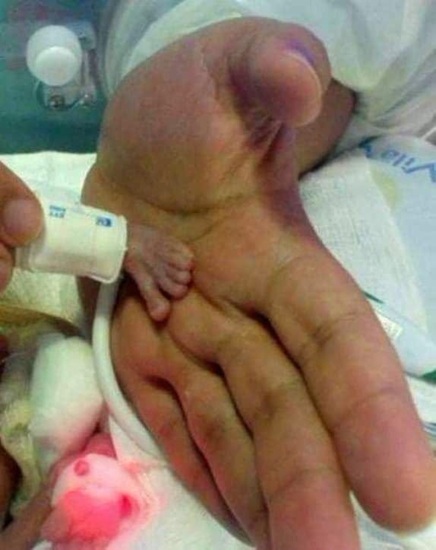
A baby born at only 24 weeks of pregnancy and weighing approximately 720 grams enters the world at an extraordinarily early stage of development. At that gestational age, roughly 16 weeks remain before the conventional 40-week point used to describe a full-term pregnancy. A birth this early is medically classified as extremely preterm and generally requires immediate specialist neonatal care. Although modern medicine has dramatically improved outcomes for extremely premature infants, every baby’s circumstances are different, and no outcome can be predicted from birth weight or gestational age alone.
A weight of 720 grams is approximately 1.6 pounds, making such a newborn exceptionally small compared with a typical full-term baby. For perspective, many babies born around their expected due date weigh several kilograms. At 24 weeks, the body is still undergoing important development that would ordinarily continue inside the uterus. The lungs, brain, digestive system, skin and immune defenses are all immature, creating challenges that require close medical monitoring.
Breathing is often one of the most immediate concerns. At this stage of pregnancy, the lungs are not fully developed and may not yet produce enough surfactant, a substance that helps prevent the tiny air sacs inside the lungs from collapsing. Depending on the individual infant’s condition, neonatal specialists may use respiratory support to help maintain adequate oxygen and breathing. Treatment can vary from relatively less invasive forms of assistance to mechanical ventilation when clinically necessary.
Temperature regulation presents another challenge. Extremely premature babies have very little body fat and thin, delicate skin, which makes maintaining a stable body temperature difficult. Neonatal intensive care units therefore use carefully controlled incubators or other warming systems to create an environment that reduces heat loss. Temperature, oxygen levels, heart rate and other vital signs can be monitored continuously while the baby grows.
Nutrition must also be approached carefully. A baby born at 24 weeks may not yet have the coordination or stamina required to feed normally by mouth. Medical teams can provide nutrition through specialized methods while gradually assessing whether the infant is ready to tolerate milk. Human breast milk, including expressed milk from the baby’s mother or donor milk when available and appropriate, can play an important role in neonatal nutrition, but feeding decisions depend on the baby’s individual medical circumstances.
The digestive system remains immature at this gestational age, so clinicians watch closely for complications. One serious condition affecting some premature infants is necrotizing enterocolitis, an intestinal disease that can range from mild to life-threatening. Prematurity does not mean that a baby will necessarily develop this complication, but the increased risk is one reason feeding and abdominal health are monitored so carefully in neonatal intensive care.
The brain is similarly undergoing rapid development during this period. Extremely premature infants can face an increased risk of bleeding in the brain, known as intraventricular hemorrhage. Medical teams may use ultrasound examinations and other assessments to monitor neurological development and identify complications. Again, increased risk is not the same as certainty; individual outcomes vary significantly.
Infection is another important concern because the immune system of a baby born this early is immature. Medical staff use careful infection-control procedures and monitor premature infants for signs that could indicate illness. Small changes in temperature, breathing, heart rate, feeding tolerance or activity can sometimes be clinically significant in a very premature newborn.
The baby’s eyes also continue developing during the final months of pregnancy. Premature infants can be at risk for retinopathy of prematurity, or ROP, a condition involving abnormal development of blood vessels in the retina. Babies considered at risk are typically screened according to medical guidelines so specialists can identify significant changes and determine whether treatment is required.
Hearing, growth and neurological development can also be monitored during and after hospitalization. Surviving an extremely premature birth is only the first stage of a potentially lengthy medical journey. Some children develop without major long-term impairment, while others experience developmental, respiratory, vision, hearing or neurological challenges. Follow-up programs can help monitor progress and identify areas where additional support may be useful.
For parents, the neonatal intensive care environment can be overwhelming. Instead of immediately bringing their newborn home, they may find themselves surrounded by incubators, monitors, tubes and specialized equipment. Ordinary parenting experiences can temporarily look very different. Holding, feeding and caring for the baby may initially depend on medical stability and guidance from neonatal professionals.
When medically appropriate, parents may be encouraged to participate in their baby’s care in ways that are safe for the infant. One approach used in neonatal medicine is skin-to-skin contact, sometimes called kangaroo care. Depending on the baby’s condition, this can support bonding and may provide physiological benefits. The timing and duration should always be determined with the clinical team caring for that particular infant.
Progress in neonatal intensive care is rarely measured only through dramatic milestones. For an extremely premature baby, small changes can matter enormously. Tolerating a little more milk, requiring less respiratory support, maintaining body temperature more effectively or gaining weight steadily can each represent meaningful progress.
There can also be setbacks. Premature infants may experience periods when their condition improves followed by new complications or additional support requirements. This uncertainty is one of the reasons medical professionals generally avoid guaranteeing an outcome based solely on a baby’s early progress. Recovery and development can follow different paths even among infants born at similar gestational ages and weights.
The length of hospitalization can be substantial. Extremely premature infants frequently remain in neonatal care for weeks or months while developing abilities that would normally have matured before birth. Discharge is not determined by reaching one specific weight alone. Medical teams consider factors including breathing stability, temperature regulation, feeding, growth and the overall ability to remain safely outside the hospital environment.
Modern neonatal medicine has changed what is possible for babies born at extremely early gestational ages. Advances in respiratory support, nutrition, infection prevention, temperature control and specialized nursing have improved survival over previous generations. Outcomes nevertheless depend on many variables, including gestational age, birth weight, sex, circumstances surrounding delivery, congenital conditions, complications and the level of neonatal care available.
This is also why descriptions such as “the smallest baby in the world” require reliable evidence. A newborn weighing 720 grams is unquestionably extremely small, but babies with substantially lower documented birth weights have survived. Guinness World Records, for example, has documented surviving infants born weighing less than 300 grams. Without additional evidence, a 720-gram infant should therefore not be described as the world’s smallest or necessarily as one of the smallest ever born.
Gestational age also requires careful interpretation. Pregnancy dating is generally based on obstetric estimates and clinical information. A difference of even one or two weeks can be important when discussing extremely premature birth because fetal development occurs rapidly during this period. For that reason, medical professionals consider gestational age together with many other clinical factors rather than treating one number as a complete prediction.
The circumstances leading to an extremely premature delivery can also differ widely. Premature birth may be associated with pregnancy complications, infection, problems involving the placenta or cervix, multiple pregnancy and numerous other factors. Sometimes no single explanation can be identified. Without verified information about a specific case, it would be inappropriate to invent a reason why a particular baby arrived at 24 weeks.
The same caution applies to the baby’s eventual outcome. A dramatic social-media post may show an extremely small newborn and later claim a remarkable recovery, but photographs alone cannot establish the child’s medical history. Accurate reporting requires confirmation of what happened rather than filling missing portions of the story with assumptions.
What can be said confidently is that birth at 24 weeks represents a serious medical situation requiring specialized care. A 720-gram newborn has many developmental processes still underway and may require substantial medical support. At the same time, survival at this gestational age is possible, and advances in neonatal intensive care have given many extremely premature babies opportunities that would have been far less likely in earlier eras.
Behind the medical terminology is also an intensely human experience. Parents may spend weeks watching numbers on monitors and learning terminology they never expected to know. Nurses and physicians can become familiar figures as families wait for incremental signs of growth and stability. Each additional gram of weight and each improvement in breathing or feeding can acquire enormous emotional significance.
Eventually, some premature babies reach the point where they can leave neonatal intensive care and continue growing at home. That transition can be joyful while also bringing new responsibilities. Families may receive detailed instructions regarding feeding, medications, follow-up appointments, infection prevention or other needs specific to their child.
Development after discharge is generally considered in the context of prematurity. Healthcare professionals may use “corrected age,” particularly during the early years, when assessing certain developmental milestones. This accounts for the number of weeks the baby was born before the expected due date and can provide a more appropriate framework for evaluating early development.
Long-term follow-up is valuable because the consequences of extreme prematurity are not always apparent during the initial hospitalization. Pediatricians and specialists can monitor growth, movement, language, hearing, vision and other aspects of development. When difficulties emerge, early support may help address specific needs.
It is therefore understandable why the image of a 720-gram baby can attract enormous attention. The physical size of an extremely premature newborn makes the vulnerability immediately visible. Yet the true story is not captured by size alone. Behind that number lies sophisticated neonatal medicine, careful monitoring, uncertain outcomes and potentially months of gradual development.
A baby born at 24 weeks is not simply a miniature version of a full-term newborn. Important organs and physiological systems are still developing, which is why the first days and weeks can be medically complex. Survival and long-term health depend on a combination of biological factors, medical treatment and individual circumstances.
At the same time, statistics should never be mistaken for a prediction about one specific child. Population-level survival rates help doctors and families understand possibilities, but they cannot determine exactly what will happen to an individual newborn. Two infants born at the same gestational age and similar weight may experience very different medical journeys.
The most responsible way to describe a case with only limited information is therefore to stay close to what is actually known. A baby reportedly born at 24 weeks and weighing 720 grams would be considered extremely premature and extremely low birth weight. Such an infant would ordinarily require highly specialized neonatal care and careful follow-up.
Anything beyond those facts requires evidence. Without a confirmed identity, hospital, date, diagnosis and medical outcome, claims about a miraculous recovery or world record should not be presented as fact. The documented realities of extreme prematurity are remarkable enough without adding unsupported details.
Modern neonatal medicine has made extraordinary progress, but it remains a field where caution and precision matter. Every successful step for an extremely premature infant can represent the work of a multidisciplinary medical team alongside the resilience of a developing newborn and the patience of a family facing profound uncertainty.
A 720-gram baby born at just 24 weeks therefore represents both extraordinary vulnerability and genuine possibility. The road ahead can be long, and no responsible account can promise how it will end. But with specialized care, careful monitoring and continued medical advances, some babies born at this stage do survive and grow far beyond the tiny dimensions that defined their first days.
That is the meaningful reality behind an attention-grabbing image of a baby small enough to fit into adult hands. The remarkable part is not an unsupported claim that the child was “the smallest in the world.” It is that modern neonatal medicine can provide intensive support to a human being born months earlier than expected, giving an extremely premature newborn the opportunity to continue the development that ordinarily would still have been taking place before birth.
