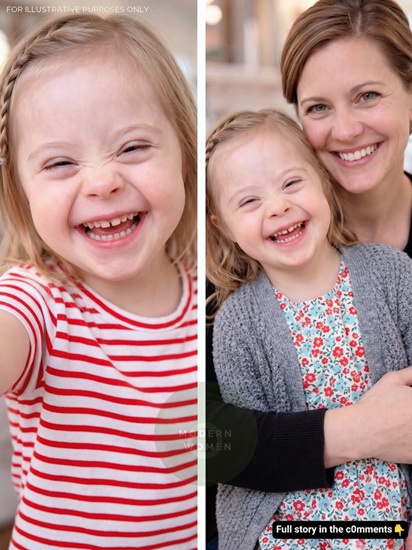
The first time I saw Evelyn, she was sleeping in a small white crib tucked into the quiet corner of a children’s care center. Afternoon sunlight filtered softly through the curtains, casting warm streaks of light across her tiny face. She looked impossibly small, almost swallowed by the oversized blanket wrapped around her fragile body. Her soft brown curls rested gently against her forehead, and one tiny hand was tucked beneath her cheek as if she had already learned that the world could sometimes be too loud for someone so young.
She was only eighteen months old, yet there was something about her peaceful expression that carried the weight of a lifetime. I stood frozen at the doorway, unable to move, unable to breathe, overwhelmed by a feeling I couldn’t explain. For several seconds, the room seemed to disappear around me. I no longer noticed the pale walls, the quiet humming of the air conditioner, or the footsteps echoing through the hallway outside.
All I could see was the little girl sleeping so peacefully, unaware that strangers were quietly deciding what the rest of her life might look like. My heart beat harder with every passing second. I had visited children’s homes before, hoping that one day I would meet the child who was meant to become part of our family. Yet none of those moments had prepared me for what I felt as I looked at Evelyn. Something deep inside me whispered that my search was finally over.
The social worker standing beside me carefully opened the thin folder she had been carrying since we arrived. Compared to the years of waiting my husband and I had endured, the file looked incredibly small. It seemed impossible that so few pages could contain everything anyone knew about a child’s life. She spoke gently, almost in a whisper, as though she didn’t want to disturb Evelyn’s peaceful sleep. Every sentence she spoke carried both compassion and sadness. She had spent years helping children find permanent homes, yet she admitted that some stories never became easier to tell.
She explained that Evelyn had been left at the hospital shortly after birth. There had been no dramatic confrontation, no emotional goodbye, and no desperate attempt to return. Her biological parents had quietly disappeared after leaving behind only a handwritten note. The note was folded neatly inside the folder. When the social worker handed it to me, my hands trembled before I even unfolded the paper. The handwriting was uneven, as if the person writing had been crying or rushing. I could already sense that whatever was written inside would stay with me forever.
The message was painfully short.
“We cannot handle a special needs baby. Please find her a better family.”
I read those words several times before I fully understood them. Each sentence felt heavier than the last. It wasn’t simply that someone had walked away from their daughter—it was the heartbreaking realization that they believed she would somehow be better off without them. I felt tears gathering in my eyes before I even realized I was crying. No child deserved to enter the world believing they were too difficult to love. No baby should ever have their future summarized by a single note left behind in a hospital room.
I slowly looked back toward the crib. Evelyn shifted slightly in her sleep, letting out the tiniest sigh before curling herself closer into the blanket. She had no idea that complete strangers had already made life-changing decisions about her future. She knew nothing about rejection, abandonment, or complicated medical terms. She was simply a little girl sleeping peacefully after lunch, trusting that when she opened her eyes someone would still be there. That simple trust shattered my heart more than anything written inside the file.
The social worker continued explaining Evelyn’s medical history. Doctors had confirmed shortly after birth that she had Down syndrome. She carefully described the developmental delays that were expected, the therapies she would likely need, and the additional medical care that might become part of her life. She spoke honestly without trying to soften the reality. There would be challenges. There would be appointments, evaluations, specialists, and moments of uncertainty. Raising Evelyn would require patience, consistency, and unconditional love. Many prospective families had quietly withdrawn after hearing those details.
I wasn’t surprised. Over the years, I had learned that adoption could sometimes be painfully unfair. Healthy newborns often received dozens of inquiries within days, while older children and children with disabilities sometimes waited months or even years before someone expressed interest. I remembered reading statistics that kept me awake at night. They weren’t simply numbers—they represented children growing older without knowing the stability of a permanent family. Every child deserved someone who chose them completely, yet too many spent birthdays hoping that someone would finally see beyond a diagnosis.
For years, my husband Norton and I had struggled through infertility. It became the silent shadow hanging over every part of our marriage. What began as optimism slowly transformed into disappointment after countless medical appointments. Every failed treatment chipped away at our confidence. We memorized hospital corridors, waiting room magazines, and the sympathetic expressions of nurses who already knew our names. Friends celebrated pregnancies while we quietly learned how to smile through heartbreak. We genuinely celebrated their happiness, but every baby shower reminded us of the family we couldn’t build ourselves.
People often told us that everything happened for a reason. Although those words were usually spoken with kindness, they rarely offered comfort. There were days when the silence inside our house became almost unbearable. Empty bedrooms remained untouched. Tiny clothes we had once purchased with hope stayed folded inside storage boxes. We tried to remain optimistic for each new medical procedure, but eventually even hope became exhausting. Every negative test result felt like another goodbye to the future we had imagined together.
Eventually, we reached a point where we realized our dream of becoming parents did not have to depend on biology. Love had never been about shared DNA. We attended adoption seminars, completed interviews, filled out mountains of paperwork, and spent months preparing our home. Every form asked us what kind of child we would consider adopting. Age. Gender. Medical history. Special needs. Those questions forced us to examine our hearts honestly rather than simply answering with emotion. Norton and I agreed that we wanted to give a child a home—not simply fulfill our own dream of parenthood.
When the social worker first mentioned Evelyn’s diagnosis, she watched us carefully. She admitted that many families hesitated after hearing the words “Down syndrome.” Some feared they weren’t capable. Others worried about the lifelong responsibility. A few simply disappeared without another phone call. She didn’t judge them; she understood that parenting any child required commitment. But every time another family declined, Evelyn remained in the care center waiting for someone else to look beyond the diagnosis written across the top of her file.
As I stood there looking at the sleeping little girl, none of those fears seemed to matter anymore. I wasn’t thinking about therapy schedules or future medical appointments. I wasn’t calculating expenses or imagining difficult years ahead. I saw only a child who deserved to wake up every morning knowing she was deeply loved. At that moment, something extraordinary happened. Evelyn slowly opened her eyes.
She blinked several times, adjusting to the light streaming through the window. For a second she looked confused, noticing unfamiliar faces standing nearby. Then, without hesitation, she smiled. It wasn’t a polite smile or a practiced expression. It was completely genuine, innocent, and full of trust. That tiny smile erased every uncertainty I had carried into the building. It felt as though she had somehow recognized me long before I recognized her. My heart knew the answer before my mind had even formed the question.
I stepped closer to the crib, carefully reaching out my hand. Evelyn looked at me curiously before wrapping her tiny fingers around one of mine. Her grip was surprisingly firm for someone so small. She giggled softly, and that simple sound echoed through every empty place inside my heart that years of infertility had created. Tears rolled down my face again, but this time they weren’t born from sadness. They were tears of overwhelming relief. After years of searching, praying, waiting, and wondering whether motherhood would ever become part of my life, I finally understood why none of the other paths had worked.
Without taking my eyes off Evelyn, I quietly turned toward Norton.
“I think we’ve found our daughter.”
Bringing Evelyn home marked the beginning of a completely new chapter in our lives. The quiet house that had once echoed with disappointment slowly transformed into a home filled with laughter, toys scattered across the living room floor, bedtime stories, and tiny footsteps racing down the hallway. Every room seemed brighter simply because she was in it. Our days became busier than we had ever imagined, but they also became richer with purpose. Every smile she shared reminded us that love often arrives in ways we never expect.
Like many families raising a child with additional developmental needs, we quickly learned that progress rarely happened overnight. Each new milestone came through patience, consistency, and encouragement. Simple achievements that many parents might take for granted became unforgettable celebrations in our home. Every new word, every independent step, and every confident smile felt like a victory worth remembering. Instead of measuring Evelyn against other children, we learned to celebrate her own unique journey.
Norton embraced fatherhood with a calm determination that amazed everyone around him. No matter how demanding his workday had been, he always found time to sit beside Evelyn after dinner. Sometimes they practiced simple hand exercises recommended by her therapists. Other evenings they read colorful picture books together, repeating words slowly while she pointed excitedly at the illustrations. He never rushed her or became discouraged by slow progress. He believed every small accomplishment deserved the same celebration as a major achievement.
Watching the two of them together became one of my favorite parts of every day. Evelyn looked at him with complete trust, while he looked at her with quiet pride that never depended on comparisons or expectations. He never focused on what she couldn’t do. Instead, he celebrated everything she could accomplish, no matter how small it appeared to others. Their bond grew stronger with each passing year, built on patience, encouragement, and unconditional love.
Life, of course, was not always easy. There were early mornings filled with medical appointments, therapy sessions, and countless conversations with specialists who genuinely wanted to help Evelyn reach her full potential. We often arrived home exhausted, but never hopeless. Every professional we met reminded us that every child develops differently and deserves opportunities to thrive at their own pace. Those words became part of our family’s outlook on life.
Our friends frequently commented on how much happiness Evelyn brought wherever she went. She had an incredible ability to make people smile. Grocery store cashiers remembered her name. Neighbors waved enthusiastically whenever they saw her riding her little bicycle. She greeted nearly everyone with excitement, never assuming the worst about people. Her kindness had a way of encouraging kindness in return.
Unfortunately, not everyone viewed the world through the same compassionate lens.
Norton’s mother, Eliza, had always maintained an emotional distance from us. She rarely raised her voice or argued openly. Instead, her criticism appeared in subtle remarks, long silences, and carefully chosen words that carried more judgment than sympathy. Conversations with her often left everyone feeling uncomfortable, even when she claimed she had said nothing offensive.
When Norton and I first shared our decision to adopt, Eliza questioned whether we had truly considered what life might be like. She framed her concerns as practical advice, but her comments lacked warmth. Rather than asking about Evelyn’s personality, interests, or happiness, she focused almost entirely on potential difficulties. Those conversations revealed very different views about family, compassion, and what truly mattered in life.
As time passed, her visits became increasingly rare. When she did stop by, she struggled to build any meaningful relationship with Evelyn. Our daughter, however, never understood emotional distance. She greeted everyone with the same enthusiasm and hope. She would proudly show visitors her drawings, favorite books, or new puzzles she had learned to complete. Like every young child, she simply wanted to share her happiness with the people around her.
After several uncomfortable visits, Norton and I realized we needed healthy boundaries for the well-being of our family. Every child deserves to grow up in an environment where they feel accepted, respected, and emotionally safe. We chose to limit contact whenever conversations became unnecessarily hurtful. The decision was difficult, but protecting our daughter’s emotional health had to come first.
Years passed more quickly than either of us expected. Before we knew it, Evelyn was preparing to celebrate her fifth birthday. She had spent weeks talking excitedly about balloons, cake, colorful decorations, and the bright yellow dress she wanted to wear because it reminded her of sunshine. Her excitement filled the entire house. She counted the days on a small calendar hanging in the kitchen, proudly marking each morning with a colorful sticker.
The morning of her birthday arrived with clear skies and warm sunshine. Friends helped us decorate the living room with paper streamers, fresh flowers, and cheerful banners. Music played softly while we arranged snacks and wrapped the final presents. Every detail had been planned around the things Evelyn loved most. We wanted her to feel celebrated not only for her birthday but for the joy she brought into our lives every single day.
Just as we finished arranging colorful cups on the dining table, the doorbell rang.
Assuming another guest had arrived early, I walked toward the front door with a smile. When I opened it, I found Eliza standing quietly outside. She wasn’t smiling. Her expression appeared unusually serious, almost troubled. Without mentioning the birthday decorations or offering congratulations, she looked past me into the house before quietly asking, “Has Norton ever told you everything?”
Her unexpected question immediately changed the atmosphere.
I turned toward the living room where Norton had been helping Evelyn arrange small gift bags for her friends. The moment he saw his mother standing in the doorway, the smile disappeared from his face. His expression revealed something I had never seen before—fear mixed with resignation. Without saying anything, he gently placed the ribbon he had been holding onto the table.
The cheerful sounds of birthday preparations gradually faded into silence.
After a long pause, Norton asked if we could sit down and talk privately before the other guests arrived. His voice remained calm, but I could hear the emotion beneath every word. Evelyn, unaware that anything unusual was happening, continued happily arranging colorful napkins while humming a tune she had learned at preschool.
Once we were seated, Norton took a slow breath before beginning to speak.
He explained that years before we met, he had briefly dated a woman named Marissa. Their relationship had ended naturally, and they eventually lost contact completely. At the time we began the adoption process, he believed that chapter of his life had closed forever.
When the adoption agency first showed us Evelyn’s file, he noticed the name of her biological mother.
Marissa.
At first he dismissed it as nothing more than coincidence. It was a common enough name, and there was no reason to believe the two were connected. Yet something continued to trouble him after we brought Evelyn home. Eventually, while helping her after bath time, he noticed a small crescent-shaped birthmark behind her ear—remarkably similar to one shared by several members of his own family.
The possibility unsettled him.
Unsure whether his suspicions had any basis in reality, he quietly sought legal guidance and eventually completed the appropriate DNA testing process. The results confirmed a biological relationship.
For several moments, neither of us spoke.
I wasn’t overwhelmed by anger alone. I was overwhelmed by the realization that our family’s story had become far more complicated than I had ever imagined. Norton admitted that he had struggled for years with the question of when—or whether—to tell me. He feared losing our marriage. He feared disrupting the life we had built together. Most of all, he feared that revealing the truth might somehow affect the security Evelyn felt within our family.
His decision, though made out of fear, had left an enormous burden between us.
Before I could fully process everything, another realization emerged.
Eliza had also known.
Looking back, many of her distant reactions suddenly made more sense. Whatever concerns she had carried were directed toward circumstances she found difficult to accept rather than toward Evelyn herself. Even so, her behavior had hurt an innocent child who deserved nothing but kindness.
After several quiet minutes, I looked across the room.
Evelyn sat happily on the floor arranging colorful birthday candles into neat little rows, completely unaware of the difficult conversation unfolding around her.
In that moment, one truth became clearer than every unanswered question.
Nothing about the new information changed the way I loved her.
I had become her mother the moment I chose to love, protect, encourage, and stand beside her every single day. Parenthood had never been defined solely by biology. It had been built through bedtime stories, scraped knees, birthday parties, doctor appointments, bedtime hugs, countless conversations, and unconditional commitment.
Whatever complicated history had brought Evelyn into our lives, our future would continue to be defined by love rather than secrets.
Later that afternoon, the birthday celebration continued.
Friends arrived carrying wrapped presents, laughter returned to the house, and children filled the backyard with games and excitement. Evelyn proudly wore her bright yellow dress and smiled as everyone gathered around to sing “Happy Birthday.”
As she closed her eyes to make her birthday wish before blowing out the candles, I quietly hoped for something simple.
Not perfection.
Not an easy life.
Only honesty, healing, and the continued strength to love each other through every unexpected chapter that life might bring.
Watching Evelyn laugh beneath the warm glow of the birthday candles reminded me of something I would carry forever.
Families are not defined only by the stories that begin them.
They are defined every single day by compassion, trust, forgiveness, and the choice to love each other, even when life becomes far more complicated than anyone expected.
