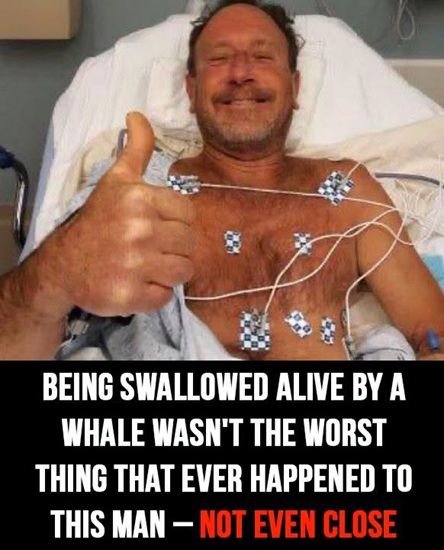
Stories of survival often capture public attention because they remind people how quickly ordinary moments can become extraordinary. Few survival stories, however, have attracted as much global interest as that of commercial lobster diver Michael Packard. In 2021, while working in the waters off Cape Cod, Massachusetts, Packard experienced an event that many people would consider almost impossible. During a routine dive, he was briefly caught inside the mouth of a humpback whale before being released unharmed from the animal’s mouth.
The unusual encounter quickly became international news and prompted widespread curiosity among scientists, marine experts, and the general public. Packard had spent many years working as a commercial lobster diver before the incident occurred. Diving in the cold waters of the North Atlantic was already a profession that demanded experience, patience, and strict attention to safety procedures. Every dive required careful planning, reliable equipment, and constant awareness of changing underwater conditions.
Although divers regularly prepare for challenging environments, few would ever expect to encounter one of the ocean’s largest mammals at such close range. According to Packard’s public accounts, the day began like many others. He entered the water to perform another scheduled dive while conditions appeared suitable for commercial lobster fishing…
-As he descended beneath the surface, his focus remained entirely on his work. Then, without warning, everything changed. He later described feeling an enormous force around him, followed by complete darkness and powerful movement. At first, he believed he had been attacked by a large marine predator because he could no longer see anything around him.
Only moments later did he begin realizing that the situation was different from anything he had imagined. Packard later explained that he believed he was inside the mouth of a whale. While surrounded by darkness, he concentrated on maintaining his breathing equipment and remaining as calm as possible. In interviews following the incident, he recalled thinking about his family and accepting the possibility that he might not survive. Those few seconds, he said, felt much longer than they actually were.

-Fortunately, the encounter ended unexpectedly. The humpback whale surfaced and expelled Packard back into the open water. He remained conscious and was able to signal for assistance before being brought safely aboard the support vessel. Medical professionals later evaluated him and treated injuries that included soft-tissue damage and decompression-related concerns. Despite the frightening experience, he recovered and eventually returned home to his family.
Marine biologists explained that humpback whales are not predators of humans. These whales feed primarily on small fish and krill using specialized feeding techniques that involve taking in enormous volumes of seawater. Because their throats are relatively narrow compared with the size of their mouths, humpback whales are physically unable to swallow a human into their digestive system. Experts believe encounters like Packard’s are extremely rare and generally accidental rather than intentional.
As the story spread internationally, many people described the whale encounter as one of the most extraordinary survival stories they had ever heard. Packard participated in interviews describing what happened and answering questions from researchers, journalists, and members of the public who found it difficult to imagine such an event taking place. While the incident appeared unbelievable at first, witness accounts and available evidence supported his description of the unusual encounter.
Surprisingly, Packard has since explained that another event from earlier in his life affected him even more deeply than the whale incident. Long before becoming known around the world for surviving the encounter at sea, he experienced a serious aviation accident that left him stranded with severe injuries. According to his public recollections, that earlier experience involved prolonged isolation, physical pain, and uncertainty about whether rescue would arrive in time. Unlike the whale encounter, which lasted less than a minute, the earlier ordeal continued for several days…
Packard has reflected that surviving difficult experiences can permanently change the way people respond to future emergencies. He believes the resilience he developed during earlier challenges helped him remain as calm as possible during the whale encounter. Rather than giving in to panic, he focused on breathing, conserving energy, and waiting for an opportunity to survive. Many psychologists note that previous experience managing high-stress situations can sometimes influence how individuals react during later crises, although every person’s response remains unique.
Experts also emphasize that remaining calm during emergencies does not eliminate fear. Instead, it often reflects years of experience, preparation, and the ability to make practical decisions while under intense pressure. Packard’s professional background as a commercial diver required him to solve problems underwater, monitor life-support equipment, and stay focused in environments where quick thinking could make a significant difference. Those skills may have contributed to his response during one of the most unusual situations imaginable.
Today, Packard’s experience continues attracting attention because it combines an extraordinarily rare marine encounter with a broader story about resilience, preparation, and survival. While the whale incident remains the event most people associate with his name, he has repeatedly explained that some of life’s greatest challenges are not always the ones that receive the most public attention. His reflections encourage people to look beyond dramatic headlines and recognize the personal strength that often develops through overcoming earlier hardships.
As Michael Packard continued sharing his story in interviews, many people expected him to describe the whale encounter as the most frightening experience of his life. Instead, he explained that an earlier accident had left a much deeper emotional impact. Years before the incident off Cape Cod, Packard survived a serious aircraft crash that resulted in multiple injuries and several days of isolation before help arrived. Looking back, he has said that enduring those long hours of uncertainty required a different kind of mental strength than the brief but dramatic encounter with the whale.
According to Packard’s public recollections, surviving the earlier accident meant coping not only with physical injuries but also with the psychological challenge of waiting without knowing when rescue would come. During that period, he had to remain focused despite pain, fatigue, and uncertainty. Those experiences, he believes, taught him the importance of controlling panic and concentrating only on the things he could influence in each moment. Although the circumstances were entirely different, those lessons remained with him years later.
When the whale encounter occurred in 2021, Packard said his first priority was to protect his breathing equipment and stay as calm as possible. Even though the situation lasted only a short time, maintaining composure became critically important. Specialists who study human performance under stress often explain that focusing attention on simple, practical actions can sometimes help individuals avoid becoming overwhelmed during emergencies. While every situation is unique, training and previous experience may influence how people respond under pressure.
Marine experts have also used Packard’s experience as an opportunity to educate the public about humpback whales. These animals are among the largest marine mammals on Earth and are widely recognized for their seasonal migrations, complex vocalizations, and specialized feeding techniques. Scientists emphasize that humpback whales do not hunt humans and that encounters involving people are extremely uncommon. Most interactions between whales and divers occur at a safe distance, and accidental close encounters remain exceptionally rare.
Following the incident, researchers and marine biologists explained that humpback whales feed primarily by taking in large volumes of water containing schools of small fish or krill before filtering the water through their baleen plates. Because their throats are much narrower than their mouths, they are physically unable to swallow large objects such as humans into their digestive systems. This anatomical feature is one reason experts believe Packard was expelled almost immediately after the whale realized something unexpected had entered its mouth.
Packard has often said that surviving both extraordinary experiences changed his perspective on life. Rather than dwelling on fear, he speaks about gratitude for everyday moments that many people easily overlook. Spending time with family, returning to familiar routines, and appreciating ordinary experiences became even more meaningful after surviving situations that could have ended very differently. He has described these simple moments as some of life’s greatest rewards.
Psychologists note that people who survive life-threatening situations sometimes experience significant changes in perspective. While recovery is different for every individual, many survivors report a stronger appreciation for relationships, health, and everyday experiences. Some also describe becoming more resilient when facing future challenges because previous hardships helped them develop coping strategies during periods of intense stress. Experts emphasize, however, that responses vary widely and there is no single pattern that applies to everyone.
Packard’s story also highlights the professionalism required in occupations that involve significant physical risk. Commercial diving demands extensive training, careful preparation, attention to safety procedures, and constant awareness of changing underwater conditions. Divers rely on experience, proper equipment, and disciplined decision-making to perform their work safely. Although unusual incidents attract public attention, most commercial dives are completed successfully through careful planning and adherence to established safety standards.
Public fascination with Packard’s experience has continued because it combines an extraordinarily rare natural event with a personal story of resilience. Many readers are naturally drawn to remarkable survival accounts, yet Packard himself has consistently redirected attention toward the broader lessons learned through adversity. Rather than presenting himself as extraordinary, he often emphasizes preparation, calm decision-making, and gratitude for being able to return home safely after both life-threatening experiences.
Experts across emergency response, psychology, and outdoor safety frequently point out that resilience is rarely developed during a crisis itself. Instead, it is often built gradually through years of training, experience, disciplined thinking, and learning how to remain focused under pressure. Packard’s experiences illustrate how previous challenges can sometimes provide valuable perspective when unexpected situations arise later in life.
Ultimately, Michael Packard’s story is about much more than an unusual encounter with a whale. It is a reminder that extraordinary headlines often represent only one chapter in a much longer personal journey. Behind the widely reported marine incident stands a man who overcame multiple life-threatening situations, continued pursuing his profession, and chose to share his experiences with honesty and perspective. His reflections encourage readers to appreciate the resilience of the human spirit, the importance of preparation, and the value of returning safely to the people who matter most after facing life’s most unexpected challenges.
