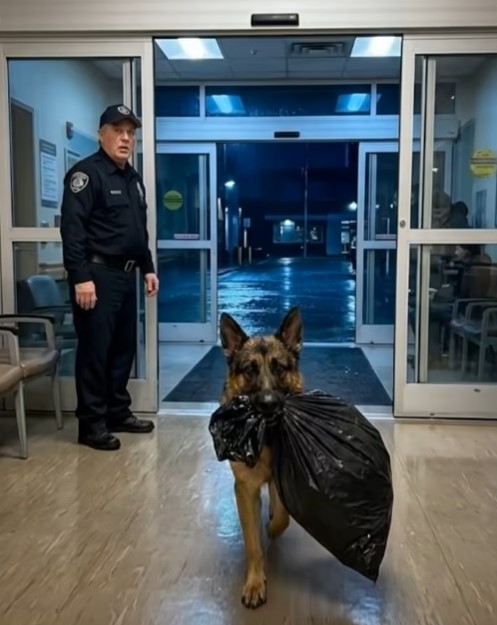
The emergency department had been unusually quiet that evening, the kind of calm that often settles before unexpected situations unfold. Outside, a severe storm moved across the city, with heavy rain striking the windows and wind howling through the streets. The lighting inside the hospital was soft but clinical, and the steady hum of machines, footsteps, and distant conversations created a controlled environment. Staff members continued their usual routines, unaware that the next few minutes would completely change the atmosphere of the entire building.
Inside the emergency wing, nurses were completing routine documentation, checking patient charts, and preparing for incoming cases. Doctors moved between rooms with quiet efficiency, while security personnel monitored the entrance. Despite the storm outside, everything inside remained structured and calm. However, that calm was suddenly interrupted by an unusual sound—barking that echoed sharply through the corridor and immediately drew attention toward the main entrance.
Within moments, the automatic hospital doors slid open, revealing a large German Shepherd drenched from the rain. Its fur was soaked, and water dripped onto the polished floor as it stepped inside. A tightly secured bag was attached to its back, appearing unusually heavy. Security personnel reacted immediately, unsure whether the animal had escaped or been brought in deliberately. Staff members cautiously approached, attempting to guide the dog back outside, but it did not retreat.
Instead, the dog moved with purpose toward the reception desk. It ignored attempts to redirect it and positioned itself directly in front of the counter. It barked repeatedly, not in aggression, but in a steady, urgent pattern that caught everyone’s attention. The intensity of its behavior quickly shifted the mood in the room. What had initially been seen as confusion began to appear more intentional, as if the animal was trying to communicate something urgent.
A nurse observing the situation noticed something unusual about the bag strapped to the dog’s body. It appeared slightly open at one edge, and subtle movement could be seen from inside. Recognizing that something might be wrong, she calmly instructed others to maintain distance. The dog, still soaked and breathing heavily, remained still but alert. The barking stopped for a moment, and the room fell into complete silence as the nurse slowly approached.
With careful hands, she unfastened the bag and gently opened it. Inside, she discovered a small child wrapped in damp fabric, weak and unresponsive. The sight immediately changed the urgency of the situation. Within seconds, emergency procedures were activated. A stretcher was called, medical staff rushed to the scene, and the child was quickly moved to a treatment area. Oxygen support, warming measures, and emergency evaluation began immediately as the team worked to stabilize the condition.
Throughout the entire process, the German Shepherd stayed near the reception area. It did not leave, panic, or become disruptive. Instead, it watched quietly, as if waiting for confirmation that help had arrived. Staff members later recalled how the animal remained unusually calm once the child was taken into care, as though it understood its responsibility had been fulfilled. The atmosphere in the hospital had shifted from routine to urgent in less than a minute.
Later investigations and emergency reports indicated that the situation had originated from a serious road accident during the storm. A vehicle carrying a family had been involved in a collision on a nearby highway, where poor visibility and weather conditions delayed immediate rescue efforts. The child’s parents had been trapped inside the vehicle, unconscious or unable to respond, while the dog had somehow managed to escape the crash site.
In a remarkable display of instinct and determination, the dog managed to carry or guide the child away from the immediate danger zone. With the child secured in the bag, it traveled through heavy rain and difficult conditions until it reached the nearest hospital. Authorities later suggested that without this intervention, the child’s chances of survival could have been significantly lower due to exposure and delay in medical care.
Medical staff emphasized that the timing of the arrival was critical. The child received immediate emergency treatment, which stabilized the condition and allowed for further care. Shortly afterward, rescue teams located the crash site and transported the parents to the same hospital for urgent treatment. Both were eventually stabilized, though their condition required continued monitoring.
Hospital employees who witnessed the event described it as one of the most extraordinary moments they had experienced in their careers. What initially appeared to be a disruption caused by a stray animal quickly transformed into a life-saving sequence of events. The dog’s behavior—its persistence, focus, and refusal to leave—played a crucial role in directing attention to a situation that might otherwise have been overlooked for critical minutes.
In the days that followed, the story became a powerful example of loyalty and instinct under extreme conditions. The German Shepherd’s actions highlighted the deep connection that can exist between humans and their animals, particularly in moments of crisis. While emergency responders, doctors, and nurses played their essential roles, it was the determination of the animal that brought the situation to their attention in time.
For those who were present that night, the memory remains vivid. The image of a rain-soaked dog standing quietly in a hospital hallway, refusing to leave until help was provided, left a lasting impression on everyone who witnessed it. It became more than just an unusual event—it became a reminder that sometimes, help arrives in the most unexpected forms, and that loyalty can appear in ways that transcend language or explanation.
