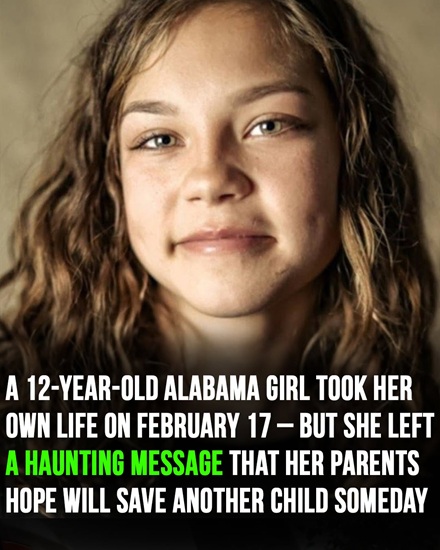
The death of 12-year-old Lindsey Mae Swan from Huntsville, Alabama, has deeply affected her family, school community, and local residents. According to statements shared by her family, the young girl died by suicide on February 17, 2026, leaving behind messages that her loved ones hope will raise awareness about mental health challenges among children and teens. Lindsey was described by her family as a bright and active student with many interests and talents.
She attended Mountain Gap Middle School and was involved in school activities including choir and science-related programs. She also participated in children’s theater and enjoyed creative and physical activities such as volleyball, gymnastics, dancing, hiking, and spending time outdoors. Her family has spoken publicly about her personality, describing her as caring and protective of others.
According to her mother, she often stood up for friends and classmates who were struggling or unable to defend themselves. Loved ones said she was known by nicknames such as “Sweet Pea” and “Stitch,” reflecting her personality among friends and family.

The family also shared that Lindsey experienced emotional difficulties prior to her death. They noted that the loss of her father several years earlier had a strong emotional impact on her. In addition, they stated that she had faced bullying at school, which they believe contributed to her emotional struggles. These factors, according to her family, became part of a larger mental health challenge she was facing.
Her mother, Brittany Booth, has spoken publicly about the importance of recognizing warning signs in young people. She emphasized that Lindsey cared deeply about others and often showed emotional awareness toward the feelings of people around her. The family has expressed hope that sharing her story may help prevent similar tragedies in the future.
Lindsey’s stepfather, Jason Booth, also encouraged open conversations about mental health. He noted that stigma surrounding emotional struggles often prevents young people from speaking up or seeking help. The family has urged parents, schools, and communities to pay closer attention to behavioral changes and emotional distress in children and teens.
According to publicly available data from mental health organizations, youth suicide remains a serious concern in the United States. The Alabama Department of Public Health has reported elevated levels of mental health challenges among teenagers in the state, while national organizations such as the National Alliance on Mental Illness (NAMI) have highlighted millions of young people experiencing suicidal thoughts each year.
Experts in mental health consistently emphasize that open communication about suicide and emotional distress can play a protective role. They stress that discussing these issues does not increase risk, but instead can help identify individuals who may need support and intervention.
Following Lindsey’s death, her family created a fundraising page to assist with related expenses and to support awareness efforts. They have also shared personal reflections and messages she left behind, which they say encourage people to check on others even when they appear to be doing well on the outside.
The community response has included messages of sympathy and concern, as well as broader discussions about bullying prevention and mental health resources in schools. Educators and advocates often highlight the importance of early intervention programs, counseling access, and supportive environments for students facing emotional difficulties.
Mental health professionals continue to urge families and communities to take any signs of distress seriously and to seek help early. In the United States, individuals can contact the 988 Suicide & Crisis Lifeline, which provides 24/7 confidential support for people in emotional crisis.
The loss of a young life like Lindsey Mae Swan has prompted reflection among those who knew her and those who have learned about her story. Her family hopes that by speaking publicly, awareness will grow and other children may receive help before reaching a crisis point.
