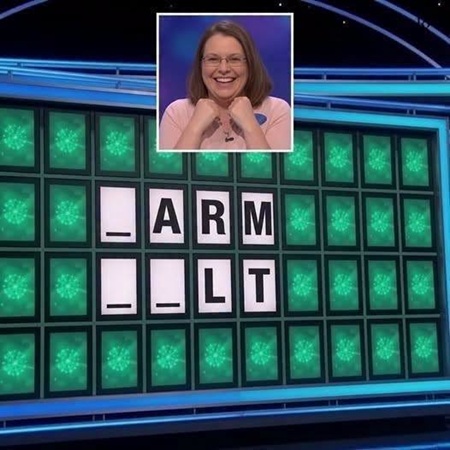
Televised game shows have long fascinated audiences because they combine entertainment with real-time decision-making under pressure. Contestants are placed in situations where time limits, incomplete information, and public attention all converge into a single high-stakes moment. These environments often reveal how differently people approach problem-solving when under stress. In many puzzle-based competitions, success is typically expected to come from step-by-step reasoning.
Contestants usually begin by analyzing visible clues, testing possible combinations, and gradually narrowing down options. This methodical approach is considered the standard strategy in logic-based games, where careful elimination is often more reliable than rapid guessing. However, not all problem-solving follows a linear path. Some contestants demonstrate what psychologists describe as pattern recognition or intuitive cognition, where the brain processes information rapidly and unconsciously. In these cases, individuals may arrive at solutions without being able to clearly explain every step that led them there.
How Intuition and Rapid Cognition Influence Decision-Making
Cognitive science suggests that the human brain is capable of processing large amounts of information beneath conscious awareness. This means that even when a person is not actively analyzing every detail, their mind may still be organizing patterns in the background. When enough information is present, a solution can sometimes appear suddenly as a moment of clarity.
This type of thinking is often referred to as “insight-based problem-solving.” It is characterized by a sudden realization rather than a gradual progression. In controlled environments such as puzzles or word games, this can create moments where a contestant appears to solve a challenge almost instantly after minimal visible analysis.
Researchers studying this phenomenon suggest that experience, memory, and familiarity with patterns all play important roles. The brain draws from past exposure to language, structure, and logic to form predictions, which can sometimes lead to rapid and accurate conclusions.
The Nature of Pressure in Competitive Environments
High-pressure environments such as televised competitions introduce additional psychological factors. The presence of an audience, time constraints, and potential rewards can all influence how individuals think and respond. Some people perform best under pressure, while others may experience hesitation or overthinking.
Game show formats often rely on this tension to create entertainment value. The uncertainty of whether a contestant will succeed or struggle adds to the viewing experience. When a contestant resolves a challenge quickly, it can feel especially surprising because it defies audience expectations of gradual problem-solving.
These moments are often remembered not only for the outcome but also for the emotional reaction they produce in the studio and at home. Sudden breakthroughs tend to stand out because they contrast sharply with the anticipated difficulty of the task.
Viral Moments and Audience Interpretation
In the digital age, game show highlights frequently circulate online, where viewers analyze and reinterpret short clips. A few seconds of footage can be replayed, slowed down, and discussed across social media platforms. This often leads to a wide range of interpretations about what occurred in the moment.
Some viewers focus on technical skill, suggesting that rapid success may come from experience or preparation. Others highlight intuition or “gut feeling” as a factor. In many cases, discussions expand beyond the game itself and into broader conversations about intelligence, memory, and human cognition.
The virality of such moments is often driven by surprise. When an outcome defies expectations, it becomes more likely to be shared, commented on, and debated. This cycle helps transform ordinary gameplay into widely discussed cultural content.
The Role of Pattern Recognition in Puzzle Solving
Pattern recognition is one of the most important skills in puzzle-solving environments. It allows individuals to identify familiar structures within incomplete information. In word-based games, for example, players may subconsciously recognize likely word formations based on partial clues.
This ability is not limited to experts or highly trained individuals. Most people use pattern recognition in daily life, whether reading, speaking, or making quick decisions. However, in competitive settings, this process becomes more visible because decisions must be made quickly and under observation.
When a contestant appears to solve a complex puzzle in a very short time, it is often the result of accumulated experience and rapid mental association rather than randomness. The brain connects available data points and retrieves likely matches from memory.
Why Sudden Solutions Capture Public Attention
Audiences are naturally drawn to moments that appear unexpected or extraordinary. A rapid solution to a difficult puzzle creates a sense of surprise that stands out from routine gameplay. This emotional response is part of what makes game shows so engaging to watch.
Such moments also raise interesting questions about human capability. Viewers often wonder whether they would respond in the same way under similar conditions. This reflection contributes to the popularity of these clips beyond the original broadcast.
In many cases, the appeal lies not only in the outcome but in the perception of effortless success. When something difficult appears to be solved with ease, it challenges assumptions about how problem-solving is supposed to work.
Insight, Intelligence, and Human Potential
Game shows and puzzle competitions provide a unique window into human cognition under pressure. They highlight the balance between analytical thinking and intuitive insight, showing that both play important roles in problem-solving.
While step-by-step reasoning remains essential in many situations, moments of sudden clarity demonstrate the brain’s ability to process complex information rapidly and unconsciously. These instances often leave a strong impression on audiences because they seem to compress time between confusion and understanding.
Ultimately, such moments remind us that intelligence is not limited to slow, deliberate analysis. It also includes the ability to recognize patterns, trust intuition, and arrive at solutions in unexpected ways. In both competitive environments and everyday life, these cognitive processes work together to shape how people understand and respond to challenges.
