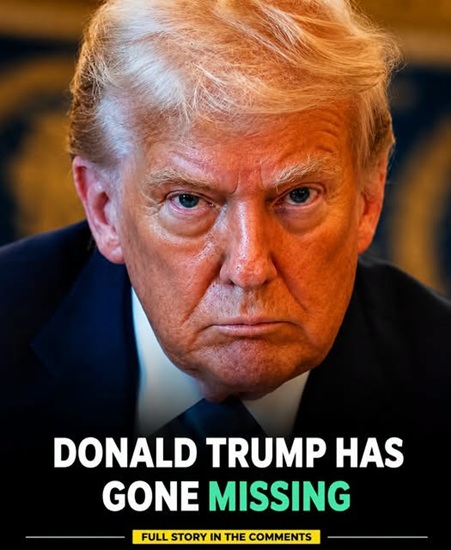
Recent public discussion has focused on the limited number of recent public appearances by Donald Trump, following reports that his visible schedule has included fewer live engagements compared to earlier periods. This shift has generated attention in political commentary and media coverage. According to publicly available schedules and media reports, Trump’s last widely covered in-person appearance at the White House Cabinet level was reported around May 27, after which his public-facing events were described as more limited in frequency.
During this period, official communications and written statements continued to be released through standard channels, including press statements and digital updates, which are commonly used in modern political communication. However, the reduced number of live press interactions and public appearances has led to increased discussion in political media and online platforms regarding the nature of his working schedule.
Some commentators have noted that modern political leaders often alternate between high-visibility public events and periods of internal meetings, policy work, and private engagements that are not always broadcast publicly. The White House has maintained in general communications that routine governmental operations and administrative work continue regardless of public appearances, as is standard practice for executive offices.
Despite this, the reduced visibility has prompted additional public interest, particularly among observers who closely follow presidential schedules and media access patterns. In addition to general schedule observations, attention has also been drawn to a recent visit by Trump to Walter Reed National Military Medical Center, which was reported by multiple media outlets.
According to those reports, the visit lasted several hours and was described as part of routine medical evaluation procedures, although no detailed medical findings were publicly disclosed beyond official summaries. The White House physician has previously issued general health updates stating that the president’s cardiovascular and cognitive condition is being monitored regularly, as is standard for individuals in high office.
These official statements have indicated that routine testing and preventive medical evaluations are part of ongoing healthcare management at the presidential level. Some medical professionals commenting in public forums and media interviews have discussed the broader topic of presidential health transparency, particularly regarding how medical information is communicated to the public.
Experts have noted that advanced diagnostic procedures, such as cardiac imaging, are sometimes performed as precautionary measures in older patients, especially those in high-stress leadership positions. However, they also emphasize that without access to full medical records, external interpretation of individual test frequency or results remains limited and should be treated cautiously.
In public discourse, health transparency for political leaders is often a recurring topic, particularly in the United States, where presidents’ medical summaries are traditionally released in simplified public reports. In this context, differing interpretations have emerged between those who view limited public appearances as routine administrative discretion and those who see it as a matter requiring greater disclosure.
Political analysts often note that modern information environments tend to amplify periods of reduced visibility, as constant news cycles and social media increase expectations for continuous updates. As a result, even short gaps in public appearances by high-profile political figures can become widely discussed topics across digital platforms and news commentary. It is also common for political schedules to fluctuate due to travel, internal meetings, policy planning sessions, and private briefings that are not publicly broadcast.
These routine variations in scheduling can sometimes create perceived gaps in visibility, even when official duties continue without interruption. In this case, discussions surrounding Trump’s recent schedule have developed alongside ongoing political developments and public interest in his activities. Supporters and critics often interpret the same periods of limited visibility differently, reflecting broader political polarization in how information is assessed and discussed.
From an administrative perspective, official communications continue to serve as the primary channel for updates on policy decisions, executive actions, and scheduled events. Media organizations typically rely on a combination of public appearances, official statements, and verified scheduling information when reporting on political activity. In the absence of daily press conferences or live events, written statements and scheduled briefings remain standard tools for communication between the administration and the public.
At the same time, political observers continue to monitor upcoming appearances, scheduled events, and official engagements to track the president’s public activity. The discussion surrounding visibility and transparency is not unique to any single administration and has been part of broader debates about modern executive communication for many years. Historical precedent shows that presidents vary in their public engagement styles, with some preferring frequent direct appearances and others relying more heavily on structured communication channels.
In the current media environment, expectations for real-time updates have increased significantly compared to earlier decades, influencing how public absence is perceived. This has contributed to ongoing commentary about the balance between private working time and public-facing communication in high-level political leadership. As of now, there has been no official indication of any unusual or exceptional circumstance regarding the president’s working status, based on publicly released statements.
However, public interest in the topic continues, driven by both political engagement and the general visibility expectations associated with the office. Political analysts suggest that such discussions often intensify during periods of reduced public appearances, regardless of the underlying administrative activity.
The broader conversation highlights how modern leadership is increasingly evaluated not only by policy decisions but also by communication frequency and public presence. In this environment, perception often becomes as influential as official confirmation in shaping public discourse.
As new official events and appearances are scheduled, further clarity is expected through standard governmental communication channels and media coverage. Until then, the discussion remains centered on interpretation of available information, public scheduling patterns, and established reporting practices.
