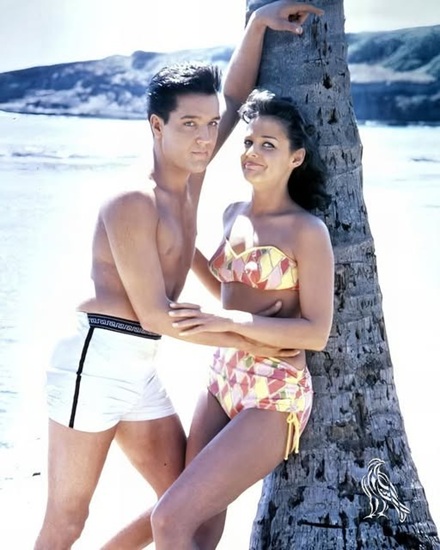
By the time the vibrant musical romantic comedy Blue Hawaii premiered in late 1961, Elvis Presley was already one of the most recognizable and influential entertainers in the world, dominating both music and cinema simultaneously. Audiences from across the United States and beyond were drawn not only to his films for entertainment, but also to experience his unique screen presence, which combined charisma, musical talent, and an effortless sense of charm.
Although critics often regarded Blue Hawaii as lighter entertainment compared to more serious films of the era, audiences embraced it warmly, helping it become one of Elvis Presley’s most commercially successful motion pictures. The film played a significant role in shaping what would become a defining formula for many of Elvis’s Hollywood productions during the 1960s, blending romance, comedy, music, and visually appealing vacation settings.
This formula typically placed Elvis in exotic or scenic locations, surrounded by attractive co-stars, simple romantic storylines, and a steady flow of musical performances designed to appeal to mainstream audiences. Behind this creative direction was Colonel Tom Parker, Elvis’s longtime manager, who quickly recognized the commercial potential of combining travel fantasy settings with accessible musical storytelling.
In Blue Hawaii, Elvis plays Chad Gates, a returning soldier who comes home to Hawaii and attempts to balance family expectations with his desire for a more relaxed, independent lifestyle. Unlike many of his other film roles, Chad is not portrayed as a professional musician, which makes his frequent singing moments feel more spontaneous and integrated into everyday situations.
This creative choice became part of the film’s charm, as Elvis would unexpectedly transition into songs during casual activities such as driving, relaxing on the beach, or spending time with friends. The soundtrack of Blue Hawaii became one of Elvis Presley’s most iconic musical collections, helping to further cement his status as a global music legend.
One of the most enduring songs from the film, “Can’t Help Falling in Love,” went on to become a timeless classic, widely recognized across generations and frequently associated with Elvis’s legacy. The song’s popularity extended far beyond the film itself, becoming a staple at weddings, ceremonies, and cultural events around the world due to its emotional and melodic simplicity.
Despite its massive success, Blue Hawaii was not without its imperfections, particularly when viewed through a modern cinematic lens that often highlights continuity and production details. For example, in several driving scenes, careful viewers can notice small continuity errors involving character positioning, hand movements, and camera cuts that slightly disrupt visual consistency.
In some sequences, props such as musical instruments appear to be played with less visible synchronization to the background audio, a common limitation in film production techniques of that era. There are also minor background audio inconsistencies, including real ambient sounds from filming locations that unintentionally made their way into the final edited version of the movie.
These imperfections, however, are often viewed today as part of the film’s historical authenticity rather than flaws that diminish its overall entertainment value. Behind the scenes, Blue Hawaii also experienced notable casting changes that influenced the final production. Actress Juliet Prowse was originally considered for a leading role following her earlier collaboration with Elvis.
However, due to reported disagreements over contractual and logistical demands, she ultimately left the project before filming began, opening the door for Joan Blackman to take the role instead. Joan Blackman’s on-screen chemistry with Elvis Presley became one of the defining elements of the film, contributing significantly to its romantic tone and audience appeal.
According to interviews and later recollections, both actors shared a natural and comfortable working relationship that translated effectively on screen. While Blue Hawaii presents a bright, carefree tropical atmosphere, Elvis’s personal feelings during production were reportedly more complex than what audiences saw in the final film. Some accounts from individuals involved in production suggest that Elvis occasionally felt creatively limited by the lightweight nature of his film roles during this period of his career.
He reportedly desired more dramatic and challenging acting opportunities that would allow him to expand beyond musical romantic comedies. Despite these frustrations, Elvis remained professional on set and continued to bring energy and humor to his performances throughout filming.
He was also known for lighthearted behavior between takes, including practical jokes and playful interactions with cast and crew members, which helped maintain a relaxed working environment. Off camera, Elvis also engaged in recreational activities during production downtime, including golf practice sessions and social interactions with fellow performers and visitors on set.
One notable feature associated with the film’s production period is Elvis’s interest in vehicles, including sports cars that reflected his personal taste and lifestyle during the early 1960s. The Hawaiian filming locations themselves played a major role in the movie’s lasting appeal, showcasing scenic landscapes that continue to attract visitors and fans of classic cinema.
Locations such as coastal viewpoints, tropical resorts, and island roads became closely associated with Elvis Presley due to their prominent use in the film. Although some of the original filming sites have changed over time or no longer exist in their original form, their historical connection to Blue Hawaii remains an important part of film tourism in Hawaii. The film also contributed to Hawaii’s global image during the early years of its statehood, promoting it as an idealized vacation destination filled with beauty, music, and romance.
Over time, Blue Hawaii became more than just a film; it evolved into a cultural snapshot of early 1960s Hollywood filmmaking and Elvis Presley’s unique position within it. Today, it remains an important part of Elvis’s cinematic legacy, remembered not only for its music and scenery but also for its influence on the style of musical films that followed. Ultimately, Blue Hawaii stands as a reflection of both the strengths and limitations of Elvis Presley’s film career, capturing a moment in time when his global fame and Hollywood presence were at their peak.
