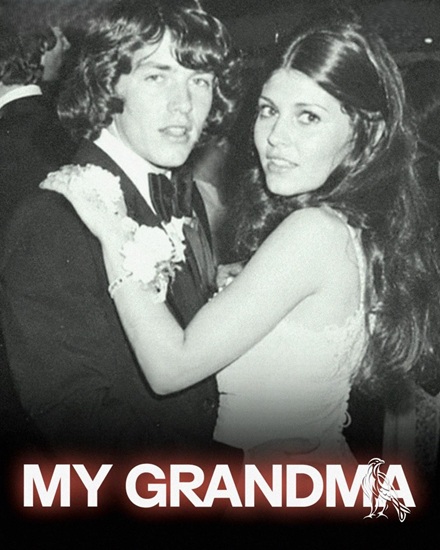
Rain tapped gently against the hospital window, steady and soft, as though the world outside was trying not to disturb what was happening inside. My grandmother had been lying in that room for weeks, her condition slowly weakening with each passing day. The doctors had spoken carefully, choosing words that still managed to carry the weight of certainty. There was not much time left, they had said, and we all understood what that meant even when we tried not to say it aloud.
I spent nearly every day beside her bed, holding her hand as if that alone could anchor her to this world a little longer. We passed the hours quietly, sometimes talking, sometimes just sitting in silence that felt strangely full. We looked through old photo albums together, her fingers moving slowly over each page as memories returned in fragments. Laughter sometimes slipped through the sadness when we found old hairstyles or faded pictures of family gatherings that felt like they belonged to another lifetime.
That evening, she rested against her pillows with an old album open across her lap. The pages were fragile and yellowed, edges curled with age, as though they might crumble if handled too quickly. She turned them carefully, stopping suddenly on a black-and-white photograph of a young boy standing beside her. Her expression changed immediately, as if something deep inside her had been awakened by the image.
“That was him,” she whispered softly, her voice barely above a breath. I leaned closer, unsure of what she meant, and asked who she was talking about. Her fingers trembled slightly as she touched the photograph. “The boy I loved in school,” she said, as though the words had been waiting decades to be spoken aloud. I had never heard her mention him before, not even once in my entire life.
She told me his name was Henry. They had met when they were teenagers, long before she met my grandfather. According to her memories, they were inseparable for a time, sharing simple moments that felt enormous at that age. He carried her books, made her laugh, and walked her home after school. Their connection, she explained, was something that felt natural and unforced, like it had always been meant to exist.
As she spoke, the hospital room seemed to fade away for a moment, replaced by something warmer and distant. She remembered dances at school events, conversations that lasted too long, and a final night at prom when they stayed behind after everyone else had left. The song playing that night, she said quietly, was Unchained Melody. Even now, she claimed she could still hear it sometimes when everything around her became silent enough.
But like many young stories, theirs did not continue the way they had once imagined. After graduation, life separated them. Families moved, letters were exchanged for a while, and then slowly, communication stopped. There was no dramatic ending, just distance and time stretching between two people until silence replaced everything. She had always believed, in her own quiet way, that he had simply forgotten her.
I asked her if she thought he had truly moved on. She hesitated for a long time before answering, her eyes fixed on the photograph. “I don’t know,” she finally said. “That was the hardest part. Not knowing.” Her voice carried something fragile, like a memory she had protected for too long. Then she added that she still loved my grandfather deeply, but that first love had never fully disappeared from her heart.
Something in that moment changed inside me. I asked her softly if she would want to see him again, if she could. Her eyes filled with tears before she answered. “I’ve dreamed about it my whole life,” she said. That was all I needed to hear. Without thinking too much about what it would take, I made her a promise that I would try to find him.
That night, I began searching through old records, school archives, and any trace of his name I could find. It was not easy. Decades had passed, and information was scattered, incomplete, or missing entirely. There were many people with the same name, many dead ends, and many moments where I almost gave up. But each failure only made me more determined to continue.
The next day, I contacted her old school and explained the situation. I expected confusion or dismissal, but instead, the woman on the phone paused and said she would see what she could do. That small moment of hope led to a chain of small discoveries—old addresses, outdated phone numbers, and distant relatives who barely remembered anything but were willing to help.
When I told my mother what I was doing, her reaction was immediate and strong. She told me to stop. She said I didn’t understand what I was interfering with, that some parts of the past should remain untouched. Her fear was clear, though she struggled to explain it. It felt less like anger and more like something heavier that she had carried for a long time.
The disagreement between us grew over the following days. She insisted that finding him would only cause pain, that reality would destroy the fragile peace my grandmother had left. I argued that truth, even painful truth, was better than silence. Beneath her resistance, I sensed something deeper—something she was not ready to admit.
Eventually, I discovered something unexpected. My mother had kept a box hidden away for years. Inside were letters—dozens of them, all addressed to my grandmother, all written in the same careful handwriting. They were from Henry. He had never stopped writing, even after decades had passed. Birthdays, holidays, years of unanswered messages filled with memories and longing.
The realization shattered everything I thought I understood. My grandmother had believed she was forgotten, but that was not the truth. The letters had been hidden, withheld by family decisions made long ago, shaped by fear and misunderstanding. My mother explained through tears that she thought she was protecting everyone, preserving stability by keeping the past sealed away.
Among the letters was one written very recently, asking if my grandmother was still alive. That was the moment everything shifted. I found an address attached, only a short distance away. Without hesitation, I went there. The house was small and quiet, surrounded by a simple garden that looked carefully maintained.
When the door opened, an elderly man stood there, holding a fragile sense of recognition in his eyes. I showed him a photograph, and everything changed in an instant. His voice broke when he said her name. There was no hesitation, no confusion—only certainty that never faded with time. He had been waiting, even without knowing if waiting still made sense.
I told him she was alive. That she was still in the hospital. That she had never stopped thinking about him. His hands trembled as he asked me to take him to her immediately. The urgency in his voice carried decades of emotion that had never found release. It was not a question of whether he should go—it was the only thing that mattered.
The next morning, I brought him to her room. The atmosphere was quiet, almost suspended, as if even the air was holding its breath. When my grandmother opened her eyes and saw him, confusion lasted only a moment before recognition took over completely. Her expression changed in a way I had never seen before.
They spoke softly at first, as though afraid that louder voices might break the moment. Then he reached for her hand, and she held it without hesitation. Time seemed to collapse around them, reducing decades into a single present moment. There was no need for explanation anymore—only presence, only recognition, only the return of something that had never truly disappeared.
I pressed play on a song from my phone, the same one she had mentioned before. Unchained Melody filled the room gently, blending with the silence. He stood beside her bed and asked if she would dance with him. She nodded, tears streaming quietly as they helped her stand. Together, they moved slowly, carefully, as though relearning something their bodies had never forgotten.
When she passed away days later, it was peaceful. There was no struggle, no fear—only calm. She held one of his letters in her hand, as if it had finally completed a circle that had been open for too long. At the funeral, my mother stood beside me in silence, her hand trembling in mine.
In the end, I understood something that stayed with me long after everything else faded. Love does not always end when people are separated. Sometimes it simply waits, quietly, through years and distance, preserved in small things like letters, memories, and unfinished moments. And sometimes, if life allows it, those moments find their way back home.
