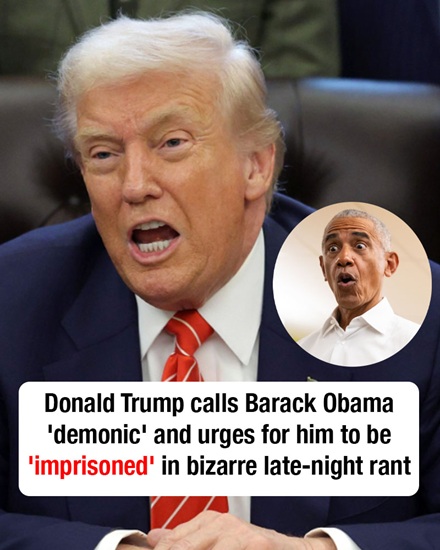
Donald Trump recently drew renewed attention online after reportedly engaging in an extended late-night posting session on his social media platform, Truth Social. According to multiple descriptions of the activity, the former president shared and reshared dozens of posts within a short period of time. Many of these posts focused on political opponents and long-running controversies tied to the 2016 U.S. presidential election.
Among the individuals frequently referenced in the reposted material was former President Barack Obama. The content circulating on Trump’s account included strong language from other users and commentary that repeated allegations related to Obama’s role during and after the 2016 election period. It is important to note that these were reposted messages from other accounts rather than official statements or verified findings.
Some of the shared posts contained highly charged language, including accusations and calls for legal action. In these reposts, Obama was described in extreme terms by some users, and the messages called for investigations and prosecutions involving multiple political figures. These claims have circulated in political discourse for years, though many of them have not been substantiated by court rulings or confirmed evidence.
The posts also revisited long-standing allegations about the investigation into Russian interference in the 2016 election. Some of the shared content suggested that federal agencies were misused to monitor Trump’s campaign activities during that period. These claims relate to a broader political debate that has continued since the end of the 2016 election cycle, but they remain heavily disputed and have been examined through various official reviews.

Trump has previously referred to the Russia investigation and related inquiries as politically motivated. Supporters of the former president often echo similar viewpoints in online discussions, while critics argue that multiple investigations into foreign interference were based on intelligence assessments conducted by U.S. agencies at the time. The debate remains a highly polarized topic in American politics.
The late-night activity on Truth Social also included reposts referencing other political figures, including former Secretary of State Hillary Clinton and discussions surrounding the 2016 election controversies, such as the handling of classified information and email-related investigations. These topics have been central to U.S. political debate for nearly a decade and continue to resurface during election cycles and public commentary.
Some of the reposted material also referenced statements made by current and former intelligence officials, including commentary tied to reports and assessments released over the years. These posts often reinterpret or selectively highlight portions of official documents, contributing to ongoing disagreement about how past events should be understood.
In addition to election-related content, the online activity included criticism directed at various political institutions and individuals. The tone of many reposted messages was strongly opinionated, reflecting the highly polarized nature of political communication on social media platforms. Truth Social, in particular, has often been used as a space for supporters and critics to engage in politically charged discussions.
At the same time, responses to Trump’s reposting activity were mixed across social media. Supporters described it as an expression of frustration and political messaging, while critics raised concerns about the amplification of unverified claims. This divide reflects broader tensions in how political figures use digital platforms to communicate directly with the public without traditional media filters.
In a separate but related context, Barack Obama has previously addressed online content involving himself and his family, including criticism of manipulated or AI-generated media. In public remarks and interviews, he has stated that while he does not typically take personal offense at political criticism, he is sensitive to content involving his wife and children, emphasizing that they did not choose public political life.
Obama has also spoken more broadly about the importance of boundaries in political discourse, particularly when it involves family members of public figures. His comments have often highlighted concerns about the increasing intensity of online political content and the way social media can amplify personal attacks or misleading representations.
As of now, there has been no official response from Trump regarding the specific reactions to his recent Truth Social activity. Similarly, much of the discussion surrounding these posts remains centered on public interpretation and media reporting rather than formal statements from the individuals involved.
Overall, the episode reflects the ongoing role of social media in shaping modern political communication. Platforms like Truth Social have become central spaces for direct messaging, reposting of political narratives, and rapid dissemination of commentary. However, they also contribute to controversy when posts include disputed claims or highly charged political language.
The situation highlights the continued polarization of U.S. political discourse, particularly between prominent figures such as Donald Trump and Barack Obama. It also underscores how digital platforms can quickly amplify narratives, both verified and unverified, shaping public conversation in real time.
